
















A worn wire brush usually gives warning signs long before it becomes unsafe: uneven wire length, splayed or missing filaments, changed vibration, reduced cleaning performance, and visible damage to the brush body. Stop immediately at these signals and replace the brush to prevent loose wires, reduced control, and tool damage.
Spot worn wire brushes before they become unsafe. In this guide you'll learn the visual and tactile warning signs, how different brush types wear, and a practical inspection checklist for safe use. With internal links to Klingspor wire brushes at DHZ-Proshop.
The first visual warning signs
The easiest way to assess wear is by closely inspecting the brush before each use. These four visual signals indicate the brush needs replacement:
1. Uneven wire length
If some wires are significantly shorter than the rest, the brush no longer makes even contact with the surface. This leads to patchy cleaning and increased chance of chatter or skipping during use.
2. Splayed wires
When wires fan outward, collapse, or no longer stand in a consistent pattern, the brush has lost stiffness and precision. This is especially critical for cup brushes and edge brushes where form and balance are essential.
3. Missing wires or gaps
A brush with multiple missing bundles, broken tufts, or visibly empty sections is already unbalanced and should be considered worn out. Missing wires mean fewer active points, more vibration, and higher risk of uneven load.
4. Discoloration, rust, or contamination
If wires are packed with debris, coated with residue, or corroded, the brush no longer cleans effectively and may overheat or feel rough during use.
Performance changes you feel and hear
A wire brush often tells you it's worn through its behavior before it becomes visibly unsafe. Watch for these signals during use:
More pressure needed for same result
If you suddenly need to push harder to remove rust or paint, the wire ends have likely shortened or become less aggressive. A healthy brush works efficiently with minimal pressure.
Loss of cutting action
A healthy brush bites consistently into rust, scale, or coating. If it starts polishing rather than cleaning, the wires are probably worn, bent, or contaminated. At that point you're no longer getting the intended surface treatment.
Changed vibration
A balanced brush runs smoothly, while a worn or uneven brush may feel rough, oscillate, or "walk" across the workpiece. This often indicates uneven wire mass or loss of concentricity.
Sound as a warning
A healthy wire brush produces a fairly steady sound. When it becomes worn, the sound may become louder, rougher, or more intermittent because wires no longer contact the surface uniformly. A brush that suddenly sounds harsher than before is worth stopping for inspection.
Safety risks of worn brushes
The biggest safety risks of a worn wire brush are loose wires, reduced control, and tool damage. These three red flags require immediate action:
Loose wires or wire breakage
Once individual wires start detaching, the brush can throw fragments at high speed. This is one of the most important hazards to watch for. If you see loose filaments protruding, stop using the brush immediately.
Visible deformation of brush body
If the supporting structure is bent or damaged, wires may contact the surface at the wrong angle, increasing chance of breakage and poor control. This is especially important for brushes mounted on power tools.
Excessive wobble or imbalance
If a brush that previously ran smoothly now vibrates enough to be felt through the tool body, the brush may be unevenly worn or incorrectly mounted. Either way, it's no longer operating in a controlled state.
Different brush types wear differently
Klingspor offers multiple wire brush formats, and each has a different wear profile:
| Brush type | Typical use | Wear pattern |
|---|---|---|
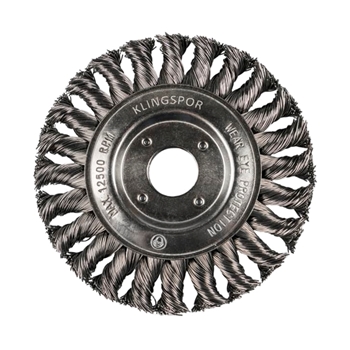
| Round brush | Weld prep, edge cleaning | Wears evenly around circumference, check for uneven wire length |
| Cup brush | Large surfaces, flat cleaning work | Often wears unevenly on outer edge, check balance |
| Pencil brush | Holes, cavities, hard-to-reach spots | Loses effectiveness as wire ends shorten in narrow working zone |
| Hand brush | Manual cleaning, detail work | Becomes unsafe if wires splay or break near handle, loss of control is immediate |
Because geometry differs, so does the wear pattern. A cup brush often wears unevenly on the outer edge, while a pencil brush may lose effectiveness as wire ends shorten in a narrow working zone. A hand brush can become unsafe if wires splay or break near the handle, because loss of control is immediate.
Therefore inspection should always be matched to brush type. You're not just looking for "worn wires"; you're also checking whether the worn pattern still allows controlled contact. Consult our product page for specific advice.
Material and surface affect wear
The material you're cleaning affects how quickly the brush wears. Hard weld scale, thick rust, abrasive coatings, and sharp edges all shorten wire life faster than light polishing or cleaning.
Special attention for stainless steel
With stainless steel, the brush must also be suitable for the job so the finish remains controlled. Klingspor notes that wire brushes are valuable because they act on the surface without changing workpiece shape as aggressively as some other abrasives, which is especially useful on ultra-thin sheet.
Thin sheet material deserves special care
Aggressive, worn, or too-hard brushes can mark the surface or distort edges on thin material. That advantage disappears once the brush wears out. If wires are no longer uniform, the brush can leave streaks, scratches, or uneven cleaning patterns instead of a clean surface.
For best results on different materials, choose the right brush from our surface preparation assortment.
Safe-use habits that extend life
To keep a brush in safe working condition longer, follow these practices:
- Use correct speed: Follow recommended RPM for brush and material. Too fast = overheating, too slow = inefficiency.
- Avoid excessive pressure: Let wire tips do the work. Forcing bends wires faster and can cause premature breakage.
- Store brushes correctly: Ensure wires aren't crushed or bent between jobs. A brush jammed in a drawer or under heavy tools can lose shape before ever seeing the workpiece.
- Keep brush clean: Buildup makes the tool work harder than necessary. Clean regularly to maintain performance.
- Always wear PPE: Eye protection, gloves, and suitable respiratory protection are essential, even with correct use.
For more tips on safe wire brush use, view our safety guide.
Frequently asked questions about wire brush wear
How often should I replace my wire brush?
Can I repair a worn wire brush?
Why does my brush throw wires during use?
How do I know if my brush is still balanced?
Which brush should I choose for stainless steel?
What do I do if my brush overheats?
Posted by the surface preparation specialist at DHZ-Proshop — Your partner for Klingspor wire brushes, surface treatment, and professional tools. Webshop available 24/7 and pickup point in Beerse. Questions about wire brushes, wear, or safety? Contact our team or view our complete surface preparation assortment.