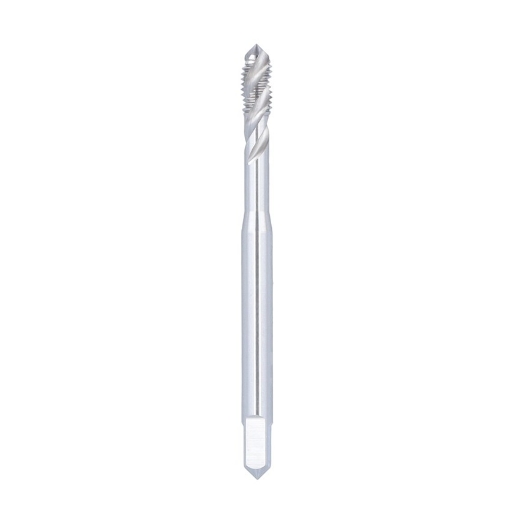
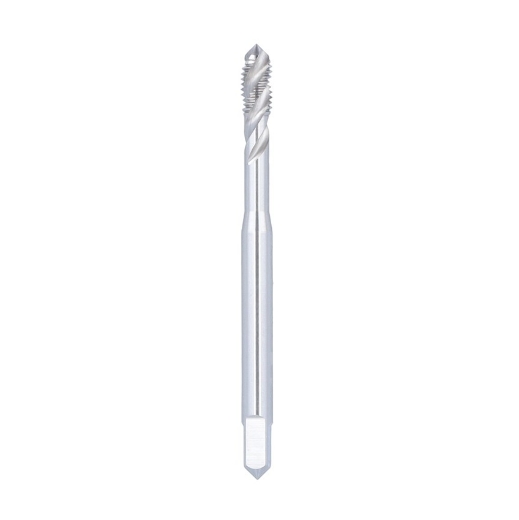
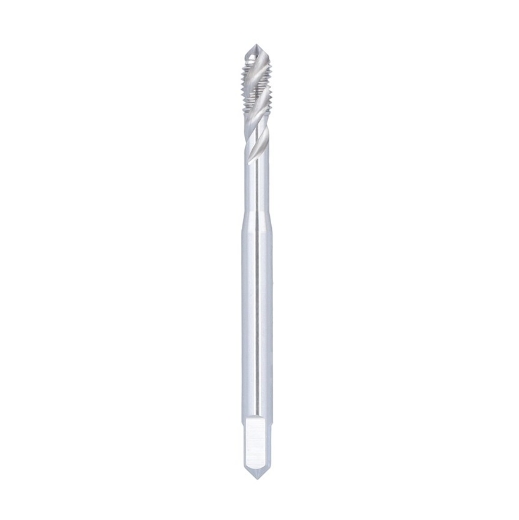
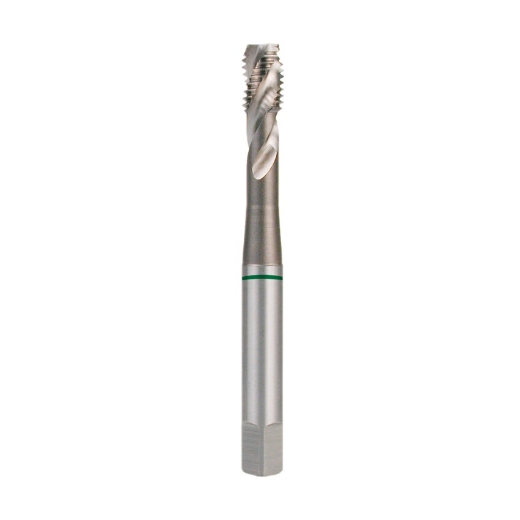
When Should You Change Taps in Deep Holes? (taper, plug and bottoming)
Change taps in deep holes when the lead of the current tap no longer provides clean progress, when chip evacuation deteriorates, or when you need a shorter lead to complete the thread close to the bottom. Never force a tap with too long a lead or too much chip load into the bottom of a blind hole.
Change taps in time when tapping deep holes. In this guide you will learn the correct tap sequence, warning signs of breakage, and practical techniques to safely cut threads in blind or deep holes. With internal links to the tap range at DHZ-Proshop.
Why change taps in deep holes?
In deep or blind holes, the risk of tap breakage is considerably higher than in through holes. The main cause is chip build-up: if the chips cannot escape freely, they block the flutes, the torque rises and the tap can break.
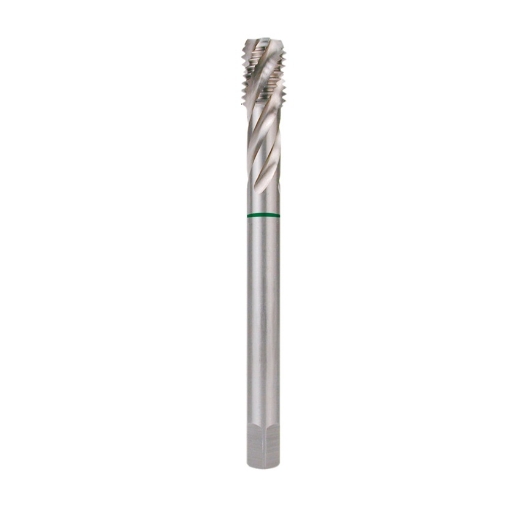
In addition, each tap has a specific lead length (chamfer). A taper tap with a long lead starts easily but cannot cut the thread all the way to the bottom. A bottoming tap with a short lead can reach the bottom, but is harder to start straight. By changing at the right moment, you combine the best of both worlds.
The safe tap sequence for deep holes
A proven sequence for blind holes with a depth greater than 1.5× the tap diameter:
- Start with a taper tap: The long lead (7-10 threads) makes it easy to start straight and cut the first thread without slipping.
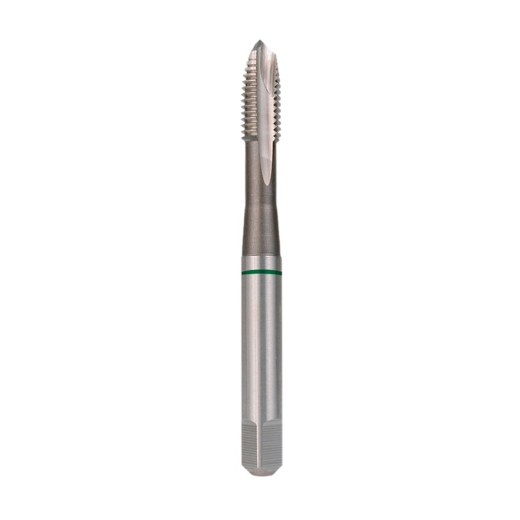
- Switch to a plug tap: The intermediate lead (3-5 threads) continues the thread further with better chip evacuation than the taper.
- Finish with a bottoming tap: The short lead (1-2 threads) cuts the thread right up to near the bottom of the blind hole.
| Tap type | Lead length | Best use |
|---|---|---|
| Taper tap | 7-10 threads | Starting threads, through holes, easy alignment |
| Plug tap | 3-5 threads | Continuing threads in blind holes, better chip evacuation |
| Bottoming tap | 1-2 threads | Completing threads close to the bottom of a blind hole |
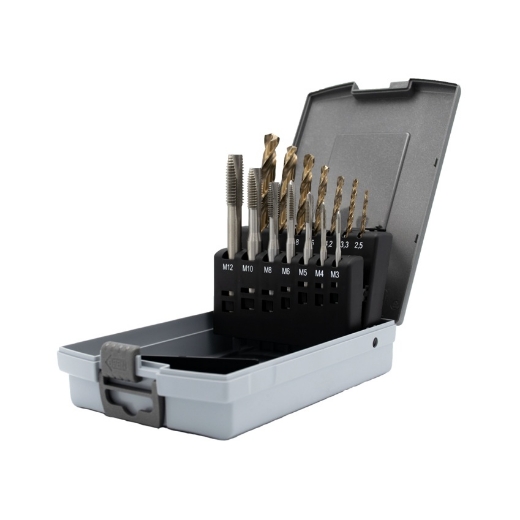
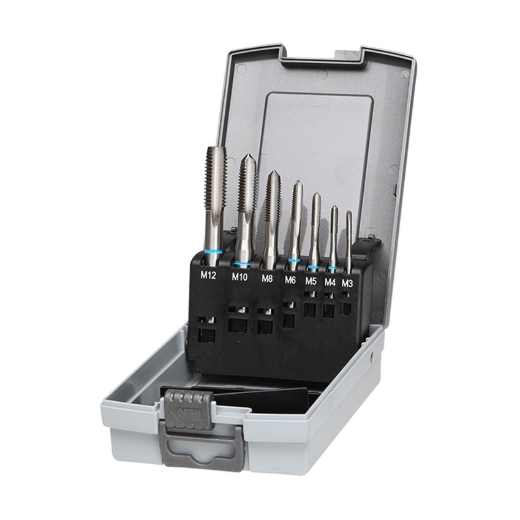
View our full range of taps for sets with all three types, ideal for professional use in metalworking.
Warning signs: when should you change?
Never force a tap that meets resistance. These signs indicate that it is time to change or adjust your technique:
1. Rising resistance
If the tap turns ever harder for the same progress, the lead may be worn or the flutes are full of chips. Stop immediately, back off to break the chips, and assess whether a shorter-lead tap is needed.
2. Poor chip evacuation
Do you see long, tangled chips that do not come out of the flutes? Or do you hear a "scraping" sound? This indicates blocked chip space, which quickly leads to tap breakage in deep holes.
3. "Sticky" feeling
A tap that suddenly feels stiff as if it is jammed often indicates that the cutting edges are becoming dull or that too little cutting oil is being used. This is a critical moment to stop and assess.
4. Approaching the bottom of a blind hole
If the tap is almost reaching the bottom but the thread is not yet complete, you need to switch to a bottoming tap. Never force a taper or plug tap to the bottom; the long lead will jam and break.
How do you prevent tap breakage in deep holes?
Tap breakage is expensive and time-consuming to repair. These techniques significantly minimise the risk:
- Keep the tap square: Use a tap guide or drill stand to hold the tap perfectly square to the hole. Tapping at an angle increases the lateral load and breakage risk.
- Use sufficient cutting oil: Apply cutting oil or tapping lubricant regularly to the tap and into the hole. This reduces friction, heat and chip adhesion.
- Back off to break chips: After every 1-2 full turns, back off a quarter to half a turn. This breaks the chips and makes evacuation easier.
- Leave room at the bottom: Drill the pilot hole at least 2-3 threads deeper than the desired thread depth. This gives the tap room to collect chips without jamming.
- Use the correct tapping speed: Slow and steady is better than fast and irregular. For manual tapping: 10-20 RPM equivalent; for machine tapping: follow the manufacturer's recommendations.
View our lubricants collection for professional tapping lubricants that reduce friction and heat.
Practical technique: step by step
- Preparation: Drill the pilot hole with the correct diameter (consult the thread charts). Make sure the hole is at least 2-3 threads deeper than the desired thread depth.
- Start with a taper tap: Place the tap square in the hole, use a tap guide if possible. Turn slowly with constant pressure, and back off a quarter turn every 1-2 turns to break the chips.
- Check progress: After reaching about 60-70% of the desired depth, assess chip evacuation and resistance. If the tap becomes stiff or chips do not evacuate well, switch to a plug tap.
- Switch to a plug tap: Clean the hole of loose chips with compressed air or a brush. Start the plug tap carefully in the already cut thread and continue tapping with the same technique.
- Finish with a bottoming tap: When you are within 2-3 threads of the bottom, switch to the bottoming tap. This can complete the thread right up to near the bottom without jamming.
- Final check: Test the thread with a matching bolt or thread mandrel. If the bolt turns smoothly to the desired depth, the thread is cut correctly.
Common mistakes when tapping deep holes
- Not using a tap sequence: Starting directly with a bottoming tap is hard to align and increases the risk of tapping at an angle and breakage.
- Too little cutting oil: Dry tapping increases friction and heat, leading to dull cutting edges and faster wear.
- Not backing off to break chips: Long, uninterrupted chips block the flutes and cause sudden torque spikes.
- Pilot hole too shallow: If the pilot hole is not deep enough, the tap has no room for chip build-up and jams against the bottom.
- Forcing through resistance: If the tap jams, do not force it. Stop, back off, clean and assess the cause.
Frequently asked questions about tapping deep holes
When should I switch from a taper to a plug tap?
How deep should I drill the pilot hole for a blind hole?
Which cutting oil is best for tapping?
Can I use a bottoming tap to start?
How do I remove a broken tap?
Which tap set do I need for general use?
Posted by the metalworking specialist at DHZ-Proshop, your partner for professional taps, tapping lubricants and precision tools. Webshop available 24/7 and collection point in Beerse. Questions about tapping or thread cutting? Contact our team or view our full tap range.