Which chemical fixing you need depends first on the substrate, not on the brand on the shelf. For massive concrete and solid brick you inject a vinylester resin such as the Soudal CA1400 straight into the drilled hole around a threaded rod or rebar, and the resin bonds directly against the solid material. For hollow substrates, hollow brick, hollow blocks or perforated brick, the resin needs a sieve sleeve (13x85mm) inserted first, otherwise it simply runs away into the cavity and never builds anchoring strength. The CA1400 cartridge comes in 280ml and 165ml sizes, so you match cartridge volume to the number of anchor points on the job. Skip the sleeve in a hollow wall and the fixing fails, no exceptions.
Which chemical fixing suits your wall? Browse our full chemical fixings range at DHZ-Proshop, and use this guide to match resin, sleeve and nozzle to your substrate before you drill a single hole.
- Solid concrete or solid brick: inject the resin directly, no sleeve required.
- Hollow brick, hollow blocks or perforated brick: always fit a sieve sleeve (13x85mm) before injecting.
- Soudal CA1400 is a styrene-free vinylester resin, sold in 280ml and 165ml cartridges.
- Keep spare mixing nozzles on hand; a cartridge left standing needs a fresh nozzle to cure correctly.
- Pick the 165ml cartridge for a handful of fixings, the 280ml for larger jobs with several anchor points.
Which chemical fixing product do you actually need?
Four products cover almost every chemical fixing job we handle in the shop: two resin cartridge sizes, spare mixing nozzles and sieve sleeves for hollow substrates. The table below lines them up by substrate and application, all linked to the real product pages.
| Product | Brand | Key spec | Ideal for |
|---|---|---|---|
| Soudal CA1400, cartridge 280ml | Soudal | Vinylester, styrene-free, 280ml, cartridge gun | Larger jobs, multiple anchor points, solid concrete or brick |
| Soudal CA1400, cartridge 165ml | Soudal | Vinylester, styrene-free, 165ml, cartridge gun | Small repairs, occasional anchor points, testing a first fixing |
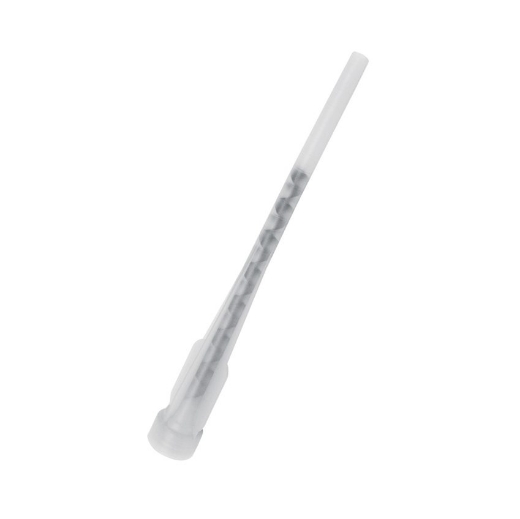
| Soudal mixing nozzle, blister 5pcs | Soudal | Transparent, blister of 5, applied by hand | Spare nozzle stock, interrupted cartridge use |
| Soudal sieve sleeve 13x85mm, blister 5pcs | Soudal | Transparent, 13x85mm, blister of 5, fitted by hand | Hollow brick, hollow blocks, perforated substrates |
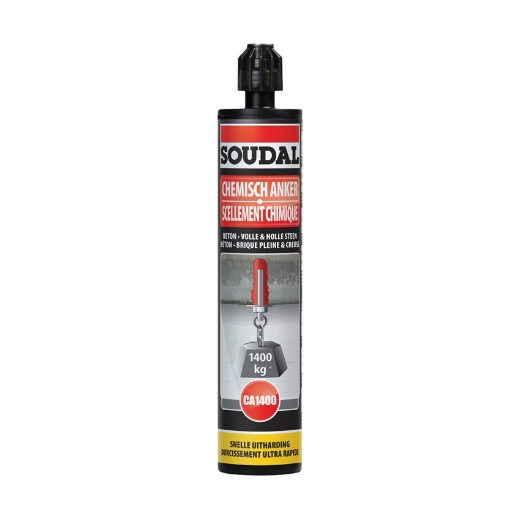
Solid concrete or brick
Massive walls and floors take the resin straight into the hole. The 280ml CA1400 is one of our most chosen picks for these jobs.
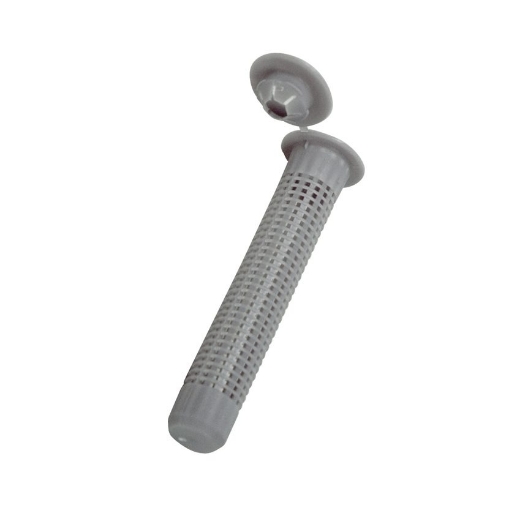
Hollow brick or blocks
Cavity walls and hollow blocks need a sieve sleeve first, so the resin stays put where the anchor actually sits.
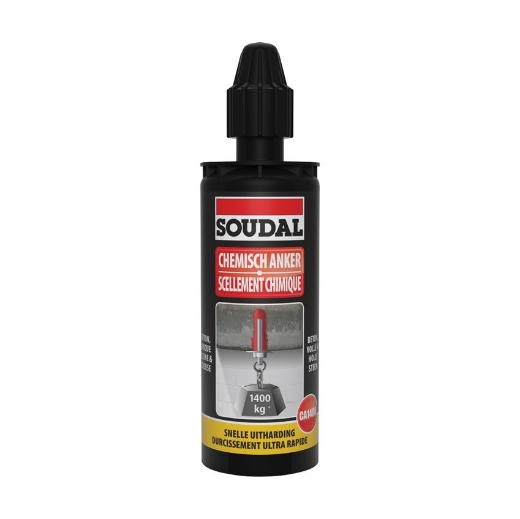
Small or occasional jobs
A handful of fixings, a shelf bracket or a single handrail plate doesn't need a full-size cartridge.
Spare nozzles
Every pause on site risks a clogged mixer tip. Keep a blister of spares in the van, not just one on the cartridge.
Which resin works in massive concrete or solid brick?
In solid concrete or solid brick, you inject the Soudal CA1400 vinylester resin directly into the drilled hole, no sleeve involved. The resin fills the gap between the hole wall and the threaded rod or rebar, then cures into a rigid, styrene-free bond that grips the solid material on all sides. This is exactly why the 280ml cartridge is one of our most chosen products for structural anchoring work: it covers enough volume for a run of anchor bolts without swapping cartridges halfway through a job.
Clean the hole thoroughly before injecting. Dust and drilling debris coat the inside of the hole and weaken the bond between resin and concrete, even though the resin itself is sound. A hole brush and a blow-out bulb, or compressed air, remove that layer before you insert the mixing nozzle.
Why does a hollow substrate need a sieve sleeve?
A hollow substrate, hollow brick, hollow block or perforated brick, cannot hold resin on its own because the cavity behind the drilled hole simply swallows it. The sieve sleeve (13x85mm) is inserted into the hole first; its mesh walls let the resin pass through and grip the surrounding material while stopping it from draining away into the void. Skip this step and the anchor rod sits in a hole that never properly filled, no matter how much cartridge you use.
Match the sleeve length to the depth of your fixing point, and always insert it before you start injecting, never after. Once the resin is in the hole, a sleeve does nothing.
In our Beerse store we tell customers straight: skip the sieve sleeve in hollow brick and the anchor will simply pull out, with the resin still soft somewhere inside the cavity.DHZ-Proshop vakteam, Beerse
Should you buy the 280ml or 165ml CA1400 cartridge?
Choose the cartridge size on the number of anchor points, not on the wall type. The 280ml cartridge covers a longer run of fixings, larger diameter holes or several anchor points in one session, which is why it counts among our most chosen chemical anchor products for bigger structural work. The 165ml cartridge suits a single bracket, a handrail plate or a small repair where you'd otherwise waste most of a larger cartridge.
Both sizes use the same vinylester, styrene-free formula and the same cartridge gun application, so the working properties don't change with the size. Only the volume, and therefore how many holes you can fill before the cartridge runs dry, is different.
How do you prepare the hole and anchor rod for chemical fixing?
Drill the hole to the diameter and depth specified for your anchor rod, then clean it out completely before injecting resin. Dust left in the hole coats the drilled surface and the rod itself, and that thin layer is enough to weaken the bond, even with a good resin. Brush the hole, blow it out, and repeat until no dust comes free.
Fit a fresh mixing nozzle before every use, and never reuse one that has sat on a cartridge overnight; the resin inside hardens and blocks the mix ratio for the next application. That's why a blister of spare nozzles belongs in the toolbox next to the cartridge, not as an afterthought once the first one clogs on site.
Common mistakes with chemical fixing
- No sieve sleeve in hollow brick: the resin drains into the cavity and the anchor never reaches proper holding strength.
- Reusing an old nozzle: resin hardens inside a nozzle left on the cartridge, blocking the mix for the next hole.
- Skipping hole cleaning: dust on the hole wall weakens the bond between resin and concrete or brick, whatever cartridge you use.
- Wrong cartridge size for the job: running out mid-fixing wastes time and leaves a half-filled hole waiting for a second cartridge.
Browse the complete range in our chemical fixings category for the resin, sleeves and nozzles covered here.
Frequently asked questions about chemical fixing
Which chemical fixing should I use for a hollow brick wall?
Do I need a sieve sleeve for solid concrete?
What is the difference between the 280ml and 165ml CA1400 cartridge?
Can I reuse the mixing nozzle on a chemical anchor cartridge?
Which anchor rod works with a chemical resin anchor?
Is styrene-free vinylester resin suitable for indoor use?
Compiled by the professional team at DHZ-Proshop, your DIY and trade supplier with a shop and collection point in Beerse. What we advise most often in the shop: check whether the wall is solid or hollow before you buy a single cartridge, since that decision drives everything else. Questions about matching resin, sleeves and rod to your project? Contact our team or browse the full chemical fixings range.