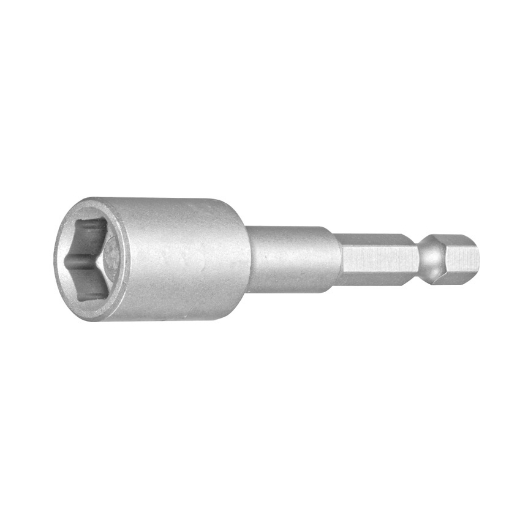
You choose a socket on two things: the size system (metric in mm or imperial in inches) and the drive size (1/4", 3/8" or 1/2" square). Match the socket exactly to your bolt across the flats: an SW10 socket fits a 10 mm hexagon head. For light assembly and electronics use a 1/4" drive; for chassis, structural and impact work step up to a 1/2" drive. A 6-point socket grips rounded or tight bolts better than a 12-point, which only adds engagement angles. A common Cobit impact bit measures SW10 x 50 mm with a 10 mm hex shank for cordless drivers.
Which socket size and drive does your job need? Browse the full socket range at DHZ-Proshop with Cobit and Labor socket bits, impact sockets and adapters in metric sizes.
- Match the socket to the bolt across the flats: SW10 fits a 10 mm hex head, not the thread (M6).
- Use metric (mm) for almost all European hardware; imperial (inch) only for older British or US gear.
- 1/4" drive for light work and tight spaces, 1/2" drive for high-torque and impact jobs.
- 6-point sockets grip worn bolts better; 12-point makes repositioning easier on accessible nuts.
- Always use impact-rated sockets (CrMo) on impact wrenches, never chrome hand sockets.
Overview: which socket and drive for which job?
The right socket starts with the bolt and the tool you drive it with. The table below links our real Cobit and Labor sockets to their key spec and typical use. See the complete socket range in the webshop.
| Product | Brand | Key spec | Ideal for |
|---|---|---|---|
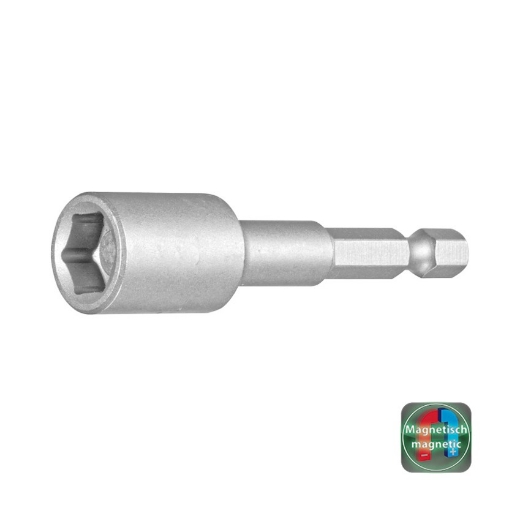
| Cobit impact socket bit SW10 x 50 mm (02830) | Cobit | 10 mm hex shank, colour-coded, magnetic | Impact drivers, fast bolt fastening |
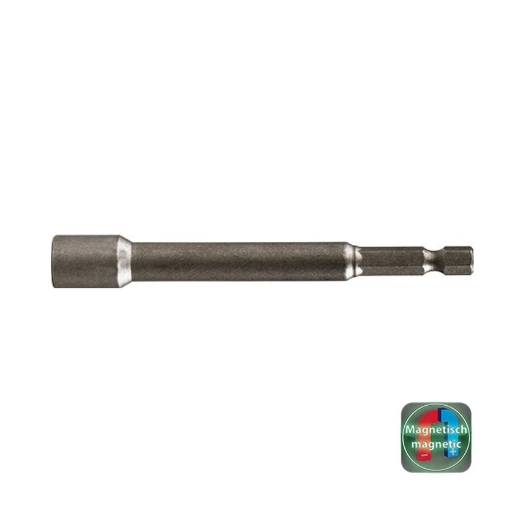
| Cobit socket bit SW13 x 100 mm (02862) | Cobit | 100 mm long, hex 13 mm drive | Recessed nuts, deep reach |
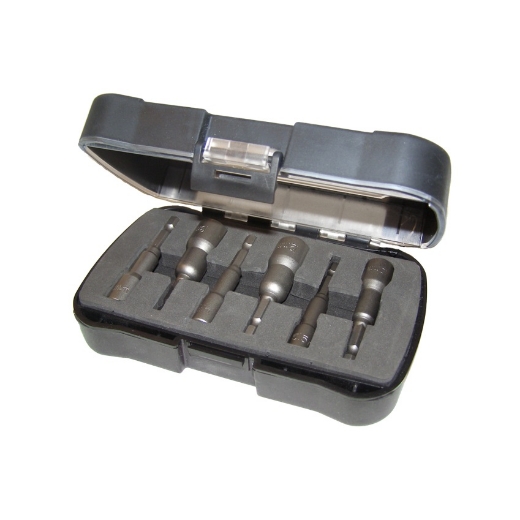
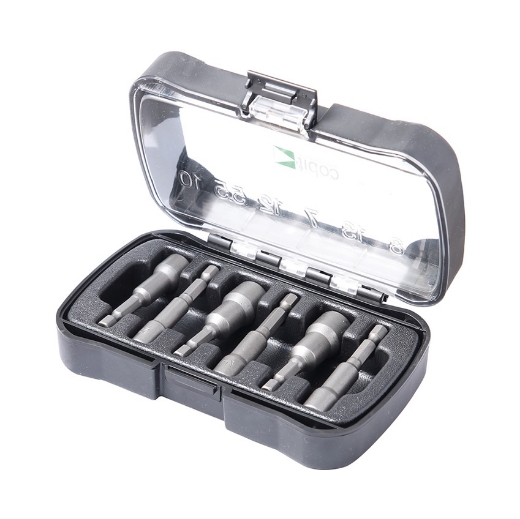
| Cobit 6-piece socket bit set 6-13 mm (10028) | Cobit | 6 sizes, 65 mm length | A starter range for daily assembly |
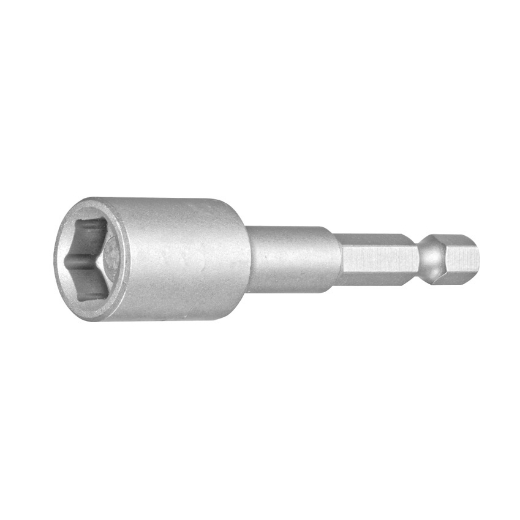
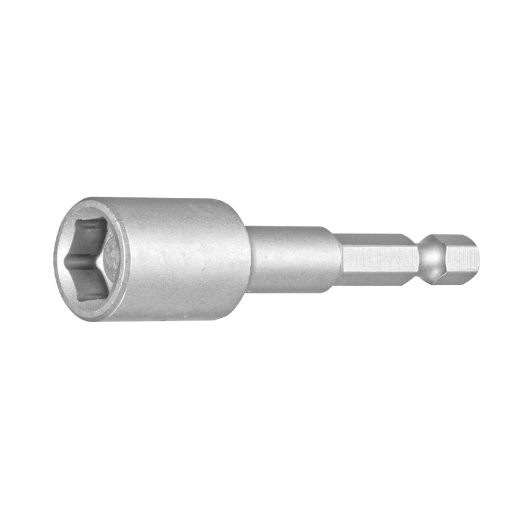
| Labor 1/4" Quicklock socket 10 x 50 mm (INSM01050) | Labor | 1/4" Quicklock, magnetic, 50 mm | Light-duty 1/4" systems |
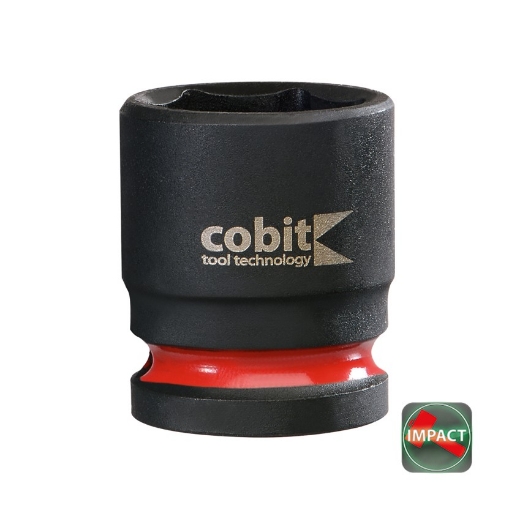
| Cobit short impact socket 1/2" 17 x 38 mm (03608) | Cobit | CrMo steel, 1/2" square, SW17 | High-torque and impact work |

Cordless impact
Driving bolts fast with an impact driver? The Cobit SW10 x 50 mm impact bit with 10 mm hex shank and colour coding sits straight in the chuck.
Full size range
Need all the common sizes at once? The Cobit 6-piece set covers 6 to 13 mm in one 65 mm length, ready for everyday assembly.
1/4" Quicklock
Working a light-duty 1/4" Quicklock system? The Labor magnetic sockets click in fast, from 8 to 13 mm at 50 mm length.
1/2" impact
High torque on chassis or structural bolts? The Cobit short 1/2" impact socket in CrMo steel, SW17 at 38 mm, handles the load.
Metric or imperial: which size system do you need?
For almost all European hardware you need metric sockets, sized in millimetres (mm). Imperial sockets, sized in fractions of an inch, only show up on older British equipment, classic American vehicles and some plumbing or specialist machinery. Mixing the two is risky: a 1/2" imperial socket is close to but not equal to 13 mm, so it rounds the corners off the bolt.
Our Cobit and Labor sockets are all marked with the metric flat size, written as SW (Schlüsselweite) followed by the millimetre figure. An SW13 socket spans 13 mm across the flats. The Cobit 6-piece set runs from SW6 to SW13, covering the bolt heads you meet most in furniture, appliances and light steelwork. Stick to metric and label any imperial pieces separately so they never end up on the wrong nut.
1/4 vs 1/2 inch drive: how much torque?
The drive size is the square fitting that connects the socket to your ratchet or wrench, and it scales with torque. A 1/4" drive is compact and light, made for delicate and low-torque work: electronics, small fasteners and tight spaces. A 1/2" drive is the heavy hitter for chassis bolts, structural steel and anything driven with an impact wrench. The 3/8" drive sits in between for general car and machine work.
Match the socket drive to the tool, not the bolt. The Labor 1/4" Quicklock sockets fit light cordless and hand systems, while the Cobit short 1/2" impact socket in CrMo steel is built for the shock loads of an impact wrench. Need to bridge two systems? Use an adapter such as the Labor 1/4" Quicklock to 1/4" square or the Cobit 1/2" to 3/4" impact adapter, but never push a small drive far beyond its torque range or it twists.
"In our Beerse shop, customers building furniture or working on a cordless impact driver almost always pick the 1/4" hex-shank Cobit bits; the 1/2" CrMo sockets we reserve for the heavy chassis and structural jobs."DHZ-Proshop vakteam, Beerse
6-point or 12-point: which grips better?
A 6-point socket grips a hex bolt on its flats, spreading force over the full face, which is why it holds rounded, rusted or high-torque bolts better. A 12-point socket has twice as many engagement angles, so it slips onto a nut quicker and lets you reset the ratchet in a tighter swing. The trade-off: a 12-point contacts the corners more, so it rounds a worn bolt sooner.
For impact and breaking-loose work, choose 6-point every time; the Cobit impact and CrMo sockets are built around that flat-face grip. For accessible, lower-torque assembly where speed of repositioning matters, a 12-point is convenient. When a bolt head is already chewed up, a 6-point is your best chance of getting it moving without a stud extractor.
Matching the socket to the bolt size
You size a socket on the hexagon head across the flats, never on the thread. A bolt labelled M6 has a 6 mm thread but typically a 10 mm head, so it takes an SW10 socket, not SW6. That distinction trips up a lot of people. Measure across two parallel flats with a caliper and read the millimetre figure straight off.
| Bolt thread | Standard hex head | Socket size |
|---|---|---|
| M4 | 7 mm | SW7 |
| M5 | 8 mm | SW8 |
| M6 | 10 mm | SW10 |
| M8 | 13 mm | SW13 |
This is why the Cobit 6-piece set spans SW6 to SW13: that range covers M4 through M8 heads, the bulk of everyday fastening. The colour coding on bits like the Cobit SW10 x 50 mm impact bit lets you grab the right size at a glance, which saves time when you are switching sizes on one job. When in doubt, take the bolt to the shop and we test the fit on the spot.
Common mistakes
- Sizing on the thread, not the head: M6 needs an SW10 socket, not SW6. Always measure across the hexagon flats.
- Using chrome hand sockets on an impact wrench: they crack under shock loads. Only impact-rated CrMo sockets belong on an impact tool.
- Mixing metric and imperial: a 1/2" socket on a 13 mm bolt feels close but rounds the corners. Keep the two systems apart.
- Choosing 12-point for stuck bolts: the extra angles slip on worn heads. Reach for a 6-point when a bolt fights back.
Browse the complete selection in our socket range or find all your tools and building materials in Belgium on the DHZ-Proshop webshop.
Frequently asked questions about socket sizes
What socket size do I need for an M6 bolt?
What is the difference between 1/4" and 1/2" drive?
Should I choose a 6-point or 12-point socket?
Are metric and imperial sockets interchangeable?
Can I use a normal socket on an impact wrench?
What does SW mean on a socket?
Compiled by the vakteam of DHZ-Proshop, your do-it-yourself and trade supplier with a shop and pick-up point in Beerse. What we advise most often in the shop: size the socket on the bolt head across the flats, keep metric and imperial apart, and only put impact-rated CrMo sockets on an impact wrench. Questions about the right socket or drive for your job? Contact our team or browse the full socket range.