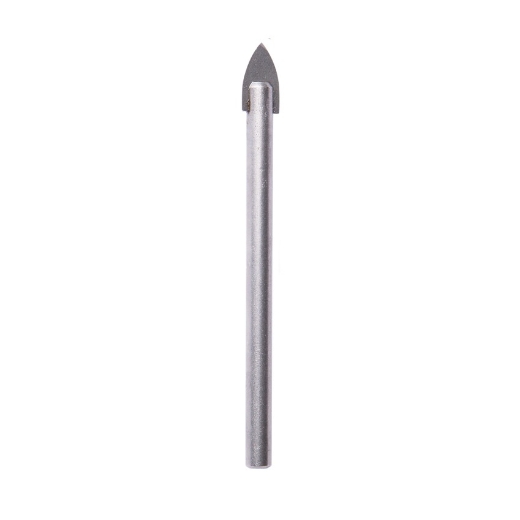
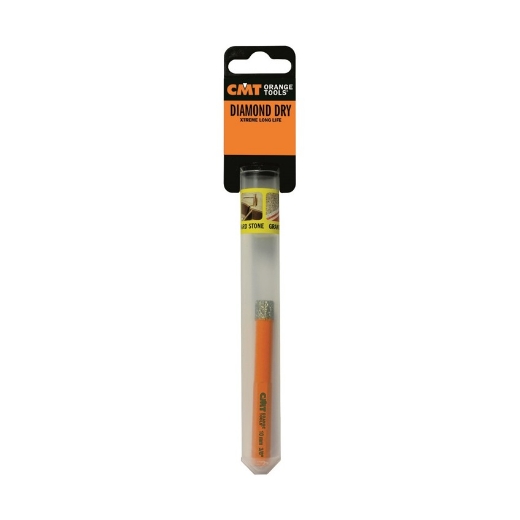
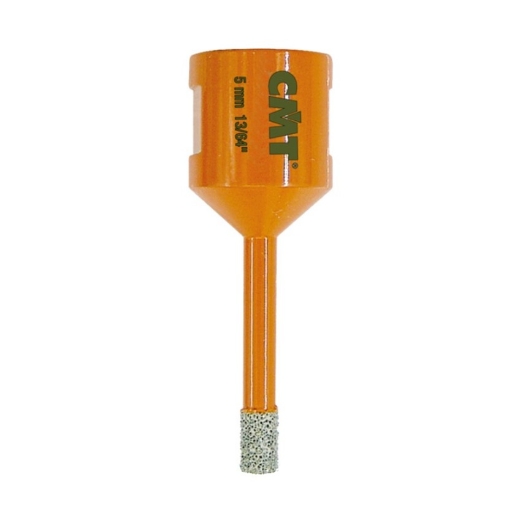
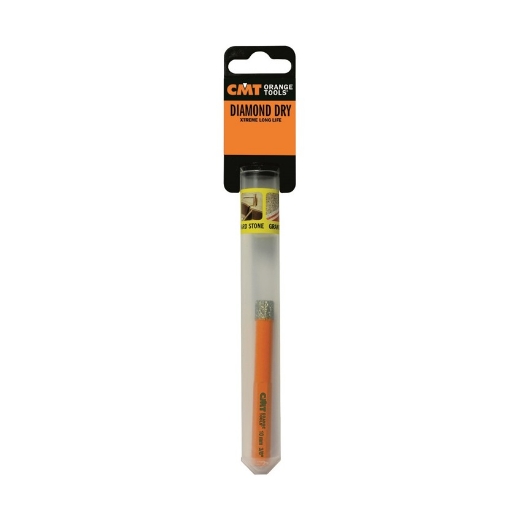
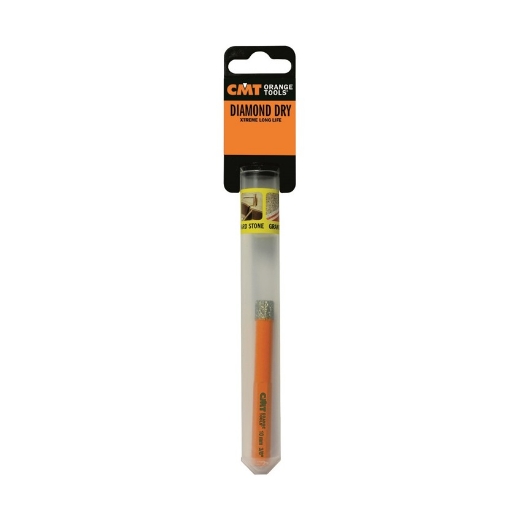
The right tile bit depends on three things: the tile material, the point type and the diameter you need. For soft ceramic wall tiles, a spear-point glass and tile bit does the job, such as the Labor range from 3 to 12 mm. For hard porcelain (gres) and natural stone, you need a diamond core bit, because a spear point simply skids or cracks the glaze. CMT diamond core bits in this range cover diameters from 6mm up to 68mm with a boring depth of up to 40mm, enough for pipe holes, sockets and tap connections. Never use the hammer or percussion function when boring a tile: it is the single biggest cause of cracked tiles.
Which tile bit fits your job? Browse the full range of tile bits at DHZ-Proshop for glass and tile bits, diamond core bit sets and HEX/M14 hole saws in every diameter.
In short:
- Ceramic wall tile: a spear-point glass and tile bit, always without the hammer function.
- Porcelain (gres) and natural stone: a diamond tile bit. Most of ours are dry bits that need no water according to their sheets; wet bits need constant water cooling.
- Diameter follows the fitting: from 4mm for a small screw hole up to 68mm for a waste pipe.
- Connection must match your machine: HEX shank for a standard drill, M14 thread for an angle grinder.
- A colour-coded set such as the Cobit 05042 lets you grab the correct diameter without guessing.
Overview: which tile bit for which job?
Match your tile bit to the table below before you start drilling. Every product listed is a real diamond core bit or glass and tile bit from our own range, so you can click straight through to the exact diameter you need.
| Product | Brand | Point / connection | Diameter | Ideal for |
|---|---|---|---|---|
| Labor glass bit 4x65mm | Labor | Spear point, round shank | 2.1–4mm | Small pilot holes in ceramic tile and glass |
| Labor glass bit 6x70mm | Labor | Spear point, round shank | 4.1–6mm | Ceramic wall tile, cable and screw holes |
| Labor glass bit 8x80mm | Labor | Spear point, round shank | 6.1–8mm | Ceramic wall tile, wall plug holes |
| Cobit 4-piece diamond core bit set 05042 | Cobit | Diamond rim, colour-marked, angle grinder | Set of 4 sizes | Porcelain and natural stone, quick size changes |
| CMT diamond core bit 552-006G | CMT | Diamond rim, HEX shank | 6mm, depth 30mm | Small holes in porcelain, marble, granite |
| CMT diamond core bit 552-008G | CMT | Diamond rim, HEX shank | 8mm, depth 40mm | Porcelain, marble and granite |
| CMT diamond core bit 552-010G | CMT | Diamond rim, HEX shank | 10mm, depth 40mm | Extremely hard porcelain and stone |
| CMT diamond core bit 552-014G | CMT | Diamond rim, HEX shank | 14mm, depth 40mm | Larger pipe holes in porcelain or stone |
| CMT diamond core bit 552-506G | CMT | Diamond rim, M14 (angle grinder) | 6mm, depth 35mm | Porcelain and stone, drilled with a grinder |
| CMT diamond core bit 552.520 | CMT | Diamond rim, M14 (angle grinder) | 20mm, depth 35mm | Socket and pipe holes in stone or porcelain |
| CMT diamond core bit 552.555 | CMT | Diamond rim, M14 (angle grinder) | 55mm, depth 40mm | Large diameter holes for waste fittings |
| CMT diamond core bit 552-568G | CMT | Diamond rim, M14 (angle grinder) | 68mm, depth 40mm | Extra-large holes, drain pipes |
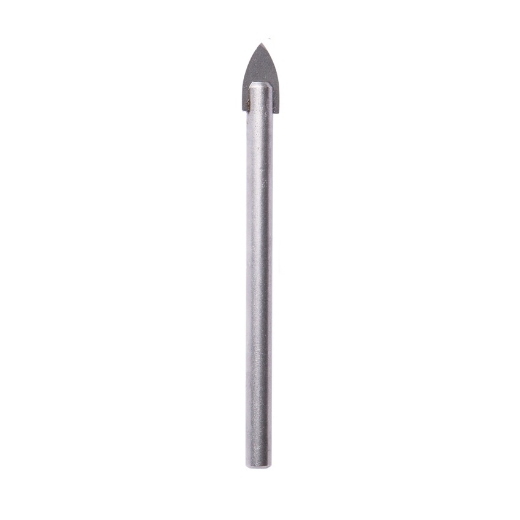
Glass and tile bits
Ceramic wall tile or glass? The Labor spear-point range is one of our most chosen options for clean, glaze-friendly pilot holes.
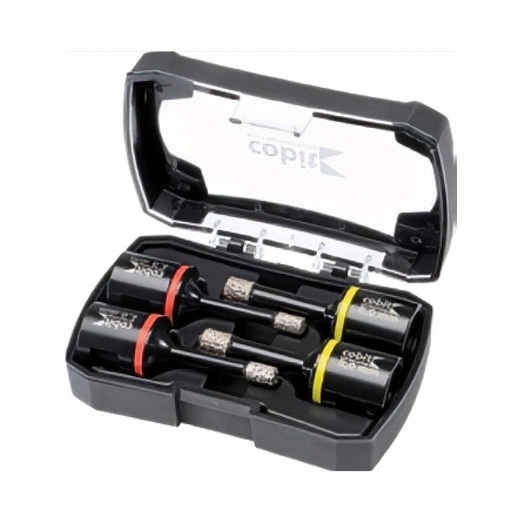
Colour-coded diamond set
Fitting several diameters in porcelain or stone on the same job? The Cobit set keeps every size within reach and colour-marked.
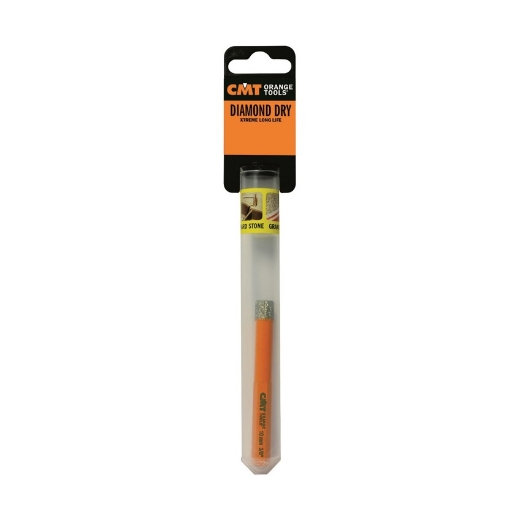
Small diameter, HEX shank
Cable ducts or dowel holes in porcelain? The CMT HEX range from 6mm to 14mm fits directly into a standard drill.
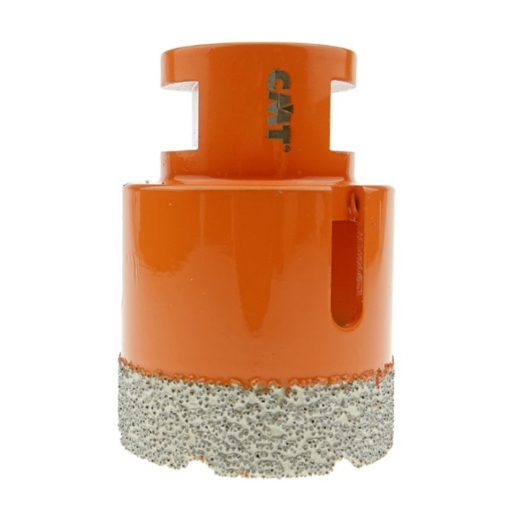
Large diameter, M14
Waste pipes or shower drains through porcelain or stone? The CMT M14 range covers 20mm up to 68mm with an angle grinder.
Step 1: what tile material are you drilling into?
Start by checking whether your tile is soft ceramic or hard porcelain (gres) or natural stone, because that single choice decides everything else. Ceramic wall tile has a soft body under a thin glaze; it accepts a spear-point bit without much resistance. Porcelain, granite and marble are dense and far harder; only an abrasive diamond rim wears through them without shattering the surface.
Tap the tile lightly with a fingernail if you are unsure. A duller, denser sound and a cool, heavy feel usually point to porcelain or stone; a lighter, more hollow sound suggests standard ceramic. When in doubt, treat the tile as hard and reach for a diamond core bit: it also cuts ceramic cleanly, while a spear point never cuts porcelain.
Step 2: which point type matches that material?
Ceramic and glass call for a spear-point glass and tile bit, while porcelain and natural stone need a diamond rim core bit. The spear point on the Labor range scores and grinds through the glaze with a carbide tip, ideal for a quick screw or cable hole in a soft wall tile. A diamond rim, as used on every CMT and Cobit core bit in this range, grinds away material with embedded diamond grit instead of cutting it, which is the only way to get through dense porcelain without cracking it.
In our shop in Beerse, customers fitting a tap or waste pipe through porcelain almost always leave with a diamond core bit rather than a spear-point bit, because a spear point simply cannot handle gres or natural stone.DHZ-Proshop trade team, Beerse
Step 3: which diameter do you need?
Match the diameter to the fitting, not to the bit you happen to have in the box. Small fixings, cables or screw anchors in ceramic wall tile need a 4mm to 8mm glass and tile bit, exactly the Labor sizes above. For a socket, bracket or dowel hole in porcelain or stone, the 6mm to 14mm CMT HEX core bits cover most jobs with a boring depth of 30mm to 40mm. Anything larger, such as a tap connection or waste pipe, needs the 20mm to 68mm CMT M14 range, run from an angle grinder.
Measure the fitting itself before you order a diameter. A pipe collar or tap body is usually a few millimetres wider than the pipe it carries, so hold the actual part against the tile and mark it rather than guessing from memory.
Step 4: match the connection to your machine
Check whether your bit needs a HEX shank for a cordless or standard drill or an M14 thread for an angle grinder, because the two are not interchangeable. The CMT range up to 14mm uses a HEX shank that chucks straight into a normal drill, which suits precise, one-handed work on smaller holes. The CMT M14 core bits (5 to 68 mm), the Cobit M14 bits (6 to 14 mm) and the Carat EHS Brilliant bits (up to 132 mm) screw directly onto an angle grinder, which gives the power needed for wider diamond rims.
Check your machine before ordering: a HEX bit will not fit an angle grinder and an M14 bit will not fit a standard drill chuck. If you regularly switch between diameters on grinder work, the Cobit 05042 set keeps four colour-marked M14 sizes together in one case.
Step 5: drill without hammer function, at the right speed
Switch off the hammer or percussion setting completely. Speed and cooling depend on the bit: according to Carat, its dry tile bits run at 1,500 rpm or more on a drill and at the maximum speed of an angle grinder, with Lubriwax in the core or cooling slots instead of water. CMT, Cobit and Labor recommend a low to moderate speed. Wet bits such as the Carat Premium range need constant water cooling. Start the hole at a shallow angle to let the point or rim bite in, then bring the drill upright once a shallow dimple has formed.
A small ring of modelling clay or a sealant frame around the mark holds a puddle of water in place on a vertical wall tile, which is often easier than an assistant with a spray bottle. Ease off the pressure the moment you feel the bit break through the back of the tile, to avoid tearing the exit edge.
Common mistakes
- Using the hammer function: percussion mode is built for masonry, not tile, and it is the fastest way to crack porcelain or ceramic.
- Choosing a spear-point bit for porcelain: a glass and tile bit skids on dense gres instead of cutting it, ruining both the bit and the tile.
- Using a wet bit dry: wet bits such as the Carat Premium range need constant water cooling. For dry drilling, choose a dry diamond tile bit such as the Carat Economy or Brilliant, which has Lubriwax in the core.
- Guessing the diameter: always hold the actual fitting against the tile and mark it; an undersized hole forces the pipe and cracks the glaze.
Browse the complete range in our tile bits category to find the exact point, diameter and connection for your job.
Frequently asked questions about tile bits
Which tile bit is best for porcelain?
What is a glass and tile bit and when do I use it?
Which tile drill bit do I need for a diamond core hole in porcelain?
What diameter tile bit do I need for pipes and taps?
Can I use the hammer or percussion function on tiles?
Do I need water cooling when drilling tile bits?
Compiled by the trade team of DHZ-Proshop, your DIY and trade shop with a store and pick-up point in Beerse. What we advise most often in our shop: pick the point type for the tile material first, then the diameter for the fitting, and never switch on the hammer function. Questions about matching a tile bit to your job? Contact our team or browse the full tile bits range.