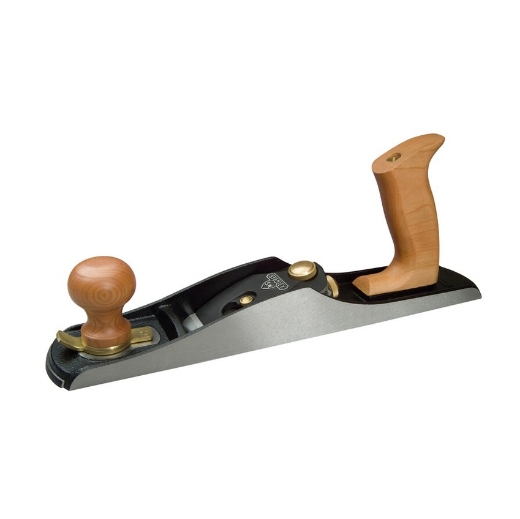
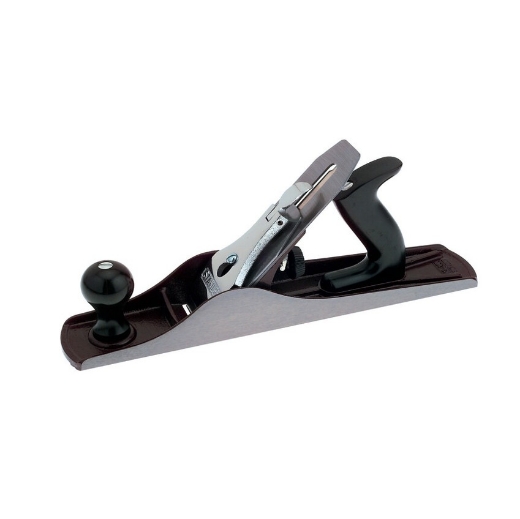
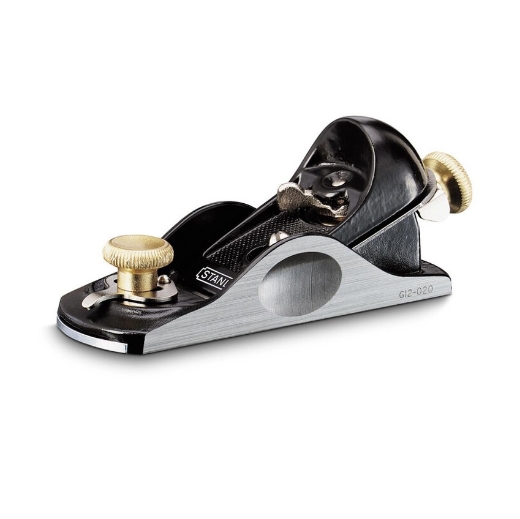
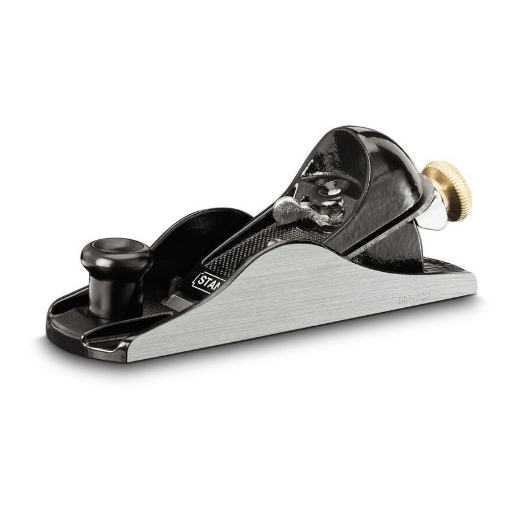
Match the plane to the task, not the other way round. In short: a block plane for end grain, chamfers and small trimming (the Stanley 60 1/2 measures just 150mm, so it fits one hand), a jack plane for fast stock removal and initial flattening (the Stanley Bailey No.5 runs to 334mm), and a longer jointer or smoothing plane for truing long edges and a clean final surface (the Stanley Bailey jointer is 560mm). A block plane is the sensible first buy for most people. The right length and blade angle decide whether you tear out fibres or leave glass-smooth wood.
Which plane suits your job? Browse the full Stanley plane range at DHZ-Proshop and match block, jack and jointer models to trimming, flattening and finishing.
- Buy a block plane first: it handles end grain, chamfers and quick trimming in one hand.
- A jack plane (around 334mm, like the Stanley Bailey No.5) removes stock fast and flattens rough boards.
- A jointer plane (560mm Stanley Bailey) trues long edges so boards glue up flat.
- Never use a long plane for end grain; a low-angle block plane cuts it cleanly.
- Sharpness beats size: a keen iron on the correct plane is what stops tear-out.
Which hand plane for which job?
Each plane length is built for one main task. See the full Stanley plane range; the table below links job to plane.
| Plane | Brand | Length | Best for |
|---|---|---|---|
| Block plane 60 1/2 | Stanley | 150mm | End grain, chamfers, one-hand trimming |
| Block plane 9 1/2 | Stanley | 160mm | General-purpose small work, edges |
| Smoothing plane Bailey No.3/4 | Stanley | 245mm | Final smoothing of faces |
| Jack plane Bailey No.5 | Stanley | 334mm | Stock removal, rough flattening |
| Jointer plane Bailey | Stanley | 560mm | Truing long edges and boards |
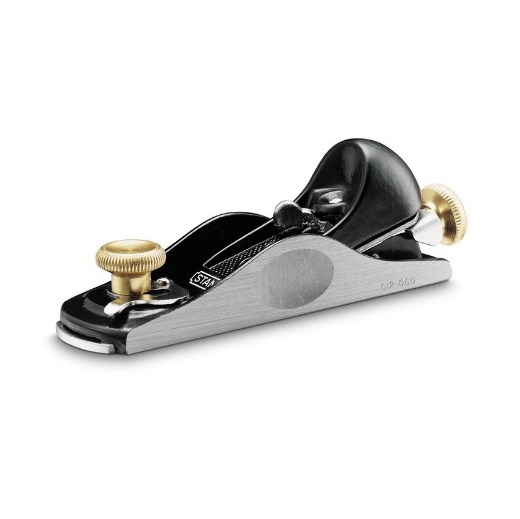
Trimming & end grain
Fitting a door, easing an edge or cleaning end grain? The compact 60 1/2 block plane works in one hand and cuts across the fibres cleanly.
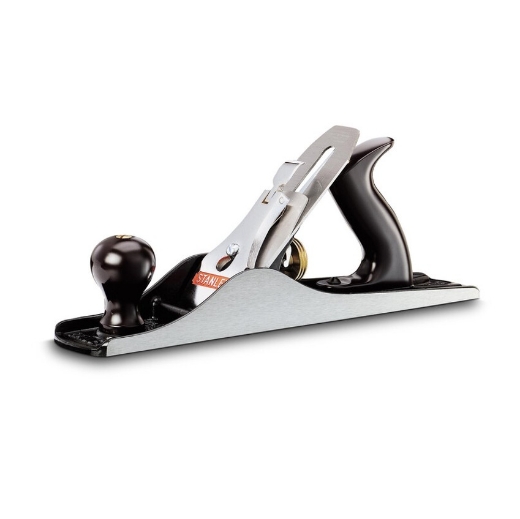
Fast stock removal
Rough sawn board that needs flattening? The 334mm Bailey No.5 jack plane hogs off material quickly and levels twists and cup.
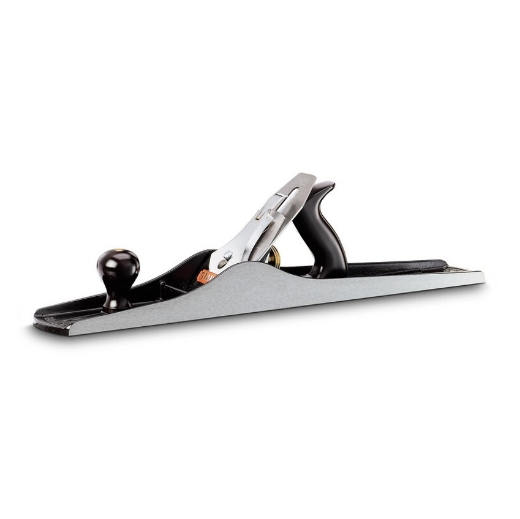
True long edges
Gluing panels edge to edge? The 560mm Bailey jointer bridges high spots so the whole edge ends up dead straight.
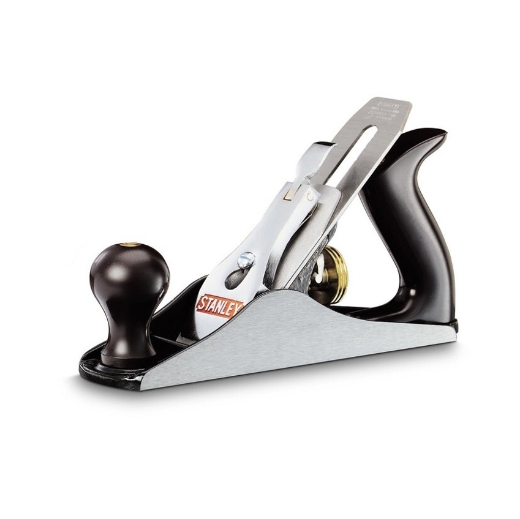
Glass-smooth finish
Want a surface straight off the tool? The 245mm Bailey No.3/4 smoothing plane leaves a fine, ready-to-finish face.
Start with the task, then pick the length
The first question is what the plane must do, because length dictates the result. A short plane follows the surface it rides on and cuts locally, so it suits trimming, chamfers and smoothing. A long plane spans dips and bumps, only cutting the high spots, which is exactly what you need for a straight, flat edge.
Three jobs cover most woodwork: removing waste fast, truing a surface or edge, and finishing. A jack plane around 334mm handles the first, a jointer at 560mm handles the second, and a smoothing plane at 245mm finishes off. End grain and small trims are a separate case where a block plane wins.
Block plane: end grain, chamfers and quick trims
A block plane is the plane you reach for most, and the first one worth owning. Its low blade angle and short body (the Stanley 60 1/2 is only 150mm) let it shear end grain cleanly and ride one-handed along an edge. Use it to break sharp corners, ease a door, trim a proud plug or clean up a mitre.
The Stanley range gives you options: the compact 60 1/2 at 150mm for tight work, the 9 1/2 at 160mm as a general all-rounder, and the wider 220 at 180mm or 110 at 180mm for slightly bigger faces. For very fine trimming there is the small 102 at 140mm.
"When someone buys their first plane in our Beerse shop, nine times out of ten we point them at a Stanley block plane. It does the most jobs and it never leaves the bench."DHZ-Proshop vakteam, Beerse
Jack plane: the workhorse for stock removal
A jack plane is the all-round bench plane you use to level rough boards and remove waste before finer work. At 334mm the Stanley Bailey No.5 is long enough to flatten, yet short enough to take a heavy cut fast. Set the iron for a coarser shaving and it hogs off material; back it off and it doubles as a light truing plane.
If you want a low-angle jack for shooting and end grain as well, the Stanley No.62 low-angle jack is the choice. On a budget or for site work, the Handyman jack at 356mm covers the same job. The jack is the plane that turns a sawn plank into something you can smooth or joint.
Jointer and smoothing planes: truing and finishing
For dead-straight edges and a flawless final surface, split the work between a jointer and a smoothing plane. The 560mm Stanley Bailey jointer is long enough to bridge the length of a board edge, so it planes only the high spots and leaves a straight line ready for glue-up. Nothing shorter gives the same reference over a metre-long joint.
Once the surface is true, the Bailey No.3/4 smoothing plane at 245mm takes fine shavings for the last pass. Its shorter body follows the surface and leaves a clean face that often needs no sanding. Sharpen the iron keenly, set a fine mouth, and finish along the grain.
Special planes: rebates, grooves and hollows
Some jobs need a purpose-built plane rather than a bench plane. For cutting rebates and shoulders you use a Stanley rebate plane at 255mm, whose iron reaches the full width of the sole so it works right into a corner. For grooves and multiple profiles the Stanley RB10 combination plane at 260mm takes interchangeable cutters.
Curved and concave work calls for a compass or spokeshave-style tool: the Stanley round spokeshave at 55mm shapes chair legs, curved edges and gentle hollows a flat plane cannot reach. Reach for these only when the joint or profile demands it; a block, jack and jointer cover everything else.
Common mistakes
- Using a long plane on end grain: a jointer or jack tears end grain; use a low-angle block plane instead, cutting from both edges inward.
- Buying a smoother first: a smoothing plane cannot flatten a rough board. Start with a block plane, then a jack for stock removal.
- Setting the iron too coarse for finishing: a heavy cut leaves tracks and tear-out. Fine shavings and a keen edge give the clean surface.
- Skipping sharpening: a dull iron dents fibres instead of slicing them. Every plane, whatever the size, only performs when the blade is sharp.
See the full selection in our plane range or find all your tools and building materials in Belgium on the DHZ-Proshop webshop.
Frequently asked questions about hand planes
Which hand plane should I buy first?
Which hand planes do I actually need?
Which hand plane do I use for end grain?
Which block plane is best for general work?
What is the difference between a jack plane and a jointer?
Which plane do I use to cut a rebate?
Compiled by the DHZ-Proshop vakteam, your do-it-yourself and trade supplier with a shop and collection point in Beerse. What we advise most across the counter: start with a Stanley block plane, add a jack for the heavy work, and keep every iron sharp. Questions about the right plane for your job? Contact our team or browse the full plane range.