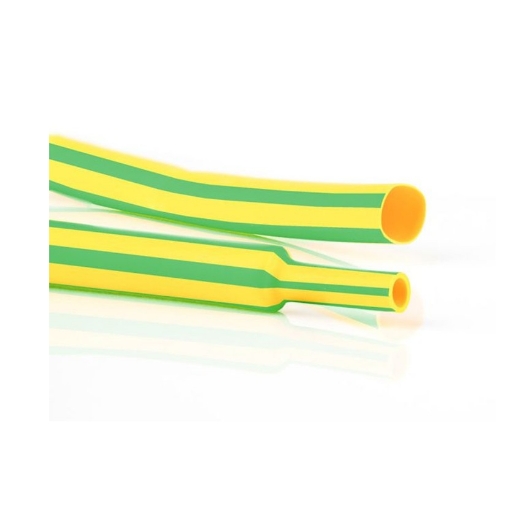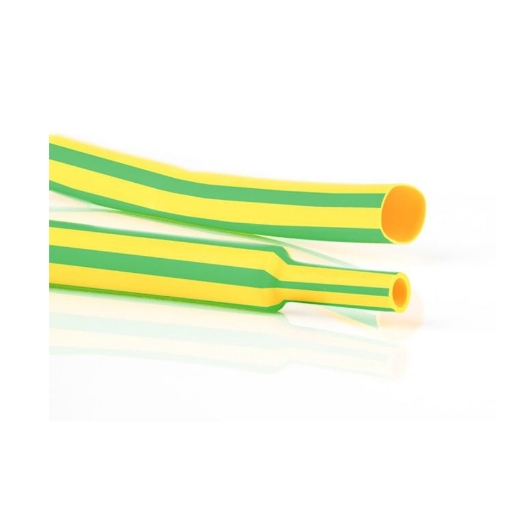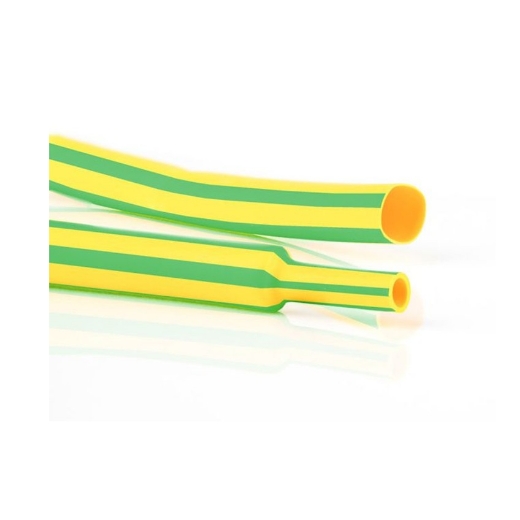
You choose heat shrink tubing by matching the expanded diameter to the widest point of your connector and the recovered (shrunk) diameter to the cable underneath, not by the label on the shelf. A 2:1 shrink ratio (like WKK's 9.5mm → 4.8mm mil-spec sleeve) suits round, single cables, while a 3:1 ratio (down to 0.5mm recovered) grips irregular shapes such as fork terminals and multi-wire splices. Plain thin-wall tubing without adhesive insulates and colour-codes; it is rated to 135°C and flame retardant in our mil-spec range, but it is not sealed against submersion. Get the diameter or ratio wrong and the sleeve either refuses to slide on, or shrinks down without ever gripping the joint.
Not sure which krimpkous fits your cable? Browse the full krimpkousen range at DHZ-Proshop for mil-spec, thin-wall and halogen-free tubing in every diameter.
- Match the tubing's expanded diameter to the widest part you slide it over, and the recovered diameter to the cable it must grip.
- A 2:1 ratio handles round, single cables; a 3:1 ratio pulls down tight on forks, splices and stepped joints.
- Thin-wall mil-spec tubing insulates and colour-codes but has no adhesive lining, so it is splash-resistant, not submersible.
- Mil-spec tubing rated to 135°C and flame retardant holds up near engines, panels and other heat sources.
- On long production runs, a 75m roll of halogen-free tubing cuts waste and reduces reordering.
Which heat shrink tubing fits which cable?
The table below lists the WKK mil-spec and halogen-free krimpkous range from DHZ-Proshop, matched to the diameter and job each type is built for. Every size shown is the tubing's expanded diameter before heat, followed by its recovered diameter after shrinking.
| Product | Ratio | Diameter (expanded → recovered) | Rating | Ideal for |
|---|---|---|---|---|
| WKK thin-wall, 1m | 2:1 | 9.5mm → 4.8mm | Flame retardant, Mil-Spec 135°C | Single wires, small connectors |
| WKK thin-wall, 1m | 2:1 | 12.7mm → 6.4mm | Flame retardant, Mil-Spec 135°C | Medium cables, small wire groups |
| WKK thin-wall, 1m | 2:1 | 50.8mm → 25.4mm | Flame retardant, Mil-Spec 135°C | Thick cables, cable looms and bundles |
| WKK thin-wall, 10m roll | 3:1 | 3.2mm → 1mm | Flame retardant, Mil-Spec 135°C | Fine wires, irregular connectors |
| WKK thin-wall, 10m roll | 3:1 | 1.5mm → 0.5mm | Flame retardant, Mil-Spec 135°C | Very fine wires, sensor leads, electronics |
| Halogen-free thin-wall, 75m roll | 2:1 | 16mm → 8mm | Flame retardant, halogen-free | Panel building, vehicles, bulk jobs |

Small wires and connectors
A single crimp terminal or joint on a standard cable? The 9.5mm → 4.8mm mil-spec sleeve is one of our most chosen sizes and slides easily over the lug before shrinking tight.
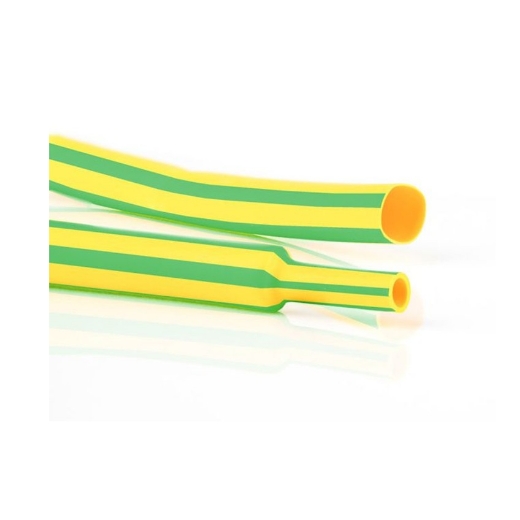
Thick cables and looms
Bundling several cables or covering a thick multicore run? The 50.8mm → 25.4mm sleeve has room to fit over the loom and enough recovery to clamp it down firmly.
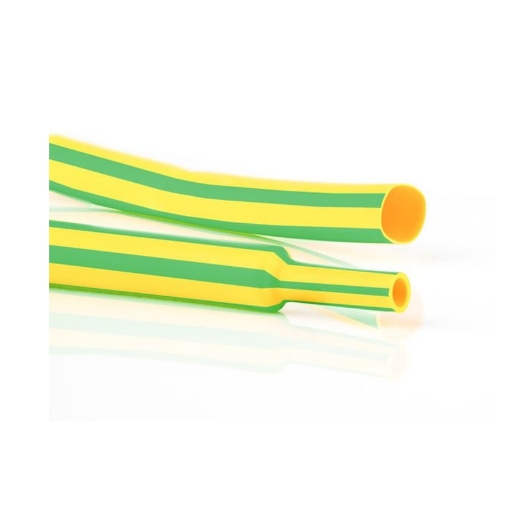
Fine wires and irregular shapes
Sensor leads, fork terminals or a step down from wire to pin? The 3:1 sleeve at 1.5mm → 0.5mm recovers far enough to hug uneven, narrow joints where 2:1 leaves gaps.
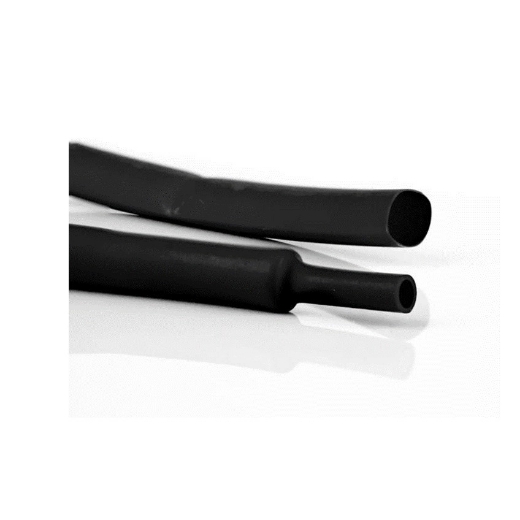
Bulk panel work, halogen-free
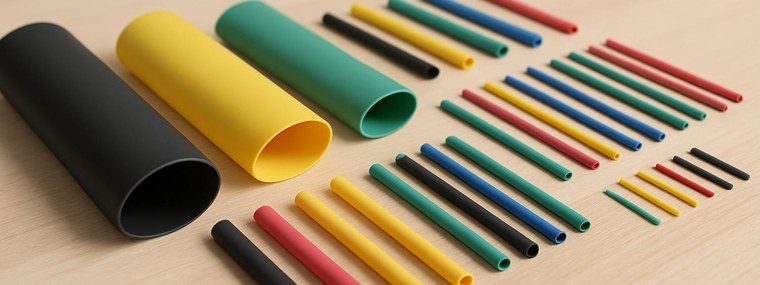
Running many identical joints in a panel or vehicle build? The 75m roll of halogen-free black tubing keeps you supplied without opening a fresh pack every metre.
Why won't my heat shrink tubing fit over the cable?
It usually won't fit because you picked tubing by the cable's nominal size instead of the connector's widest point. Every WKK sleeve is specified with two numbers, for example 9.5mm → 4.8mm: the first is the expanded diameter before heat, the second the recovered diameter after full shrink. The expanded figure must clear the biggest obstacle on the joint, a crimp lug, a solder blob or a splice, or the sleeve simply won't slide on.
The recovered diameter matters just as much on the other end. If it's much larger than the cable underneath, the tubing shrinks down but never actually grips, leaving a loose, wobbly sleeve that slides along the wire. Measure the widest point with a caliper if you have one, then pick a size where the expanded diameter comfortably exceeds it and the recovered diameter sits close to the bare cable's outer diameter.
What does heat shrink ratio mean, and how do I work it out?
The heat shrink ratio is simply the expanded diameter divided by the fully recovered diameter, and it tells you how much a sleeve can grip down once heated. A tubing marked 9.5mm → 4.8mm has a ratio of roughly 2:1; one marked 1.5mm → 0.5mm reaches 3:1. To calculate which ratio you need, divide the widest point of your joint by the diameter you want the sleeve to end up hugging, then choose tubing whose ratio matches or beats that number.
A 2:1 ratio is the workhorse for round, single-diameter cables where the joint barely changes shape from one end to the other. A 3:1 ratio earns its keep on irregular joints: fork terminals, multi-wire splices, or a step from a thick cable down to a thin pin. There is no single "best" heat shrink ratio; the highest ratio in a range isn't automatically the right pick, it's the one that matches how much the diameter actually changes along the joint.
In our workshop in Beerse, customers reach for the 3:1 mil-spec sleeve almost every time they're closing off a fork terminal or a multi-wire splice, because a 2:1 sleeve simply won't pull down tight enough on that kind of shape. DHZ-Proshop vakteam, Beerse
Do I need adhesive-lined heat shrink, or plain thin-wall?
Choose adhesive-lined tubing when the joint sits outdoors, in an engine bay, underground or anywhere it can get wet; choose plain thin-wall tubing, like the WKK mil-spec range, for dry indoor wiring where insulation and colour coding are the goal. Adhesive-lined sleeves carry a hot-melt glue lining on the inside that melts as the tubing shrinks, flowing around the wire strands to close off the ends. Plain thin-wall tubing has no such lining, it only wraps and insulates.
The mil-spec and halogen-free sleeves in this range are all thin-wall, non-adhesive types, which is exactly why they're so widely used for colour-coding, quick strain-free insulation and panel building. If your job sits outside or near moisture, check the wider krimpkousen category for an adhesive-lined option before you commit to a plain sleeve.
Is heat shrink tubing waterproof without adhesive?
No, plain thin-wall heat shrink tubing is splash-resistant, not waterproof. Without an adhesive liner, the ends of the sleeve stay open at a microscopic level, and water wicks in along the individual wire strands through capillary action, even though the outer jacket looks perfectly sealed. Over time that trapped moisture corrodes the connection from the inside, long before any visible damage shows on the sleeve itself.
For a joint that must stay dry, adhesive-lined tubing sealed with enough overlap past the bare wire on both ends is the only reliable route. Heat it until a bead of melted adhesive shows at each end; that bead is your visual confirmation the seal has actually formed.
Common mistakes with heat shrink tubing
- Sizing by the cable's wire gauge instead of the connector's widest point: the sleeve won't slide over a crimp lug or splice that's wider than the cable itself.
- Using a 2:1 ratio on an irregular joint: fork terminals, multi-wire splices and stepped connections need the extra recovery of a 3:1 sleeve to close every gap.
- Assuming thin-wall tubing seals out water: without an adhesive lining it insulates and colour-codes only; moisture still wicks in along the wire strands.
- Heating with a lighter flame instead of a heat gun: an open flame scorches or splits polyolefin tubing, where a heat gun shrinks it evenly and safely up to its full temperature rating.
Browse the complete range in our krimpkousen webshop to size your next repair or build correctly the first time.
Frequently asked questions about heat shrink tubing ratio
What does "heat shrink ratio" mean?
How do I calculate the right heat shrink ratio for my cable?
What is the difference between 2:1 and 3:1 heat shrink tubing?
Is a higher heat shrink ratio always the best choice?
Is PVC sleeving the same as heat shrink tubing ratio?
Is heat shrink tubing waterproof without adhesive?
Compiled by the specialist team of DHZ-Proshop, your DIY and trade supplier with a shop and pickup point in Beerse. What we advise most often in the store: check the widest point of your joint before you pick a diameter, and match the ratio to how irregular that joint actually is. Questions about the right krimpkous for your cable? Contact our team or browse the full krimpkousen range.