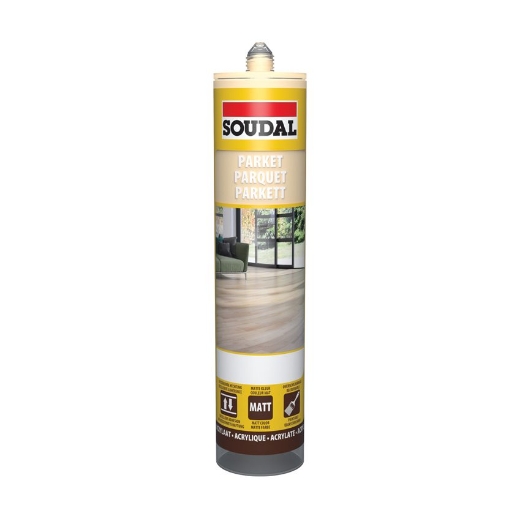
Gluing parquet with Soudal? Below you can quickly choose the right parquet adhesive based on your parquet type and plank dimensions. After that, you'll learn when you need a primer or moisture protection, and how to apply the adhesive correctly.
Quickly choose the right Soudal parquet adhesive
View the full Soudal parquet adhesive range in our webshop.
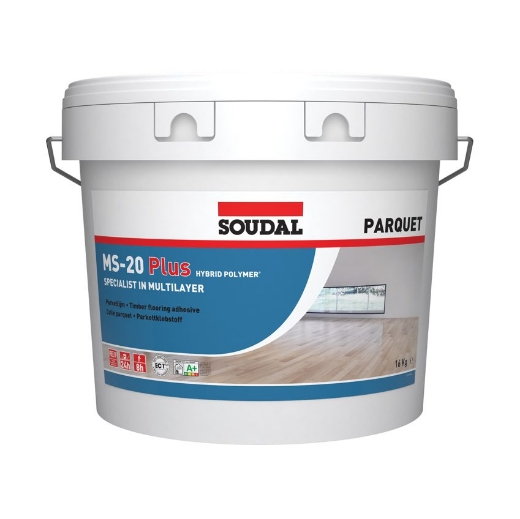
Narrow solid parquet
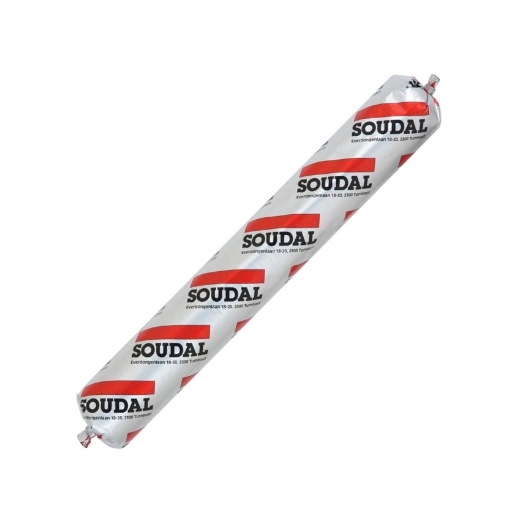
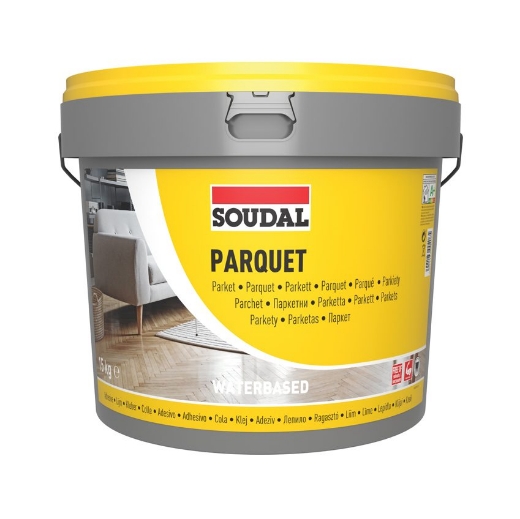
For narrow solid parquet up to max. 150 mm wide and min. 12 mm thick (for oak: max. 160 mm, min. 20 mm) and multi-layer parquet up to max. 200 mm wide, min. 14 mm thick. The MS-20 Plus is an elastic 1-component MS polymer adhesive without water or solvents.

Wide solid or heavily loaded parquet
For solid parquet up to max. 180 mm wide and min. 15 mm thick (for oak: max. 200 mm, min. 20 mm) and multi-layer parquet up to max. 240 mm wide, min. 15 mm thick. The MS-30 Plus has stronger adhesion and is also suitable for damp rooms.
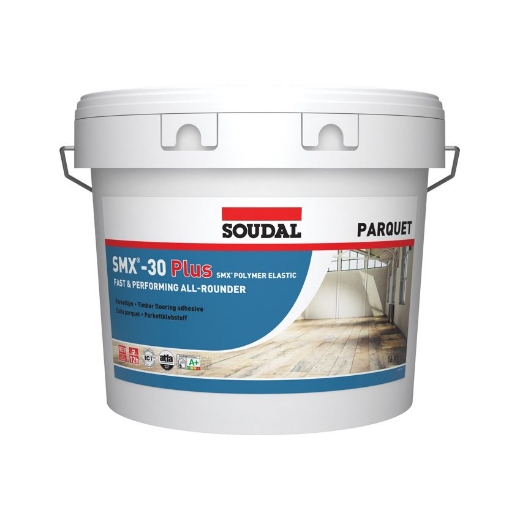
Wide solid or professional application
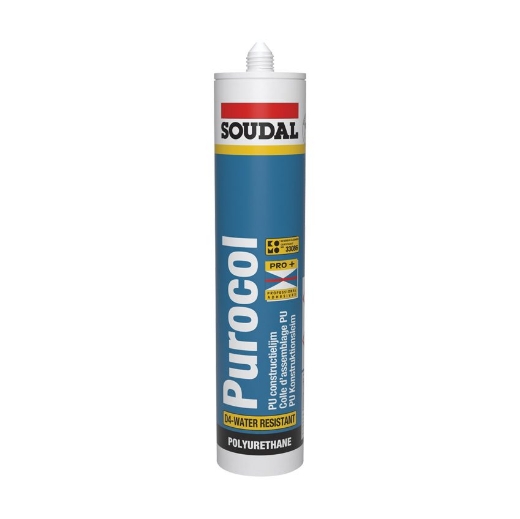
For solid parquet up to max. 200 mm wide and min. 16 mm thick, and multi-layer parquet up to max. 280 mm wide, min. 16 mm thick. The SMX-30 Plus is based on SMX hybrid polymer technology with rapid strength build-up, high final strength and EC-1Plus low emissions, the professional choice.
Primer & moisture protection
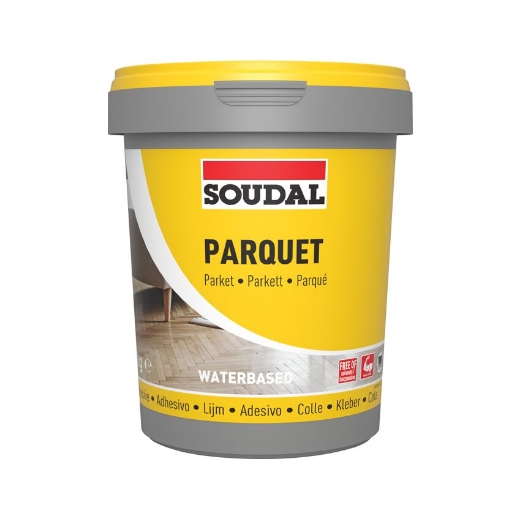
A primer improves adhesion on porous or dusty substrates. The WBPR-11P Surface Primer is suitable for most cement screeds and levelling compounds. The WBPR-21P Deep Primer is specifically for highly absorbent or sandy substrates. For rising damp, choose the 2-component epoxy primer Epoxyseal EPR-31.
What to watch for when gluing parquet?
Wood "works" continuously due to moisture and temperature. Good preparation and the right gluing technique are decisive for a stable end result that lasts for years.
- Check the substrate: The floor must be clean, dry, dust-free and stable. On a porous or dusty substrate, first apply a primer (WBPR-11P or WBPR-21P). If rising damp is suspected, first use the Epoxyseal EPR-31 as a waterproof barrier, a standard primer will not suffice in that case.
- Choose the right notched trowel: The notch size determines the adhesive transfer. Use a fine notched trowel N°B3 for smaller parquet sizes and a coarse notched trowel N°11 for planks larger than 60×300 mm. Always aim for at least 80% adhesive transfer. Also take consumption into account: approximately 700 to 900 g/m² with a fine trowel (N°B3) and 900 to 1100 g/m² with a coarse trowel (N°11), up to 1200 g/m² for the SMX-30 Plus.
- Work in manageable areas: Do not apply more adhesive than you can work within the open time (approximately 25 to 30 minutes for the MS adhesives, up to about 45 minutes for the SMX-30 Plus). Place the parquet into the adhesive with a sliding motion and tap it down with a rubber mallet. If necessary, weigh down the laid parquet to prevent it from coming loose.
- Respect the curing time: An MS or SMX polymer adhesive cures chemically. The floor can usually bear light loads after just a few hours (according to Soudal min. 2 hours for the SMX-30 Plus, min. 3 hours for the MS-30 Plus and min. 8 hours for the MS-20 Plus), but wait longer before sanding and finishing (lacquering, varnishing): min. 12 hours (SMX-30 Plus), 16 hours (MS-30 Plus) up to 24 hours (MS-20 Plus). The more moisture and the colder the room, the longer the curing. Always consult the technical data sheet of the chosen adhesive.
Frequently asked questions about gluing parquet with Soudal
What is the difference between MS-20 Plus, MS-30 Plus and SMX-30 Plus?
How do I choose the right parquet adhesive based on plank width?
Do I always need a primer before gluing parquet?
What do I do if my floor is too damp or has rising damp?
Which notched trowel do I use for parquet?
How long does parquet adhesive need to dry before I can load the floor?
Posted by the Soudal adhesive expert at DHZ-Proshop, Your specialist in fastening materials, adhesives & silicones. Webshop available 24/7 & collection point in Beerse (province of Antwerp). Questions about these products or our DIY tip? Contact our team.