How do you maintain sealant joints so they last longer? Mould and discolouration in sealant joints are almost always the result of moisture lingering too long and dirt settling in. With the right habits, sorted by frequency, you keep sanitary sealant joints in good condition for years without damaging them.
Sealant joint maintenance, what to do when?
Is there already mould in the joint or is the sealant lifting? Then maintenance is no longer enough, read our guide on removing old sealant.
After every use, wipe away water & ventilate
The simplest and most effective measure: after every shower or bath, wipe the water off the tiles and sealant joint with a squeegee or microfibre cloth. Sealant joints that dry quickly after use give mould spores hardly any chance to germinate, they need moisture to grow. Then crack open a window or switch on the ventilation for at least 15–20 minutes. Showers that regularly dry out completely suffer significantly less from mould discolouration than showers that always stay slightly damp. More background: preventing mould in sealant joints.
Weekly, clean with a mild cleaner
Clean sealant joints weekly with a mild, non-abrasive cleaner and a soft brush or sponge. Soap film and skin oils adhere to the sealant joint and form a breeding ground for mould if left too long. Avoid scouring pads and aggressive spray cleaners containing bleach on silicone sealant: they attack the surface, make the sealant rougher and thus actually increase the chance of contamination. Good choice: a neutral bathroom cleaner or diluted vinegar water for limescale. Then rinse thoroughly with water and let the joint dry. Weekly cleaning takes 2 minutes and prevents months of trouble later on.
Monthly, inspect & degrease
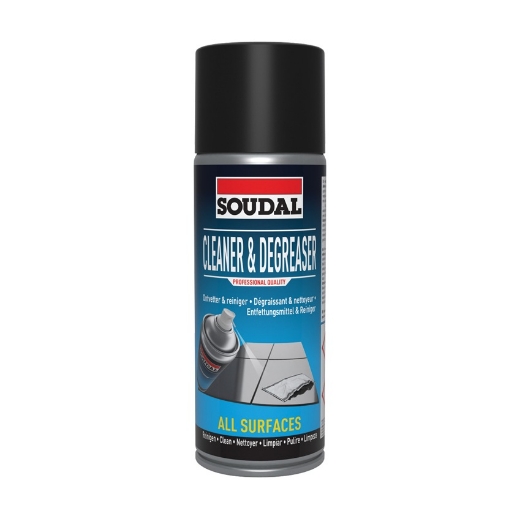
Inspect the entire sealant joint monthly for lifting edges, cracks or black spots deep in the sealant. Lifting edges are the earliest sign that water is creeping behind the joint, act quickly to prevent mould forming behind the tiles. Degrease the joint with Soudal Cleaner & Degreaser to remove built-up grease film that the regular cleaner can't shift. This degreasing only needs to be done monthly and considerably extends the lifespan of the sealant joint. Also check the colour: early yellowing or greying is easier to treat than deeply ingrained mould.
When to replace?, 4 signs to watch for
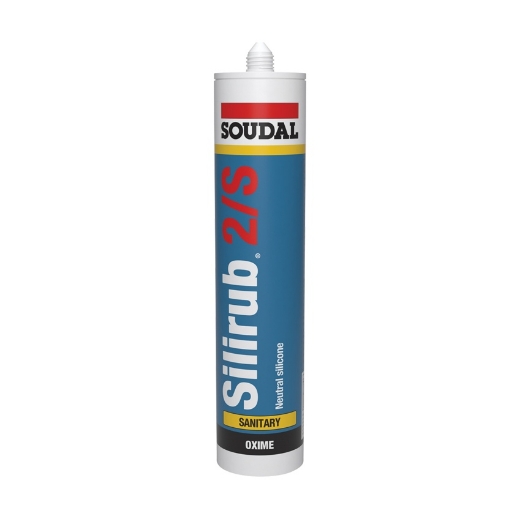
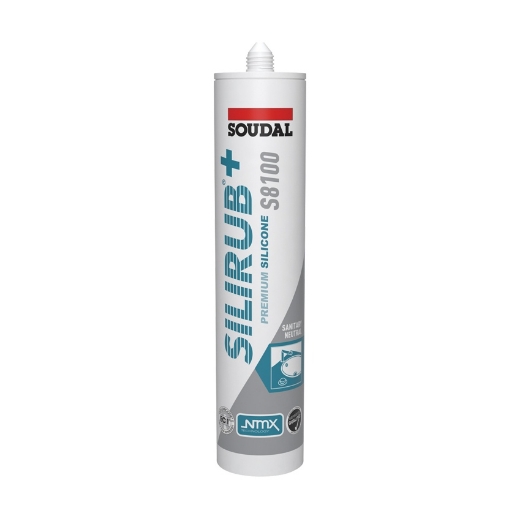
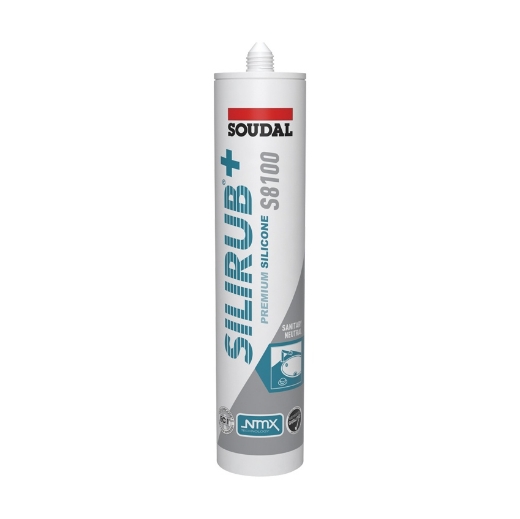
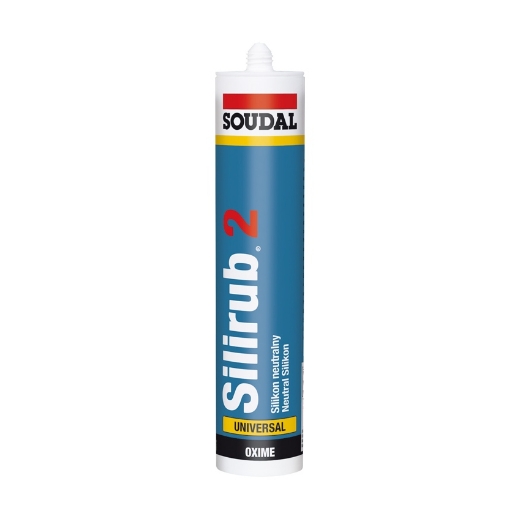
Maintenance has its limits. Replace the sealant joint completely when: (1) the sealant lifts at the edges or shows cracks, (2) mould sits deep in the sealant, visible as black spots in the sealant, not just on it, (3) mould keeps returning in the same spot despite cleaning, (4) the sealant has yellowed, discoloured or feels brittle. When replacing: never apply new sealant over the old, remove it all completely. More: removing old sealant. New sealant: Silirub 2S or for intensive use Silirub+ S8100.
Cleaning without damaging the sealant joint, what works and what doesn't
Not every cleaner is suitable for silicone sealant. What seems to clean well in the short term can shorten the lifespan of the joint.
- Soft brush or sponge, never a scouring pad: Silicone sealant has a smooth, closed surface. Scouring pads, even the "soft" green ones, create microscopic scratches in the sealant surface. Those scratches trap dirt, soap film and mould spores far better than a smooth joint. Scouring just once with a scouring pad doubles the maintenance needs for the rest of the sealant's lifespan. Always use a soft brush, an old toothbrush for corners, or a non-abrasive sponge.
- Mild cleaner, no bleach on silicone: Products based on sodium hypochlorite (bleach, chlorine bleach) attack silicone sealant over time: the sealant becomes more brittle and loses elasticity. For daily cleaning, use a neutral bathroom cleaner. For stubborn limescale spots, diluted citric acid or vinegar water works well without damaging the sealant surface. Always rinse thoroughly with water. The same applies to exterior sealant on window frames: a soft brush with water is enough for annual maintenance.
- Surface mould vs. mould in the sealant: Black spots on the sealant surface are surface mould and can often be removed with a soft brush and an anti-mould cleaner. Black spots in the sealant, visible as stains that won't come off when cleaning, are mould that has grown deep into the material. These cannot be cleaned away; the joint must be completely replaced. Always try to remove surface mould first before deciding to replace. More: preventing mould in sealant joints.
- Removing limescale from sealant joints: Limescale adheres to sealant joints just as it does to tiles. Diluted vinegar water (1 part vinegar to 3 parts water) or a limescale cleaner work effectively. Let the product soak in for 5–10 minutes and remove with a soft brush. Rinse thoroughly, leftover acid can weaken the adhesion of sealant to tiles over the long term. Do not use steel wool or hard plastic scrapers on the sealant itself.
- Exterior sealant: window frames and façade joints: Exterior sealant on window frames and façades requires less frequent maintenance than sanitary sealant, but does deserve annual attention. Clean exterior joints in autumn with water and a soft brush to remove moss, algae and dirt before winter. Then check the joint edges for lifting sections, a window frame joint that lifts in winter lets water infiltrate. More about exterior sealant: sealant for windows and doors.
- When is cleaning mould pointless and replacement necessary? If the mould keeps returning in the same spot after cleaning, the cause lies deeper: either there is mould behind the joint (water creeps along a lifting edge), or the ventilation is structurally inadequate. Cleaning then addresses the symptom, not the problem. Replace the joint completely and tackle the ventilation at the same time. When resealing, choose Silirub+ S8100, the mould-resistant formulation buys extra time in structurally difficult conditions. More about colour choice and mould visibility: which colour sealant to choose.
Frequently asked questions about maintaining sealant joints
How often should I clean sealant joints in the shower?
Why does mould keep returning in the same spot?
Can I use bleach to remove mould from sealant joints?
How long does a well-maintained sealant joint last?
What do I do if the sealant edge lifts in just one spot?
Do I need to maintain exterior sealant too?
Posted by the Soudal sealant expert at DHZ-Proshop, your specialist in fasteners, adhesives & silicones. Webshop available 24/7 & collection point in Beerse (province of Antwerp). Questions about maintaining, cleaning or replacing your sealant joints? Contact our team.