Choosing plasterboard screws: coarse thread for wood, fine thread for metal, and always the right length. The biggest mistake in plasterboard work is driving the wrong screw into the wrong frame. Coarse thread (type C) grips into wood, fine thread (type S) cuts its own thread in steel profiles. After that, the thickness of the plasterboard, single or double, determines the length. And then there is the choice between loose screws and collated screws for the tacker or automatic screwdriver. Below you choose at a glance.
Which plasterboard screw for which situation?
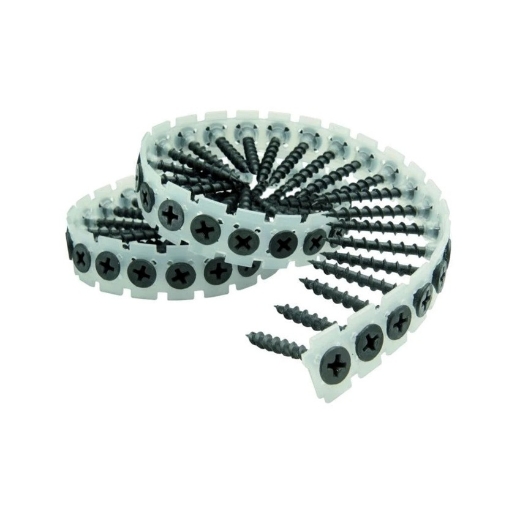
Single plasterboard on a timber frame, coarse thread 3.9×25 collated
Plasterboard screw coarse thread 3.9×25 collated (type C), the standard choice for one layer of plasterboard (12.5 mm) on a timber frame. Coarse thread bites firmly into wood without splitting it. Collated: suitable for automatic magazine screwdrivers for fast and even placement on large surfaces. 1000 pcs per roll.
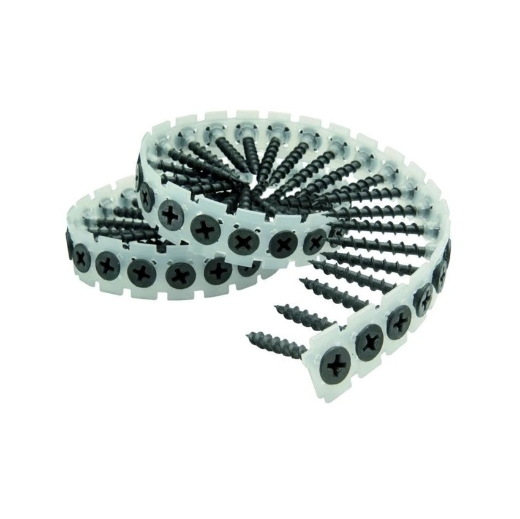
Double plasterboard or extra thickness on wood, coarse thread 3.9×45 collated
Plasterboard screw coarse thread 3.9×45 collated (type C), for two layers of plasterboard on a timber frame (2× 12.5 mm = 25 mm total) or for thick plasterboard (18–25 mm acoustic). The longer screw guarantees sufficient penetration into the wood beyond the plasterboard thickness. Coarse thread type C also for plasterboard on a timber lintel or joist layer.
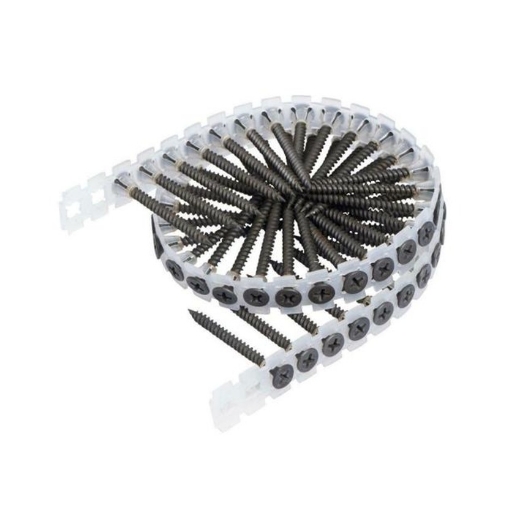
Single plasterboard on a metal frame, fine thread 3.5×35 collated
Plasterboard screw fine thread 3.5×35 collated (type S), for plasterboard on steel C- or U-profiles. Fine thread cuts its own thread in the steel without needing pre-drilling. Length 35 mm is the standard for a single board on a steel stud, sufficient drilling length beyond the plasterboard for a good grip in the profile.
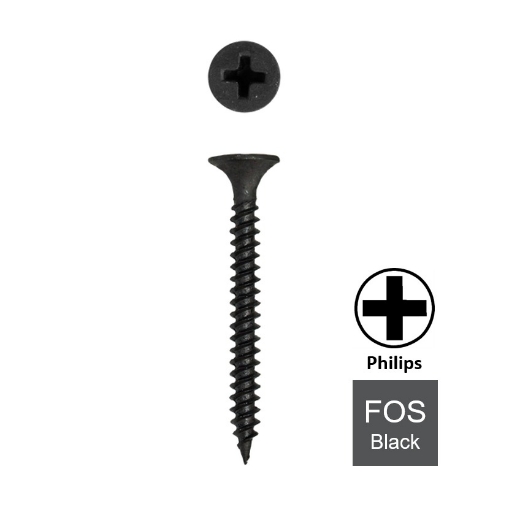
Double board on metal or heavy thickness, fine thread 4.2×65 loose
Plasterboard screw fine thread 4.2×65 phosphated (type S, loose), for double plasterboard on a metal frame or for screwing through thick acoustic or fire-resistant plasterboard into metal profiles. The larger diameter (4.2 mm) provides extra pull-out strength. Loose (not collated): handy for manual placement or for smaller quantities.
Fitting plasterboard screws correctly, step by step
A correctly fitted plasterboard screw sits just below the surface of the plasterboard without piercing or damaging the cardboard layer. That seemingly small requirement has major consequences: screws fitted too shallow create an unevenness that shows through after painting; screws fitted too deep break through the cardboard layer and lose their grip.
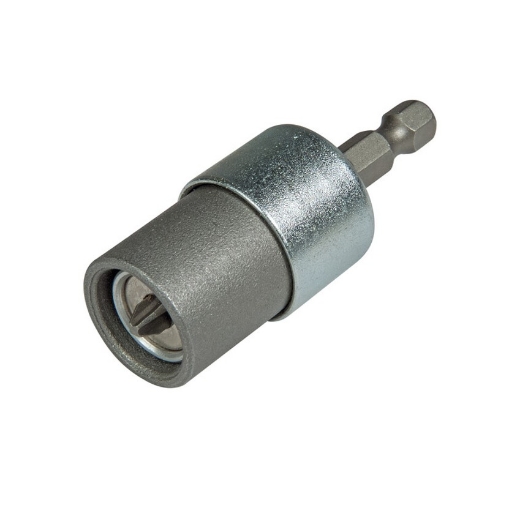
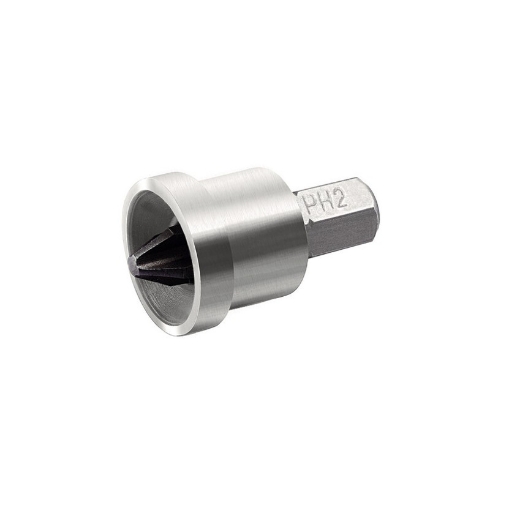
- Depth setting: the most critical step: Always use a spring-loaded magnetic bit holder with depth stop. This holder stops automatically once the screw head reaches the set level, so every screw sits at exactly the same depth. Without a depth stop you will inevitably drive screws through the cardboard layer, and then the screw no longer has grip in the gypsum, a local paper bulge appears and the board loses its pull-out strength at that point. Set the depth so the head sits just 1 mm below the gypsum surface, but the cardboard layer remains intact.
- Coarse thread (type C) vs fine thread (type S), why you cannot use them interchangeably: Coarse thread (type C) has a wide, deep profile that bites into the fibres of wood and mechanically locks into it. If you try to drive that same coarse thread into a steel profile, the tip shoots through the thin steel without finding enough material to grip, you end up with a loose screw in a deformed hole. Fine thread (type S) has a sharp tip and narrower thread profile that cuts its own thread in the steel, but in wood the fine thread grips less deeply and the pull-out strength is considerably lower. The type letters C (Coarse = coarse, for wood) and S (Steel = steel) are exactly that: the indication of the frame material.
- Spacing: rules for wood and metal: For timber frames the recommended centre spacing is 20–25 cm along the intermediate studs and 15 cm along the edges of the plasterboard. For metal frames the recommended centre spacing is 15–20 cm along the steel stud and 10–15 cm along the edges. Too large a spacing risks the board coming loose under movement or load; too small a spacing weakens the plasterboard along the screws and increases the risk of cracks in the finishing layer at the screws.
- Phosphated surface, why plasterboard screws are rust-resistant: All plasterboard screws at DHZ-Proshop are phosphated: the surface is chemically treated with a phosphate layer that inhibits corrosion and at the same time ensures better adhesion of the jointing and finishing compound. That phosphate layer is the reason you never see plasterboard screws rusting through the finish, not even in damp rooms where plasterboard is used (kitchen, bathroom provided the right plasterboard type). Never use ordinary wood screws in plasterboard: these have no phosphate layer and can bleed through after painting.
- Collated screws vs loose screws, when to use which: Collated screws are intended for use with an automatic magazine screwdriver or a screwdriver with a magazine attachment. They are placed quickly and evenly on large surfaces, a complete room with plasterboard is finished in a fraction of the time. Loose screws are the choice for small quantities, top-ups, repairs and manual work. With loose screws you can buy each size separately in small packs (200 pcs, 500 pcs, 1000 pcs), practical if you only need a dozen screws for a repair patch.
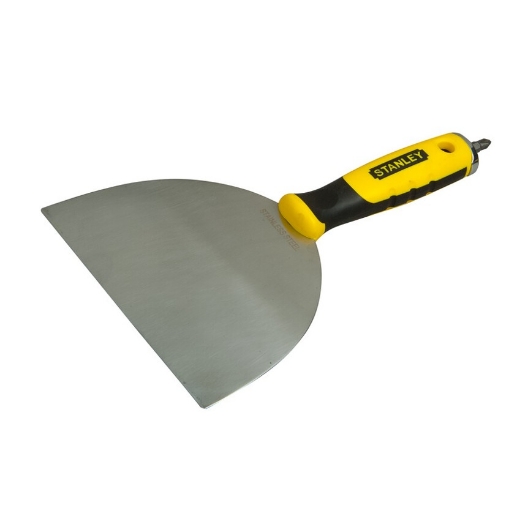
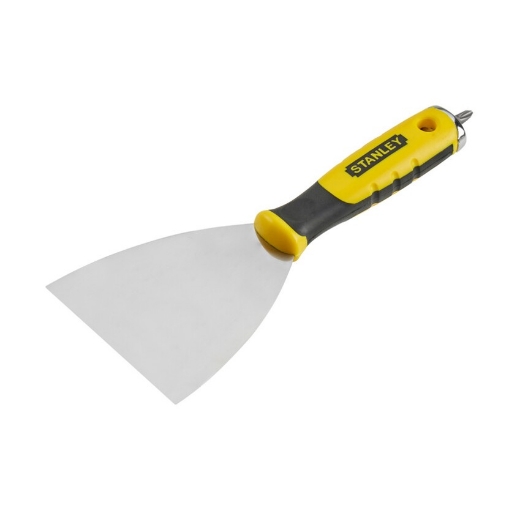
- Finishing plasterboard after screwing, tools: Once all the screws are in, the dimples (the slight indentation around the screw head) and the joints are filled with jointing compound or finishing plaster. Use a wide knife to smooth the compound over the joints and screw heads. After drying (24–48h depending on the compound) the surface is lightly sanded with fine sandpaper (grit 120–180) for an even base. Sanding mesh is more convenient than sandpaper for jointing compound: it clogs less quickly. Then, if needed, a second layer of jointing compound follows, drying, sanding and primer before you paint.
Frequently asked questions about plasterboard screws
What is the difference between coarse thread (type C) and fine thread (type S) plasterboard screws?
How deep should a plasterboard screw sit and why is that so precise?
What lengths are available and how do I choose the right length?
Can I use ordinary wood screws instead of plasterboard screws?
What is the difference between collated screws and loose screws?
How far apart should I place the screws?
Why are plasterboard screws phosphated and what exactly does that do?
Posted by the materials expert team of DHZ-Proshop, specialist in fastening materials, screws & plasterboard tools. Webshop available 24/7 & collection point in Beerse (province of Antwerp). Questions about the right screw for your project? Contact our team.