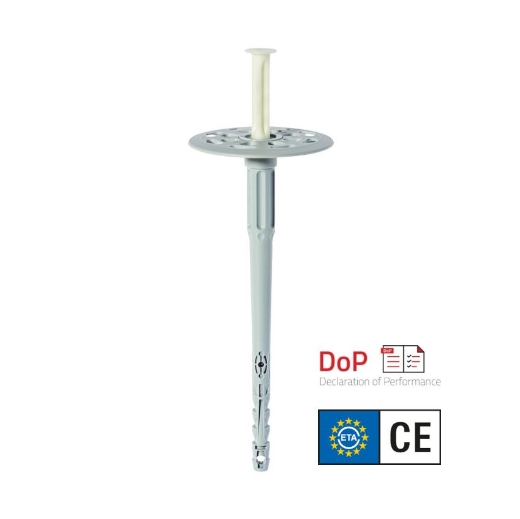
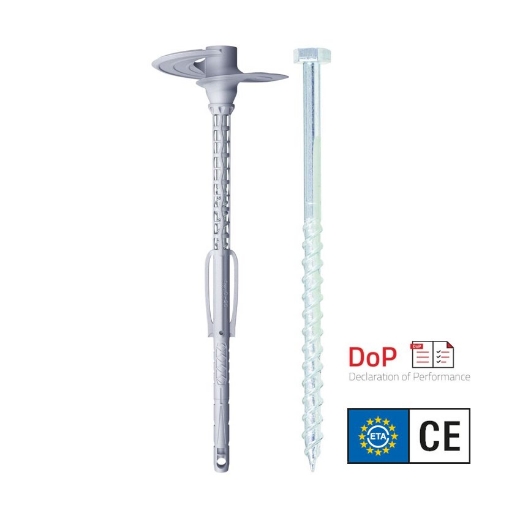
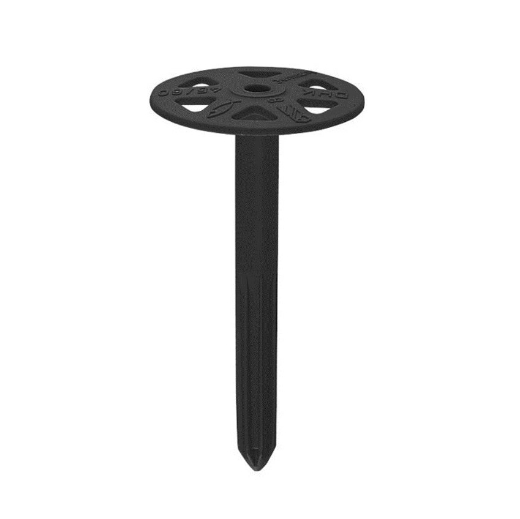
Insulation boards that sag, tilt or pull off the wall almost always point to the wrong insulation plug for the substrate or the wrong washer diameter for the board. Solid masonry and concrete need a screw or nail-in plug with sufficient anchoring depth into the load-bearing wall, while cavity wall insulation needs a longer plug that bridges the cavity. The washer, or schotel, must be wide enough to spread the load: soft mineral wool needs a large plate such as the 70mm Ø Fischer DTM steel washer, while rigid foam boards manage with a smaller 36-60mm plate. Get the depth, plug type and washer size wrong, and the insulation will loosen within a season. Match all three to the substrate, and the fixing holds for decades.
Which insulation plug do you actually need for your wall? Browse the full insulation plugs range at DHZ-Proshop and this guide will point you to the right one in minutes.
- Solid brick or concrete: use a screw-in or nail-in plug such as the Fischer Termofix B110 or Termoz Ecotwist SV-II.
- Cavity wall insulation: choose a longer nail-in anchor such as the Connecton Isolfix NT or the inox NT-P version for exterior durability.
- Soft mineral wool needs a wide washer (up to 70mm Ø); rigid foam boards manage with a 36-60mm washer.
- The plug must anchor at least 35-40mm into the solid base material behind the insulation, not just into the insulation itself.
- Never mix a plastic washer with heavy, wind-exposed panels; steel washers such as the HV 36 or DTM 70x10 spread the load better.
Which insulation plug and washer fit which situation?
The table below lists the Fischer and Connecton insulation plugs and washers from our range, matched to the substrate and insulation type they are built for. Use it as a quick lookup before you order.
| Product | Type / material | Key spec | Ideal for |
|---|---|---|---|
| Fischer Termofix B110 | Screw plug, verzinkt staal | Length 110mm, washer Ø60mm | Solid masonry/concrete, facade insulation |
| Fischer Termoz CN 8/210 | Nail-in plug, plastic | Length 210mm, Ø8mm shaft, washer Ø60mm | Thicker facade insulation into brick/concrete |
| Fischer FID II | Insulation plug, plastic | Length 50mm | Thin, light insulation boards |
| Fischer FID II Plus | Insulation plug, plastic | Length 90mm | Thicker light insulation boards |
| Connecton Isolfix NT | Nail-in cavity anchor, plastic | Length 120mm, Ø10mm shaft | Cavity wall insulation, brick/concrete leaf |
| Connecton Isolfix NT-P inox | Nail-in anchor, roestvrij staal | Length 360mm, Ø10mm shaft | Deep cavity walls, permanent exterior use |
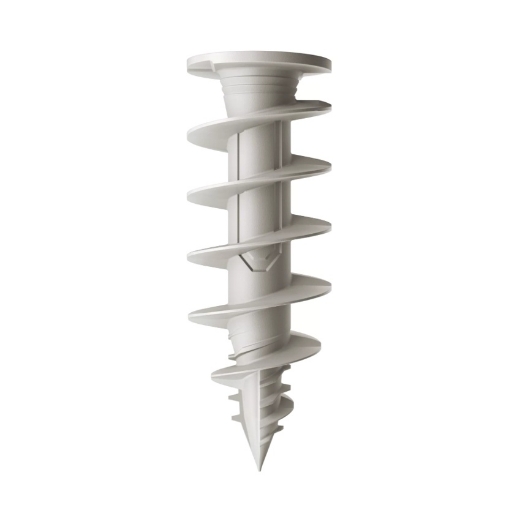
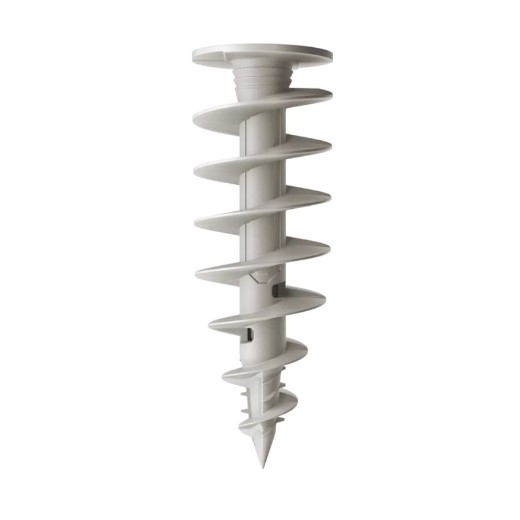
| Fischer Termoz Ecotwist SV-II | Twist-in screw plug, plastic | Length 232mm, washer Ø66mm | Facade insulation 30-60mm, no pre-drilled collar |
| Fischer isolatieplug DHK 45/40 | Insulation plug, plastic | Length 65mm, Ø8mm shaft | Thinner facade insulation, light loads |
| Fischer isolatieplug DHM 260 inox A2 | Insulation plug, inox A2 | Length 260mm, Ø8mm shaft | Thick exterior facade insulation, long-term corrosion resistance |
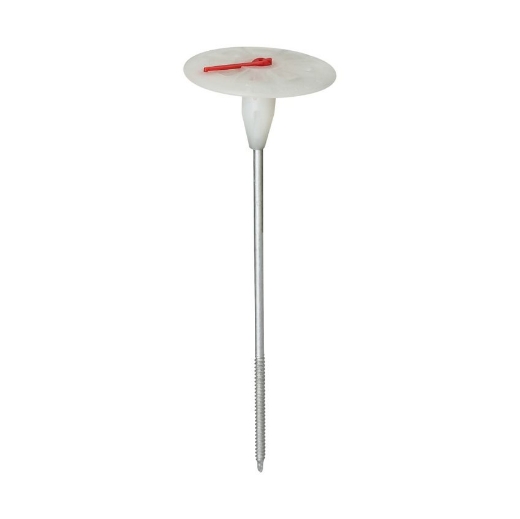
Solid masonry or concrete
Fixing a facade board straight onto brick or concrete? The Termofix B110 screw plug is one of our most chosen fixings for exactly this job.
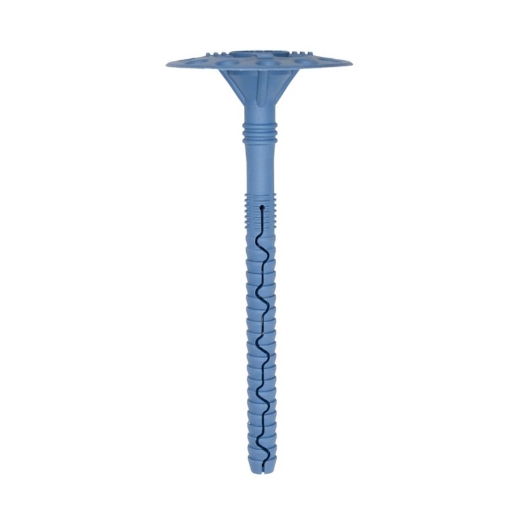
Cavity wall insulation
Bridging a cavity to anchor insulation boards to the inner leaf requires reach and grip. The Isolfix NT nail-in anchor is built for that span.
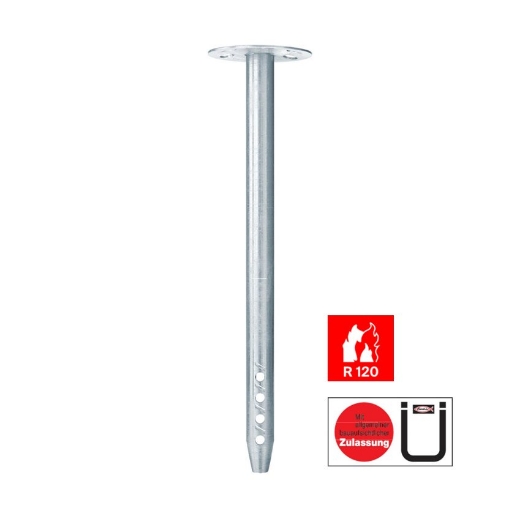
Exterior, long-term exposure
Rain, UV and frost will corrode ordinary steel over the years. The inox A2 DHM 260 or the inox NT-P slaganker keep their grip outdoors.
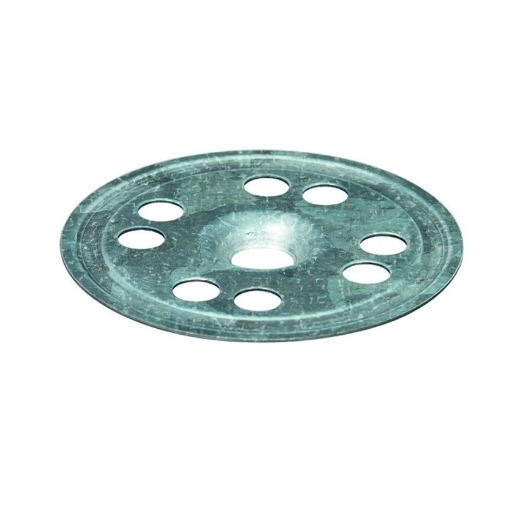
Soft mineral wool
Soft insulation needs a wide plate to stop it crushing or tearing around the plug. The DTM 70x10 steel washer spreads that load properly.
Why do insulation boards keep coming loose?
Loose insulation is almost always a fixing problem, not a board problem. Three causes come back time and again: the plug is too short and never reaches the solid wall behind the insulation, the washer is too small to spread the load, or a plastic plug was used on a wall that needed a metal anchor into deep or cavity construction.
A plug that only grips the insulation itself, not the load-bearing wall, will pull straight out under its own weight over time, especially once the board is exposed to wind suction on a facade. That is why every fixing in this range is designed to reach past the insulation and anchor into brick, concrete or the inner leaf of a cavity wall.
How do I pick the right insulation plug for my substrate?
The substrate behind the insulation decides the plug type: solid brick or concrete takes a screw-in or nail-in plug, while a cavity wall needs a plug long enough to cross the cavity and anchor in the inner leaf. Mixing these up is the single most common reason a fixing fails within months.
For solid masonry and concrete facades, the Fischer Termofix B110 or the Termoz Ecotwist SV-II screw plug work directly into the drilled hole, with the twist-in collar of the Ecotwist skipping a separate pre-drilled recess. For cavity walls, the Connecton Isolfix NT nail-in anchor bridges the gap and locks into the solid inner leaf; where the fixing stays permanently exposed to weather, the inox version of the Isolfix NT-P slaganker resists corrosion far longer than a plastic or zinc-plated equivalent.
Which washer diameter suits my insulation board?
The washer, or schotel, spreads the clamping force over the insulation surface, and its diameter should grow with the softness of the board. A rigid foam board holds fine under a 36mm washer such as the Fischer HK 36 or HV 36, while soft mineral wool needs a wider plate, up to the 70mm Ø of the Fischer DTM 70x10, to avoid crushing or tearing the fibres.
Plastic washers such as the ISO schijf 8/60 (Ø60mm) suit lighter, decorative or interior fixings where corrosion is not a concern. Steel washers, verzinkt or inox, are the better choice on exterior facades exposed to UV and moisture, since they keep their shape and clamping force for years longer than plastic.
How deep should an insulation plug anchor into the wall?
An insulation plug must reach at least 35-40mm into the solid substrate behind the insulation layer, not just into the insulation board itself. That anchoring depth is what carries the actual load; the section running through the insulation only positions the washer against the board.
This is why plug length always follows insulation thickness: a 65mm DHK 45/40 suits thinner boards on a shallow facade, while a 210mm Termoz CN or a 260mm DHM inox is needed once the insulation itself is thick, or where a cavity has to be bridged first. Measure the actual board thickness before ordering; a plug that is too short will never reach a solid grip, no matter how well it is installed.
In our shop in Beerse, customers fixing thicker facade insulation nearly always end up choosing a longer Termoz or Isolfix plug once we've measured the actual board thickness together with them.DHZ-Proshop vakteam, Beerse
How do I fix insulation boards to a wall correctly?
Drill through the insulation into the solid substrate first, matching the drill diameter to the plug's shaft, then insert the plug so the washer sits flush against the board without crushing it. Screw plugs such as the Termofix B110 are driven in with a screwdriver bit; nail-in types such as the Termoz CN or Isolfix NT are hammered home once the sleeve is seated.
Fit the insulation board first, mark and drill through it into the wall, then push the plug through until the washer meets the board surface. Do not overtighten a nail-in plug: driving the nail too far can crack the collar of a plastic sleeve and reduce its holding force rather than increase it.
Common mistakes with insulation plugs
- Plug too short: if it stops in the insulation instead of reaching the solid wall, the board will pull loose within a season.
- Washer too small: a narrow plate on soft mineral wool crushes or tears the fibres, letting the board shift free.
- Wrong material outdoors: plastic or ordinary steel corrodes or degrades faster than inox A2 on a permanently exposed facade.
- Overdriving a nail-in plug: hammering past the stop cracks the plastic collar and weakens the grip instead of strengthening it.
Browse the full insulation plugs and washers range at DHZ-Proshop to find the exact length and washer diameter for your project.
Frequently asked questions about insulation plugs and washers
What are insulation fixing plates used for?
What is an insulated mounting plate and when do I need one?
How do you fix insulation to a wall?
What determines the cost of repairing a loose insulation fixing?
Which insulation plug suits cavity wall insulation?
How deep should an insulation plug go into the wall?
Compiled by the DHZ-Proshop trade team, your DIY and trade supplier with a shop and collection point in Beerse. What we advise most often in the shop is to measure the insulation thickness first and pick the plug length from there, rather than guessing. Questions about which plug or washer fits your wall? Contact our team or browse the full insulation plugs range.