Which Bolt Do You Choose for Indoor and Outdoor Projects? (A2 stainless, A4 stainless and galvanized steel)
The safest way to choose a bolt for indoor or outdoor use is to start with the environment. Then match the coating or stainless grade to the amount of moisture, salt, and maintenance the joint will face. For general indoor work, standard zinc-plated bolts are often enough, while outdoor projects usually need stainless steel or heavier corrosion protection.
Pick the right bolt for indoor and outdoor projects without rust surprises. In this guide you will learn how to assess the environment, understand the difference between A2 and A4 stainless steel, and select the right fastener. Check our assortment of bolts and screws at DHZ-Proshop.
Start with the environment
The first question is always where the bolt will live. Indoor, sheltered outdoor, and harsh outdoor conditions each create different corrosion risks. Dry interior spaces are the easiest case: if the fastener is not exposed to humidity, water, or chemicals, a standard coated bolt is often enough. Outdoor garden, facade, or decking work introduces moisture and temperature cycling, which makes corrosion protection far more important. At the harshest end are coastal, marine, and chemically exposed environments, where a more resistant material like A4 stainless steel, or another highly corrosion-resistant solution, is usually the safer choice.
Indoor bolts: what usually works
For indoor projects, the bolt usually doesn't need marine-grade corrosion resistance. Standard zinc-plated or zinc-coated fasteners are common in dry or lightly humid rooms because they strike a practical balance between cost and protection. That makes them suitable for furniture, light constructions, shelving, cabinets, and plenty of general assembly work where the joint isn't constantly exposed to water. In a controlled indoor climate the coating can last a long time, because the corrosion pressure is relatively low.
The main exception is indoor spaces with persistent moisture, such as bathrooms, laundry rooms, areas near swimming pools, or industrial spaces with condensation. In those cases, indoor doesn't automatically mean low corrosion risk. Here, always consider at least A2 stainless or a heavier coating.
Outdoor bolts: rust protection becomes critical
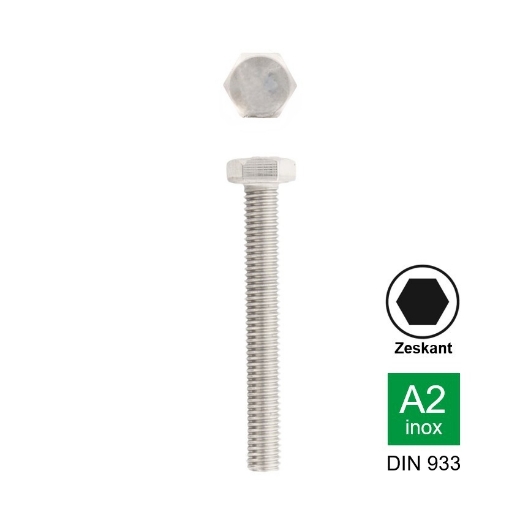
Outdoor bolts face rain, humidity, UV, temperature cycling, and sometimes salt or chemical contamination, so the surface protection has to do more than look tidy on day one. For general outdoor use, stainless steel is often the most practical corrosion-resistant choice, especially A2 stainless for normal weather, because it handles general outdoor conditions without constant maintenance. For tougher exposure, particularly near the coast or in salty air, A4 stainless is usually the safer call: the added molybdenum gives it better resistance to chloride corrosion and pitting, and that extra resistance is exactly what cuts down rust surprises over time.
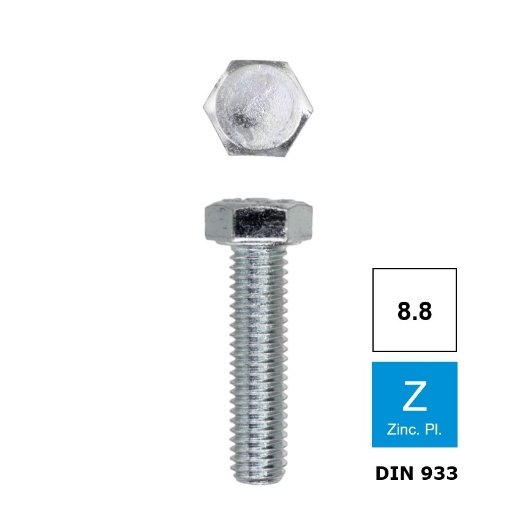
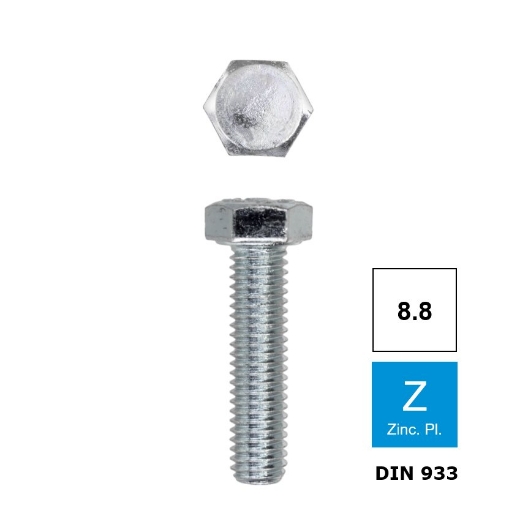
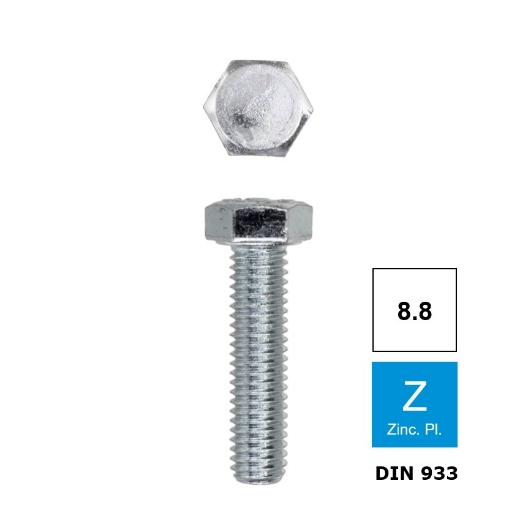
Galvanized bolts use a zinc layer to slow corrosion, a common and cost-effective choice for many outdoor and indoor jobs where stainless steel would be overkill.
- Hot-dip galvanizing: generally offers stronger protection than electroplated zinc because the coating is much thicker and metallurgically bonded to the steel. Ideal for structural outdoor applications.
- Electroplated zinc: lays down a much thinner zinc layer. Useful in dry indoor environments or mild outdoor conditions, but not the best answer for long-term exposure to rain or salty air.
If the project will sit outside for years, especially without much maintenance, stainless or hot-dip galvanized fasteners are always safer.
A2 versus A4 stainless steel
A2 and A4 are the two stainless grades people encounter most in fastening. A2 is comparable to 304 stainless steel, while A4 is comparable to 316 and contains molybdenum for better resistance to salt and chlorides.
| Property | A2 Stainless (304) | A4 Stainless (316) |
|---|---|---|
| Best application | Normal outdoor use, garden structures, facades | Coastal areas, marine structures, chemical environments |
| Salt resistance | Moderate, not suitable for direct salt spray | Strongly improved by molybdenum against chlorides |
| Price indication | Affordable and widely available | Slightly higher, but cheaper than replacement |
A2 is a strong general-purpose stainless option for typical outdoor use. It's often enough when the bolt sees rain but not persistent salt spray. A4 is the better option when the risk level rises. Check our stainless steel and galvanized fasteners for the right specifications for your project.
Match the bolt to the joint and substrate
The best bolt isn't only corrosion-resistant, it's also mechanically right for the job: it has to match the load, the material thickness, and the type of connection. Corrosion resistance doesn't replace strength, so the bolt still needs the correct property class for the load it carries. For structural work, stainless bolts are typically used in grades that balance corrosion resistance with enough mechanical performance, and if the load is high, you shouldn't pick a bolt just because it won't rust.
The bolt is also only one part of the assembly. The nut, washer, and any mating hardware should follow the same corrosion logic: pair a stainless bolt with a low-grade carbon steel nut and the nut can corrode first and ruin the joint, so outdoors it's usually best to keep the whole fastening system in one corrosion class. The substrate matters as much as the environment too. In aluminium or mixed-metal connections, galvanic corrosion becomes a risk if the wrong metals are paired, and in wood, especially damp or resinous timber, the fastener has to resist both the moisture and the natural extractives in the wood itself.
Frequently asked questions about bolts and corrosion
Can I use a galvanized bolt outdoors?
What is the difference between A2 and A4 stainless steel?
Can I combine a stainless bolt with a steel nut?
Why is my bolt rusting in a humid bathroom?
How do I prevent galvanic corrosion with aluminum?
Which bolt should I choose for a wooden deck near the sea?
Posted by the fastening expert at DHZ-Proshop, your partner for bolts, nuts, screws, and plugs for wood, metal, and plastic. Webshop available 24/7 and pickup point in Beerse. Questions about corrosion resistance or the right strength class? Contact our team or view our complete range of bolts and nuts for your next project.