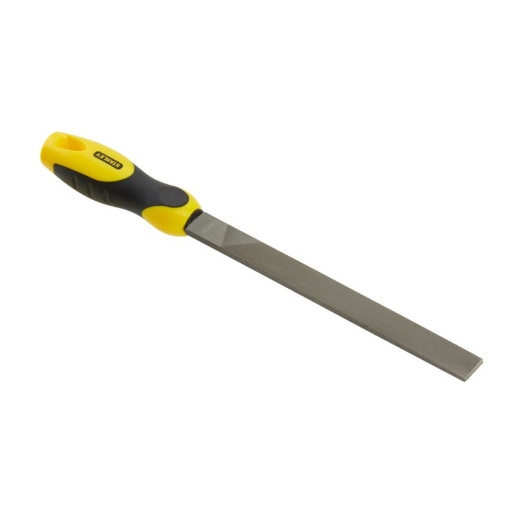
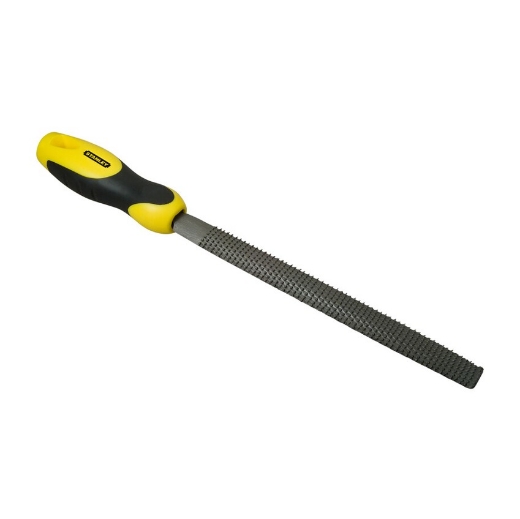
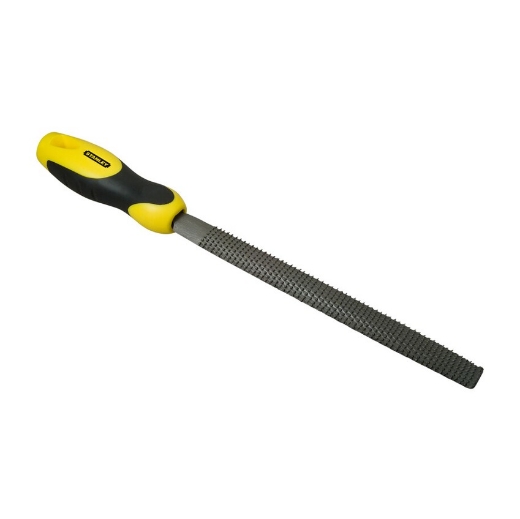
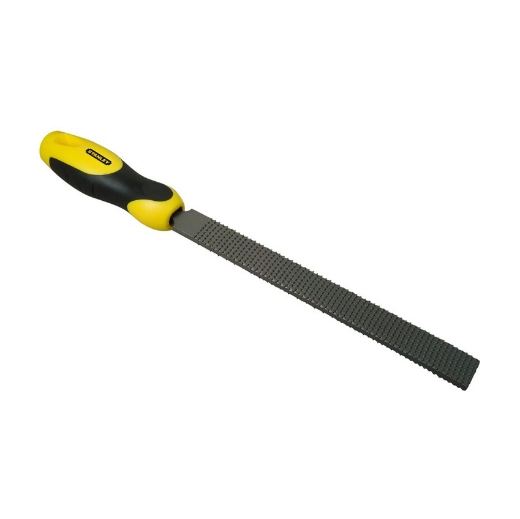
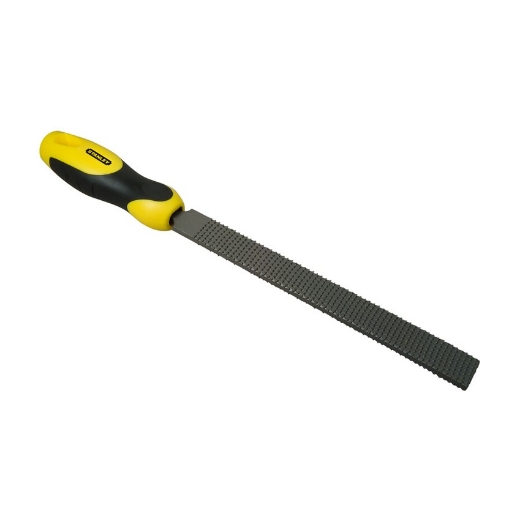
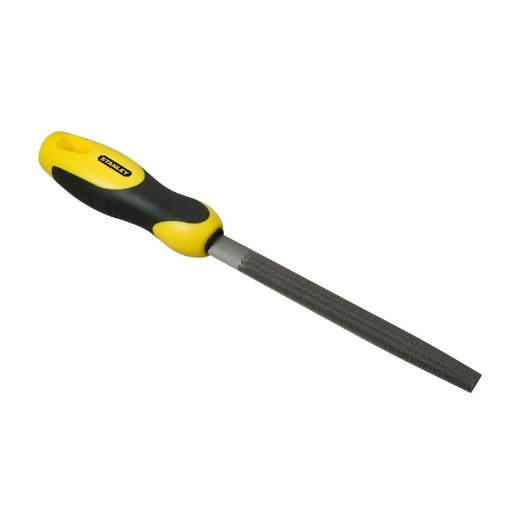
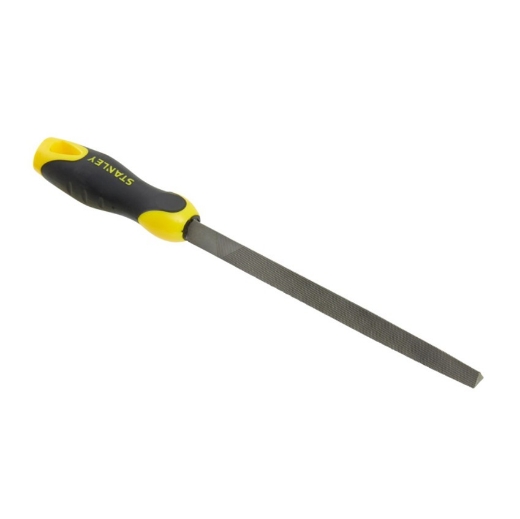
Choosing the right file or rasp comes down to two questions: what material are you working, and what shape is the surface? For wood, you reach for a rasp with individual punched teeth, because it clears material fast without clogging. For metal, plastic and fine finishing, you need a file, where rows of machine-cut teeth (the "cut", or kapping) leave a smoother surface. A half-round shape gives you a flat side for straight edges and a curved side for concave cuts in one tool. The Stanley Surform Shaping Tool Hobby carries a 255mm blade for rough wood shaping, while the CMT grit rasp has a cutting width of 41-50mm for grinding grout and tile adhesive on an oscillating multi-tool. Get the cut grade wrong, coarse where you needed fine, and you'll spend twice as long fixing the surface you just damaged.
Which file or rasp matches your job? Browse the full range in our Stanley files & rasps collection. This guide walks through cut, shape and material so you buy the right tool once.
- Rasps have individual punched teeth and clear wood fast; files have rows of cut teeth and give a finer finish on metal.
- Bastard cut removes material quickly and coarsely; half-smooth is a middle ground; smooth cut is for final finishing.
- Flat is for straight edges, half-round handles both flat and concave surfaces, round enlarges holes, triangular reaches into corners.
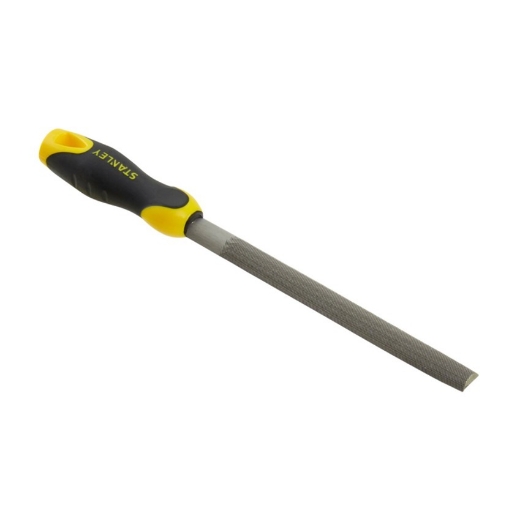
- The Stanley Half-Round Bastard File 200mm is one of our most chosen tools for everyday metalwork.
- For grout, tile adhesive and stone, reach for an oscillating multi-tool rasp attachment, not a hand file.
Which File or Rasp Do You Need? Quick Overview
The table below lines up our range by shape, cut and typical use, so you can match the tool to the job before you read further. Every entry links straight through to the product page.
| Tool | Shape | Cut / type | Ideal for |
|---|---|---|---|
| Half-Round File Bastard 200mm | Half-round | Bastard (coarse) | General metalwork, one of our most chosen files |
| Flat File Smooth 200mm | Flat | Smooth (fine) | Finishing metal edges, precision fitting |
| Half-Round Rasp Half-Smooth 200mm | Half-round | Half-smooth | Wood shaping with a finer finish |
| Half-Round Rasp Bastard 200mm | Half-round | Bastard (coarse) | Fast wood shaping, curves and flats |
| Flat Rasp Half-Smooth 200mm | Flat | Half-smooth | Smoothing flat wood surfaces |
| Flat Rasp Bastard 200mm | Flat | Bastard (coarse) | Rapid stock removal on flat wood |
| Half-Round File Half-Smooth 200mm | Half-round | Half-smooth | Metal finishing on curved and flat parts |
| Triangular File Bastard 200mm | Triangular | Bastard (coarse) | Sharpening saws, corners and angles |
| Round Rasp Half-Smooth 200mm | Round | Half-smooth | Enlarging holes and curves in wood |
| Round File Half-Smooth 200mm | Round | Half-smooth | Enlarging holes and curves in metal |
| 6-Piece Needle File Set | Assorted, small | Fine | Precision work on small metal or plastic parts |
| Surform Shaping Tool Hobby 255mm | Planer-style blade | Perforated blade, 255mm | Fast rough shaping and trimming of wood |
| CMT Grit Rasp Starlock Plus | Oscillating attachment | Tungsten carbide grit, 41-50mm cutting width | Grinding grout, tile adhesive and stone |
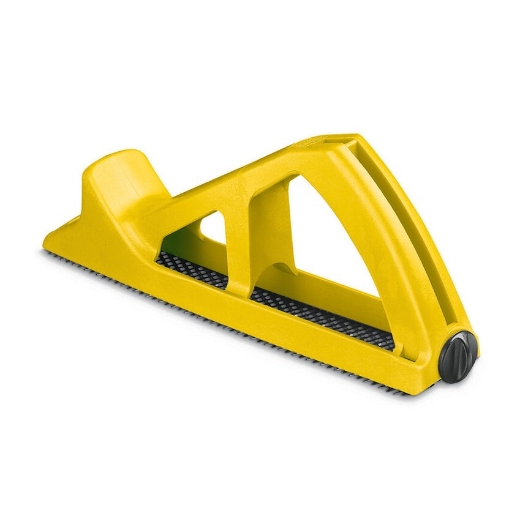
Shaping wood fast
Trimming a door edge or rounding a plank? The Surform Shaping Tool Hobby has a 255mm blade with perforated teeth that clear shavings instead of clogging.
Everyday metalwork
Deburring a cut bolt or shaping a bracket? The Half-Round Bastard File combines a flat and curved side, and it's one of our most chosen tools for exactly this.
Small, precise parts
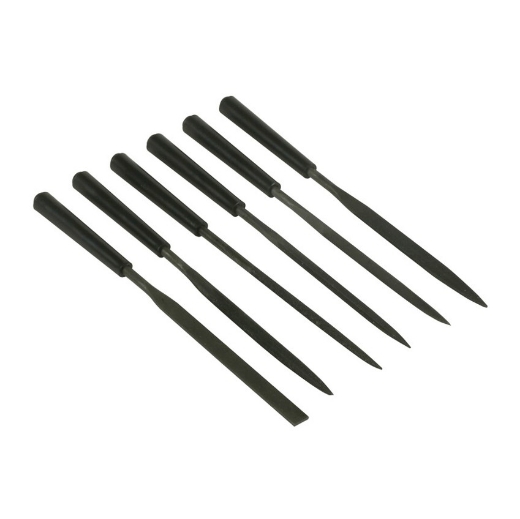
Fitting a jewellery piece or cleaning up a model part? The 6-piece Needle File Set covers flat, round, half-round and triangular profiles in one box.
Grout, tile adhesive and stone
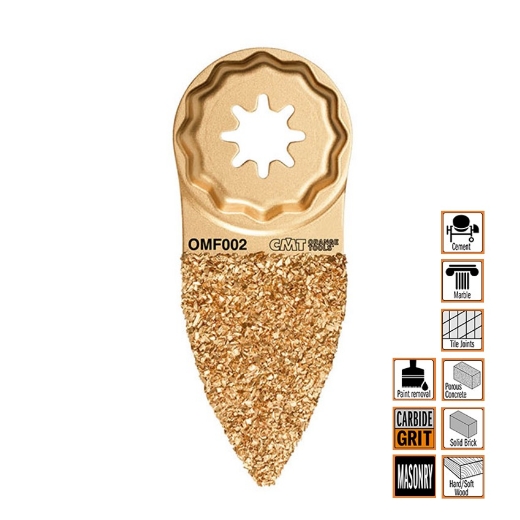
Removing old grout or adhesive residue on tile? The CMT Grit Rasp fits a Starlock oscillating tool and grinds a 41-50mm path through stone and ceramic.
What Is the Difference Between a File and a Rasp?
A file has rows of teeth cut in straight lines across the blade, while a rasp has individual teeth punched one by one. That difference decides the finish: a file leaves a smoother surface and works best on metal and plastic, while a rasp bites in coarser and clears wood fast without clogging as quickly. Reach for a rasp when you need to remove a lot of wood quickly and don't mind a rougher surface; reach for a file when the material is harder or the finish needs to be smooth.
Mixing them up costs you time. Try to file wood with a fine-cut metal file and the teeth clog with fibres within minutes. Try to rasp metal and the coarse teeth gouge instead of smoothing, leaving a surface you'll need to fix with an actual file afterwards.
What Does Bastard, Half-Smooth and Smooth Cut Mean?
The "cut" of a file or rasp describes how coarse or fine its teeth are, and it decides both speed and finish. Bastard cut is the coarsest of the three, removing material quickly but leaving visible tooth marks. Half-smooth cut sits in the middle, useful once the rough shape is done and you need a tidier surface. Smooth cut is the finest, reserved for final finishing where the surface has to feel clean to the touch.
Work in that order. Start with a bastard file or rasp to shape the piece, move to half-smooth to even it out, and finish with a smooth file only if the surface needs to look polished. Skipping straight to smooth on a rough piece just wastes strokes.
Which Shape Do You Need: Flat, Half-Round, Round or Triangular?
The shape of a file or rasp has to match the surface you're working, not the material. A flat profile is for straight edges and flat faces, a half-round profile handles both a flat side and a curved side in one tool, a round profile enlarges holes and concave curves, and a triangular profile reaches into corners, angles and saw teeth that other shapes can't get into.
Half-round is the shape most people reach for first, because it covers the widest range of jobs without switching tools. Round and triangular are more specialised: keep one of each in the workshop for holes and corners, but don't expect them to replace a flat or half-round for general work.
In our Beerse workshop, the Half-Round Bastard File is the first tool we hand a customer who isn't sure what they need: it handles flat edges and curved cutouts in one pass, on both wood and metal jobs.DHZ-Proshop vakteam, Beerse
Which Rasp Is Best for Wood?
For wood, a rasp with individual punched teeth clears material far faster than a file and resists clogging with fibres. The Half-Round Rasp Bastard 200mm shapes a curved edge or a flat face in the same tool, while the Flat Rasp Bastard 200mm is the better pick for long, straight cuts along a board. Follow up with a half-smooth rasp once the rough shape is done, to knock down the deep tooth marks before sanding.
For fast, rough shaping on hobby projects, the Surform Shaping Tool Hobby works more like a small hand plane than a traditional rasp. Its 255mm blade and 42mm width clear long shavings quickly, which makes it the better choice when you're removing a lot of wood in one go rather than fine-tuning a small area.
Which File Is Best for Metal?
For metal, a file always beats a rasp, because the finer, evenly spaced teeth leave a smoother surface without gouging. The Half-Round File Bastard 200mm handles rough shaping and deburring, the Half-Round File Half-Smooth 200mm evens out the surface afterwards, and the Flat File Smooth 200mm finishes flat edges to a clean, close-fitting surface. The Round File Half-Smooth 200mm is the one to grab for enlarging a drilled hole or cleaning up an internal curve.
Work the file in one direction on the push stroke and lift it clear on the return; dragging teeth backwards across metal dulls them fast. Clamp the workpiece so it doesn't move, since a shifting piece under the file rounds off edges you wanted to keep square.
Can You File or Rasp Plastic?
Yes, and a file is the safer choice for plastic, because a rasp's coarser teeth tend to tear or melt softer plastics under friction. A half-smooth or smooth file removes flash and smooths cut edges on PVC pipe, acrylic sheet or 3D-printed parts without generating enough heat to distort the material. Keep strokes light and let the teeth do the work rather than pressing hard.
For small plastic parts, such as trimmed fittings or hobby models, a needle file from the 6-piece set reaches into tight spots a full-size file can't, and its fine cut avoids chipping brittle edges.
When Do You Need a Needle File Set?
A needle file set is the right choice whenever the workpiece is too small for a standard 200mm file to control accurately. The Stanley 6-piece Needle File Set covers flat, round, half-round, triangular and other common profiles in a compact size, built for jewellery, small metal fittings, model-making and fine plastic trimming. Their short length gives you far more control in tight spaces than a full-size file ever will.
Use the same cut-grade logic here as with full-size tools: rough down first with the coarser profiles in the set, then switch to the finer ones only for the final pass.
Which Tool Do You Use for Stone, Tile or Grout?
For stone, tile and grout, skip hand files altogether and reach for the CMT Grit Rasp, a Starlock attachment for an oscillating multi-tool with a tungsten carbide grit surface and a cutting width of 41-50mm. It's built to grind out old grout lines, tile adhesive and mortar residue on stone or ceramic, jobs a hand file simply isn't hard-wearing enough to handle.
Let the tool's oscillation do the cutting; forcing it into the joint faster than the grit can clear debris just wears the attachment down without speeding up the job.
Common Mistakes
- Using a rasp on metal: the coarse, punched teeth gouge metal instead of smoothing it. Switch to a file for anything harder than wood.
- Skipping the cut grades: jumping straight to a smooth file on a rough piece wastes strokes. Start bastard, move to half-smooth, finish smooth.
- Filing without a handle: a bare tang can pierce your palm under pressure. Always fit a handle before you file.
- Forcing the wrong shape into a curve: a flat file in a round hole only rounds off the edges you're trying to shape. Grab a round or half-round profile instead.
Browse the complete range in our files & rasps collection and find matching tools for your workshop at DHZ-Proshop.
Frequently Asked Questions About Files and Rasps
What is the difference between a file and a rasp?
What does "bastard cut" mean on a file?
Which file shape do I need for round holes?
Can I use a rasp on metal?
What is a Surform tool used for?
How do I remove grout or tile adhesive without a hand tool?
Compiled by the trade team at DHZ-Proshop, your DIY and trade supplier with a shop and pickup point in Beerse. Wat wij in de winkel het vaakst adviseren is simple: start with a half-round bastard file or rasp for general work, then add a needle set or Surform once you know your next job. Questions about matching a file or rasp to your material? Contact our team or browse the full Stanley files & rasps collection.