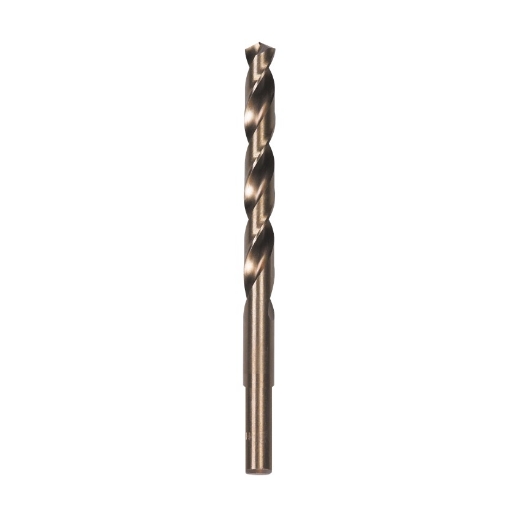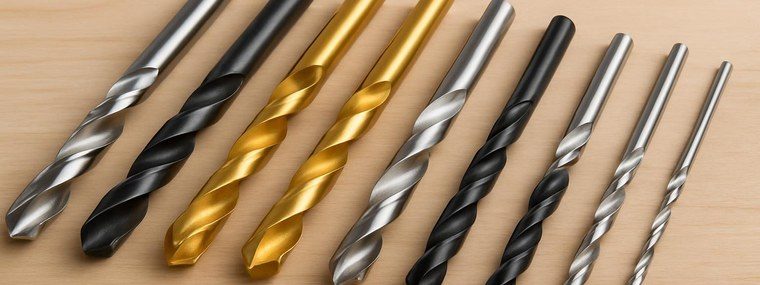
Your drill bit smokes, squeals or stops biting in stainless? That is the wrong steel grade, not bad luck. Use a HSS-G ground bit for mild steel and aluminium, and a HSS-Co cobalt bit for stainless steel and hard alloys. The point angle matters too: a 118° point centres well in soft metals, while a 135° split point starts without a punch mark and handles hard steel. Cobalt grades such as HSS-Co 5% carry the heat that stainless throws off. Match grade and point to the metal and the bit lasts far longer.
Which drill bit fits the metal you are drilling? The metal drill bit range at DHZ-Proshop holds HSS-G and HSS-Co cobalt bits, long versions and complete sets, each cut for a different metal.
- HSS-Co cobalt (HSS-Co 5%) is the answer for stainless steel and tough alloys, because the cobalt in the steel resists heat.
- HSS-G ground bits cut cleanly in mild steel, aluminium and plastic; the ground flutes stay sharp.
- A 135° split point self-centres and starts without a punch; a 118° point suits softer metals.
- Colour is not a quality rating: bright, gold or bronze finishes tell you about coating, not steel grade.
- Low speed plus cutting oil beats brute force every time when drilling stainless.
Which metal drill bit is best for which metal?
The best metal drill bit depends on the metal, not on the diameter alone. For mild steel and aluminium a HSS-G ground bit is enough; for stainless steel you need a HSS-Co cobalt bit. All bits below follow the DIN 338 standard unless stated. Compare the real options from the metal drill bit range.
| Product | Brand | Grade & point | Best for |
|---|---|---|---|
| HSS-Co Cobalt 5% 5x86mm, 135° split point | Labor | HSS-Co 5%, 135° split point | Stainless steel, hard alloys |
| HSS-G ground 5x86mm, 118° split point | Labor | HSS-G, 118° point | Mild steel, aluminium, plastic |
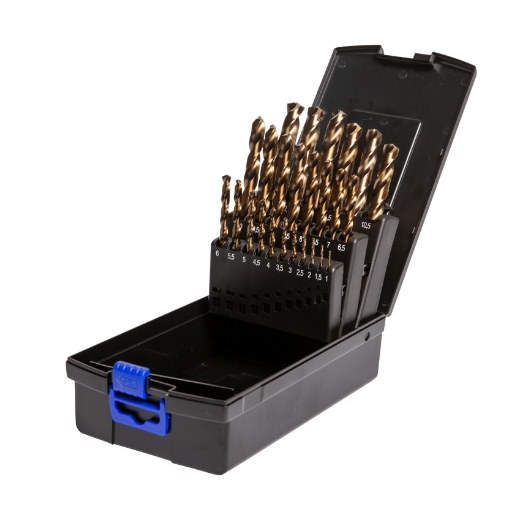
| HSS-Co set 19-piece, 1-10mm | Labor | HSS-Co 5%, 135° split point | Mixed hard-metal work |
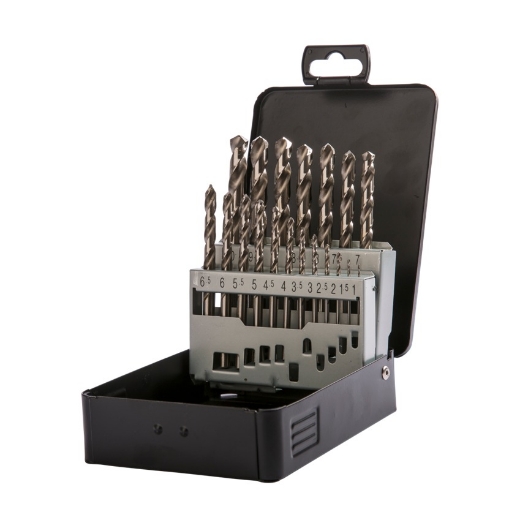
| HSS-G set 19-piece, 1-10mm | Labor | HSS-G, 118° point | General workshop, steel & alu |
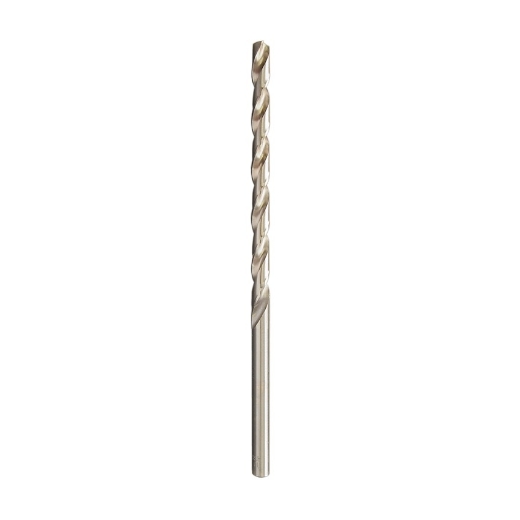
| HSS-G extra long DIN 1869, 6x140/205mm | Labor | HSS-G, 130° split point | Deep holes, reaching through |
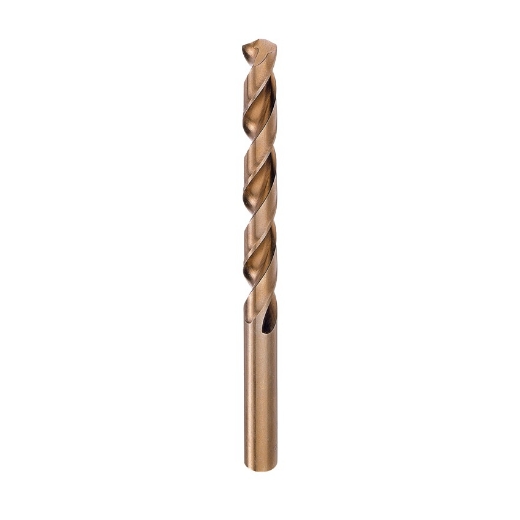
Stainless steel
Inox eats ordinary bits. A HSS-Co 5% cobalt bit with a 135° split point carries the heat and keeps cutting. One of our most chosen bits.
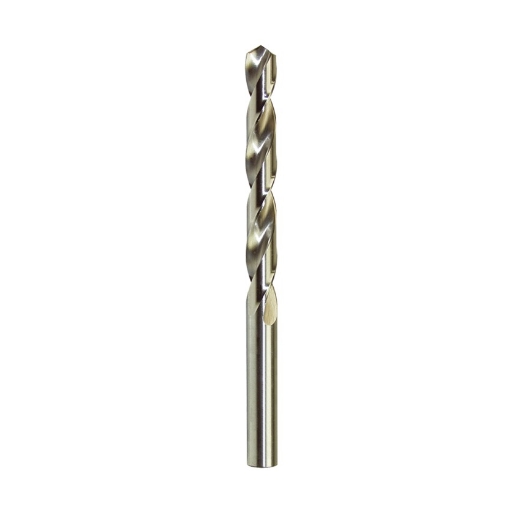
Mild steel & alu
For everyday steel, aluminium and plastic the HSS-G ground bit with 118° point cuts clean and centres easily.
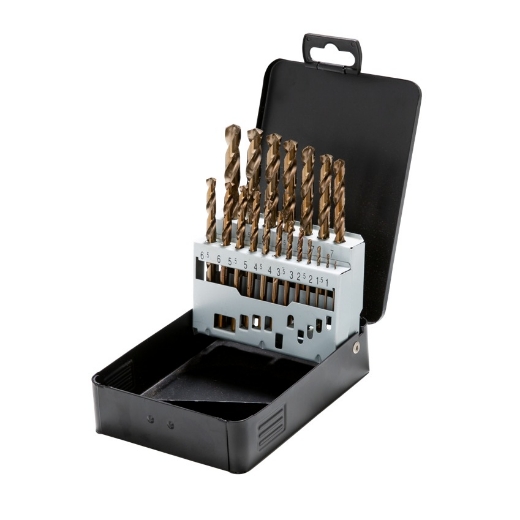
Full set
Want every size covered? The 19-piece HSS-Co set runs 1 to 10mm in 0.5mm steps, all with a 135° split point.
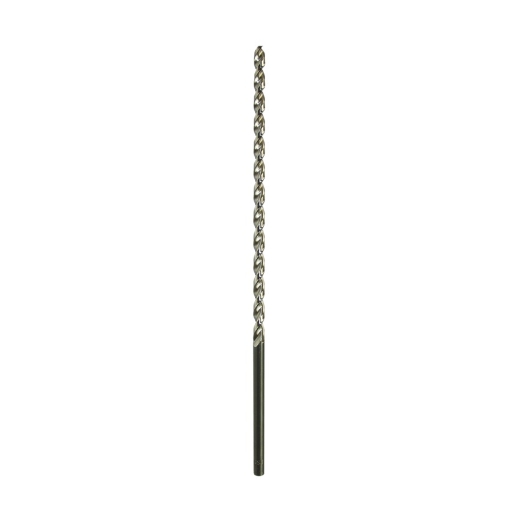
Deep holes
Reaching through thick stock or into a recess? The DIN 1869 extra-long HSS-G bit offers 140mm of useful length.
Why does my metal drill bit burn out or stop cutting?
A metal drill bit fails for three reasons: wrong steel grade, wrong speed, or no cooling. Stainless steel work-hardens the moment you run the drill too fast, so the surface turns glass-hard and the bit rubs instead of cutting. Once the cutting edge overheats it loses its temper and goes blunt in seconds. That blue tint on the flutes is the giveaway.
The second trap is grade. Ordinary HSS handles mild steel and aluminium fine, but it wilts against stainless and tool steel. Those metals demand the extra heat resistance that cobalt brings. The third trap is starting: without a centre punch or a self-centring split point, the bit wanders and skates across the surface before it bites.
HSS, HSS-G or HSS-Co: which steel grade do you need?
Match the grade to the metal: HSS-G ground bits for mild steel and aluminium, HSS-Co cobalt bits for stainless and hard alloys. HSS (High Speed Steel) is the base material that tolerates the friction heat of drilling metal. HSS-G means the flutes are precision ground rather than rolled, so the cutting edge is sharper and more accurate straight out of the box.
HSS-Co adds cobalt to the alloy. The Labor cobalt bits carry HSS-Co 5%, and that 5% cobalt lifts the heat resistance enough to drill stainless steel without the edge softening. For a workshop that touches inox regularly, cobalt is the safer default. The 5x86mm HSS-Co bit has a 52mm useful length, the same as its HSS-G twin, so the difference sits entirely in the alloy.
In our Beerse shop, anyone drilling stainless walks out with a HSS-Co cobalt bit, not plain HSS. The cobalt earns its keep the first time you drill inox. DHZ-Proshop vakteam, Beerse
Buying by the set saves swapping bits mid-job. The 19-piece HSS-Co set runs 1 to 10mm in 0.5mm steps, while the 25-piece RoseBox set stretches to 13mm. For general steel and aluminium the HSS-G 19-piece set covers the same range.
What point angle should a metal drill bit have?
The point angle sets how the bit starts and which metal it suits: 118° for softer metals, 135° for hard steel and stainless. A 118° point has a slightly longer tip that centres neatly in mild steel and aluminium once you have a punch mark. The Labor HSS-G bits use this classic 118° geometry, and the 5x86mm HSS-G is a solid all-rounder.
A 135° split point is flatter and, crucially, self-centring. The split grind means the bit bites straight away without wandering, so you can skip the centre punch on flat stock. All the Labor cobalt bits carry the 135° split point, which pairs perfectly with the harder metals cobalt is meant for. For very deep work, the DIN 1869 extra-long HSS-G bit uses a 130° split point over its 140mm useful length.
Which colour is a metal drill bit and does colour mean quality?
Colour indicates coating or finish, not steel grade or quality. A bright silver bit is usually uncoated ground HSS or HSS-G. A gold-coloured bit typically carries a titanium nitride coating that lowers friction, while a dark bronze or black finish points to an oxide or steam-tempered surface that helps chips slide off. None of these colours guarantees the bit can drill stainless.
Judge the bit by its stated grade and standard, not its shine. The Labor cobalt bits are HSS-Co 5% to DIN 338 whatever their surface looks like, and that spec is what tells you they handle inox. So read the label: grade, DIN standard and point angle beat colour every time when you pick a bit.
Common mistakes when drilling metal
- Plain HSS in stainless: ordinary HSS softens fast against inox. Reach for a HSS-Co cobalt bit for any stainless or hard-alloy work.
- Running too fast: high speed work-hardens stainless and burns the edge. Drop the rpm as the diameter or hardness rises and add cutting oil.
- No lubrication: drilling steel dry cooks the tip. A drop of cutting oil carries heat away and keeps the edge sharp.
- Skipping the pilot hole: forcing a large bit straight in wanders and overheats. Pilot small, then open to size for a round, clean hole.
Browse the full selection in the metal drill bit range or find all your tools and building materials in Belgium on the DHZ-Proshop webshop.
Frequently asked questions about metal drill bits
Which metal drill bit is best for stainless steel?
Which metal drill bits do I need for general workshop use?
Which metal is used in a drill bit?
Which colour is a metal drill bit?
What is the difference between a 118° and 135° point angle?
Do I need cutting oil to drill metal?
Compiled by the DHZ-Proshop vakteam, your do-it-yourself and trade supplier with a shop and pick-up point in Beerse. What we advise most across the counter: for stainless take a HSS-Co cobalt bit with a 135° split point, for everyday steel and aluminium a HSS-G ground bit does the job. Not sure which grade suits your metal? Contact our team or browse the full metal drill bit range.