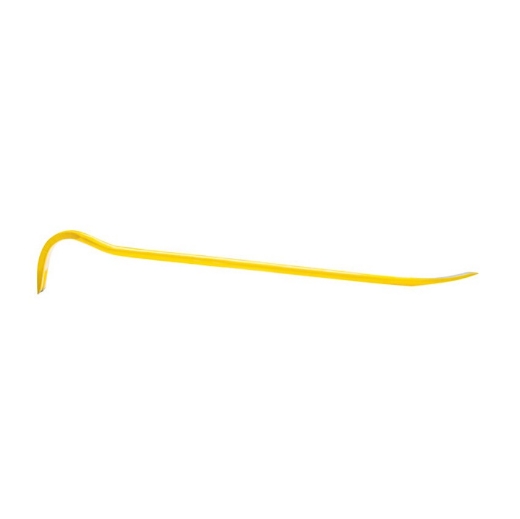
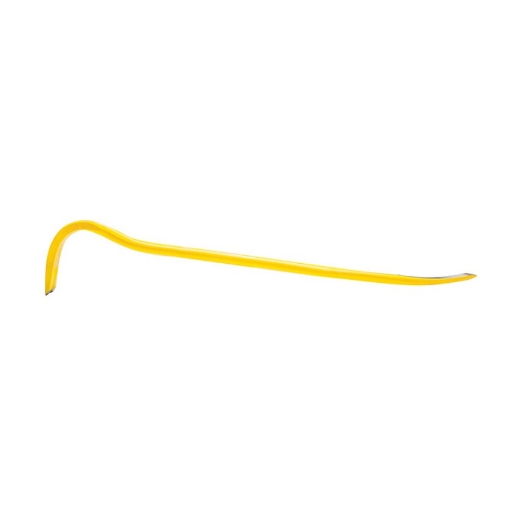
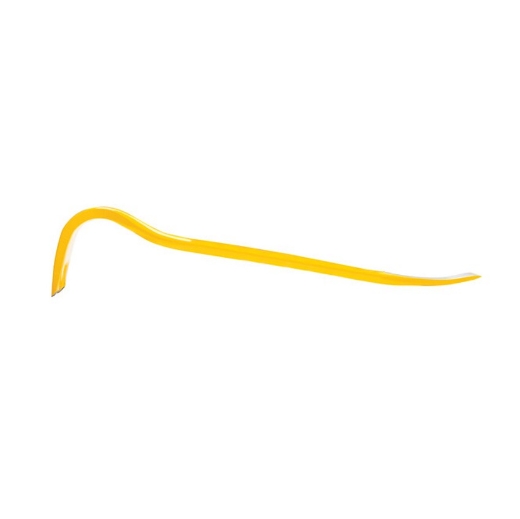
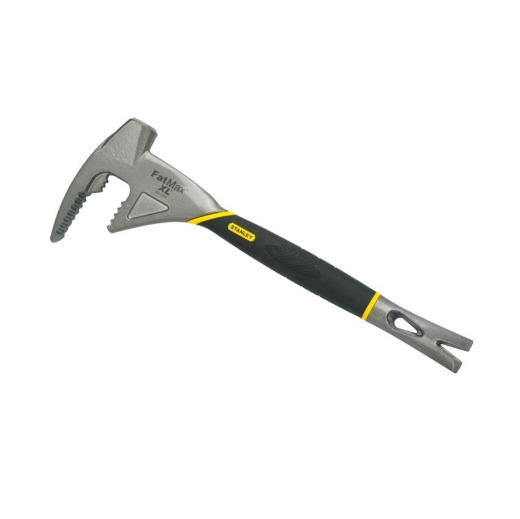
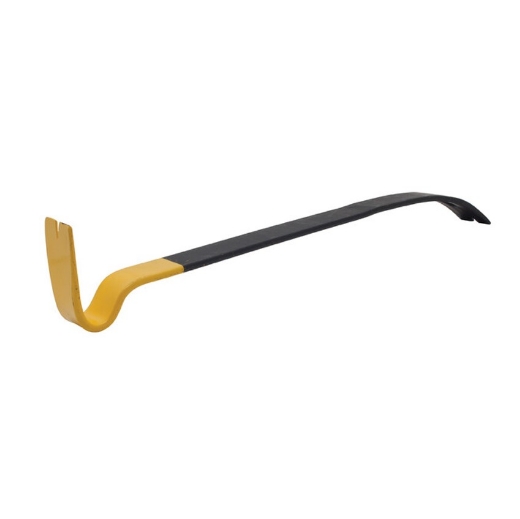
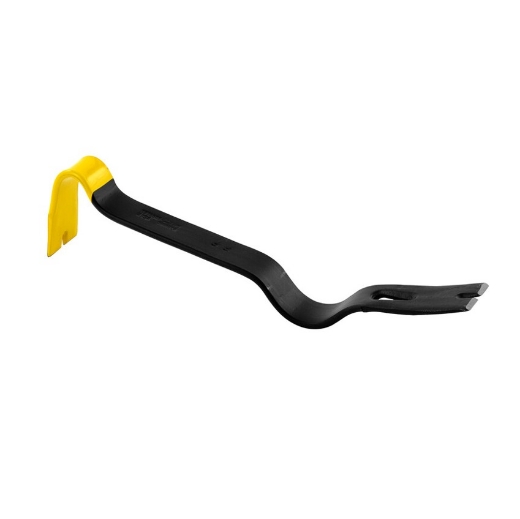
The right pry bar depends on the job, not on personal taste. For heavy demolition and stripping timber frames or flooring, pick a long flat bar between 760mm and 1000mm, such as the Stanley FatMax Koevoet 1000mm, for maximum leverage. For dismantling skirting, architrave or trim without marking the wood, a short fine-claw bar of 200mm to 300mm slides underneath cleanly. For a stubborn nail in a tight spot, the narrow claw of the Stanley FatMax Fijne Koevoet Smalle Klauw 300mm gets under the head where a wide claw cannot. A hexagonal cross-section, like the 18,5mm hex of the Polet 090650, delivers more twisting force in a compact 500mm length than a flat bar of the same size. Choose the length for your leverage need first, then choose the claw shape for the material you're pulling.
Which pry bar do you need for your job? In the Stanley pry bar range at DHZ-Proshop you'll find flat FatMax bars, Wonder Bars, fine-claw bars, a hex bar and multi-tools such as the Fubar. This guide takes you through five steps to the right choice.
- Long bars (760mm to 1000mm) give you the most leverage for heavy demolition work.
- Short fine-claw bars (200mm to 300mm) protect trim and mouldings from damage.
- A hex cross-section, such as the Polet 500mm/18,5mm, adds torque without extra length.
- Multi-tools like the Fubar combine hammer, pry and nail-pulling in one bar.
- Match the claw width to the nail head; a wide claw crushes fine trim, a narrow claw slips underneath it.
Overview: pry bar length, shape and best use
Every pry bar in the Stanley pry bar collection is built for a specific balance of reach, control and force. The table below lists length, claw shape and the job each one suits.
| Product | Length | Shape | Ideal for |
|---|---|---|---|
| Stanley FatMax Koevoet 1000mm | 1000mm | Flat bar, curved claw | Heavy demolition, tearing down structures |
| Stanley FatMax Koevoet 900mm | 900mm | Flat bar, curved claw | Heavy demolition, framing |
| Stanley FatMax Koevoet 760mm | 760mm | Flat bar, curved claw | Dismantling floors and walls |
| Stanley FatMax Koevoet 600mm | 600mm | Flat bar, curved claw | General dismantling, medium leverage |
| Stanley FatMax Pro Fubar | Compact multi-tool | Hammer, pry, nail puller | Combined demolition and prying tasks |
| Stanley FatMax Fubar II | Compact multi-tool | Hammer, pry, nail puller | All-round demolition and nail pulling |
| Stanley Wonder Bar 530mm | 530mm | Flat, thin claw | Trim and moulding removal |
| Stanley Super Wonder Bar 400mm | 400mm | Flat, wide claw | Nail pulling, trim removal |
| Stanley Wonder Bar 300mm | 300mm | Compact flat bar | Tight spaces, small nail pulling |
| Stanley Koevoet Fijn Brede Klauw 200mm | 200mm | Fine, wide claw | Delicate finish work, slipping under trim |
| Stanley FatMax Fijne Koevoet Smalle Klauw 300mm | 300mm | Fine, narrow claw | Precision nail pulling in tight spots |
| Mob koevoet 100cm | 1000mm (100cm) | Heavy round/hex bar | Maximum leverage, professional demolition |
| Polet 090650 koevoet zesk. 500mm/18,5mm | 500mm | Hex bar, 18,5mm cross-section | High torque in a compact length |
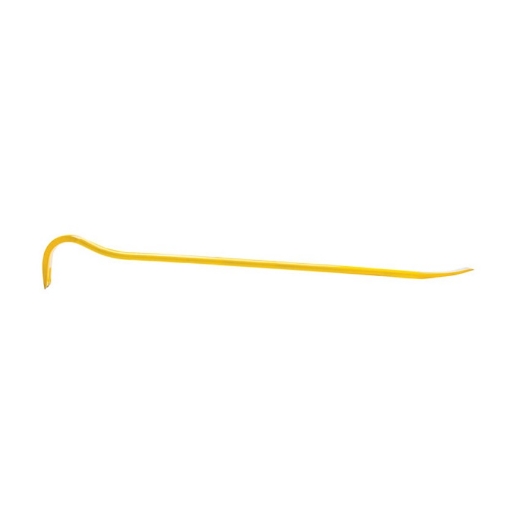
Heavy demolition
Tearing down a frame, floor or wall? The 1000mm length turns a small push into a big pulling force.
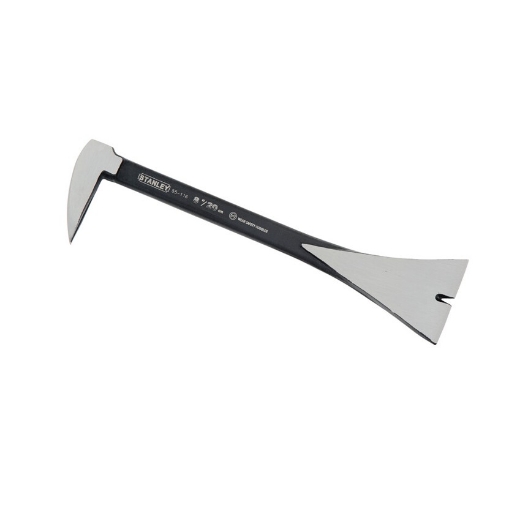
Fine finish work
Removing skirting or a moulding you want to reuse? The fine wide claw slides under paint and timber without gouging it.
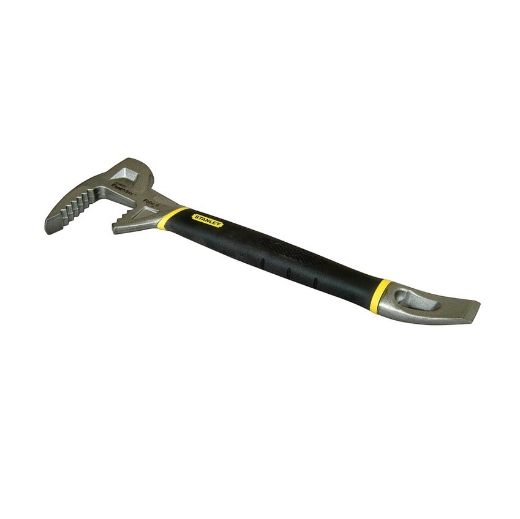
All-round multi-tool
One tool for hammering, prying and pulling nails on site. The Fubar II covers all three without a tool change.
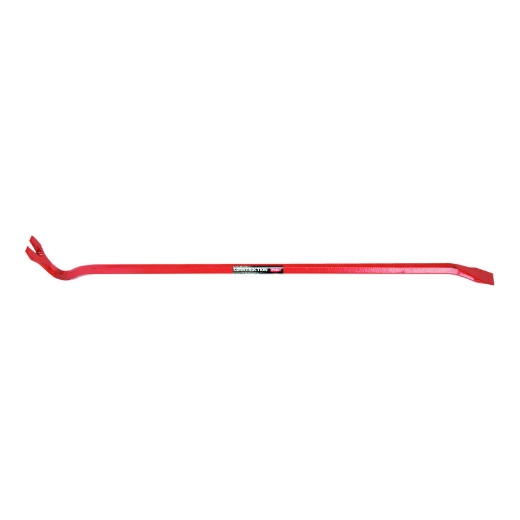
Maximum torque
Stuck material that won't budge with a flat bar? A hex cross-section resists twisting far better in a compact length.
Step 1: define the job before you pick a bar
Decide first whether you are demolishing, dismantling for reuse, or simply pulling nails; the answer determines everything else. Heavy demolition, tearing out a stud wall, ripping up flooring, calls for a long flat bar with serious leverage, such as the Stanley FatMax Koevoet 900mm or 1000mm. Careful dismantling of skirting, architrave or panelling you want to reuse calls for a fine-claw bar that won't leave marks. Simple nail pulling from a board or pallet needs neither length nor width, just a claw narrow enough to get under the head.
Mixing these up wastes effort. A short fine bar bends under heavy demolition loads, and a long heavy bar crushes delicate trim you wanted to keep intact. Match the tool to the task before you even look at length or claw shape.
Step 2: pick the length for the leverage you need
Length equals leverage: the longer the bar, the less force your arm has to supply for the same pulling power. For tight spaces and nail pulling, a 300mm bar such as the Stanley Wonder Bar 300mm gives full control in confined corners. For general dismantling around the house, a 530mm to 600mm bar, like the Stanley Wonder Bar 530mm or FatMax Koevoet 600mm, balances reach and manoeuvrability. For heavy structural demolition, go to 760mm, 900mm or the full 1000mm; the extra length converts modest hand pressure into a force that lifts joists and pries apart framing.
Step 3: pick the claw shape for the material
The claw shape decides whether you damage the material or lift it cleanly. A fine, wide claw, as on the Koevoet Fijn Brede Klauw 200mm, spreads pressure over a wider area and slides under painted trim without splitting it. A fine, narrow claw, as on the FatMax Fijne Koevoet Smalle Klauw 300mm, is built to slip under a single nail head in a tight gap where a wide claw won't fit. A curved, heavier claw, as fitted to the FatMax Koevoet range, is built for prying against studs and joists rather than for finesse.
Choose the claw before you choose the finish you want on the material you're removing. A wide flat claw on delicate skirting leaves a visible dent; a narrow claw on heavy framing simply won't survive the load.
Step 4: choose hex or flat for maximum torque
A hexagonal or round cross-section resists twisting far better than a flat bar of the same length, which matters when material won't let go easily. The Polet 090650 combines a 500mm length with an 18,5mm hex cross-section, giving high torque without needing extra length, one of our most chosen bars for that reason. For the heaviest professional demolition, the Mob koevoet 100cm is a full metre of round-section bar built for sustained, heavy prying.
In our shop in Beerse, tradespeople reaching for maximum leverage in a short bar almost always pick up the hex-section Polet before a flat bar of the same length.DHZ-Proshop vakteam, Beerse
Choose a hex or round bar when you're twisting against a stuck joint or a stubborn fixing, and reserve the flat FatMax bars for straightforward, straight-line prying.
Step 5: add a multi-tool for combined tasks
A multi-tool bar like the Stanley FatMax Fubar II or the heavier FatMax Pro Fubar combines a striking face, a pry end and a nail puller in one compact tool, useful when a job switches constantly between hammering and prying. On a demolition site you rarely do only one task; a Fubar means one tool stays on your belt instead of three.
Keep a Fubar for mixed jobs and reserve a dedicated long FatMax Koevoet for pure heavy leverage; a multi-tool trades some raw leverage for versatility.
Common mistakes
- Using a short bar for heavy demolition: a 300mm bar lacks the leverage for structural work and risks bending under load.
- Using a wide claw on delicate trim: the wide flat claw crushes soft or painted wood; switch to a fine narrow claw.
- Twisting a flat bar sideways: flat bars bend under torque; use a hex or round-section bar such as the Polet 090650 instead.
- Prying without a fulcrum: without a block of wood underneath, you lose leverage and mark the surrounding surface.
Browse the full range in the Stanley pry bar collection at DHZ-Proshop.
Frequently asked questions about pry bars
What length pry bar do I need for demolition?
What's the difference between a Wonder Bar and a FatMax pry bar?
Which pry bar removes nails without damaging the wood?
What is a Fubar used for?
Why choose a hexagonal pry bar over a flat one?
Can I use a pry bar to remove floorboards?
Compiled by the trade team at DHZ-Proshop, your DIY and trade shop with a store and collection point in Beerse. What we advise most often in the shop is to pick the bar for the job first, length and claw second. Questions about which pry bar suits your project? Contact our team or browse the full Stanley pry bar collection.