Choosing the right wall plug comes down to two questions: what are you drilling into and how heavy is the load? In solid concrete or brick a universal expansion plug such as the fischer DuoPower is all you need; in aerated concrete you need a dedicated aerated concrete plug (GB) that screws itself into the soft material; for cavity walls or plasterboard choose a cavity fixing that opens up behind the board; and in hollow-core ceilings you use a hollow-core anchor (FHY) that expands inside the cavity. Not sure? Our plug & anchor selector gives you concrete advice with the right drill size in two clicks.
Step 1: identify your substrate (your drill will tell you)
The substrate decides everything when fixing. A simple test: drill a pilot hole and watch what happens. Grey, heavy dust and slow progress? You are in concrete or solid brick. Red dust with the drill jolting through voids now and then? That is perforated brick. Drilling suspiciously easily with soft whitish dust? Aerated concrete. And does the drill suddenly fall into a void after a centimetre? Then you have a cavity wall or plasterboard — and an ordinary expansion plug has nothing to grip there.
Rule of thumb for the load: up to ±20 kg (frames, lamps) light fixings are fine, between 20 and 50 kg (wall cabinets, radiators, TV brackets) go one size up, and above 50 kg use anchors or chemical fixing instead of nylon plugs.
Our four go-to fixings per substrate
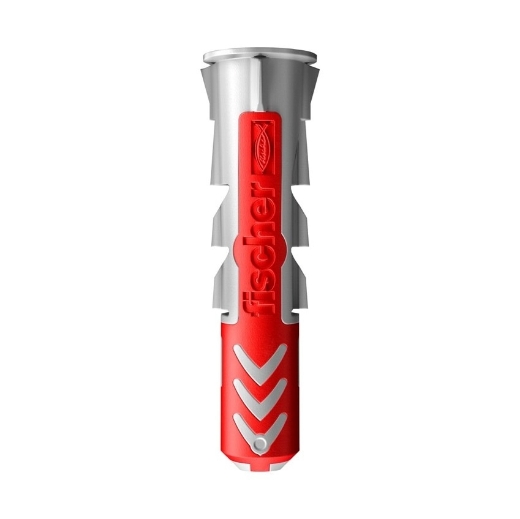
Concrete, solid brick & perforated brick: fischer DuoPower
The DuoPower is the plug we recommend most often because it adapts automatically: in solid substrates it expands, in perforated brick it knots itself into the voids. The grey and red components work together — hence the name. For wall cabinets and TV brackets choose the 10 × 50 mm with a 6 to 8 mm screw. Drill size = plug size: use a 10 mm drill.
View the fischer DuoPower 10x50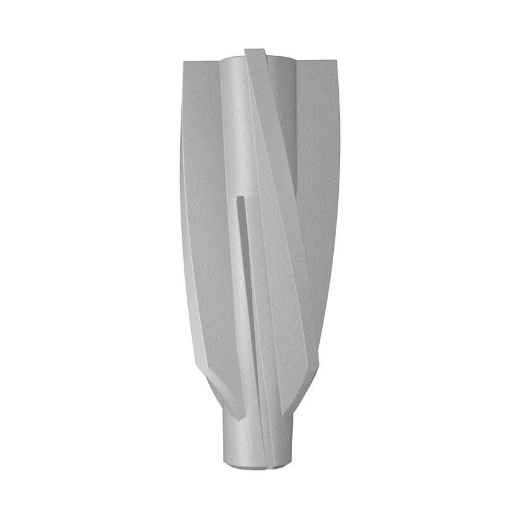
Aerated concrete: fischer GB plug
Aerated concrete (Ytong) is soft — an ordinary expansion plug pulls straight back out. The GB plug has coarse, sharp fins that cut into the material and spread the load over a large area. For most jobs on an aerated concrete wall the GB10 is the right size.
View the fischer GB10 plug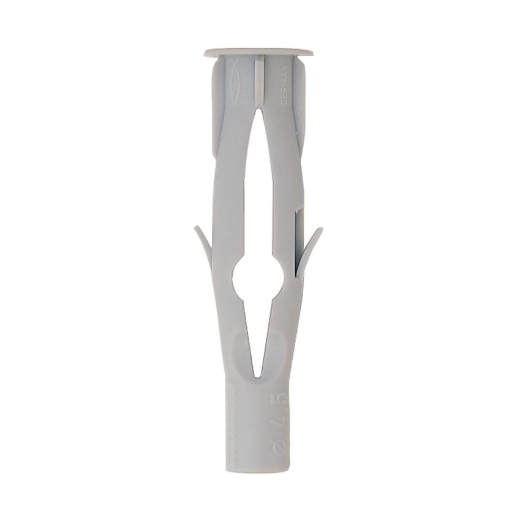
Cavity wall & plasterboard: fischer FU cavity fixing
In a cavity wall the fixing has to lock itself behind the board. The universal FU cavity fixing folds open into a sturdy umbrella behind the plasterboard as you tighten it. For radiators or wall furniture on a stud wall the FU 10 × 60 is a reliable choice. Genuinely heavy loads do not belong on plasterboard — find the studs behind it or use through-fixing.
View the fischer FU 10x60 cavity fixing (pack of 25)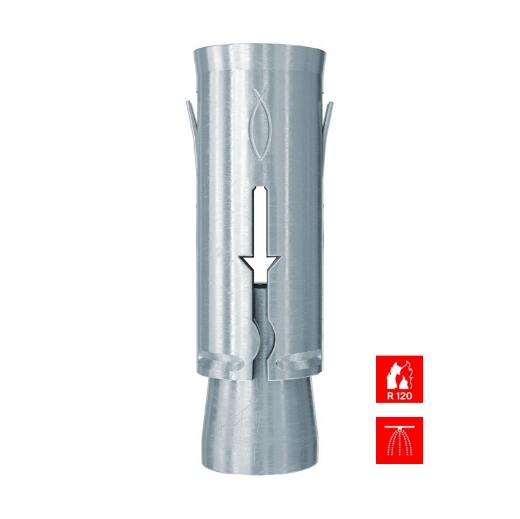
Hollow-core slabs & ceilings: fischer FHY anchor
Hollow-core floor slabs are full of voids — exactly where the FHY anchor locks itself. It expands inside the cavity and offers a metric M8 internal thread for a threaded rod or bolt, ideal for pipe brackets, ducting or suspension systems. Drill size: 12 mm (the M8 refers to the internal thread, not the drill hole).
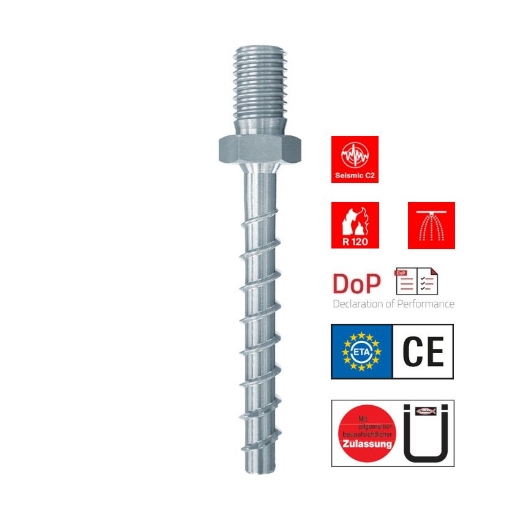
View the fischer FHY M8 hollow-core anchorTip: in concrete you can even skip the plug: a concrete screw such as the fischer FBS II cuts its own thread directly into the concrete — faster to fit and reusable after removal.
Overview: substrate → plug → drill size
| Substrate | Light (<20 kg) | Medium (20–50 kg) | Heavy (>50 kg) | Drill size |
|---|---|---|---|---|
| Concrete / solid brick | Nylon plug 6 | DuoPower 8–10 | Through bolt, concrete screw or chemical | = plug size |
| Perforated brick | Universal plug 6–8 | DuoPower 8–10 (long) | Chemical anchor with sieve sleeve | = plug size |
| Aerated concrete | GB 8 | GB 10–14 | Chemical anchor | = plug size |
| Plasterboard | Plasterboard plug | FU cavity fixing / metal | Not on the board — find the studs | = plug size |
| Hollow-core slab | Universal plug 8 | FHY hollow-core anchor | 12 mm (FHY M8) | |
Remember: the drill size always equals the plug diameter — a 10 mm plug belongs in a 10 mm hole. Worn-out hole? Go one plug size up.
The three mistakes we see most often
1. Hammer drilling in perforated brick or plasterboard. Hammer action smashes the thin webs of perforated brick, leaving the plug nothing to grip. Use hammer mode only in concrete and solid brick.
2. A screw that is too short. The screw must pass fully through the plug and beyond: plug length + thickness of the item + 5 mm. For a DuoPower 10×50 with a 5 mm bracket that means a screw of at least 60 mm.
3. Not cleaning out the drill hole. Drill dust halves the holding power of any plug — and for chemical anchors a clean hole is essential. Blowing out or vacuuming always pays off.
"Nine out of ten failed fixings are not caused by a bad plug, but by a plug that does not match the substrate. Drill a pilot hole first and look at the dust — you will almost always choose correctly."
In short
- Identify your substrate first — the drill dust tells you what you need.
- Concrete/brick: DuoPower · aerated concrete: GB plug · cavity wall: FU fixing · hollow-core slab: FHY anchor.
- Drill size = plug diameter; screw length = plug length + material thickness + 5 mm.
- Above 50 kg: anchors or chemical fixing instead of nylon plugs.
- In doubt? Use our free plug & anchor selector — advice in two clicks.