Pick your work glove by the hazard, not the colour. For wet and dirty jobs you reach for a fully coated PVC or latex glove, for chemicals a neoprene glove, for handling rough material a leather glove, and for everyday gripping and assembly a PU- or nitrile-coated glove. Our single best-selling glove is the Artelli Ocean PVC (size 10). The EN 388 standard tells you abrasion, cut, tear and puncture resistance at a glance. Get the size right too: a glove that slips off ruins your grip and your safety.
Which glove fits your job? Browse the full range in our work gloves category and let this roundup of our best-sellers point you to the right pair.
- The Artelli Ocean PVC is our top seller.
- Match the glove to the hazard: PVC/latex for wet, neoprene for chemicals, leather for rough handling, PU/nitrile for grip.
- The EN 388 code (four digits) rates abrasion, cut, tear and puncture resistance.
- No work glove is rated for live electrical work; that needs certified dielectric gloves to EN 60903.
- Size matters: 8 = M, 9 = L, 10 = XL, 11 = XXL.
Which work gloves sell best at DHZ-Proshop?
Our five best-selling work gloves are all from Artelli, and each one covers a different job. The table below shows what fellow customers reach for. Browse them all in the work gloves category.
| Glove | Brand | Type | Best for |
|---|---|---|---|
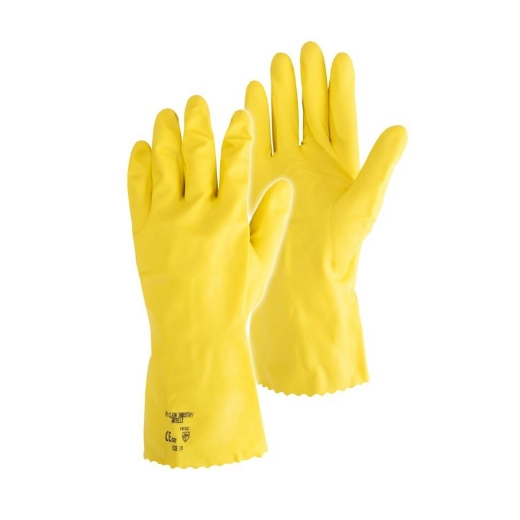
| Ocean PVC 27cm (size 10) | Artelli | Waterproof | Wet, dirty, cold-water jobs |
| Pro-chemie Neopreen plus (size 10) | Artelli | Chemical resistant | Cleaning agents, solvents |
| Tropic leather (size 9) | Artelli | Leather, cold insulating | Rough material, outdoor |
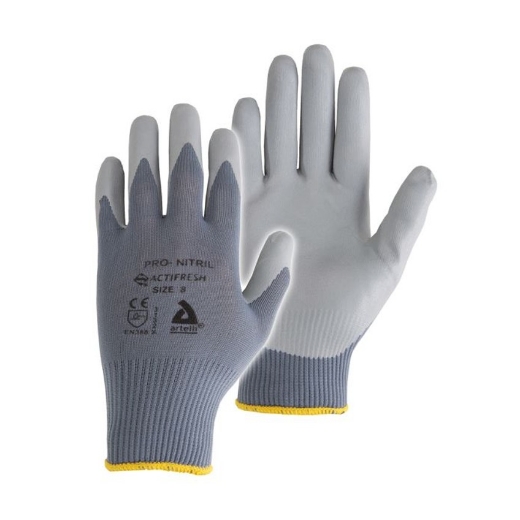
| Pro-PU grey (size 10) | Artelli | Universal | Assembly, fine handling |
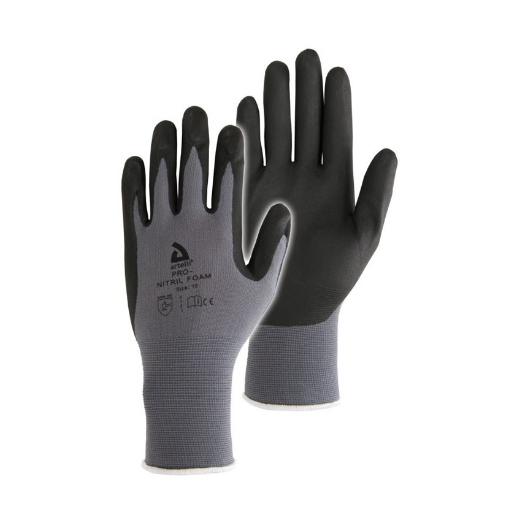
| Pro-nitril plus (size 9) | Artelli | Universal | Greasy, general grip |
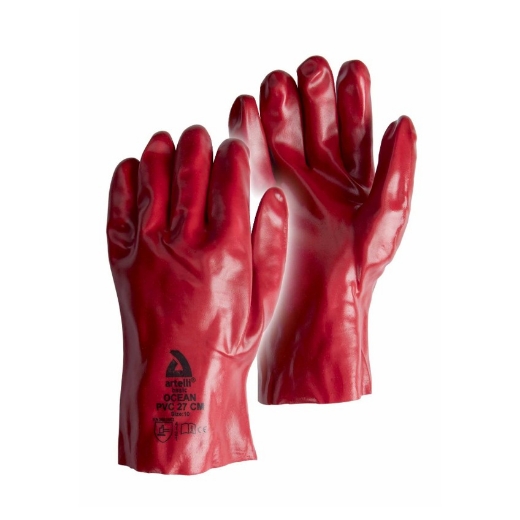
Wet & waterproof
Fish ponds, drains, cleaning, cold water? The Ocean PVC reaches up to the forearm at 27 cm and keeps your hands dry. Our number one seller.
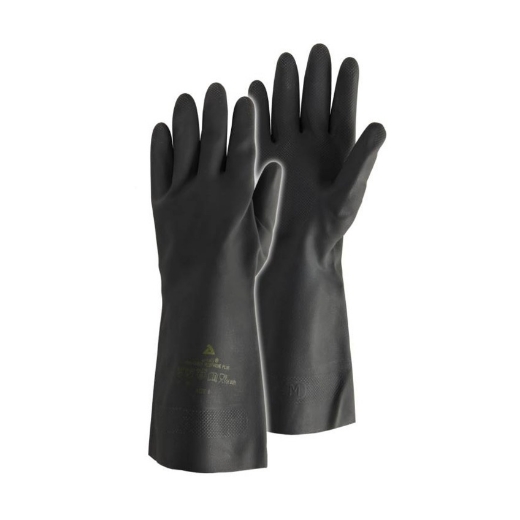
Chemical work
Handling cleaning agents, solvents or paints? The Pro-chemie neoprene glove resists a wide chemical range and is our second best-seller.
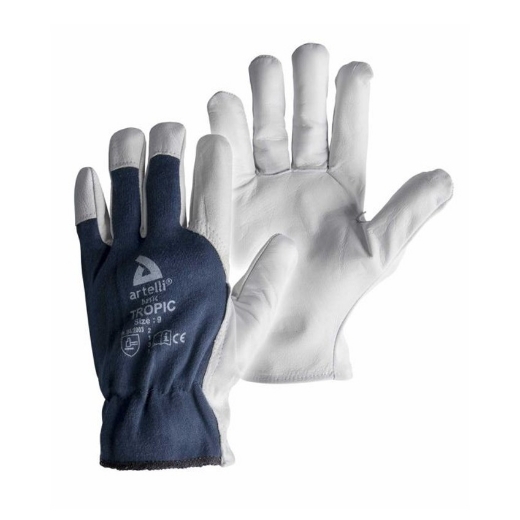
Rough handling
Timber, pallets, sharp edges and cold outdoor work? The Tropic leather glove protects against splinters and insulates against cold.
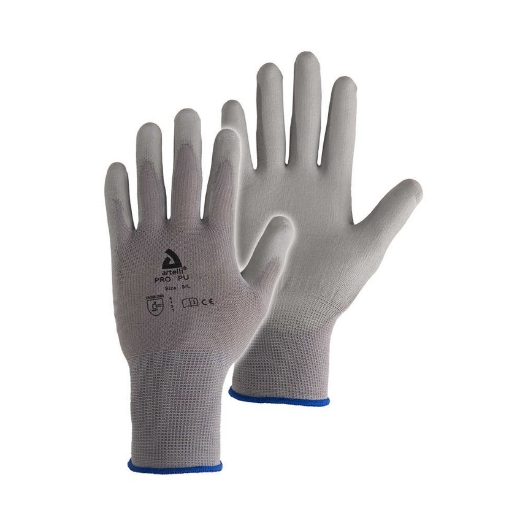
Grip & assembly
Daily assembly, fine work, mechanics? The Pro-PU grey gives precise grip; the Pro-nitril plus adds oil and grease resistance.
What do the EN 388 numbers on a work glove mean?
EN 388 is the European standard for gloves against mechanical risks, shown as a shield pictogram with four digits and sometimes extra letters. The four positions rate, in order, abrasion resistance (0-4), cut resistance by the coup test (0-5), tear resistance (0-4) and puncture resistance (0-4). A higher number means more protection. A letter after the digits (A to F) gives the newer TDM cut-resistance rating for sharp jobs.
Read it from left to right and match it to your task. Handling cardboard and pallets? Abrasion and tear matter most. Stripping sheet metal or glass? Cut resistance comes first. The pictogram lets you compare two gloves objectively instead of guessing.
Which glove is best for wet and dirty jobs?
For wet, dirty and cold-water work you want a fully coated waterproof glove, and ours is the Artelli Ocean PVC. With its 27 cm length it reaches over the wrist and onto the forearm, so water and dirt cannot run inside while you work in drains, ponds, fish handling or general cleaning. It is our single best-selling glove.
For lighter wet jobs that still need dexterity, the Artelli Pro-clean industrie Latex is a thinner liquid-tight option available down to size 7 (S) for smaller hands. PVC suits the rougher, longer-contact work; latex suits the finer cleaning and dipping tasks.
In our Beerse shop the Ocean PVC is the glove people come back for again and again; it is by far our most-handed-over glove for wet work.DHZ-Proshop vakteam, Beerse
Which glove protects against chemicals?
For contact with cleaning agents, solvents, acids or paints you need a dedicated chemical-resistant glove, and our pick is the Artelli Pro-chemie Neopreen plus. Neoprene resists a broad range of chemicals and stays flexible, which is why this glove ranks second in our category.
Always check the chemical against the glove's resistance data before prolonged contact, because no single material stops every substance. A standard PU or nitrile assembly glove is not a chemical glove: it protects your grip, not your skin against solvents. View the Pro-chemie Neopreen plus for the full specification.
Which leather is best for work gloves?
Good work-glove leather is supple split or grain leather that resists abrasion, splinters and heat while staying comfortable, and the Artelli Tropic uses exactly that for rough handling and cold-weather work. Leather shines where synthetic coatings wear through fast: lifting timber, moving pallets, stacking bricks and gripping sharp or hot edges. The Tropic also insulates against cold, which makes it a year-round outdoor choice. It is a popular choice.
Leather grips dry materials well but loses its advantage when wet, so keep it for dry, abrasive work and switch to a coated glove for oily or soaked conditions. See the Artelli Tropic leather glove in size 9 (L).
Which glove gives the best grip for assembly and general work?
For daily assembly, fine handling and general gripping, a thin PU- or nitrile-coated knit glove beats every alternative on dexterity. The Artelli Pro-PU grey gives clean, precise grip on dry parts and is a popular choice. When the work turns greasy or oily, step up to the Artelli Pro-nitril plus, which adds oil and grease resistance and is also a popular choice.
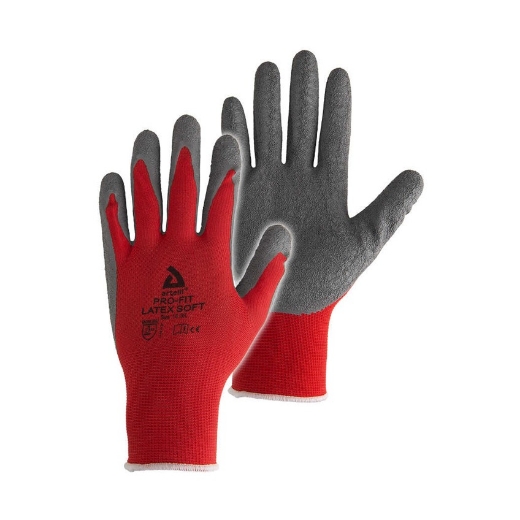
Prefer a soft, cushioned feel for long shifts? The Artelli Pro-latex soft uses a foamed latex palm for extra grip and comfort, available from size 9 (L) up to size 11 (XXL). For a cleaner look in white, the Artelli Pro-PU white offers the same PU grip.
How do I choose the right glove size?
Choose the size that fits snugly without pinching, because a loose glove slips and a tight one tires your hand. Artelli sizes follow the standard numeric scale, so match the number to your usual clothing size: 7 = S, 8 = M, 9 = L, 10 = XL, 11 = XXL. Measure around the widest part of your palm if you are unsure; the centimetre measurement roughly equals the glove number.
| Glove size | Clothing size | Typical hand |
|---|---|---|
| 7 | S | Small hand |
| 8 | M | Average hand |
| 9 | L | Larger hand |
| 10 | XL | Big hand |
| 11 | XXL | Very big hand |
For waterproof and leather gloves, allow a touch of extra room if you wear a thin liner underneath. For assembly gloves, go snug so you keep your feel for small parts.
Common mistakes when choosing work gloves
- Using an assembly glove for chemicals: a PU or nitrile knit glove protects your grip, not your skin against solvents. For chemical contact you need a dedicated neoprene glove like the Pro-chemie.
- Trusting any work glove for live electrical work: standard EN 388 gloves are not electrically insulating. Live work needs certified dielectric gloves tested to EN 60903.
- Choosing the glove on colour instead of EN 388: the four-digit code tells you abrasion, cut, tear and puncture resistance. Read it before you buy.
- Wearing the wrong size: a loose glove slips off and kills your grip; a tight glove tires and tears. Match 8 = M, 9 = L, 10 = XL.
See the full selection in our work gloves category or browse all your tools and building materials in Belgium on the DHZ-Proshop webshop.
Frequently asked questions about work gloves
What are the best work gloves?
Which leather is best for work gloves?
What jobs require gloves?
Which gloves are safe for working with electricity?
What do the EN 388 numbers mean?
How do I choose my glove size?
Compiled by the DHZ-Proshop vakteam, your do-it-yourself and trade supplier with a shop and pickup point in Beerse. What we hand over most in the shop is the Artelli Ocean PVC for wet work and the Pro-PU grey for assembly, because they cover the two jobs customers ask about most. Not sure which glove fits your task or which size? Contact our team or browse the full work gloves category.