Bright steel, zinc-plated steel or stainless A2, which material for which bolt? The material choice for bolts and nuts determines whether your connection is still intact in ten years' time or has long since succumbed to rust. Bright steel has no surface treatment and is suitable for indoor use only; zinc-plated steel (Cr3) offers decorative protection and a neater appearance; stainless A2 is the choice as soon as moisture, outdoor air or corrosive environments come into play. Below you can quickly choose the right material and the right type of fastener for your project.
Which type of connection for which situation?
Complete range: Bolts & screws.
Bolts, bright steel, zinc-plated Cr3 or stainless A2
Hexagon bolts (DIN 931 partial thread / DIN 933 full thread) and socket bolts (DIN 912 cylinder head / DIN 7991 countersunk), available in all three materials. Bright steel for indoor structural use; zinc-plated Cr3 for visible indoor applications with an industrial appearance; stainless A2 for outdoors, damp rooms and hygiene environments.
Nuts, always in the same material as the bolt
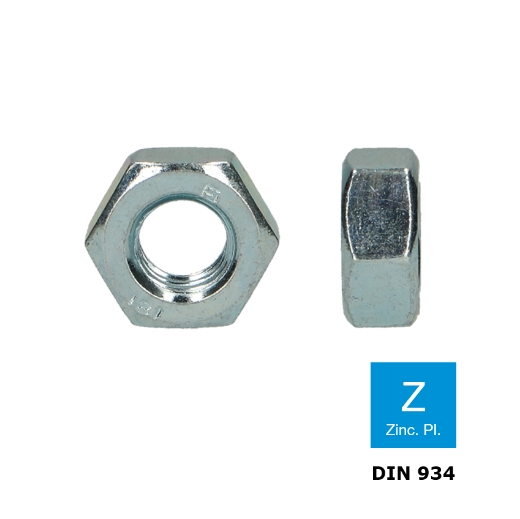
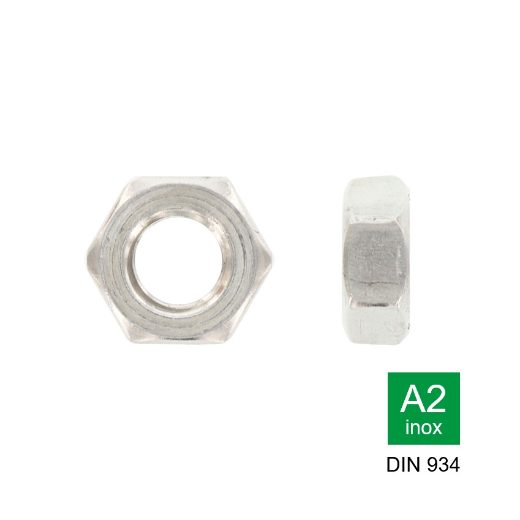
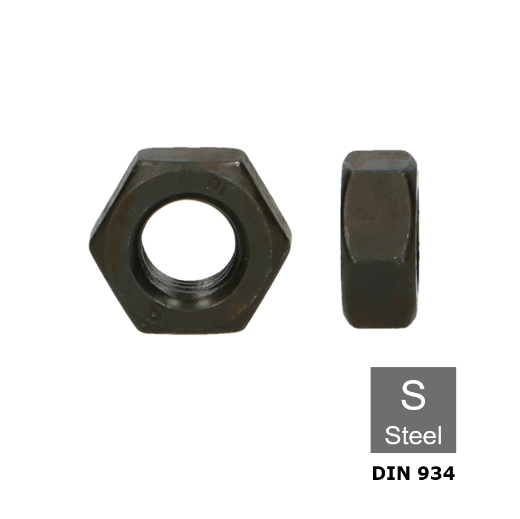
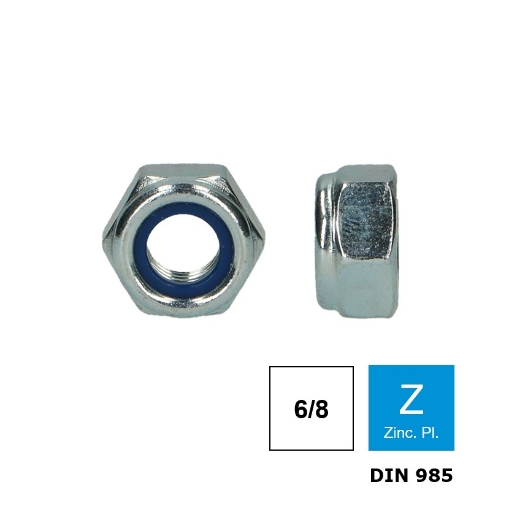
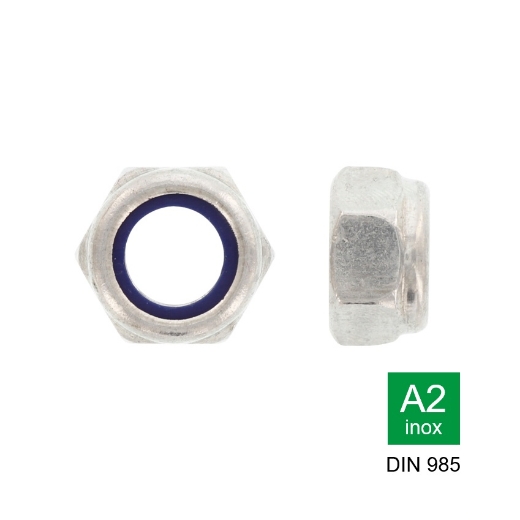
Hexagon nuts DIN 934, never combine with a bolt of a different material. Stainless bolts with steel nuts or vice versa cause galvanic corrosion in the presence of moisture: the less noble metal corrodes faster. Always choose the same material as the bolt (bright steel, zinc-plated Cr3 or stainless A2).
Washers, load distribution and vibration damping
Flat washers DIN 125 distribute the clamping force of the bolt head or nut over a larger surface, indispensable with soft materials such as wood, plastic or aluminium that would otherwise be indented. Spring washers DIN 127 absorb vibrations and prevent loosening under dynamic load. Washers too should always be in the same material as the bolt and nut.
Blind rivets, single-sided connection without a nut
Blind rivets are the solution when the back of the connection is not accessible for a nut, closed profiles, gutters, chassis work, thin sheet fastenings. Applied from one side, they expand at the rear into a permanent rivet head. Available in aluminium, steel and stainless steel.
Bright steel, zinc-plated Cr3 and stainless A2, the differences in detail
Bolts are not just a size and a thread pitch, the material determines how long the connection remains intact. The three materials available as standard at DHZ-Proshop together cover almost all use situations, but each has its own logic.
- Bright steel, strong, but without protection: Bright steel is pure structural steel (iron + carbon) without any surface treatment. The black-brown colour you see is the result of cooling in an oil bath during production, this is not a protective layer, merely a by-product of the manufacturing process. Bright steel therefore has virtually no corrosion resistance: even indoor humidity can cause rust formation under prolonged exposure to moisture. The correct application is indoor structural use in dry rooms: load-bearing structures of shelving, racks, furniture construction and industrial constructions. Advantage: bright steel is the hardest and strongest of the three materials, and has a raw industrial appearance that can be deliberately used aesthetically in furniture or interior elements with an industrial look.
- Zinc-plated steel Cr3, electrolytically zinc-plated with passivation: Zinc-plated bolts are Cr3 quality: electrolytically zinc-plated, where the zinc layer is passivated after application. That passivation considerably slows the oxidation of the zinc and gives the bolts their characteristic silver-grey glossy appearance. The zinc acts as a sacrificial layer that galvanically sacrifices itself in favour of the underlying steel. Crucial to understand: zinc-plated steel is not stainless. Once the zinc layer has been eaten through, the steel too rusts quickly. In dry indoor situations, Cr3 zinc plating provides years of protection. In damp outdoor environments or under prolonged exposure to rain, the lifespan is limited and stainless A2 is the better choice. Zinc-plated steel is the prime choice for visible fastenings indoors, think of socket bolts DIN 912 for neatly finished furniture connections or DIN 7991 countersunk socket bolts that disappear completely into the workpiece.
- Stainless A2 (AISI 304), stainless for outdoors and damp environments: Stainless A2 is stainless steel with 18% chromium and 8% nickel (also known as 18/8 steel). The chromium forms a stable, self-repairing passive oxide layer that structurally counteracts rust formation, even if the surface is damaged, this layer repairs itself when oxygen is present. A2 is resistant to atmospheric conditions, rain, condensation and non-oxidising acids. The applications: outdoor work (terraces, gates, pergolas), damp rooms (bathroom, sauna, swimming pool) and situations with hygiene requirements (food industry, hospitality). Point of attention: stainless A2 is not fully chloride-resistant. In a full marine environment with direct sea salt, A2 can develop localised pitting corrosion; in that case choose stainless A4 (AISI 316, with added molybdenum for higher Cl resistance).
- DIN numbers, geometry, not the material: A common misconception is that the DIN number says something about the material. That is incorrect, the DIN number describes the geometry exclusively. DIN 931 is a hexagon bolt with partial thread (shank partly smooth, partly threaded): ideal when the shank takes up a shearing force or when you want to fit the bolt in a close-fitting smooth hole. DIN 933 is a hexagon bolt with full thread, the standard for most through-going connections. DIN 912 (socket cylinder head) and DIN 7991 (socket countersunk head) are socket bolts: the head disappears completely or almost completely into the workpiece, handy when there is no room for a hexagon wrench or when a sleek appearance is desired.
- Galvanic corrosion, the most dangerous mistake in bolted connections: When two dissimilar metals are in electrical contact in the presence of an electrolyte (rain, condensation, humidity), a galvanic cell is created: the less noble metal corrodes faster. In practice this means: never combine a stainless bolt with a zinc-plated nut or vice versa. Zinc is less noble than stainless steel, the zinc layer of the nut is attacked faster as soon as moisture is involved. This is not a theoretical risk: on terraces and outdoor work, one regularly sees zinc-plated nuts that have rusted through after just one winter because they were combined with stainless bolts. Always use a bolt, nut and washer of the same material.
Frequently asked questions about bolt materials
What is the difference between bright steel and zinc-plated steel for bolts?
When do I choose stainless A2 and when is it not sufficient?
Should I always choose nuts and washers in the same material as the bolt?
What is the difference between DIN 931 (partial thread) and DIN 933 (full thread)?
When do I use a socket bolt (DIN 912) instead of a hexagon bolt?
When do I use blind rivets instead of a bolt-nut connection?
What do I use a spring washer for and when does a flat washer suffice?
Posted by the material expert team at DHZ-Proshop, specialist in bolts, screws & fastening materials. Webshop available 24/7 & collection point in Beerse (province of Antwerp). Questions about the right material choice? Contact our team.