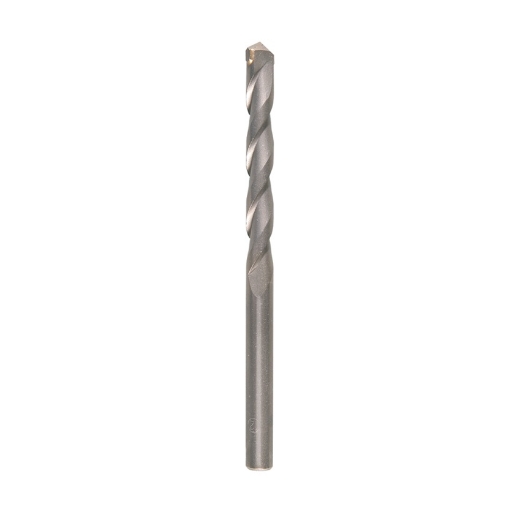
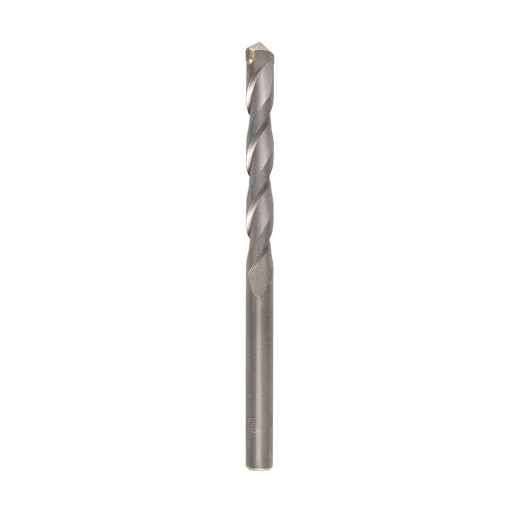
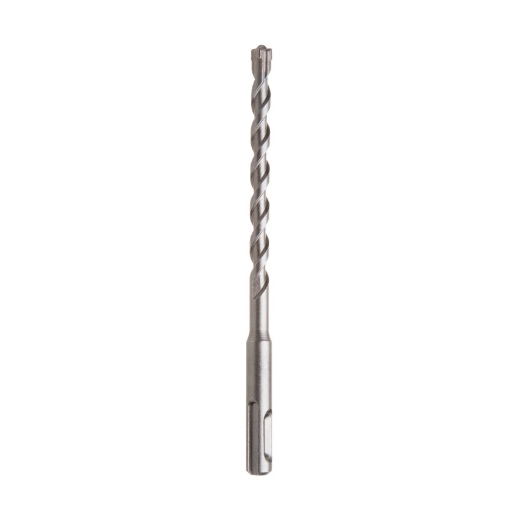
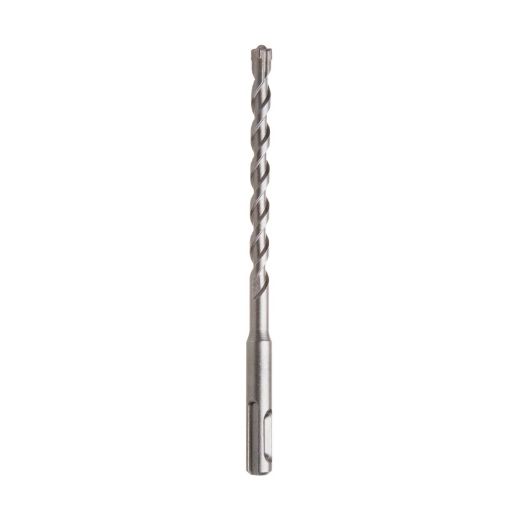
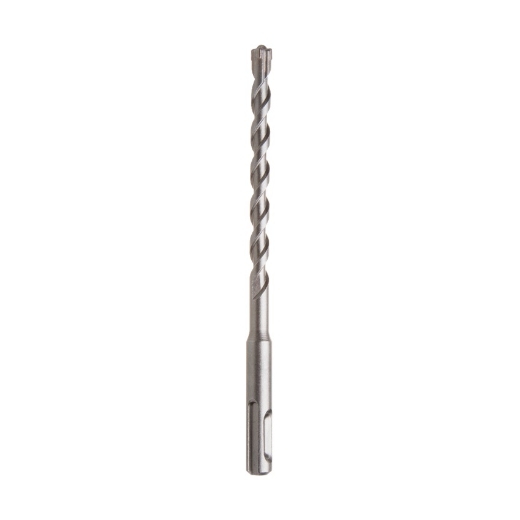
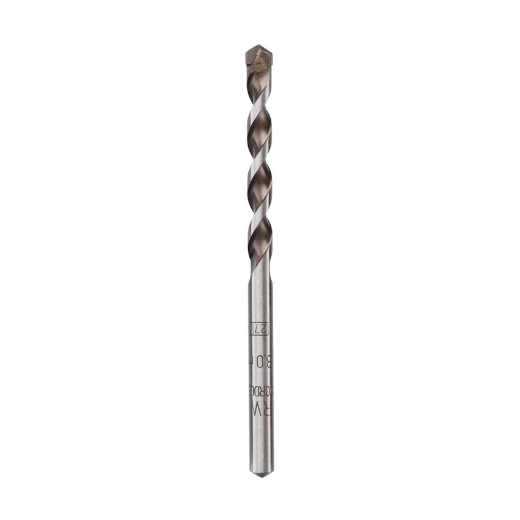
The substrate decides the drill bit, not the other way round. For concrete you need an SDS-plus bit with a carbide tip, run through a hammer drill so the shank locks and slides freely in the chuck. For brick and sandlime brick a cylindrical (straight) shank bit in an ordinary impact drill is usually enough, since the material is softer and less abrasive. Diameter always follows the plug or anchor you plan to use, for example a 6mm bit for a 6mm plug, never larger. Get the connection wrong and the bit slips in the chuck under load; get the diameter wrong and the fixing never grips.
Not sure which masonry drill bit fits your wall? Browse the full range in our masonry drill bits category, where SDS-plus, straight-shank and diamond bits are all listed with their exact specifications.
- Concrete asks for an SDS-plus bit with a carbide tip in a hammer or SDS drill, not a plain straight-shank bit.
- Brick and sandlime brick are softer, so a cylindrical shank bit in an ordinary impact drill does the job in most walls.
- The diameter must match the plug exactly; a 6mm plug needs a 6mm hole, never 8mm "to be safe".
- For clean openings in brick without hammer action, for example for cables or pipes, a diamond dry-drilling bit is the correct tool.
Overview: which masonry drill bit for which job?
The table below lines up the actual masonry bits from our range by connection, diameter and the substrate they suit best. Use it to shortlist before you check the full masonry drill bits assortment.
| Product | Brand | Shank / connection | Diameter | Ideal for |
|---|---|---|---|---|
| Labor betonboor HM 6x100mm | Labor | Straight shank, 130° tip | 4.1 - 6mm | Light masonry, standard impact drill |
| Labor betonboor HM 8x120mm | Labor | Straight shank, 130° tip | 6.1 - 8mm | Brick and sandlime brick fixings |
| Irwin multi-material bit 6x160mm | Irwin | Straight shank | 4.1 - 6mm | Mixed jobs: brick, tile and metal in one wall |
| Irwin multi-material bit 8x200mm | Irwin | Straight shank | 6.1 - 8mm | Sandlime brick, plasterboard-over-masonry combos |
| Irwin masonry bit 8x400mm | Irwin | Straight shank | 6.1 - 8mm | Deep holes through cavity brick walls |
| Labor SDS-Plus premium 4-cutter 6x100/160mm | Labor | SDS-plus, chrome-molybdenum/carbide | 4.1 - 6mm | Concrete with an SDS hammer drill |
| Labor SDS-Plus premium 4-cutter 8x150/210mm | Labor | SDS-plus, chrome-molybdenum/carbide | 6.1 - 8mm | Concrete anchors, deeper fixings |
| Labor SDS-Plus premium 4-cutter 10x250/310mm | Labor | SDS-plus, chrome-molybdenum/carbide | 8.1 - 10mm | Larger anchors, through thick concrete walls |
| Labor SDS-Plus premium 4-cutter 16x390/450mm | Labor | SDS-plus, chrome-molybdenum/carbide | 15.1 - 20mm | Heavy-duty anchors, deep concrete penetration |
| Irwin SDS+ Speedhammer Plus 6x260mm | Irwin | SDS+ plus | 4.1 - 6mm | Repeated concrete drilling, fast chip removal |
| Carat Brilliant diamond brick bit set 112/132/162mm | Carat | Dry diamond core, with centring pin | 112 / 132 / 162mm | Clean openings in brick, no hammer function |
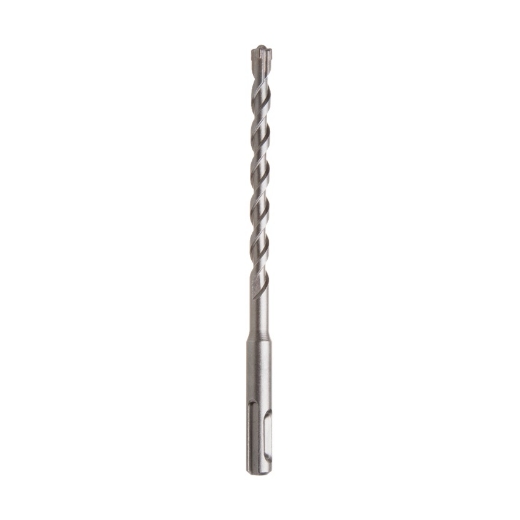
Concrete, most-chosen SDS-plus
The Labor SDS-Plus premium 4-cutter 6x100/160mm is one of our most chosen bits for exactly this job: fast, clean holes in dense concrete with an SDS hammer drill.
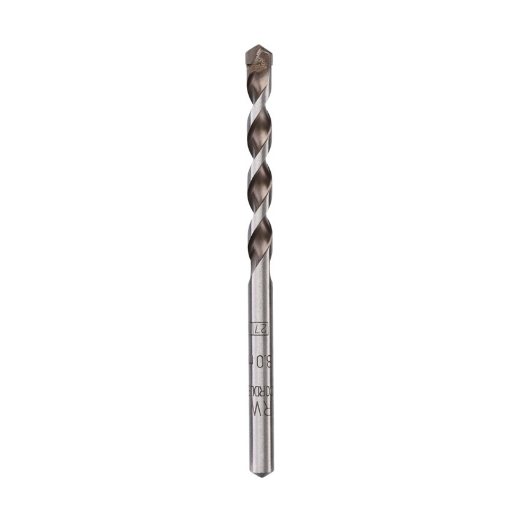
Brick and mixed materials
The Irwin multi-material bit 8x200mm handles brick, sandlime brick and the occasional tile or plate in one straight-shank bit, ideal for a standard impact drill.
Deep holes through cavity walls
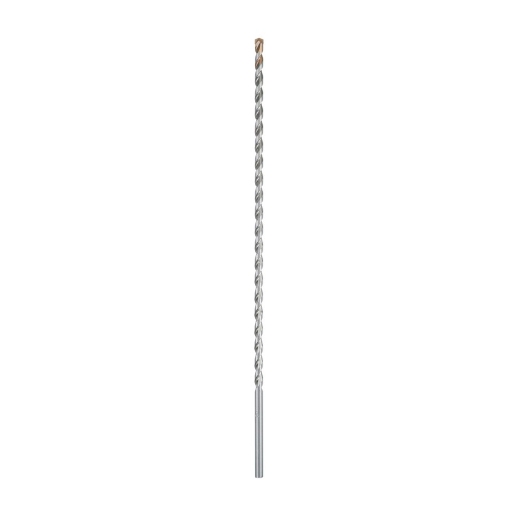
The Irwin masonry bit 8x400mm reaches through thick brick or block walls in a single pass, useful for cabling or fixings that need extra depth.
Clean openings, no hammer
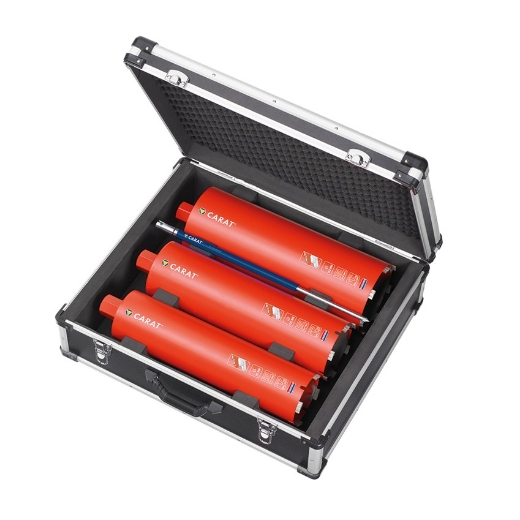
The Carat Brilliant diamond brick bit set drills clean round openings in brick for cables or pipes, with a centring pin and no hammer action needed.
Why does the substrate decide the drill bit?
Concrete, brick and sandlime brick behave completely differently under a rotating, hammering tip. Concrete is dense and contains hard aggregate, so it needs a carbide tip that keeps cutting under repeated impact. Brick is softer and more porous, so a lighter straight-shank bit already cuts through without excessive force. Sandlime brick sits in between: harder than clay brick, softer than concrete, and it responds well to the same straight-shank bits used for brick, just with slightly more patience.
Ignore the substrate and you pay for it in wear. A straight-shank bit forced into thick concrete overheats and blunts fast. An SDS-plus bit on a thin brick partition is overkill and can crack the brick around the hole if the hammer setting stays on. Match the bit to the wall first, the machine second.
SDS-plus or cylindrical shank: which do I need?
Choose SDS-plus when you drill concrete or reinforced structures with a hammer drill or SDS rotary hammer; the grooved shank locks into the chuck and transfers hammer energy directly into the tip. Choose a cylindrical (straight) shank bit when you work brick, sandlime brick or lighter block with an ordinary drill or impact drill, since the round shank grips fine in a standard three-jaw chuck.
The connection is not cosmetic. An SDS-plus bit only fits an SDS-plus chuck, so it will not work in a standard drill at all. A straight-shank bit fits a normal chuck but slips under heavy hammer load in dense concrete, which chews up the shank and ruins your hole. Our range covers both: the Labor SDS-Plus premium 4-cutter series for concrete, and the Irwin multi-material and standard masonry bits for brick work with a straight shank.
In our shop in Beerse, customers drilling into a concrete lintel almost always leave with an SDS-plus bit, while anyone working on an interior brick wall picks up a straight-shank bit instead.DHZ-Proshop craft team, Beerse
Which size masonry drill bit should I use?
The diameter of your drill bit must match the plug or anchor you are fitting, never a size larger "to be safe". A 6mm plug always needs a 6mm hole; drilled too wide, the plug spins in the hole instead of expanding against it and loses its grip completely. Our range runs from 4.1mm up to 20mm across the SDS-plus 4-cutter series alone, covering everything from small picture hooks to heavy anchor bolts.
For fixings without a plug, such as a wall bracket screwed straight into brick with a frame anchor, follow the fixing manufacturer's recommended pilot diameter instead of guessing. When in doubt, drill the smaller size first and test the fit; you can always open a hole up, but you cannot shrink one that came out too wide.
Which drill bit is best for concrete?
For concrete, an SDS-plus bit with a carbide 4-cutter tip is the correct choice, driven by a hammer drill or SDS rotary hammer. The Labor SDS-Plus premium 4-cutter range covers 4.1mm through 20mm diameters, with the 6x100/160mm size counting among our most chosen bits for everyday concrete fixings. The 4-cutter geometry keeps the bit centred and clears dust efficiently, which matters most once you pass 100mm of usable length in solid concrete.
For repeated concrete drilling on site, the Irwin SDS+ Speedhammer Plus 6x260mm adds extra reach at 260mm total length, useful when you need to punch through a thicker wall or slab in one pass rather than extending the hole in stages.
Which drill bit suits brick and sandlime brick?
Brick and sandlime brick drill cleanly with a straight-shank masonry bit in a standard or impact drill, without needing the SDS-plus system at all. The Labor betonboor HM series (6x100mm and 8x120mm) and the Irwin multi-material bits cover the common diameters for plugs and light fixings in these substrates. Their 130° point on the Labor range is ground to bite into masonry immediately, rather than skating across the surface on the first turns.
For deeper penetrations, for example through a full cavity wall or a thick sandlime brick partition, reach for the Irwin masonry bit 8x400mm rather than extending a short bit with force. Its extra length keeps the bit straight over the full depth of the hole, which a short bit pushed to its limit cannot manage.
When do I need a diamond bit instead of a masonry bit?
Reach for a diamond dry-drilling bit when you need a clean, round opening in brick for cables, pipes or ventilation, without any hammer action at all. The Carat Brilliant diamond brick bit set covers 112mm, 132mm and 162mm diameters over a 420mm length, with a centring pin that keeps the core bit steady as it starts cutting. A standard masonry or SDS-plus bit is not designed for these larger diameters and will not give the same clean edge.
Diamond core bits cut by abrasion rather than by hammering, so they run in the plain rotary setting of your drill. Keep the tool speed moderate and let the segmented rim do the work; forcing a diamond bit only wears the segments faster without speeding up the cut.
Common mistakes when choosing a masonry drill bit
- Using a straight-shank bit in a rotary hammer: the shank was never designed for SDS hammer energy and slips or snaps under load.
- Drilling concrete with a light masonry bit: a standard 130° tip wears out fast against dense aggregate; switch to an SDS-plus carbide 4-cutter instead.
- Choosing a diameter larger than the plug: an oversized hole lets the plug spin freely and never develops its grip.
- Running the hammer function for a diamond core bit: diamond bits cut by rotation only; hammering chips the segments and cracks the brick edge.
Find every diameter and connection in our masonry drill bits category before you start a job.
Frequently asked questions about masonry drill bits
Which masonry drill bit is best for concrete?
What exactly are masonry drill bits?
Which size masonry drill bit should I use?
What colour is a masonry drill bit?
Which drill bit do I need specifically for concrete rather than brick?
SDS-plus or straight shank: which connection do I need?
Compiled by the craft team of DHZ-Proshop, your DIY and trade supplier with a shop and collection point in Beerse. What we advise most often in the shop: check your drill's chuck type first, then match the bit diameter to your plug, and only then decide on concrete versus brick. Questions about the right masonry bit for your wall? Contact our team or browse the full masonry drill bits category.