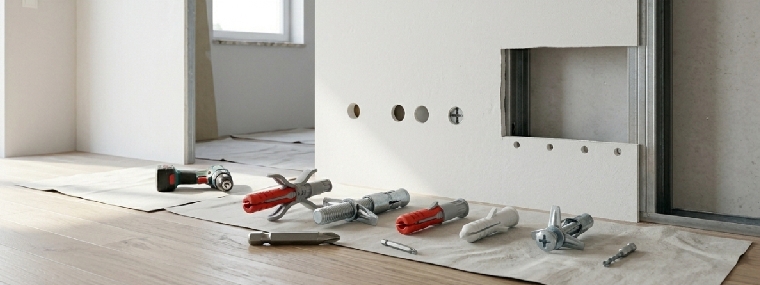
Which Hollow Wall Anchor for Your Job? (Quick Weight + Wall Type Guide)
For hollow walls, you choose the anchor on two things: the board thickness and the weight of the load. In short: the Duoblade is the fast choice for light objects, the HM and GKM are strong plugs for general plasterboard mounting, the DuoTec is the versatile powerhouse for heavy loads, and classic toggle plugs give maximum load distribution. A hollow wall has a cavity or a thin board skin, so the anchor must spread the load behind the surface instead of relying on solid material in front of it. That is why a solid-wall plug fails fast in plasterboard: it spins, crushes the board or pulls out.
Which hollow wall anchor do you use for your job? On the Fischer plate and hollow-wall fixings page at DHZ-Proshop you will find DuoTec, toggle plugs, HM hollow-wall plugs, Duoblade and GKM metal plasterboard plugs, each for a different board thickness and load level. This guide lines them up quickly.
Overview: which plug for which load?
Browse the full Fischer hollow-wall fixings range in our webshop. The table links the load level to the right plug.
| Load | Best plug | Type |
|---|---|---|
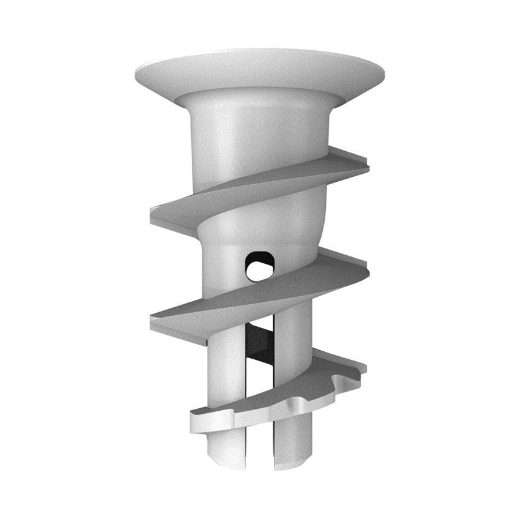
| Very light | Duoblade | Self-drilling plasterboard plug |
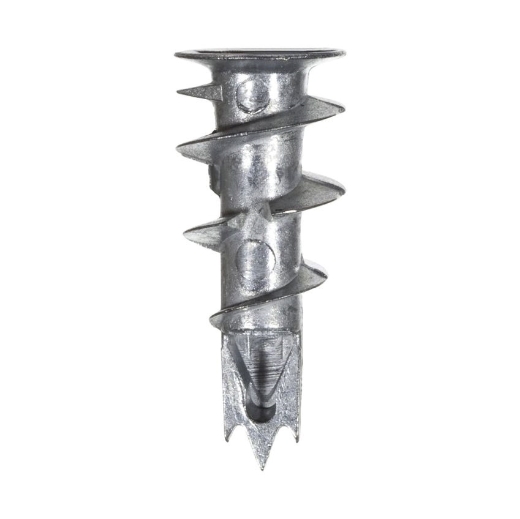
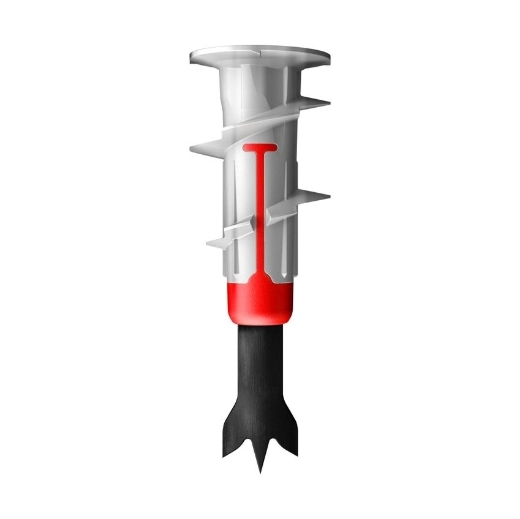
| Light to medium | GKM or HM | Metal plasterboard / hollow-wall plug |
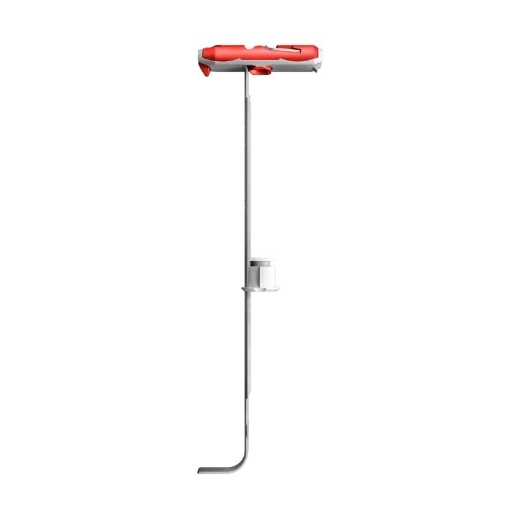
| Medium to heavy | DuoTec | Two-component toggle plug |
| Heavy, max. spread | Toggle plug (KD/KDH) | Classic toggle plug |
Light objects
Small mirror, picture frame, cable clip? You screw the self-drilling Duoblade straight into plasterboard, without pre-drilling a large hole.
Plasterboard, general
Lighting, towel rail, curtain rails? The metal GKM or the HM hollow-wall plug give a firm, reliable grip.
Heavy loads
Bracket or heavier cabinet? The DuoTec folds open behind the board for high tensile and shear forces, even in tight cavities.
Maximum load distribution
Heavy shelf or cabinet pulling hard on the wall? A classic toggle plug spreads the load over a large rear-side area.
Start with the wall type and board thickness
The first question is whether the wall is standard plasterboard, double-layer board, a cavity wall or a narrow, insulated void. That changes the plug choice immediately. Thin plasterboard often accepts light hollow-wall plugs or self-drilling solutions; thicker or double board needs stronger anchors with better spread behind the surface.
Hollow-wall anchors are not interchangeable across board thicknesses. A plug that works in single-layer plasterboard is not ideal for double board or insulated cavities. If the cavity is narrow or packed with insulation, you need a plug that works with short rear-side spread. That is why the DuoTec is so useful: the short toggle element and the hole of just 10 mm work even in narrow and insulated cavities.
Light loads: Duoblade
For light objects such as small mirrors, frames, cable clips or light accessories, a fast hollow-wall plug is enough. The Fischer Duoblade, the newest member of the DuoLine, is the fast choice here: you screw the self-drilling point straight into the plasterboard with a (cordless) screwdriver, without pre-drilling a large hole.
The limitation is clear: light anchors are not the right choice for shelves, cabinets or anything that pulls or levers often. They are convenience anchors, not heavy-load solutions.
General plasterboard mounting: HM and GKM
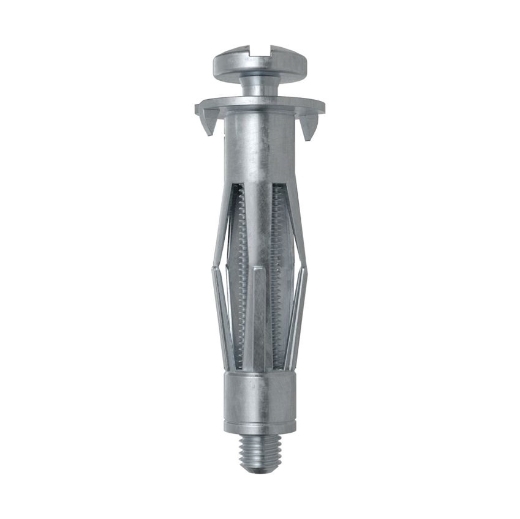
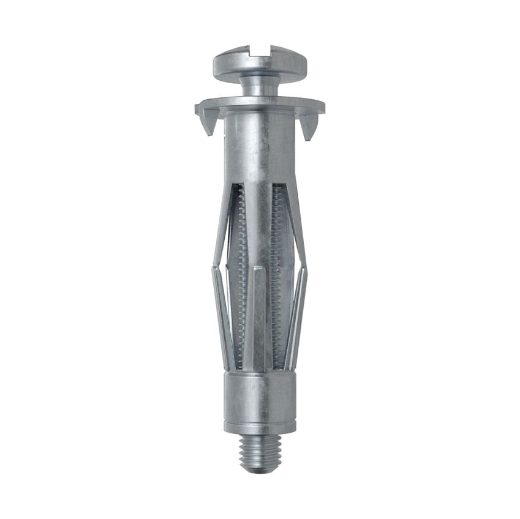
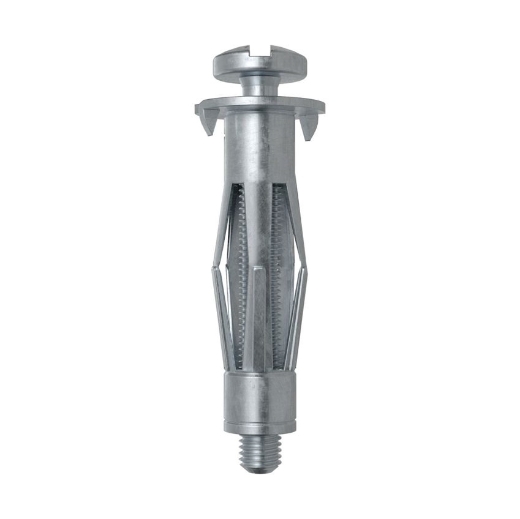
The Fischer HM metal hollow-wall plug is a strong middle-ground choice for many hollow-wall jobs, with a metric thread for lighting, towel rails, curtain hardware and other medium-duty mounting. The metal body spreads behind the wall for a more secure grip than a basic plastic plug. The HM is set with a special tool (HM-Z pliers) that pulls the plug into the cavity behind the board, after which the arms spread open.
The GKM metal plasterboard plug is the self-tapping metal choice for plasterboard and gypsum fibreboard. The sharp, self-drilling thread cuts a form-fit into the board; in single-layer plasterboard you do not need to pre-drill and you just use a cross-head bit. Thanks to its short length, little space is needed behind the board, so the GKM also works when the board thickness and cavity depth are unknown. Note: the GKM is not suitable for tiled plasterboard.
Heavy loads: DuoTec and toggle plugs
The Fischer DuoTec is a two-component toggle plug that reaches exceptionally high loads for the toggle category. In board material with a cavity behind it, it is set as a toggle plug; the toggle element folds open automatically behind the board and so deploys the load capacity. In solid material, the same plug can work as a spread plug. It does not need to be cut, so the plasterboard is not weakened, and it does not fall into the hole even without the screw. You use it with wood or chipboard screws, hooks or metric threaded rod. For heavier fixtures and brackets, the DuoTec is often the answer when a standard hollow-wall plug feels too light.
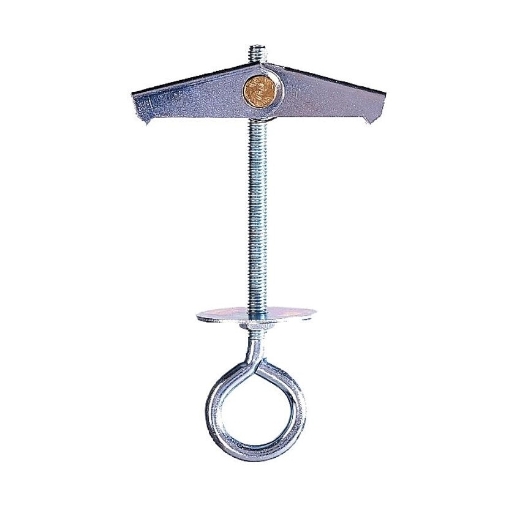
Classic toggle plugs (such as the KD/KDH) remain the heavy-load solution when you want maximum load distribution. A tilting element opens behind the wall and spreads the load over a large area, ideal for heavy shelves, cabinets and rails. The trade-off: they need more space behind the wall and are more installation-sensitive, so not always the quickest option.
Load direction: tensile versus shear
A hollow-wall anchor is chosen not just by weight, but by how the load acts on the wall. A hanging lamp or small sign behaves differently from a shelf or cabinet that pulls away from the wall.
Tensile (pull-out) load is usually the most dangerous for hollow walls, because it tries to yank the anchor straight out. Shear load is more forgiving, because it presses downward along the wall plane rather than directly away from it. That is why heavy shelves and cabinets need stronger anchors like the DuoTec or a toggle plug, while light decoration gets by with a simple solution. The load direction matters as much as the load size.
Common mistakes
- A solid-wall plug in a hollow wall: it does not open correctly and can fail under load. Use a true hollow-wall anchor.
- Treating all hollow-wall plugs as equal: a light blade anchor is not the same as a DuoTec or a toggle plug.
- Ignoring the board thickness: if the wall is too thin or too thick for the anchor's design, the plug does not deploy correctly. The wall and the anchor have to fit each other.
Browse the full selection via our Fischer hollow-wall fixings category or find all your fasteners and building materials in Belgium at the DHZ-Proshop webshop.
Frequently asked questions about hollow-wall plugs
Which hollow-wall plug do I use for a heavy cabinet?
What is the difference between the DuoTec and an ordinary toggle plug?
Which plug for light objects in plasterboard?
When do I choose the GKM and when the HM?
Why does an ordinary plug fail in a hollow wall?
How important is the board thickness?
Posted by the fastening expert at DHZ-Proshop, premium Fischer dealer and your specialist in hollow-wall plugs: DuoTec, toggle plugs, HM, Duoblade and GKM. Webshop available 24/7 and pick-up point in Beerse. Questions about the right plug for your hollow wall? Contact our team or browse our complete range of fasteners.