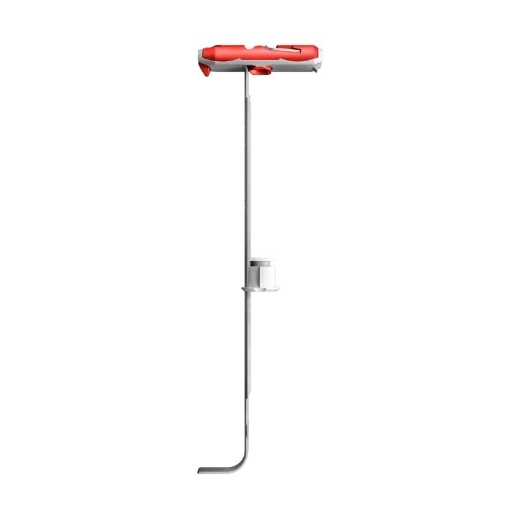
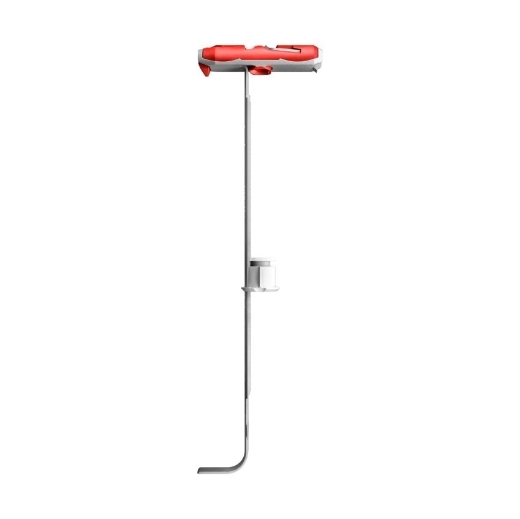
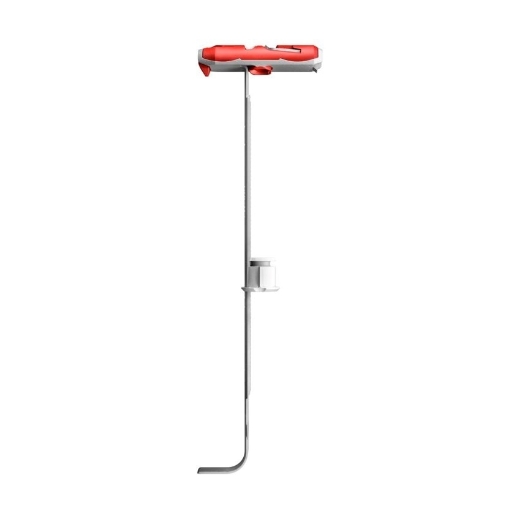
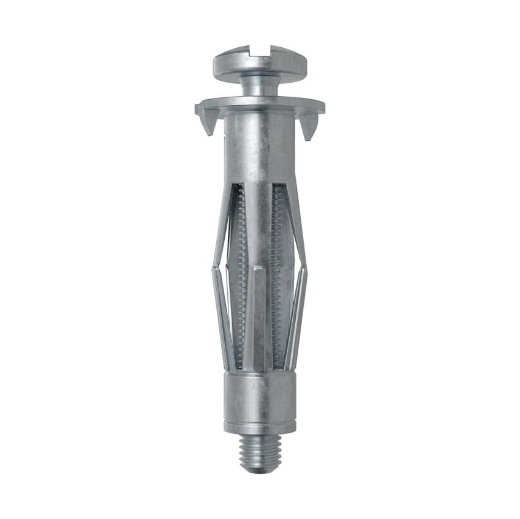
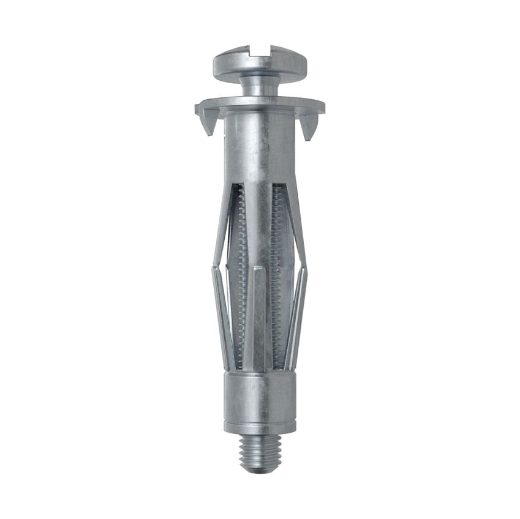
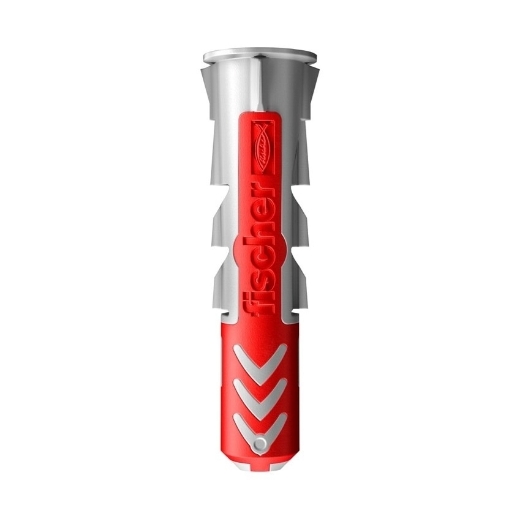
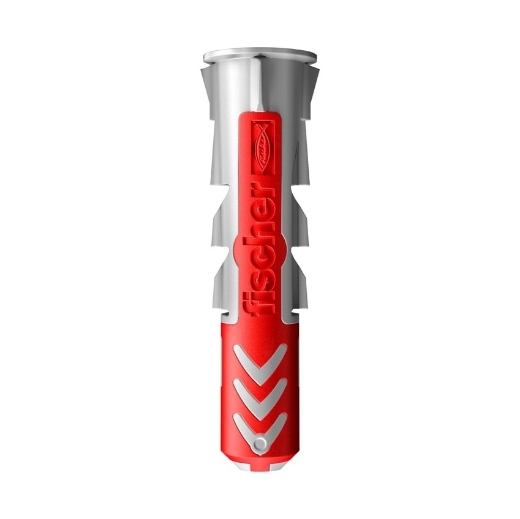
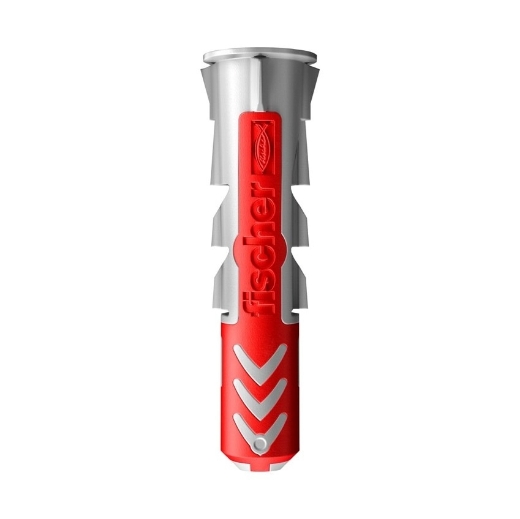
For solid concrete you use universal plugs such as the Fischer UX or SXR. For hollow brick (aerated brick, plaster blocks, Ytong) you choose special cavity wall plugs such as the Fischer GB, FID or chemical anchors such as FIS V. The crucial difference: in solid material the plug works through friction, while in hollow brick the plug must expand behind the wall or bond for load capacity.
Which plug for hollow brick versus solid concrete? In this selection guide you'll discover which Fischer plug to use per substrate, how to drill and fit correctly, and which mistakes to avoid for a safe fixing of light to heavy loads.
Overview: which plug for which substrate?
| Substrate | Recommended Fischer plug | Max. load (safe) | When to choose |
|---|---|---|---|
| Solid concrete | Fischer UX, SXR, ULTRACUT | 20-150 kg per plug | For heavy loads, outdoors, damp areas |
| Solid brick | Fischer UX, SXR, DUOPOWER | 15-80 kg per plug | For facades, internal walls, medium-heavy loads |
| Hollow aerated brick | Fischer GB, FID, chemical anchor FIS V | 5-40 kg per plug | For internal walls, light to medium-heavy loads |
| Plaster blocks / Ytong | Fischer GK, GKB, chemical anchor | 3-25 kg per plug | For light internal walls, very soft substrate |
| Heavy load in hollow wall | Fischer FIS V + sieve sleeve, push-through fixing | 50-200+ kg per anchor | For cabinets, sanitary ware, heavy structures |
Quickly choosing the right plug
Browse the full range of Fischer plugs in our webshop. Choosing the right plug starts with identifying your substrate and estimating the load.
Solid concrete or solid brick
For solid substrates a universal plug such as the Fischer UX or SXR is sufficient. These work through friction: the plug expands in the drill hole and clamps the screw tight. Ideal for brackets, handrails and heavy loads.
Hollow aerated brick (indoors)
For hollow walls such as aerated brick you use plugs that expand behind the wall: Fischer GB, FID or a toggle anchor. These grip on the back of the wall, not through friction.
Heavy load in hollow wall
For heavy loads such as kitchen cabinets or sanitary ware in hollow walls you choose a chemical anchor (Fischer FIS V) with sieve sleeve. This bonds the screw to the substrate for maximum load capacity.
Plaster blocks or Ytong
For very soft materials such as plaster or Ytong you use special plasterboard plugs (Fischer GK) or chemical anchors. Mechanical plugs quickly tear out this substrate.
Unsure about the substrate?
Drill a test hole: does hard dust/grit come out? Then it's solid. Does soft powder come out or do you break through the wall? Then it's hollow or soft. When in doubt, choose a safer option.
Estimating the load
Calculate with a safety factor of 4x: for a load of 10 kg you choose a plug that can take at least 40 kg. For hollow walls, always calculate more conservatively than for solid.
Identifying the substrate: hollow brick versus solid
The most common mistake is choosing the wrong plug by misjudging the substrate. Here's how to tell the difference:
Solid concrete
- Characteristics: Very hard, heavy, homogeneous material
- Drilling result: Fine, hard dust/grit, drill goes slowly
- Tap test: Dull, heavy sound
- Typical use: Foundations, load-bearing walls, floors, facades
Solid brick
- Characteristics: Hard but more porous than concrete, red/brown in colour
- Drilling result: Reddish powder, moderate resistance
- Tap test: Solid but less dull sound than concrete
- Typical use: Facade walls, partition walls, older houses
Hollow aerated brick
- Characteristics: Lightweight, visible air pockets at the cut edge
- Drilling result: Soft powder, drill sometimes suddenly breaks through
- Tap test: Hollow, echo-like sound
- Typical use: Internal walls, non-load-bearing partition walls
Plaster blocks / Ytong
- Characteristics: Very soft, white/light grey, easy to cut
- Drilling result: Fine white powder, very low resistance
- Tap test: Very dull, soft sound
- Typical use: Light internal walls, renovation
Fitting correctly: step by step
For solid concrete or solid brick
- Drill diameter: Use exactly the diameter of the plug (e.g. 6mm plug = 6mm drill)
- Drill depth: Drill 10mm deeper than the plug length to collect dust
- Cleaning: Blow the hole dust-free with a pump or compressed air
- Placing the plug: Tap the plug in lightly until it sits flush
- Choosing the screw: Use the recommended screw diameter (see packaging)
- Tightening: Tighten until the plug expands, but do not force it
For hollow aerated brick
- Check wall thickness: Measure the thickness of the brick before drilling
- Drill carefully: Use a sharp masonry drill, without hammer action, to prevent cracks
- No hammer setting: For hollow or soft materials always drill without hammer action
- Select the plug: Choose a plug that is shorter than the wall thickness minus 10mm
- Placing: For GB/FID plugs: insert the plug and tighten until it expands behind the wall
- Check: Pull lightly on the plug to check that it grips well
For chemical anchors in a hollow wall
- Place the sieve sleeve: First place a sieve sleeve in the drill hole
- Cleaning: Blow the hole thoroughly dust-free (crucial for adhesion)
- Mixing: Press out the first 2-3 cm of resin to ensure good mixing
- Injecting: Fill the hole from the back to the front with FIS V resin
- Placing the screw: Slowly turn the threaded rod or anchor rod into the resin
- Curing: Wait the full curing time (see product sheet) before loading
Common mistakes when fitting plugs
- Wrong drill diameter: A hole that is too wide = no grip, a hole that is too narrow = plug breaks or wall cracks
- Not removing dust: Dust in the hole significantly reduces the grip of mechanical and chemical plugs
- Hammer setting on a hollow wall: The hammer drill setting cracks hollow brick or plaster. Always drill without hammer action in soft materials
- Plug too long for a hollow wall: You drill through the back → plug falls out or the wall is damaged
- Not cleaning the chemical anchor: Without thorough cleaning the resin doesn't bond → the anchor fails under load
- Loading too soon after a chemical anchor: Resin needs time to cure. Always wait the full time
- Universal plug in a hollow wall: UX/SXR plugs do not work in hollow materials. They expand but have no back wall to press against
Load values: guidelines per Fischer plug
These values are indicative for safe applications in Belgian/Dutch homes. Always consult the technical datasheets for exact calculations.
| Plug type | Substrate | Safe working load* | Application |
|---|---|---|---|
| Fischer UX 6 | Concrete, solid brick | 20 kg | Shelves, brackets, light cabinets |
| Fischer SXR 8 | Concrete, solid brick | 40 kg | Heavier cabinets, handrails |
| Fischer GB 10 | Hollow aerated brick | 15 kg | Mirrors, light wall cabinets |
| Fischer FID 50 | Hollow walls | 25 kg | Furniture, sanitary brackets |
| Fischer FIS V + sieve sleeve | Hollow walls, concrete | 100+ kg | Kitchen cabinets, heavy structures |
| Fischer GK 6 | Plaster, Ytong | 8 kg | Light wall decoration, cable holders |
*Safe working load = maximum recommended load with safety factor. Always calculate conservatively for hollow or soft substrates.
Frequently asked questions about plugs for hollow brick and concrete
Which plug for aerated brick?
Can I use a UX plug in hollow brick?
How do I recognise a hollow versus a solid wall?
Do I need to make the drill hole dust-free?
How heavy a load can I put in a hollow wall?
Which drill for Fischer plugs?
How long does a chemical anchor need to cure?
Can I reuse a plug?
Posted by the fixing expert at DHZ-Proshop, Your specialist in Fischer plugs, anchors and professional fixing techniques. Official Fischer partner with tailored advice. Webshop available 24/7 and collection point in Beerse. Questions about the right plug for your project? Contact our team or browse our full Fischer range.