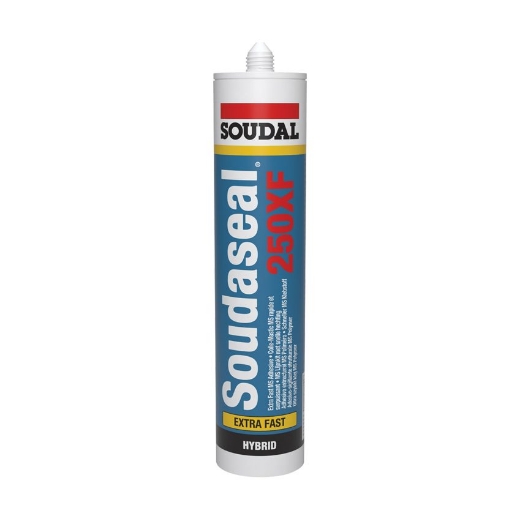
Which Soudal adhesive do you choose for your job? From assembly adhesive to parquet adhesive, from wood glue to contact adhesive, the Soudal range is broad. Below you'll quickly see which type of adhesive suits your application, then you'll read the three decisive factors for a good choice.
Quickly choose the right type of Soudal adhesive
View the full Soudal adhesives range in our webshop. You can filter by application and type.
Mounting & bonding (hybrid adhesive)
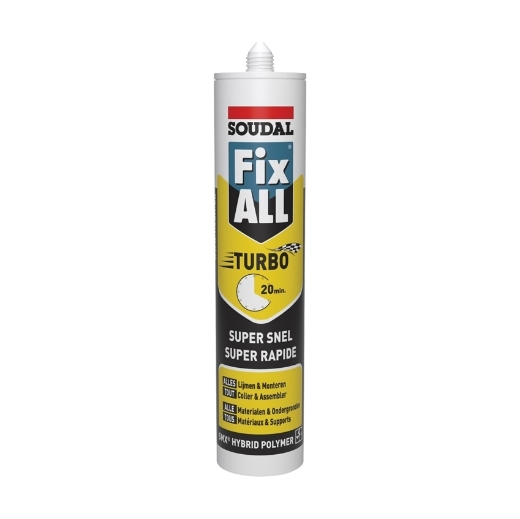
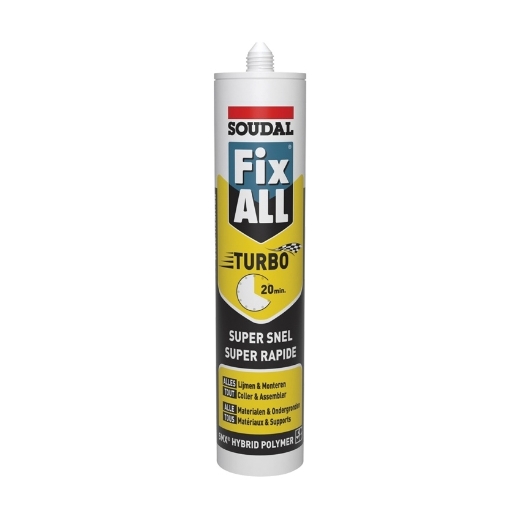
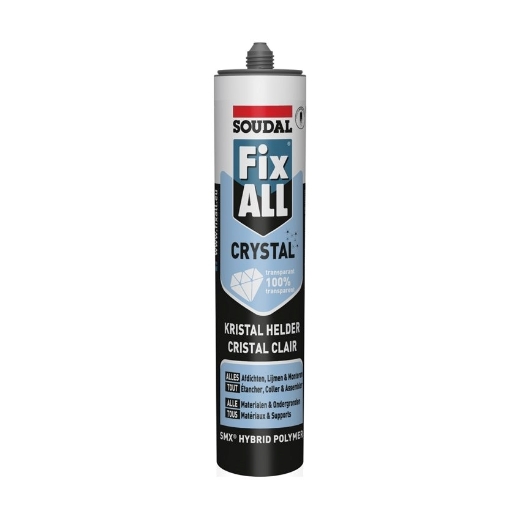
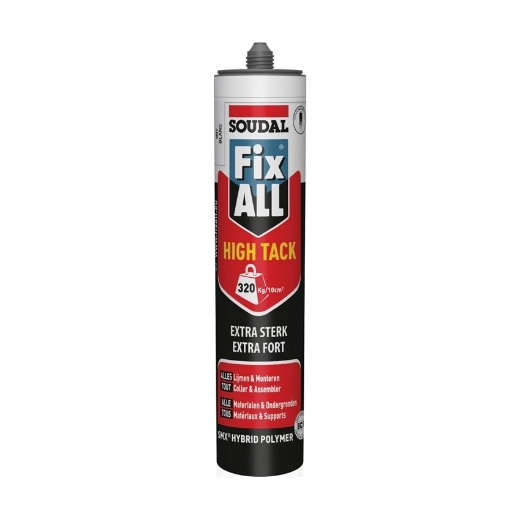
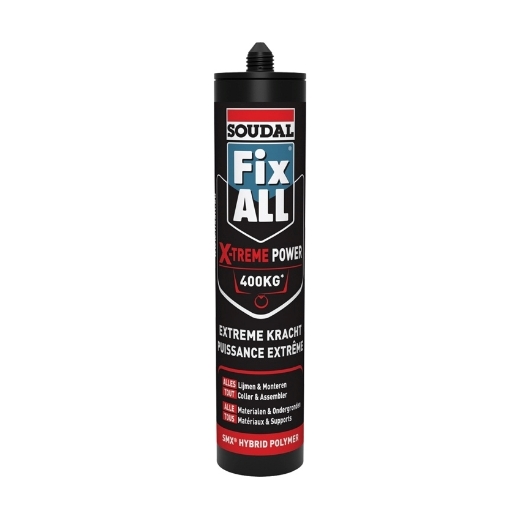
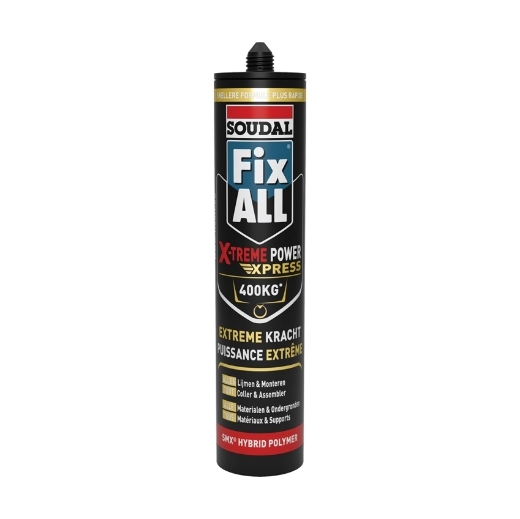
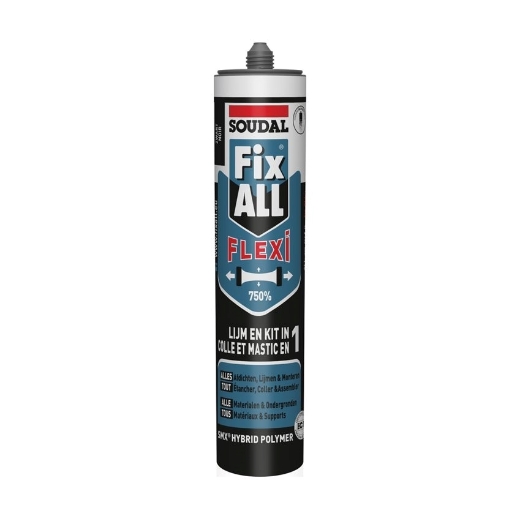
For fixing skirting boards, panels, mirrors, wall decoration and heavy objects without drilling. Soudal Fix All is the most versatile choice: bonds to wood, stone, metal, glass and most plastics, also works on slightly damp substrates and stays elastic after curing. Choose the variant based on bonding strength, speed or transparency.
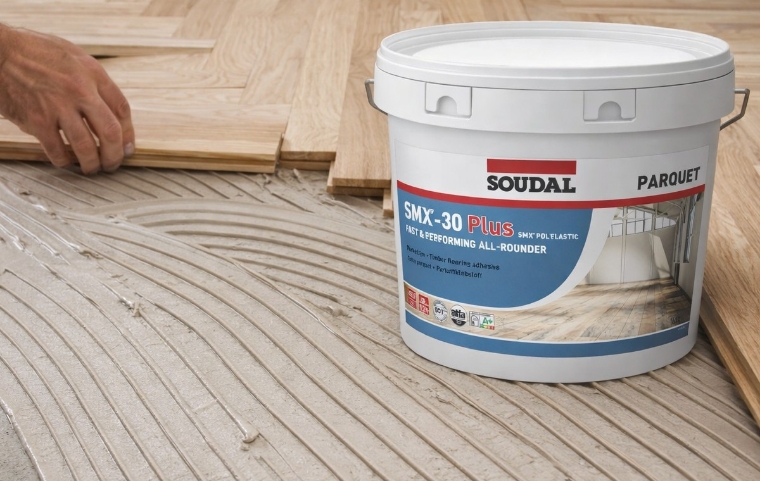
Bonding parquet
For permanently bonding solid or engineered parquet to a screed. The choice depends on plank width and thickness: MS-20 Plus for narrow planks, MS-30 Plus for wider or heavier wood species, SMX-30 Plus for the widest planks and professional applications. Always solvent- and isocyanate-free.
Bonding wood (wood glue & PU adhesive)
For bonding wood joints, furniture parts and structural timber. Choose Soudal wood glue (D2/D3/D4) based on moisture resistance: D2 for dry rooms, D3 for occasional moisture, D4 for outdoors or permanently damp environments. For demanding joints without clamps, Soudal PU adhesive is an alternative with high final strength.
Contact adhesive & special applications
For bonding decorative panels, laminate, rubbers, foam and other materials where both surfaces are coated with adhesive and bond instantly once pressed together. Soudal contact adhesive gives an immediate bond without clamping time. Also available as a spray for large surfaces.
What to watch for when choosing the right adhesive?
Three factors determine whether an adhesive works well and lasts. Ignore them and you risk joints coming loose or slow curing.
- Substrate: porous or non-porous? Porous materials such as wood, concrete and stone partly absorb adhesive, this promotes adhesion. Non-porous substrates such as metal, glass and smooth plastics require an adhesive with specific bonding technology (such as SMX polymer in Fix All) or pre-treatment. No standard construction adhesive bonds to PE and PP.
- Environment: indoors, outdoors or damp? For outdoors and damp rooms (bathroom, cellar, terrace) choose an adhesive that is water-resistant after curing. Many hybrid adhesives such as Fix All Flexi are suitable for this. Wood glue D2 is only for dry environments; choose D3 or D4 in case of moisture exposure.
- Load and elasticity: A rigid joint (epoxy, cyanoacrylate) is strong but breaks under shocks or expansion. An elastic joint (MS polymer, PU) can absorb movement. For wood, which moves with temperature and moisture, elasticity in parquet adhesive and outdoor applications is not a luxury but a requirement.
Frequently asked questions about Soudal adhesives
What is the difference between adhesive, sealant and PU foam?
Which adhesive do I choose for wood on wood, wood on stone or metal on metal?
Can I use Soudal adhesive on damp or wet substrates?
How long do I need to wait before a bonded joint can bear a load?
Can Soudal adhesive be painted over?
Which adhesive do I use for bonding parquet?
Posted by the Soudal adhesive expert at DHZ-Proshop, Your specialist in fastening materials, adhesives & silicones. Webshop available 24/7 & pick-up point in Beerse (province of Antwerp). Questions about these products or our DIY tip? Contact our team.