A cable lug that keeps coming loose, or a connection that gets warm, almost always comes down to one of three mismatches: the wire diameter doesn't match the lug's rated gauge, the terminal type (ring, fork, pin or ferrule) isn't right for the connection, or the crimp or solder method was applied badly. Wire gauge is colour-coded: red covers roughly 0.5 ~ 1.5mm², blue covers 1.5 ~ 2.5mm², and yellow covers 4.0 ~ 6.0mm². A lug sized for a thinner wire than you're actually inserting never grips the strands properly, and that loose contact is exactly what causes heat and eventual failure. Fix the mismatch and the connection stays tight and cool for years.
Which cable lug do you actually need? Browse the full range in our cable lugs category to compare ferrules, ring lugs, fork lugs, pin terminals and connectors side by side. This guide walks you through choosing the right one in three steps.
- Colour tells you the wire gauge at a glance: red for 0.5 ~ 1.5mm², blue for 1.5 ~ 2.5mm², yellow for 4.0 ~ 6.0mm².
- Ring terminals give the most secure bolted connection; fork terminals let you disconnect a wire without fully removing the nut.
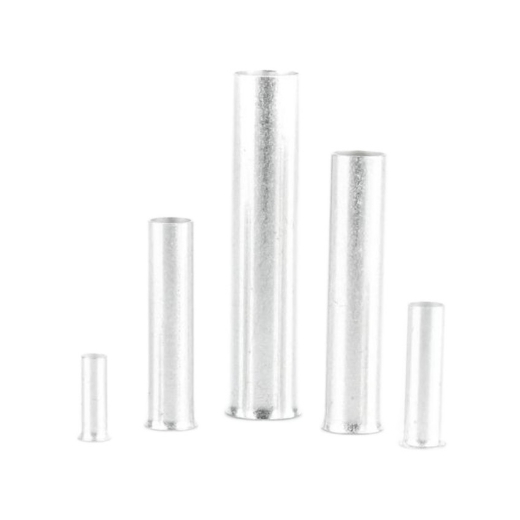
- Bootlace ferrules protect stranded wire ends going into terminal blocks and control panels, and stop the strands fanning out under a screw.
- Crimping is the everyday joining method on site; a soldered-seam ring lug or a solder connector gives a permanent, gas-tight joint for heavier cable.
- Never crimp a lug rated for a smaller gauge than your actual cable. The jaws won't close on the strands and the joint will loosen or overheat.
Which cable lug matches which wire and connection?
The table below lines up real cable lugs from our range against wire gauge, hole or tab size and typical use, so you can pick by diameter first and terminal shape second. Full range available in the cable lugs category.
| Product | Terminal type | Wire gauge | Hole / tab | Ideal for |
|---|---|---|---|---|
| Bootlace ferrule, insulated collar, orange | Ferrule | 3.1 ~ 5mm² | 20mm length | Stranded wire into terminal blocks; one of our most chosen ferrules |
| Bootlace ferrule, uninsulated | Ferrule | 2.1 ~ 3mm² | 20mm length | Fine stranded wire in metal terminal blocks without collar |
| Twin ferrule "Twins", orange | Double ferrule | 3.1 ~ 5mm² | 23mm length | Two conductors sharing one screw terminal |
| Ring terminal Ø3.7mm, blue | Ring terminal | 1.5 ~ 2.5mm² | Hole Ø3.7mm | Bolted, permanent connections that shouldn't move |
| Ring terminal Ø10.5mm, red | Ring terminal | 0.5 ~ 1.5mm² | Hole Ø10.5mm | Thin wire onto a large stud or busbar |
| Fork terminal Ø3.7mm, blue | Fork terminal | 1.5 ~ 2.5mm² | Hole Ø3.7mm | Connections you need to disconnect regularly |
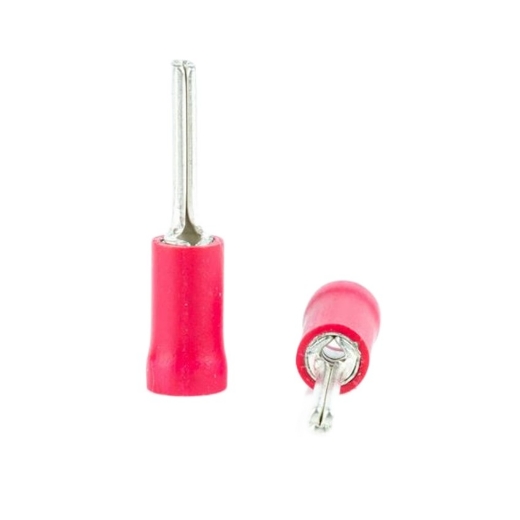
| Pin terminal, red | Pin terminal | 0.5 ~ 1.5mm² | - | Screw-clamp terminal blocks and relays |
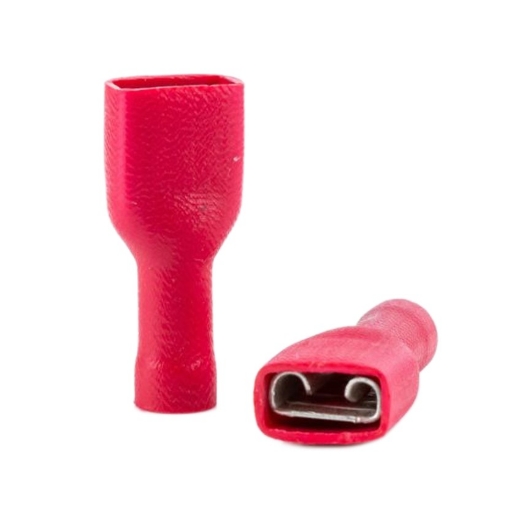
| Female spade terminal, red | Spade / blade | 0.5 ~ 1.5mm² | Tab 0.8 x 2.8mm | Plug-on connections to appliances and switches |
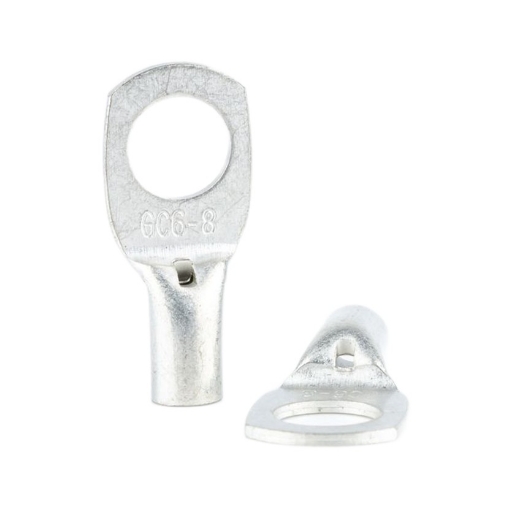
| Ring press lug DIN 46234, soldered seam | Press lug | 4.0 ~ 6.0mm² | Hole Ø5mm | Heavier cable crimped with a proper crimping tool |
| Ring press lug / tube, 50mm² | Press lug (tube) | 20.1 ~ 50mm² | Hole Ø6mm | Heavy-duty power cable and earthing straps |
| Heat shrink butt connector, yellow | Butt connector | 4.0 ~ 6.0mm² | - | Sealed splice, indoors or damp locations |
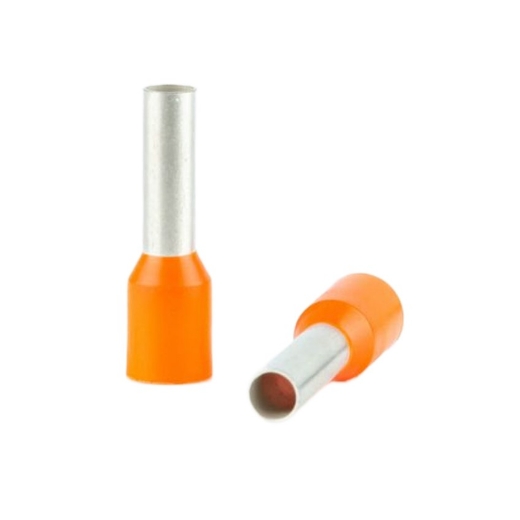
Stranded wire into a terminal block
Bare strands under a screw fan out and loosen over time. An insulated bootlace ferrule holds every strand together and stops that from happening.
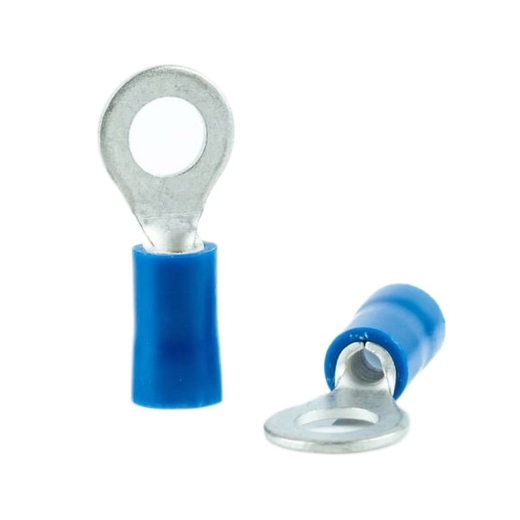
Bolted, permanent connection
Onto a stud that stays tightened for years, a ring terminal is the only sensible shape. It cannot slip off, even if the nut vibrates loose slightly.
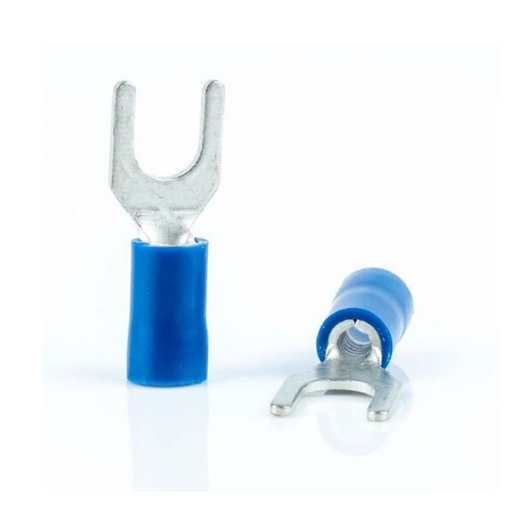
A wire you'll disconnect often
Removing a nut fully every time you service a panel wastes time. A fork terminal slides out from under a loosened nut without removing it entirely.
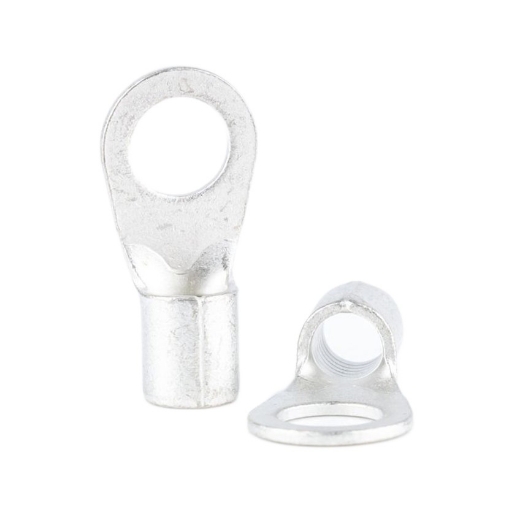
Heavier cable, permanent splice
For 4.0 ~ 6.0mm² and up, a soldered-seam press lug or a solder connector gives a joint that won't work loose under vibration or heat cycling.
How do you match a cable lug to your wire diameter?
You read the colour first, then check the printed gauge range against your wire. Red terminals cover 0.5 ~ 1.5mm², blue covers 1.5 ~ 2.5mm², and yellow covers 4.0 ~ 6.0mm²; the bootlace ferrules follow their own bands, such as 2.1 ~ 3mm² for the uninsulated version and 3.1 ~ 5mm² for the insulated orange ferrule. Strip the insulation to the length printed on the pack, twist the strands, then insert until they're just visible past the metal barrel.
A lug rated too small won't accept the strands at all, so people are tempted to trim wires down or leave strands out, both of which weaken the joint. A lug rated too large lets the barrel crimp around air instead of copper, and that loose grip is what generates resistance and heat under load. When your wire falls between two colour bands, always round up rather than down; a slightly loose collar is less risky than strands that don't fully seat.
Ring, fork, pin or ferrule: which terminal type fits your connection?
The terminal shape depends entirely on how the connection is made and how often it needs to come apart. A ring terminal slides fully over a bolt or stud and cannot come loose sideways, which makes it the right choice for anything bolted and left in place, such as an earth strap or a battery terminal. A fork terminal has an open end so it slides out from under a loosened nut, ideal for terminals you access for maintenance. A pin terminal pushes into a screw-clamp terminal block rather than under a bolt, and a bootlace ferrule isn't a connector to another part at all, it simply bundles stranded wire so a screw clamp grips it evenly.
Spade or blade terminals, like the female spade with a 0.8 x 2.8mm tab, are built for push-on plug connections to switches, relays and appliance tabs rather than for bolts. Round pin connectors serve a similar plug-in role where a male pin meets a female socket rather than a screw. Pick the shape the destination component actually requires; forcing a ring terminal onto a plug tab, or a spade terminal onto a threaded stud, never gives a reliable joint.
Crimp or solder: which joining method is right for your job?
Crimping is the standard method for almost all field and panel wiring, because it's fast, repeatable and doesn't need heat near flammable insulation. A proper crimp tool compresses the barrel evenly around the strands in one squeeze, giving a gas-tight mechanical joint on ferrules, ring, fork, pin and spade terminals alike. Soldering is reserved for connections where a permanent, fully sealed joint matters more than speed, such as the ring press lug DIN 46234 with a soldered seam or a dedicated solder connector rated 4.0 ~ 6.0mm².
A crimp only works if it matches the barrel: pliers-style crimpers meant for insulated terminals will crush an uninsulated ferrule barrel out of shape, and a light-duty crimper won't fully close a heavy press lug rated up to 50mm². Solder joints need the opposite care, too much heat melts the insulation collar on an already-insulated terminal, so bare or heat-shrink types are the better match for soldering. If you need a sealed splice without a soldering iron on site, a heat shrink butt connector combines a crimp with a heat-activated seal, giving you weatherproofing without an open flame.
When customers come in unsure which crimp tool to use, we point them straight to the wire gauge printed on the terminal pack first. Match that number to the cable, and the ring, fork or ferrule choice usually sorts itself out.DHZ-Proshop vakteam, Beerse
Common mistakes when choosing and fitting cable lugs
- Ignoring the colour band: a red terminal rated 0.5 ~ 1.5mm² will not grip a wire sized for the blue 1.5 ~ 2.5mm² band, even if it physically fits in the barrel.
- Crimping bare strands without a ferrule: loose strands under a screw clamp fray and reduce contact over time, always sleeve stranded wire first.
- Using a fork terminal where vibration is present: an open-ended fork can walk off a stud under constant vibration; a closed ring terminal stays put.
- Soldering an already fully insulated terminal: the heat needed to flow solder melts or discolours the insulation collar, ruin the seal you were trying to protect.
Find the full range, including ferrules, ring, fork and pin terminals plus connectors, in the cable lugs category.
Frequently asked questions about cable lugs
How do I know which cable lug gauge I need?
What is the difference between a ring terminal and a fork terminal?
Do I need a bootlace ferrule on stranded wire?
Should I crimp or solder a cable lug?
What does DIN 46234 mean on a ring lug?
Can I use a spade terminal instead of a ring terminal?
Compiled by the trade team at DHZ-Proshop, your DIY and trade supplier with a shop and pickup point in Beerse. What we most often advise in store is to check the wire gauge and colour band before anything else, that single step prevents most loose or overheating connections. Questions about which cable lug fits your job? Contact our team or browse the full cable lugs category.