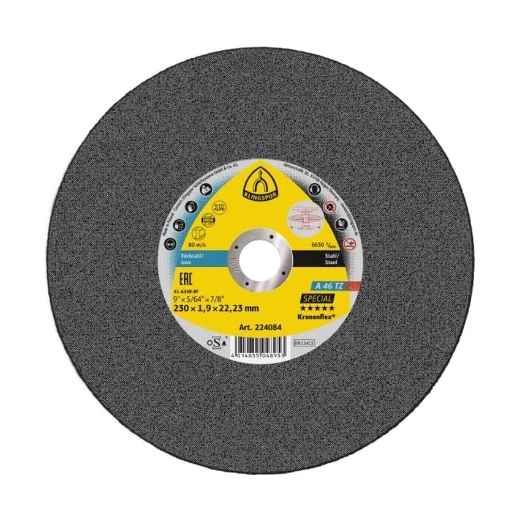
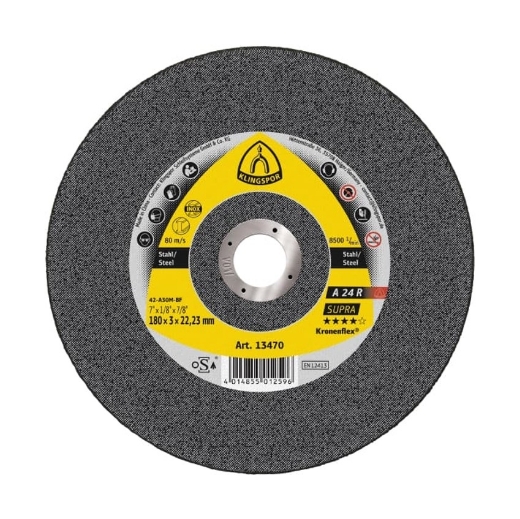
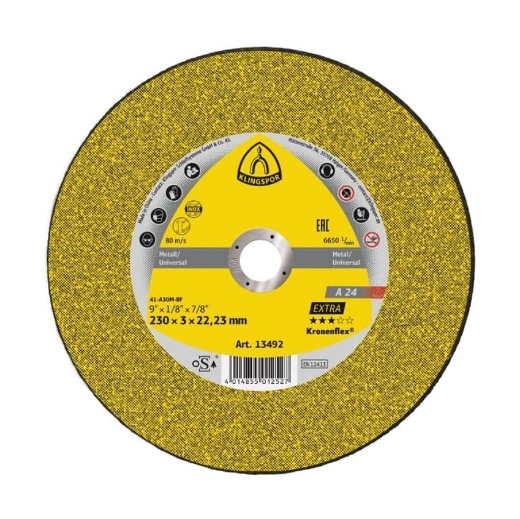
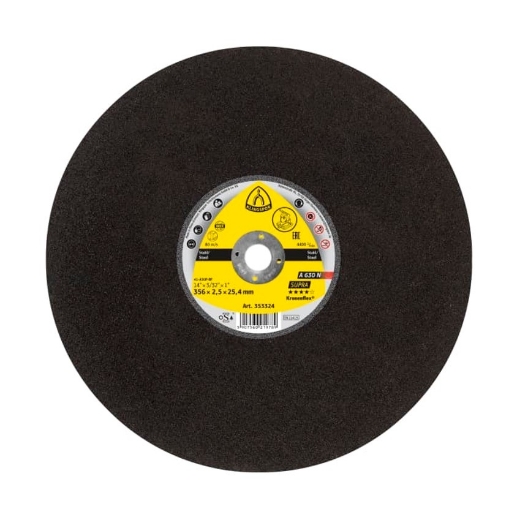
Which cutting disc do you choose per material? (metal, concrete and tile)
Choose the right cutting disc by first determining the material: use resin-bonded discs for steel, INOX-labelled discs for stainless steel, diamond blades for concrete and masonry, and fine diamond or ceramic discs for tiles. Then check thickness, profile and machine compatibility for safe, clean cuts without guesswork.
Choose the right cutting disc per material. In this guide you'll learn how to select discs based on material type, cutting type and machine, with practical tips for metal, concrete and tile. With internal links to the cutting tools range at DHZ-Proshop.
Always start with the material
The first question when choosing a cutting disc is always: what exactly are you cutting? The material determines which disc you need, because different materials generate different amounts of heat, friction and wear.
| Material | Recommended disc type | Why this choice? |
|---|---|---|
| Ordinary steel / metal | Resin-bonded metal cutting disc (aluminium oxide/zirconia) | Effective for ferrous metals, good wear resistance, safe at high speed |
| Stainless steel (INOX) | INOX-labelled cutting disc (iron-free) | Prevents contamination, cuts cleaner given the higher resistance of stainless steel |
| Aluminium / non-ferrous | Non-ferrous suitable disc (special abrasive composition) | Prevents clogging caused by soft, sticky metal particles |
| Concrete / masonry / stone | Diamond blade (segmented or continuous) | Diamonds cut hard, brittle materials efficiently and safely |
| Tile / ceramic / glass | Fine diamond blade or ceramic-suitable disc | Reduces chipping and ensures clean, controlled cuts |
Browse our full range of cutting tools for discs specifically designed for your material.
Disc types per application
Not all cutting discs are the same. They are divided into families, each optimised for specific tasks.
Metal cutting discs (for steel and general metal)
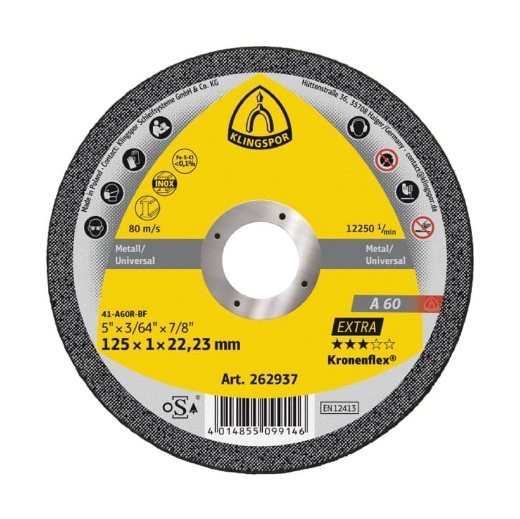
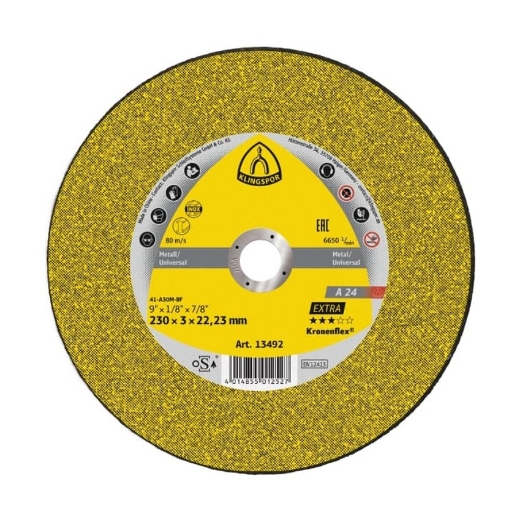
These resin-bonded discs use aluminium oxide or zirconia abrasives and are reinforced with fibreglass for safety. They are ideal for structural steel, tubes, profiles and general metalwork.
- Features: Fast cutting speed, good wear resistance, safe at high RPM
- Use: Steel structures, pipes, metal frames, repair work
- Note: Do not use for INOX or non-ferrous metals
INOX cutting discs (for stainless steel)
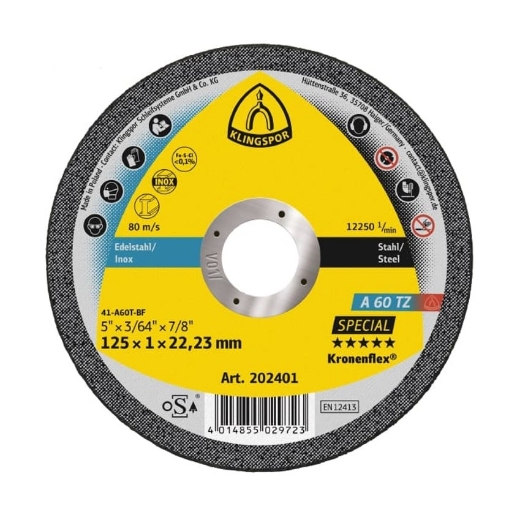
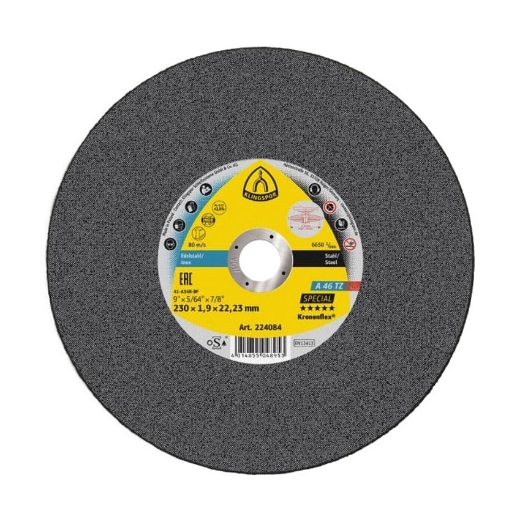
INOX discs are specially developed for stainless steel. They contain no iron particles that could cause contamination and are designed to handle the higher resistance of stainless steel.
- Features: Iron-free composition, clean cut, less heat build-up
- Use: Stainless steel pipes, kitchen equipment, façade cladding, decorative metalwork
- Note: Always use for stainless steel to prevent corrosion and discolouration
Diamond blades (for concrete, stone, masonry)
Diamond blades use industrial diamond particles in a metal matrix to cut extremely hard materials. They are the standard choice for construction and demolition work.
- Features: Very long service life, cuts hard materials efficiently, available in segmented (faster) and continuous (cleaner) variants
- Use: Concrete floors, bricks, natural stone, demolition work
- Note: Choose segmented for speed, continuous for precision and clean edges
Tile and ceramic discs
These fine diamond or ceramic-suitable blades are designed to cut brittle materials without chipping or breaking.
- Features: Fine diamond grit, controlled cutting speed, minimal chipping
- Use: Floor tiles, wall tiles, ceramic panels, glassy materials
- Note: Use low speed and light pressure for the best results
Thickness, profile and machine compatibility
After choosing the right disc type, you still need to check three technical specifications: thickness, profile and machine compatibility.
Disc thickness: speed versus service life
The thickness of a cutting disc directly affects how it performs:
- Thin discs (1.0-1.6 mm): Cut faster with less material removal, ideal for thin sheets, precision work and light metal. Less friction = less heat.
- Thicker discs (2.0-3.0 mm): More durable and stable for heavy cuts, better for thick materials or prolonged use. More material = longer service life.
Advice: Choose thin for speed and precision, thick for durability and heavy applications.
Profile: flat versus depressed centre
The profile of the disc determines how you can position it:
- Flat discs: Versatile and easy to use for general cuts. Ideal when you have straight access to the workpiece.
- Depressed-centre discs: Provide extra space around the spindle, handy in tight spaces or with specific tool configurations. Require more attention to angle and control.
Machine compatibility: always check these three points
- Bore (hole size): Must fit exactly onto the spindle of your angle grinder or cut-off saw. A common size is 22.23 mm. An incorrect bore is unsafe and can cause the disc to slip.
- Diameter: Must fall within the range of your machine. Common sizes are 115 mm, 125 mm and 230 mm. Too large = unsafe, too small = limited cutting depth.
- Maximum speed (RPM): The disc must have an RPM rating that is higher than or equal to the no-load speed of your machine. Never use a disc with a lower rating than the machine speed.
Safe cutting: the most important rules
A cutting disc spins at high speed and can break and fly apart if used incorrectly. Choosing the right disc is the first step; using it safely is the second. Stick to these rules:
Cut with the edge only, never apply sideways pressure
This is the most important rule for cutting discs. A cutting disc is thin and designed exclusively to cut straight through the material with its edge. Never use it for grinding, and never apply sideways pressure by tilting or levering: this can cause the disc to break and fly apart with force. For grinding or sideways loads, use a thicker grinding disc, which is made for that purpose.
Check speed, diameter and bore before mounting
A mismatch between disc and machine is one of the biggest causes of disc breakage. Always check before mounting whether the maximum speed of the disc is equal to or higher than that of your machine, whether the diameter falls within the range of your machine, and whether the bore fits exactly onto the spindle. Never mount a disc that is larger than the maximum diameter of your machine, and never remove the guard to fit a larger disc.
Inspect, protect and let the disc do the work
Check every disc before use for cracks, chips or deformation and replace damaged discs immediately. Always wear safety goggles or a face shield, hearing protection, gloves and closed work clothing, and keep flammable material away from the spark stream. Don't force the disc: light, even pressure lets the disc cut efficiently, while too much pressure builds up heat and increases the risk of breakage.
Frequently asked questions about cutting discs
Can I use one disc for both metal and concrete?
How do I know if my disc is still safe to use?
What is the difference between a segmented and a continuous diamond blade?
Should I use an INOX disc for all stainless steel?
How do I choose the right diameter for my angle grinder?
Why does my disc get so hot during cutting?
Posted by the cutting specialist at DHZ-Proshop, your partner for professional cutting discs, diamond blades and safe cutting tools. Webshop available 24/7 and collection point in Beerse. Questions about disc selection or cutting technique? Contact our team or browse our full cutting tools range.