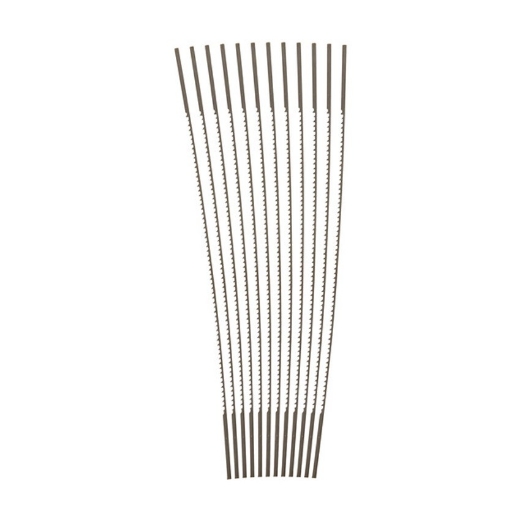
Your choice of hand saw comes down to the material, the length of the cut and how clean the finish must be. A universal saw with medium-coarse teeth, such as a blade with 7 teeth per inch, powers through solid timber and site work fast. A crosscut saw ("kapzaag") with finer teeth, around 13 per inch, gives you a controlled, straight cut over shorter lengths. A fine saw at 11 teeth per inch leaves plywood, MDF and laminate splinter-free. None of these wood saws is built to cut steel.
Not sure which saw fits your job? Browse the full range in the Stanley saws category at DHZ-Proshop.
- A universal saw with 7 to 8 teeth per inch cuts solid wood and framing timber fast, at the cost of a rougher edge.
- A crosscut saw with around 13 teeth per inch gives a controlled, straight cut on shorter site lengths and branches.
- A fine saw at 11 teeth per inch leaves plywood, MDF and laminate free of splinters and tear-out.
- More teeth per inch means a slower but cleaner cut; fewer teeth means faster but rougher.
- Standard wood-cutting hand saws are not made for metal; the tooth steel dulls or breaks instantly.
Which hand saw suits which job?
The table below lines up the ten Stanley hand saws in our range against blade length, teeth per inch and the job each one handles best. Use it to shortlist a saw before reading the sections underneath.
| Product | Blade / teeth | Ideal for |
|---|---|---|
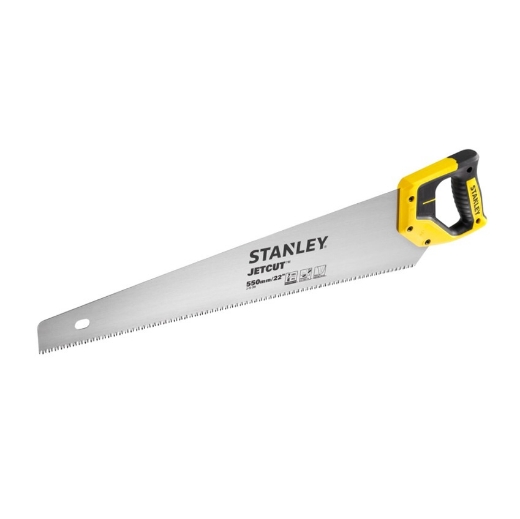
| Stanley® FatMax Handzaag II JetCut 550mm | 550mm | General-purpose cutting of solid wood and boards |
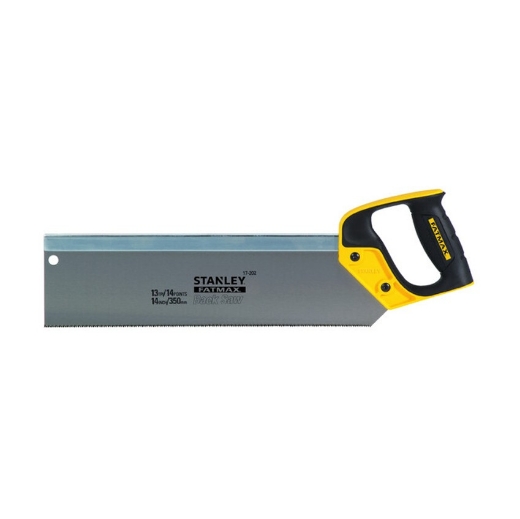
| Stanley® FatMax Kapzaag 350mm - 13T/inch | 350mm, 13 TPI | Controlled crosscuts, shorter site cuts |
| Stanley® Handzaag JetCut HP Fine 450mm - 11T/inch | 450mm, 11 TPI | Fine, splinter-free finish cuts |
| Stanley® FatMax Handzaag Fine Finish 450mm | 450mm | Fine, joinery-level finish |
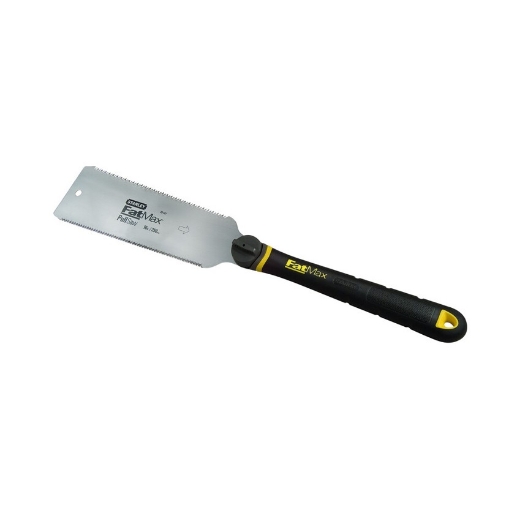
| Stanley® FatMax Japanse Zaag | Pull-cutting blade | Precision cuts, tight joints |
| Stanley® Handzaag JetCut SP 550mm - 7T/inch | 550mm, 7 TPI | Fast general-purpose cutting, framing timber |
| Stanley® FatMax Omklapbare Toffelzaag | Folding blade | Compact all-round site & DIY saw |
| Stanley® JetCut Laminator 450mm - 11T/inch | 450mm, 11 TPI | Clean cuts in laminate and panel material |
| Stanley® Japanse Zaag Fijn/Grof 600mm | 600mm, double-edge fine/coarse | Fine and rough cuts with one blade |
| Stanley® FatMax Vouwbare Schrobzaag | Folding blade | Branches, green wood, garden pruning |

General wood cutting
Framing timber, boards or a quick site cut? A universal saw with a long, sturdy blade handles solid wood without slowing down.
Branches & trees
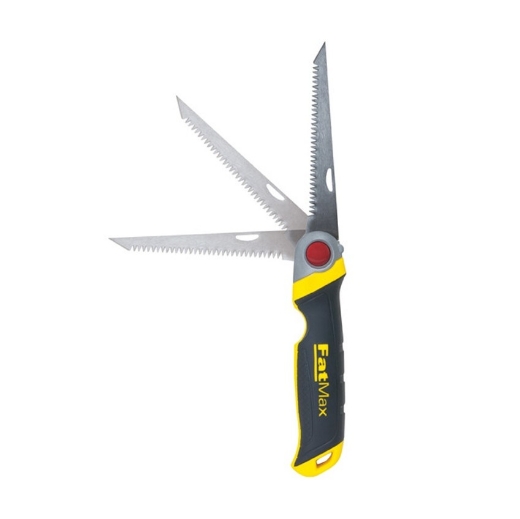
Cutting green wood or garden branches clogs a fine blade fast. A folding pruning saw is built for that job instead.
Splinter-free finish
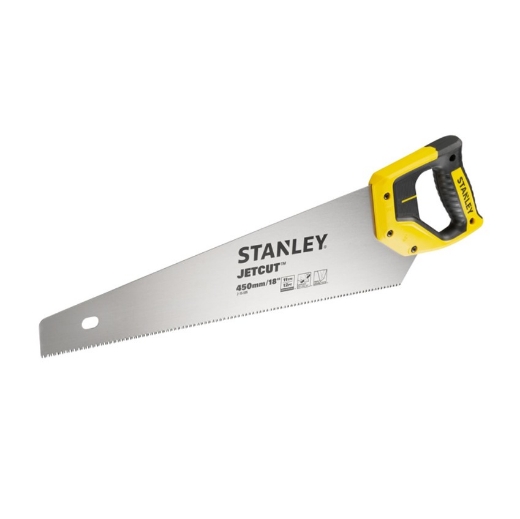
Plywood, MDF or a visible edge? An 11 TPI fine saw slices through the surface layer without tearing it out.
Precision joinery
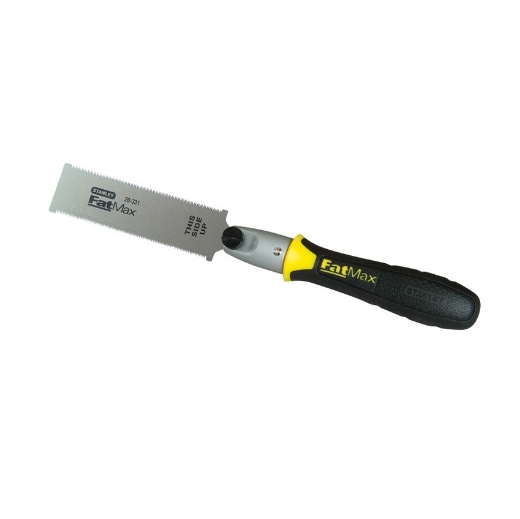
Flush cuts, tenons or tight joints need a thin, hardened blade that cuts on the pull stroke for extra control.
How many teeth per inch do you need to cut wood?
Teeth per inch (TPI) decides how fast and how clean a hand saw cuts. Fewer teeth, around 7 per inch, remove material quickly but leave a rougher edge; that's the range where our universal saw with 7T/inch sits, built for framing timber and general site work. More teeth, from 11 to 13 per inch, slow the cut down but leave it smoother, which is exactly what our fine saws and the 13T/inch crosscut saw deliver.
Some panel saws on the market go beyond 15 teeth per inch for ultra-fine veneer work. For everyday plywood, MDF and laminate cuts, 11 to 13 teeth per inch already gives a clean, splinter-free edge without the cut feeling painfully slow. An 8 TPI blade sits close to our 7T/inch universal saw: a solid middle ground when you switch between rough framing and slightly tidier work on the same job.
Tooth shape matters as much as the count. Crosscut teeth are angled to sever wood fibres cleanly when sawing across the grain. Rip teeth are shaped more like small chisels, built to remove material fast when cutting along the grain. A hand saw's tooth geometry and its TPI together decide whether it's built for speed or for finish.
Which hand saw is best for general wood cutting?
For everyday wood cutting you reach for a universal saw: a longer blade with medium-coarse teeth that powers through solid timber, framing wood and boards without stalling. The Stanley® FatMax Handzaag II JetCut 550mm and the Stanley® Handzaag JetCut SP 550mm - 7T/inch both fit this role, with the 7 TPI blade tuned for fast, no-nonsense cutting.
On site or around the house, a foldable option earns its keep. The Stanley® FatMax Omklapbare Toffelzaag is one of our most chosen saws for exactly that reason: it closes flat into a toolbox, yet unfolds into a full-length blade that still cuts a straight line through solid wood.
In our shop in Beerse, customers who ask for one all-round saw for site and home projects almost always walk out with a folding universal saw; it fits in a toolbox and still tracks a straight line through solid timber.DHZ-Proshop vakteam, Beerse
Which hand saw do you need for branches and rough timber?
For trees, garden branches and green wood, use a folding pruning saw, not a fine finish saw. The Stanley® FatMax Vouwbare Schrobzaag has aggressive, widely set teeth that clear sap and wet sawdust as they go, so the blade keeps cutting instead of clogging up.
For crosscutting shorter lengths of solid timber on site, a kapzaag gives more control than a long universal saw. The Stanley® FatMax Kapzaag 350mm - 13T/inch combines a shorter, 350mm blade with 13 teeth per inch, striking a balance between speed and a straight, controlled cut on smaller sections.
Keep the two jobs separate. A pruning saw pushed into dry construction timber wanders and tears; a kapzaag pushed into wet green wood clogs almost immediately.
Which hand saw gives the cleanest cut in plywood and laminate?
Plywood, MDF and laminate need a fine saw with a high tooth count, because the thin surface veneer chips easily under coarse teeth. The Stanley® Handzaag JetCut HP Fine 450mm - 11T/inch and the Stanley® JetCut Laminator 450mm - 11T/inch are both built for exactly that: 11 teeth per inch that slice the top layer cleanly instead of tearing it out.
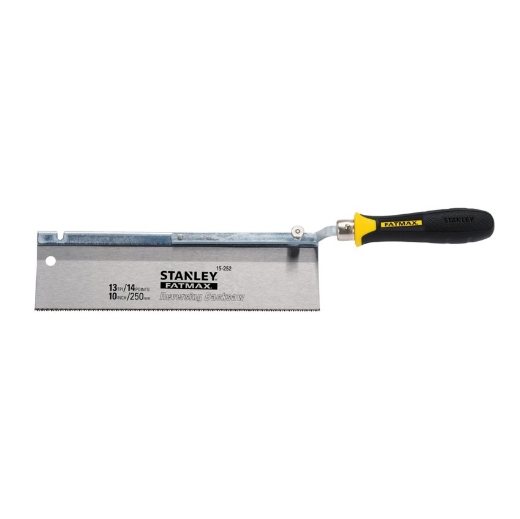
For joinery-level finish work, such as trimming a mitre or shaping a joint, the Stanley® FatMax Handzaag Fine Finish 450mm adds even more control. When you need a pull-stroke saw for flush cuts and delicate detail work, the Stanley® Japanse Zaag Fijn/Grof 600mm gives you two edges on one blade, a fine side for finish cuts and a coarser side when you need to move faster.
Can a hand saw cut metal?
No. A standard wood-cutting hand saw, universal, crosscut or fine, is not designed to cut steel, aluminium or other metals. The tooth geometry and steel hardness of these blades are matched to wood fibres; pushed into metal, the teeth dull within seconds or snap off entirely. Cutting metal calls for a saw with very fine, hardened teeth built specifically for that material, a different tool altogether from the ones in this guide.
If your job involves both wood and metal, keep two separate saws on hand rather than forcing one blade to do both. Check the full saws range at DHZ-Proshop for the current selection.
Common mistakes when choosing a hand saw
- Using a coarse universal saw on plywood or laminate: the 7 TPI teeth tear the thin top layer instead of slicing it, leaving chipped edges. Switch to an 11 TPI fine saw for that job.
- Cutting green branches with a fine finish saw: fine teeth clog with sap almost instantly. A folding pruning saw with widely set teeth clears the cut as it works.
- Assuming a higher TPI is always better: extra teeth slow you down on rough framing cuts where speed matters more than a polished edge.
- Trying to cut metal with any of these saws: the teeth dull or break on contact with steel or aluminium; a dedicated metal-cutting blade is the only fix.
Compare every option in the Stanley saws category, or explore the wider range of tools and building materials at DHZ-Proshop.
Frequently asked questions about hand saws
Which hand saw is best for cutting wood?
Which hand saw is best for cutting trees or branches?
Can a hand saw cut metal?
Which hand saw is best for plywood?
How many teeth per inch do I need to cut wood?
Which hand saw should I buy for general DIY use?
Compiled by the vakteam of DHZ-Proshop, your DIY and trade supplier with a shop and collection point in Beerse. Wat wij in de winkel het vaakst adviseren: match the tooth count to the job first, then pick blade length for comfort. Questions about which hand saw fits your project? Contact our team or browse the full Stanley saws range.