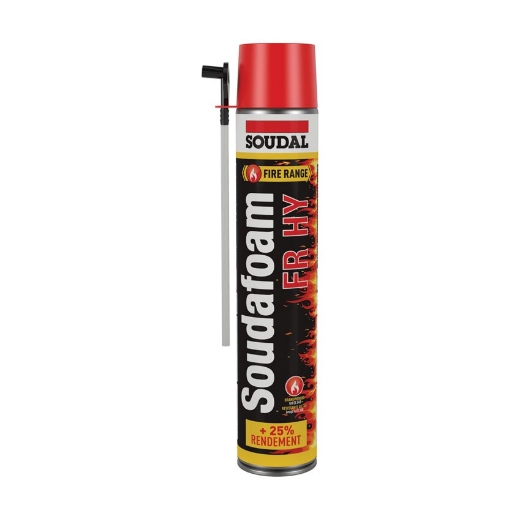
Fire-resistant and heat-resistant joint sealants: the right choice per situation. 'Heat-resistant' and 'fire-resistant' sound the same, but they are two fundamentally different products with different legal requirements. A stove sealant around your fireplace does not need EI certification. A penetration of cables through a fire-resistant wall does, and the wrong product leads to rejection at inspection or the failure of fire compartmentation in an actual fire. Below you can quickly choose the right product and read how to apply it correctly.
Fire-resistant or heat-resistant, what to choose for which situation?
Full range: Soudal fire protection.
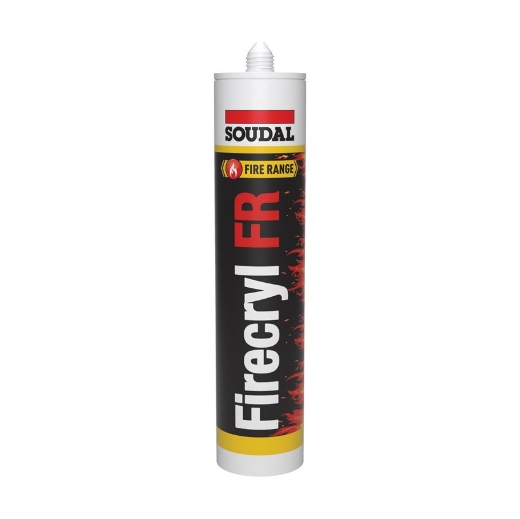
Penetrations & cable ducts
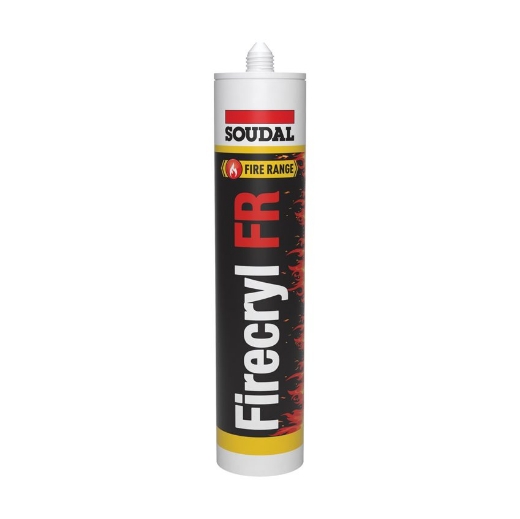
Soudal Firecryl FR, fire-resistant acrylic sealant, EI-certified up to 4h. Foams up in case of fire and seals the penetration hermetically. For static joints without movement. Overpaintable. Available in white and grey.
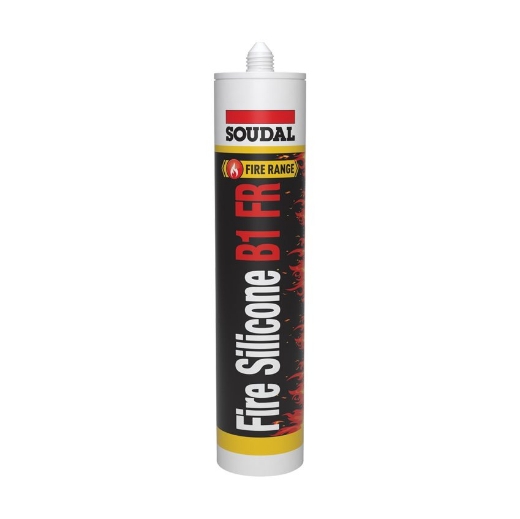
Fire-resistant expansion joints
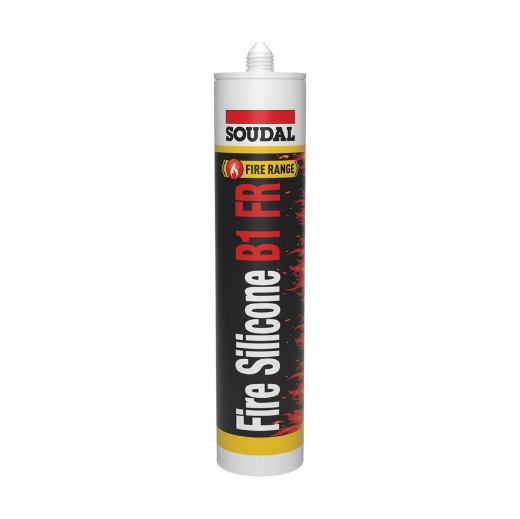
Soudal Fire Silicone B1 FR, elastic fire-resistant silicone, EI-certified up to 4h. Specially for joints that must also absorb movement (expansion, thermal expansion up to 25%). Not overpaintable, choose colour at purchase.
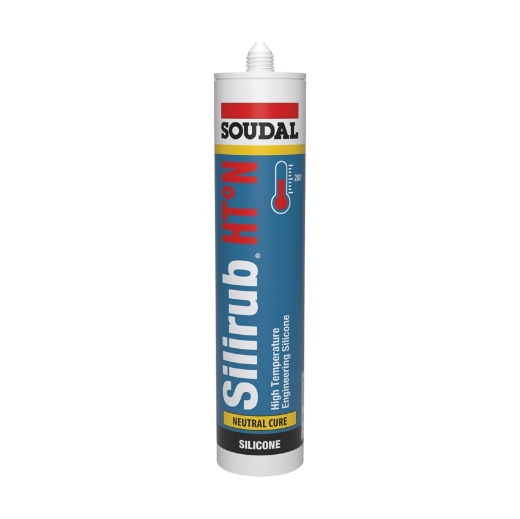
Stoves & fireplaces (up to 285°C)
Silirub HT-N / HT-A, heat-resistant silicone up to 285°C. HT-N (neutral) for all substrates incl. plastic. HT-A (acetic, black) for metal, glass and ceramics, faster curing. No EI classification, merely temperature-resistant.
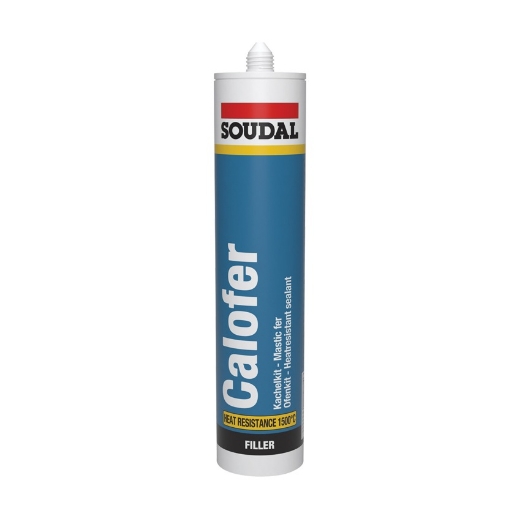
Extreme heat up to 1500°C
Calofer / Firecement HT / Stove sealant, fire-resistant pastes that cure stone-hard. For sealing and repairing stoves, fireplaces, ovens and barbecues. First use: always fire up gently to avoid cracks.
Belgian EI classification, what is on the cartridge and what does it mean?
In the Belgian construction sector, fire safety is laid down in the Royal Decree (KB) of 7 July 1994. Since the transition to European standards we no longer work with the old Rf value, but with the EI classification. The EI value consists of two components:
E (Etanchéité, flame-tight and smoke-tight) means that the sealant prevents the passage of flames and hot gases for the specified time. I (Insulation, thermal) means that the sealant also limits the temperature rise on the cold side. A sealant with classification EI 120 therefore holds back both flames and an excessive temperature rise on the other side of the wall for 120 minutes.
For linear joints the standard EN 1366-4 is decisive, for point penetrations EN 1366-3. In Belgium, the EI1 standard (measured at 100mm from the joint) often imposes stricter requirements than in neighbouring countries, consult the specification or the fire brigade advisory sheet in case of doubt.
How to check a cartridge: look for (1) CE marking with notified body number, (2) reference to EN 1366-3 or EN 1366-4, (3) the EI class (EI 60 / EI 90 / EI 120), and (4) any limitations such as maximum joint width for which the classification applies. Products that only state "flame-retardant" without an EI class are not certified for sealing fire-resistant partitions.
B1 ≠ EI: the designation B1 (as in Fire Silicone B1 FR) refers to the reaction-to-fire classification, the product is hard to ignite. This is a different classification from the EI value. A product can be B1 without being EI-certified for compartmentation. For structural fire compartmentation, the EI class is always decisive.
Application, how to guarantee adhesion and fire resistance
A fire-resistant sealant is only as good as its application. A sealant that comes loose loses its EI value, the certification only applies when the sealant has been applied correctly in line with the test set-up.
- Primer on concrete and porous substrates, mandatory: For untreated concrete, calcium silicate brick or aerated concrete a primer is necessary to guarantee sufficient adhesion depth. Always clean first with Soudal Cleaner & Degreaser and let the primer dry completely before applying the sealant.
- Backing for deep joints, rock wool for certified systems: For joints deeper than 10–15mm, use a backing for the correct sealant depth in line with the test set-up. For EI-certified fire-resistant systems, choose rock wool, non-combustible and contributing to the I value (thermal insulation). PE backing is combustible and can affect the EI value. More about backings: difference in joint fillers.
- Overpainting Firecryl FR, waiting time 1mm/24h: Rule of thumb: 1mm of curing per 24 hours. For a joint of 10mm, wait at least 48–72 hours before overpainting to prevent crazing (cracks in the paint layer). Use water-based paints, solvent-rich paints attack the sealant surface. Fire Silicone B1 FR is a silicone and not overpaintable.
- Heat-resistant sealant, fire up gently on first use: Calofer, Firecement HT and stove sealant cure gradually through heat. The first time, fire up slowly and let it cool down completely before second use. Too rapid a thermal shock causes cracks in the fresh sealant. Full curing typically takes 2–3 firing cycles. Ventilate the room well the first few times, fumes from the curing process are normal but unpleasant.
- Flue through a wooden floor or wall: never sealant alone: For a penetration through combustible materials (wood, OSB) always use a double-walled flue with a fire-resistant casing (Promatect boards or rock wool in line with the flue specification). The seams of that casing are then sealed with Firecryl FR or Fire Silicone B1 FR. A sealant is the seal of the system, not a replacement for the fire-resistant construction itself.
Frequently asked questions
Fire-resistant vs. heat-resistant, can I use them interchangeably?
When do I choose Firecryl FR and when Fire Silicone B1 FR?
How do I recognise a genuinely certified fire-resistant product?
How long should I wait before overpainting Firecryl FR?
Can I use fire-resistant PU foam for a fire damper?
Why does the stove sealant smell so strongly during the first firing?
Is heat-resistant silicone sealant food-safe near an oven or hob?
Posted by the Soudal sealant expert at DHZ-Proshop, specialist in fasteners, adhesives & silicones. Webshop available 24/7 & collection point in Beerse (province of Antwerp). Questions about the right fire-resistant sealant for your penetration or stove? Contact our team.