Roof sealing with EPDM or roofing felt: which sealant for which situation? A leaky roof almost always starts with a detail, a seam, a penetration, a roof edge that comes loose. The membrane or roofing felt itself is rarely the problem. The right sealing compound for those details determines whether your roof stays dry for 30 years or causes problems every autumn. Below you choose the right product for each situation and read how to apply it correctly.
Which sealant for roof sealing?
Full range: Soudal damp proofing · Soudal joint sealants.
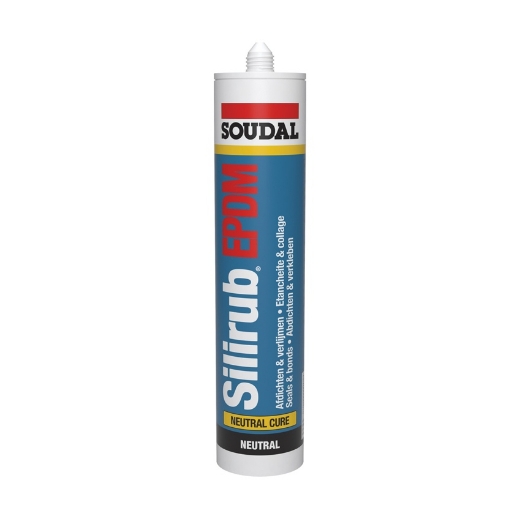
EPDM membrane, seams, connections & penetrations
Silirub EPDM black, a neutral silicone sealant specially for EPDM rubber. Does not chemically attack the membrane. Stays elastic from -60°C to +180°C. Quick skin formation. Ideal for seams in the membrane, connections to walls and roof penetrations.
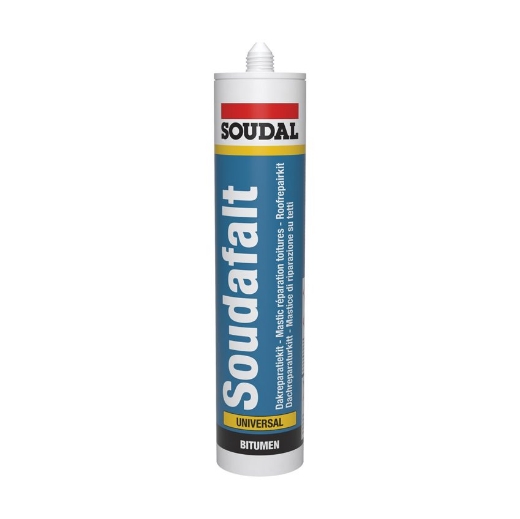
Roofing felt & bitumen roof, cracks and repairs
Soudafalt black, a bituminous plasto-elastic sealant for repairs to roofing felt and bitumen roofs. Adheres to dry and damp surfaces alike. Also suitable as an adhesive for insulation boards under roofing felt.
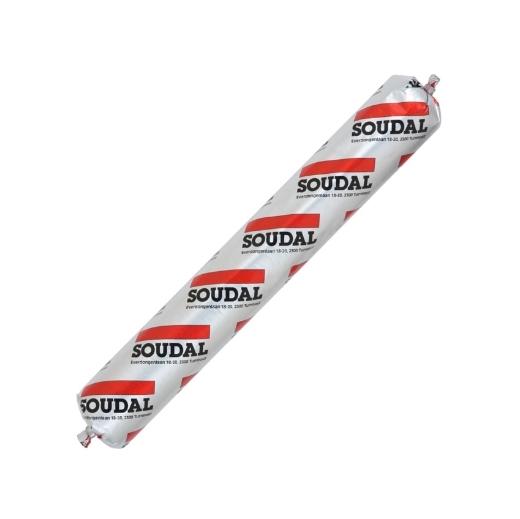
Roof edges, zinc gutters & metal profiles
Silirub EPDM sausage, for longer seam lines along roof edge profiles, zinc, lead and aluminium trims. The sausage (600ml) is more cost-efficient for larger surfaces. Adheres excellently to metals without soldering.
Emergency repair during rain or frost period
Soudafalt, the only sealant in this range that also adheres to a wet, damp surface. Immediately rain-resistant after application. Ideal for temporarily or permanently stopping an active leak in poor weather conditions.
Step-by-step, how to make a durable, leak-free roof seam
Roof details almost never fail because of the sealant itself, but because of poor preparation or a wrong choice for the surface. Follow these steps for a result that lasts for decades.
- Clean the surface, remove dust, grease and old sealant residue: Remove all loose old sealant, dust and dirt. Thoroughly degrease metal surfaces (zinc, aluminium, lead) with Soudal Cleaner & Degreaser. Grease and oxidation on zinc are the main cause of roof edges coming loose. For Silirub EPDM on EPDM membrane: check that the membrane is grease-free and dust-free, EPDM membrane is sometimes supplied with a talc powder coating that you must remove first.
- Dry and prime on porous surfaces: Silirub EPDM performs best on a dry surface. On concrete, cement render or porous upstands, use Primer 150 as an adhesion promoter. Soudafalt also adheres to damp surfaces, which makes it particularly suitable for emergency repairs in rainy weather or on a roof that is not yet fully dry.
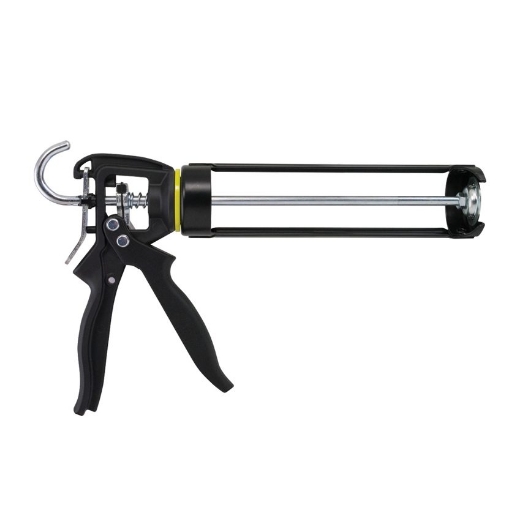
- Apply the sealant, a full, closed joint without air bubbles: Cut the nozzle at an angle to the joint width. Apply the sealant in one continuous motion with constant pressure. Ensure a full fill without interruption, on a roof every air bubble has the potential to become an entry point for water. For seams in EPDM membrane: apply the sealant on both sides of the seam and press the membrane firmly into the sealant.
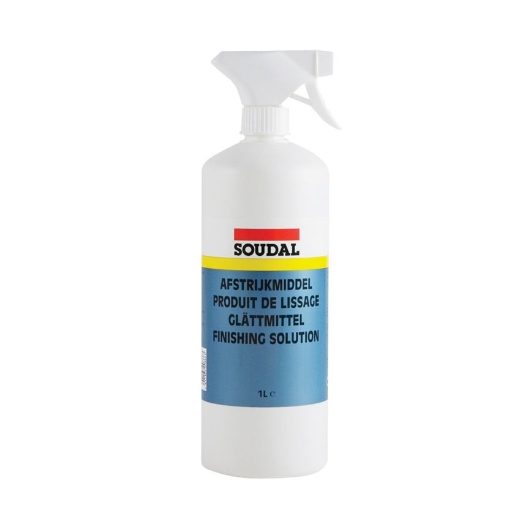
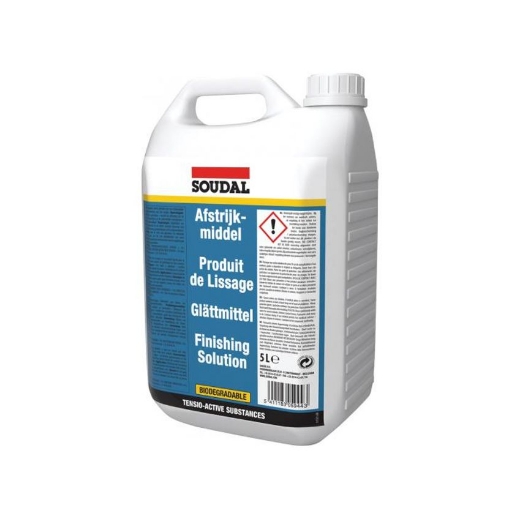
- Finishing, smoothing agent for Silirub EPDM, never water: Smooth Silirub EPDM with Soudal smoothing agent and a SoudaGlatt smoothing tool. Never use water on silicone sealant, water disrupts the curing and gives a cloudy, not fully cured surface. Soudafalt is smoothed with a damp smoother or a special bitumen smoother.
- Roof penetrations, additional sealing with swelling sealant: For cables, pipes or ventilation ducts that pass through the roof, sealant around the penetration alone often is not enough in the long term. Combine Silirub EPDM for the surface sealing with a hydro-expansive swelling sealant (Aquaswell) deep in the penetration for a watertight seal, even under water pressure from the outside.
- Chimney flashing and fire-resistant zones: At chimneys and flue outlets, the roof seal touches a fire-resistant zone. For the seal around the lead flashing and the chimney base use Silirub EPDM, but for the joint between chimney and roof finish above 100°C use a heat-resistant sealant (Silirub HT or Calofer).
- Curing, wait before mechanical load: Silirub EPDM forms a surface skin within 30–60 minutes under normal conditions. Full curing takes 24–48h depending on layer thickness, temperature and ventilation. Do not walk over the sealed seam before the sealant has fully cured. Soudafalt is durable after curing but stays plastic longer than silicone, avoid mechanical load for at least 24h.
Frequently asked questions about roof sealing
What is the difference between Silirub EPDM and ordinary silicone sealant on EPDM?
Can I use Soudafalt during rainfall?
How long does a seal with Silirub EPDM last?
Why does my roof edge sealant always come loose after a year?
Can Silirub EPDM be painted over?
Can I use Soudafalt to fix insulation boards under roofing felt?
Which sealant do I use for the seal around a chimney?
Posted by the Soudal sealant expert at DHZ-Proshop, specialist in fastening materials, adhesives & silicones. Webshop available 24/7 & collection point in Beerse (province of Antwerp). Questions about the right sealant for your roof project? Contact our team.