Silicone sealant or acrylic sealant, which do you choose? Both seal, but they differ fundamentally in elasticity, water resistance and paintability. Below you'll quickly see which type suits your application, then you can read the four most important differences at a glance.
Quick choice: silicone sealant or acrylic sealant?
View the full Soudal jointing sealant range in our webshop. You can filter by type, application and properties.
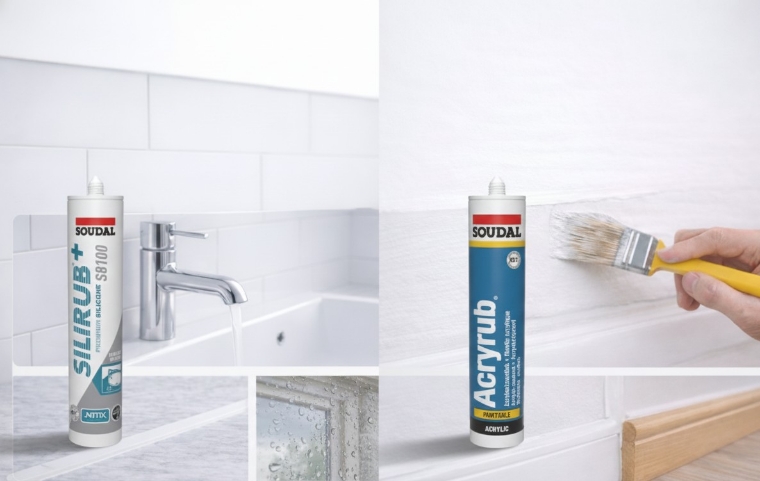
Wet areas & outdoors → silicone sealant
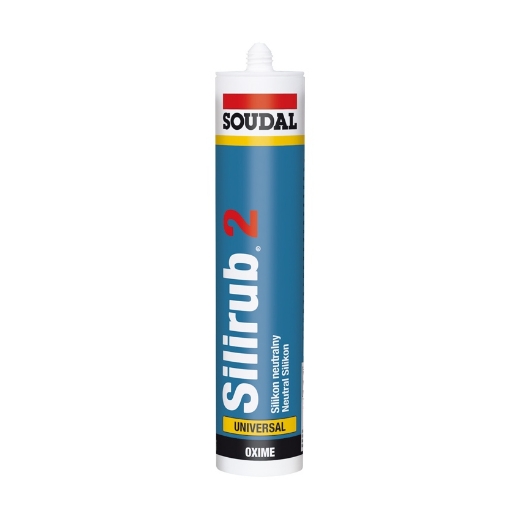
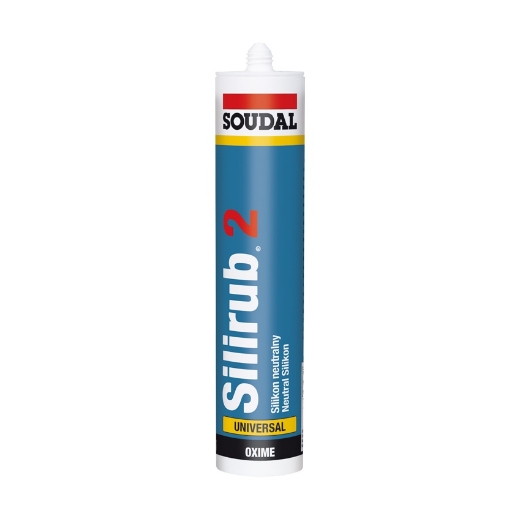
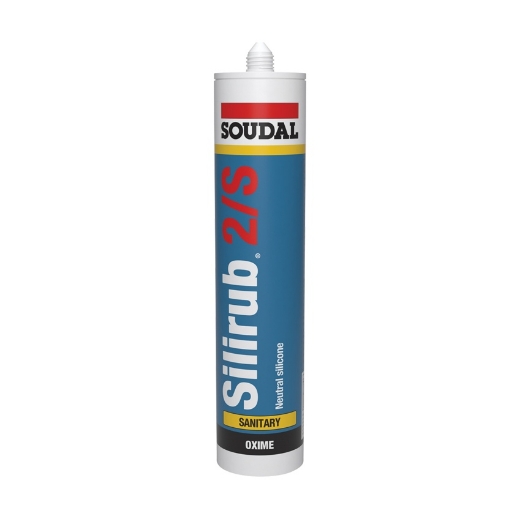
For shower, bath, kitchen, exterior joints and connecting seams around windows and doors. Silicone sealant remains permanently elastic after curing, is water-resistant and can absorb temperature fluctuations. The most commonly used Soudal sanitary choice is Silirub 2S for standard tiles and Silirub MA for natural stone.
Interior finishing & overpainting → acrylic sealant
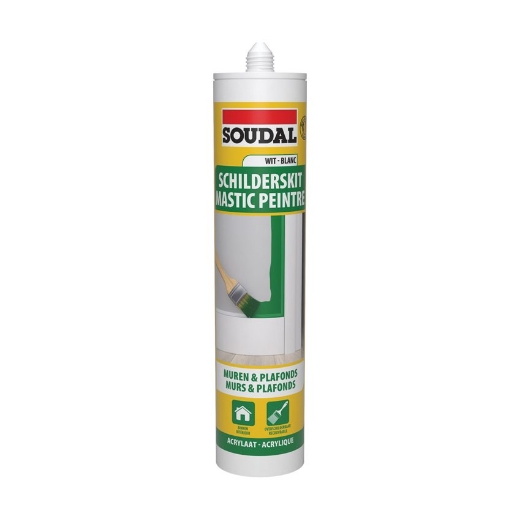
For skirting boards, wall-ceiling connections, interior door frames and other dry interior joints that you want to overpaint afterwards. Soudal Acryrub is the classic: easy to apply, smooth to finish and overpaintable with water-based paint. Not suitable for wet areas or joints with significant movement.
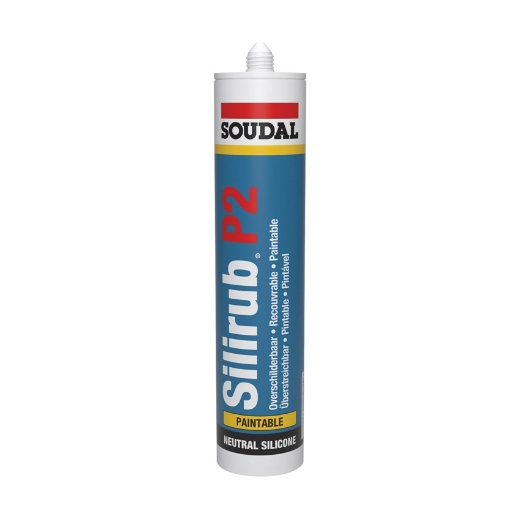
Paintable silicone → Silirub P2
Want the elasticity of silicone but still want to overpaint? Soudal Silirub P2 is specially developed to be overpaintable. Alkyd resin paints generally adhere well; always carry out an adhesion test with your specific paint. Hybrid sealants such as Fix All Flexi and Soudal Glaskit TS based on MS polymer are another alternative.
Natural stone → neutral sealant required
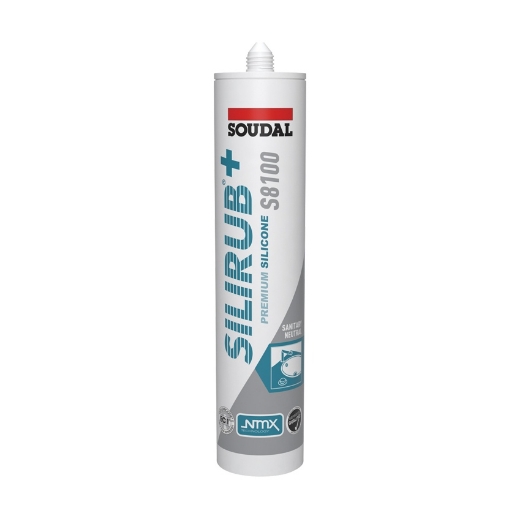
On marble, slate and granite you never use standard silicone: the plasticisers soak into the stone and cause permanent edge-zone staining. Always use a neutral-curing sealant such as Silirub MA or Silirub+ S8800. Read more in our guide sealants on natural stone.
The 4 most important differences between silicone sealant and acrylic sealant
Both types of sealant seal, but choosing based on the wrong type leads to loosening joints, mould or paint that won't adhere. These are the four properties that determine the choice.
- Elasticity and movement: Silicone sealant remains permanently elastic after curing and can absorb joint movements caused by expansion and shrinkage of materials, essential for connecting seams around windows, sanitary fittings and exterior elements. Acrylic sealant is stiffer after curing and less suitable for joints with significant movement. Use acrylic sealant only for joints with little to no movement, such as along skirting boards on a stable wall.
- Water resistance: Silicone sealant is fully water-resistant after curing and withstands prolonged moisture contact, the standard material for bathroom, shower, kitchen and outdoors. Acrylic sealant is water-based and intended for dry interior spaces. Persistent water exposure compromises adhesion and durability, never use acrylic sealant in wet areas.
- Paintability: Acrylic sealant is in most cases readily overpaintable with water-based and oil-based paints, the greatest practical advantage for interior finishing. Standard silicone sealant is not overpaintable; water-based paint won't adhere to it. Exception: Silirub P2 is a specially developed silicone sealant that is overpaintable. Hybrid sealants based on MS polymer such as Fix All Flexi are also overpaintable and combine elasticity with good paint adhesion.
- Adhesion to surfaces: Silicone sealant adheres excellently to smooth, non-porous surfaces such as glass, ceramic, enamel and metal, without primer. Acrylic sealant adheres better to porous materials such as plaster, gypsum and wood. A special rule applies to natural stone: never use standard silicone, but always a neutral sealant. The CE marking of a sealant (standard EN 15651) states which use the product is certified for (INT/EXT, movement class).
Frequently asked questions about silicone sealant vs acrylic sealant
What is the main difference between silicone sealant and acrylic sealant?
Is silicone sealant overpaintable?
Can I use acrylic sealant in the bathroom or shower?
Can I use acrylic sealant outdoors?
What does "movement class" mean on the packaging of jointing sealant?
Which sealant do I use for skirting boards along the floor?
Posted by the Soudal sealant expert at DHZ-Proshop, your specialist in fastening materials, adhesives & silicones. Webshop available 24/7 & collection point in Beerse (province of Antwerp). Questions about these products or our DIY tip? Contact our team.