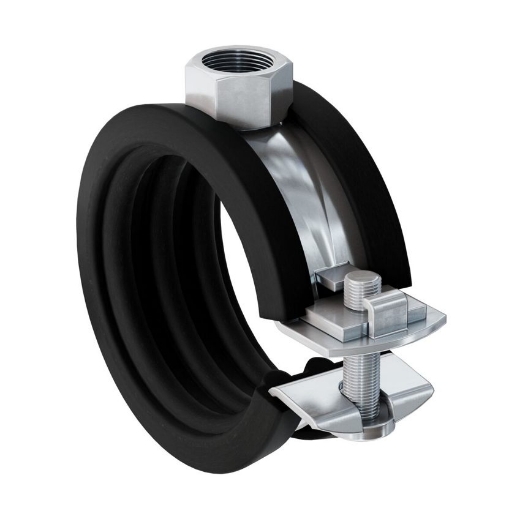
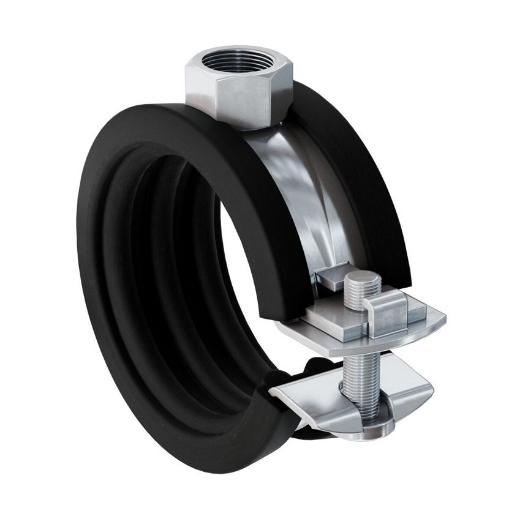
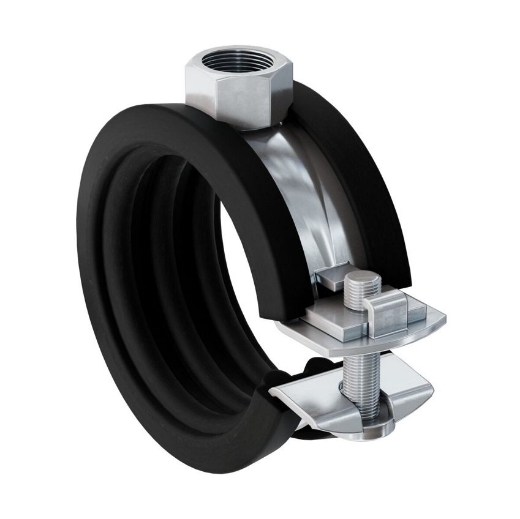
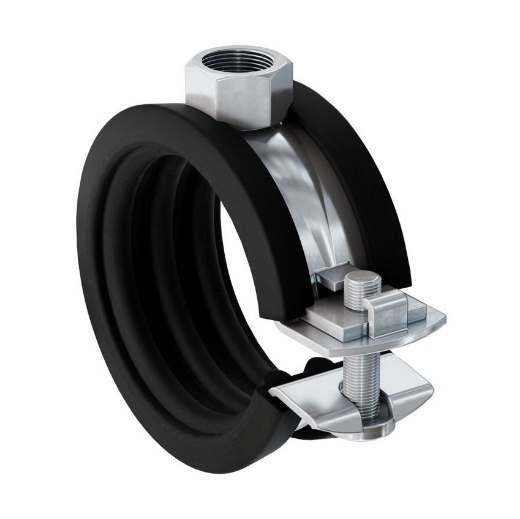
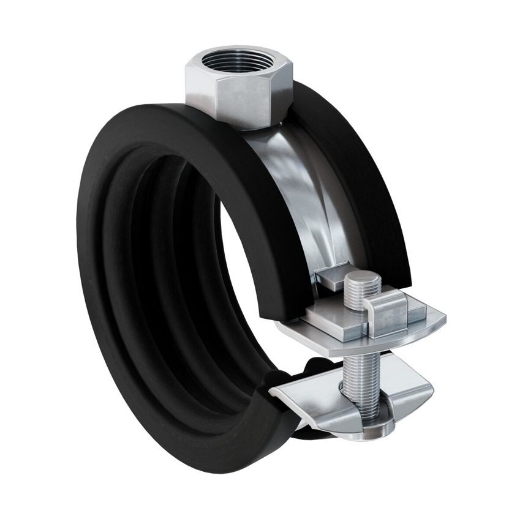
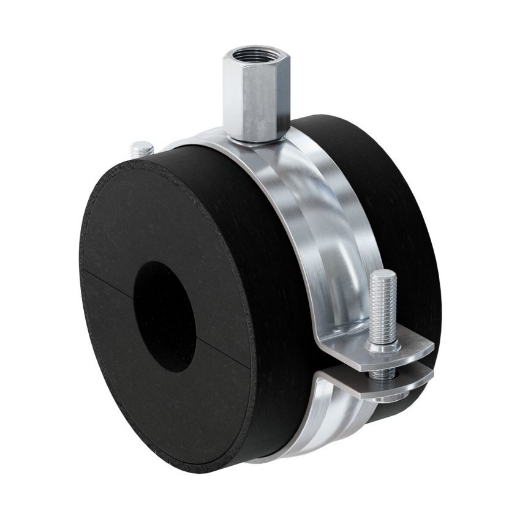
You choose a pipe clamp by matching its clamping range to your pipe's outer diameter, then deciding whether you need a rubber or silicone insert. A bare galvanized clamp, such as the Samontec FGRS series, grips copper, steel or PVC pipe directly and suits most dry, fixed indoor runs. For heating and hot water lines you want a silicone-lined clamp like the FRSH 25-30, built to handle sustained heat without the lining perishing. Cold water and condensation-prone pipework benefits from a rubber-lined clamp such as the FRSK, which also dampens vibration noise. Across the Samontec range, clamping spans run from 0-20mm up to 81-100mm on the round-steel ETR beugel, so the right size is simply the one whose range covers your pipe's measured diameter.
Not sure which pipe clamp fits your job? Browse the full range in our pipe clamps category, where every clamp lists its exact clamping span and material.
- Measure the pipe's outer diameter first; every Samontec clamp is sized by a clamping range, not a nominal pipe size.
- Fit a rubber or silicone insert on heating, hot or cold water lines to cut vibration noise and stop condensation drips.
- Pick bare galvanized steel for dry, fixed installations and stainless steel (inox A2) for damp, outdoor or corrosive spots.
- A hinged clamp with M8/M10 threading, like the FGRS 46-52, mounts faster on threaded rod than a standard screwed clamp.
- Running flexible hose instead of rigid pipe? Reach for a worm-drive hose clamp, not a pipe clamp.
Which pipe clamp fits which pipe: quick comparison
The table below lists every clamp in our Samontec range with its real clamping span, lining and typical use, so you can match it to your pipe in one glance. Full details and stock sit on each product page in the pipe clamps category.
| Product | Clamping range | Lining / material | Ideal for |
|---|---|---|---|
| FGRS 12-14 | 0-20mm | Galvanized, no insert | Small copper/PVC pipe, dry indoor runs |
| FGRS 15-19 | 0-20mm | Galvanized, no insert | General fixation, small-medium pipe |
| FGRS 20-24 | 21-40mm | Galvanized, no insert | Standard copper/steel water pipe |
| FGRS 25-30 | 21-40mm | Galvanized, no insert | One of our most chosen, standard water/gas pipe |
| FGRS 40-44 | 41-60mm | Galvanized, no insert | Larger diameter steel/PVC runs |
| FGRS 50-55 | 41-60mm | Galvanized, no insert | Large diameter pipe runs |
| FRSK 32-35 | 21-40mm | Galvanized with rubber insert | Cold water pipe, noise & condensation control |
| FRSK 42-45 | 41-60mm | Galvanized with rubber insert | Larger cold water or heating pipe |
| FRSH 25-30 silicone | 21-40mm | Galvanized with silicone insert | Heating & hot water pipe, sustained heat |
| FRS 1" inox A2 | 21-40mm | Stainless steel A2, no insert | Outdoor, damp or corrosive locations |
| ETR 90-102 rondstaalbeugel | 81-100mm | Galvanized round-steel band | Large diameter pipe, downpipes, ducting |
| SGS 9 W2 slangklem | 0-20mm | Galvanized worm-drive band | Flexible hose, not rigid pipe |
| FGRS 46-52 M8/M10 hinged | 41-60mm | Galvanized, hinged, no insert | Fast install on threaded rod, suspended pipework |
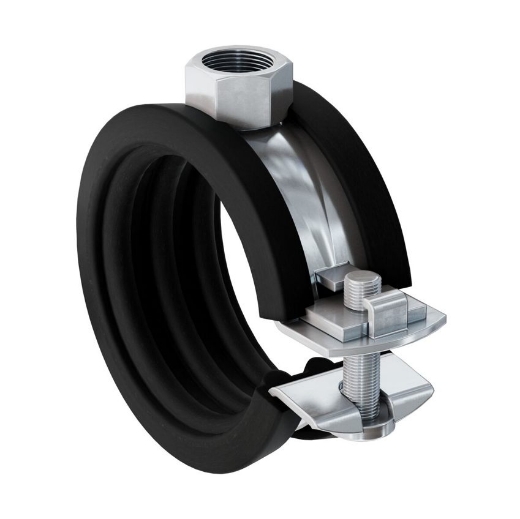
Small pipe, 0-20mm
Thin copper, PVC or gas pipe up to 20mm fits the FGRS 15-19, a bare galvanized clamp for dry, fixed indoor runs.
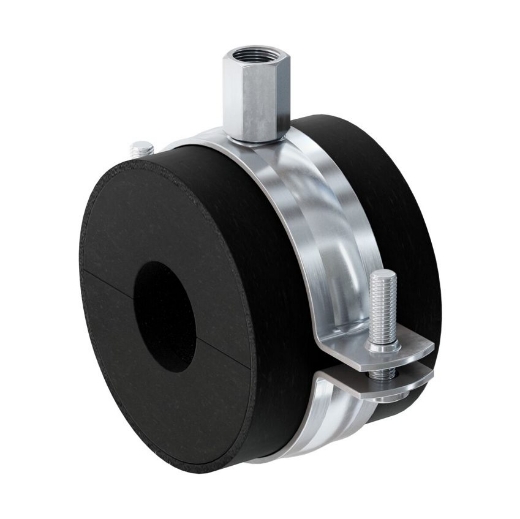
Cold water & noise
Condensation dripping off a cold pipe or a rattling bracket both point to the rubber-lined FRSK 32-35 koudebeugel.
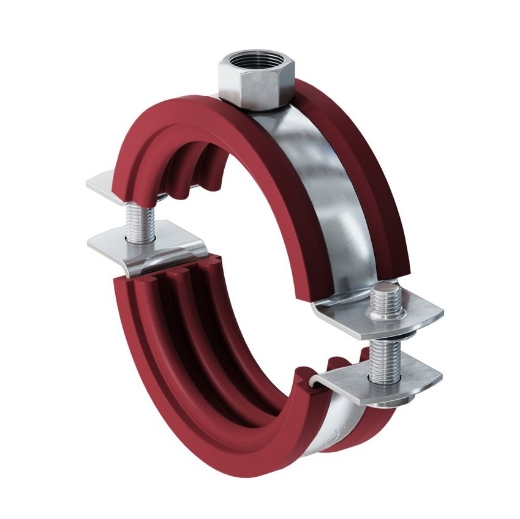
Heating & hot water
Central heating or hot water pipe needs a lining that survives sustained heat: the FRSH 25-30 uses a silicone insert.
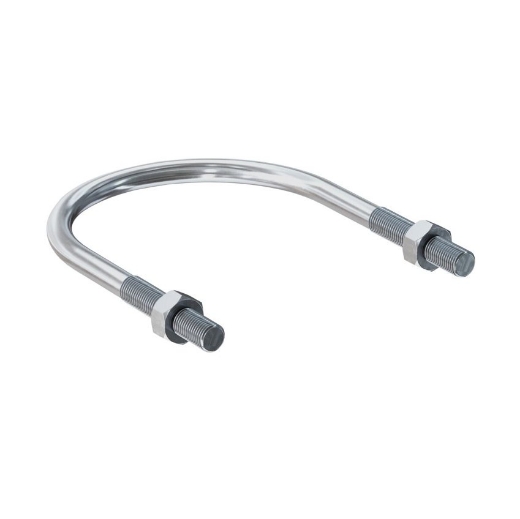
Large diameter, heavy duty
Downpipes, ducting and wide soil stacks up to 100mm sit best in the round-steel ETR 90-102 rondstaalbeugel.
How do I find the correct pipe clamp size?
You find the correct size by measuring your pipe's outer diameter with a tape or calliper, then choosing the clamp whose printed range includes that number. Never round up "just to be safe": a clamp sized too large leaves the pipe loose inside the band, which causes rattling and eventually slippage under its own weight.
Our Samontec range covers four clamping bands that between them handle almost every domestic and light commercial pipe: 0-20mm, 21-40mm, 41-60mm and 81-100mm. European copper pipe typically runs 12, 15, 18, 22 or 28mm; PVC waste and soil pipe often measures 32, 40 or 50mm, and cast-iron or thick-wall soil stacks can reach 100mm and beyond. Match the measured diameter to the nearest range in the table above, not to the nominal "inch size" printed on the pipe, since actual outer diameters vary by material and wall thickness.
Do I need a rubber insert or bare metal on my pipe clamp?
You need a rubber or silicone insert whenever the pipe carries heat, cold or vibration that could cause noise, condensation or wear; bare galvanized steel is fine for dry, fixed, low-vibration runs. A silicone-lined clamp such as the FRSH 25-30 protects a heating or hot water pipe from the abrasion that comes with thermal expansion, while a rubber-lined FRSK clamp on a cold water line absorbs condensation and stops the classic tick-tick noise as the pipe cools and contracts.
Bare metal clamps, like the standard FGRS series or the stainless FRS 1" inox, grip pipe directly and suit gas lines, rigid conduit or any run where the pipe itself does not move or sweat. Skipping the insert on a hot or cold line does not just risk noise; over years it can wear a groove into softer pipe material.
In our Beerse showroom, tradesmen fixing heating pipework almost always leave with a silicone-lined FRSH clamp instead of a bare FGRS, simply because the site call-backs for squeaking pipes stop.DHZ-Proshop vakteam, Beerse
What are the different types of pipe clamps and mounting styles?
The main mounting styles are the standard screwed clamp, the hinged clamp, the heavy round-steel band and the worm-drive hose clamp, and each solves a different fixing problem. A standard FGRS clamp closes with a single screw against a wall plug or base plate and suits most horizontal or vertical pipe runs against masonry.
A hinged clamp such as the FGRS 46-52 M8/M10 opens on a pivot, so you drop the pipe in rather than threading it through a closed loop, and its M8/M10 thread lets you hang it directly from suspended threaded rod in a ceiling void. The round-steel ETR 90-102 uses a wider band and two-point fixing for heavier, larger-diameter pipe where a single screw clamp would flex under the load. For flexible tubing rather than rigid pipe, the SGS worm-drive hose clamp tightens progressively around a soft-walled hose, something a rigid pipe clamp cannot do without crushing the tube.
Galvanized steel or stainless steel: which pipe clamp material?
Choose electrolytically galvanized steel for dry indoor installations and stainless steel A2 (inox) wherever the clamp faces moisture, outdoor weather or chemical exposure. Galvanized clamps such as the FGRS and FRSK series carry a zinc coating that resists everyday indoor corrosion and covers the vast majority of heating, water and gas pipework inside a home or workshop.
An outdoor gutter bracket, a pipe running through a damp cellar, or fixings near a swimming pool or chemical store call for the FRS 1" inox A2 clamp instead. Stainless A2 resists the surface rust that eventually creeps through a zinc layer once it is scratched or constantly wet, so it holds its grip and its looks far longer in those conditions.
Common mistakes
- Sizing on nominal pipe diameter instead of measured outer diameter: a "22mm" copper pipe and a "22mm" PVC pipe rarely share the same actual outer measurement, so always measure before ordering.
- Skipping the rubber or silicone insert on heating pipe: bare metal against a pipe that expands and contracts daily wears through the wall and creates noise within months.
- Using a rigid pipe clamp on flexible hose: a fixed-band clamp crushes soft-walled hose instead of sealing it; use a worm-drive hose clamp like the SGS series.
- Mixing galvanized clamps into damp or outdoor spots: zinc coating corrodes once scratched in wet or chemical-rich environments, where stainless A2 holds up far better.
Browse the complete range in our pipe clamps category to find the exact clamping span, lining and material for your job.
Frequently asked questions about pipe clamps
Which pipe clamps are the best for everyday plumbing?
What type of pipe can I use pipe clamps on?
What are the different types of clamps for pipes?
What are pipe clamps used for?
How do I read a pipe clamp size chart and find my diameter?
What is the standard pipe clamp size range for domestic use?
Compiled by the trade team at DHZ-Proshop, your DIY and tradesman supplier with a showroom and pickup point in Beerse. What we advise most often in the shop is to bring the pipe's exact outer diameter, or the old clamp itself, so we can match the right clamping range and lining on the spot. Questions about your specific pipe run? Contact our team or browse the full pipe clamps range.