Match the diamond blade to the material first, the machine second. For concrete and reinforced concrete you want a segmented or turbo rim (our Ø230mm turbo disc carries a 10mm segment height for long life). For tiles, porcelain and natural stone you need a continuous (closed) rim for a chip-free edge. For brick and asphalt a wide-gullet segmented blade clears the soft, sticky debris. Always check the bore size matches your machine (22.23mm for angle grinders, 25.4mm for larger cut-off saws). A wrong rim either glazes over, chips your tile or burns out fast.
Which diamond blade fits your job? Browse the full diamond blade range at DHZ-Proshop, from Carat multifunctional discs to dedicated tile and concrete blades. This roundup walks through our most-chosen discs.
- Concrete and granite cut best with a segmented or turbo rim; the Ø230mm turbo blade has a 10mm segment height.
- Tiles, porcelain and natural stone demand a continuous (closed) rim for chip-free cuts, ideally wet.
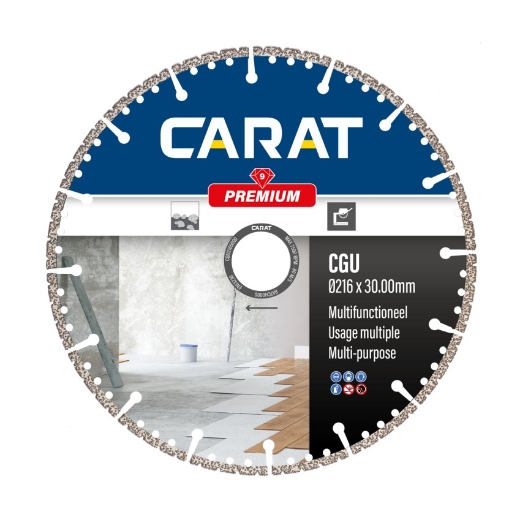
- The Carat CGU premium multifunctional discs are among our most-chosen for mixed-material work.
- Brick and asphalt need wide gullets to clear soft, sticky debris without clogging.
- The bore must match your machine: 22.23mm for angle grinders, 25.4mm for many cut-off saws.
Which diamond blade for which material?
Pick the blade by the material you are cutting, then confirm the diameter and bore fit your machine. The table below lines up our most-chosen diamond blades against the job they handle best. See the full range in our diamond blade category.
| Blade | Brand | Key spec | Best for |
|---|---|---|---|
| Carat CGU premium 216x30mm | Carat | Multifunctional, 30mm bore | Mixed materials on table/bench saws |
| Carat CGU premium 125x22.23mm | Carat | Multifunctional, angle grinder | All-round site cutting |
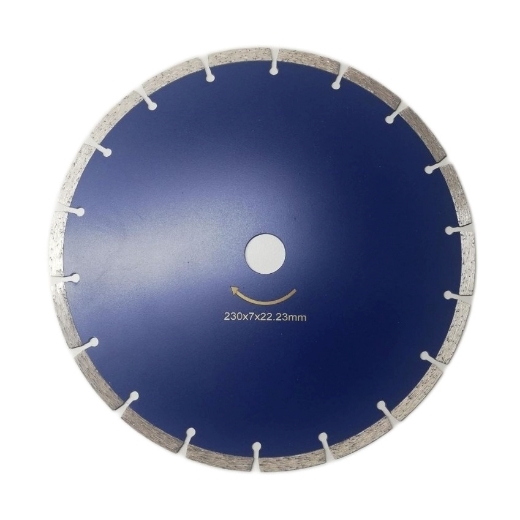
| Turbo Ø230mm concrete & granite | DHZ-Proshop | 10mm segment, 22.2mm bore | (Reinforced) concrete, granite |
| Carat CSMP premium 125x22.23mm | Carat | Continuous rim | Tiles, chip-free edge |
| Carat CA premium 230x22.23mm | Carat | Wide gullets | Brick & asphalt |
| Ø230mm marble & granite | DHZ-Proshop | 7mm segment, 22.2mm bore | Tiles & natural stone |
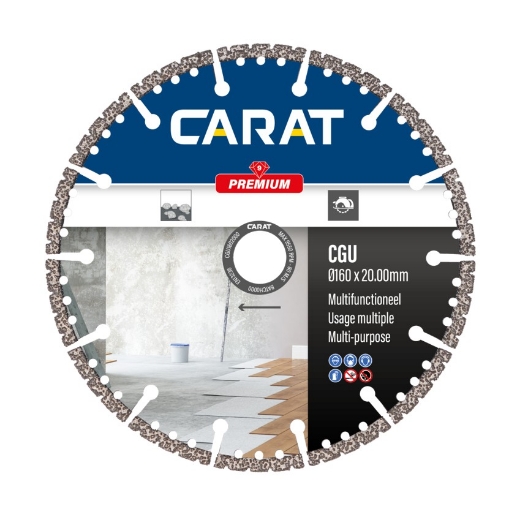
Mixed materials
One disc for concrete, brick, roof tiles and more? The Carat CGU multifunctional is one of our most-chosen discs for crews who switch material constantly.
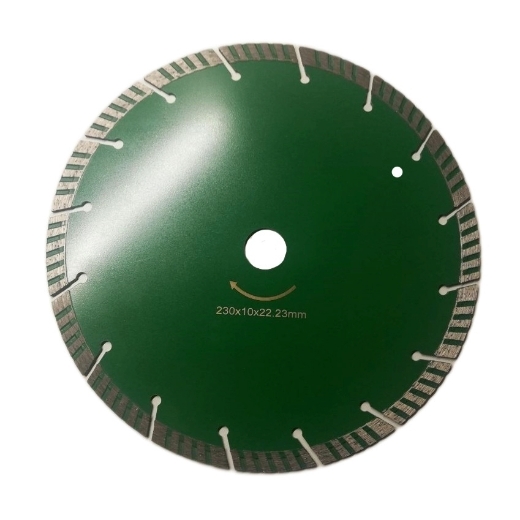
Concrete & granite
Reinforced concrete or granite? The Ø230mm turbo blade with a 10mm segment height cuts fast and resists rebar contact.
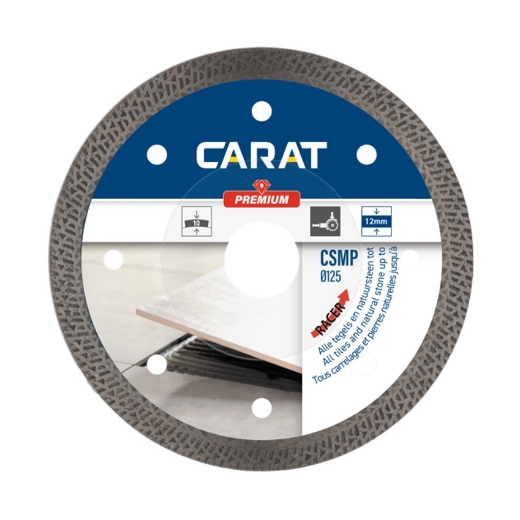
Tiles & porcelain
Wall and floor tiles without chipping? The Carat CSMP continuous-rim disc gives a clean glazed edge when cut wet.
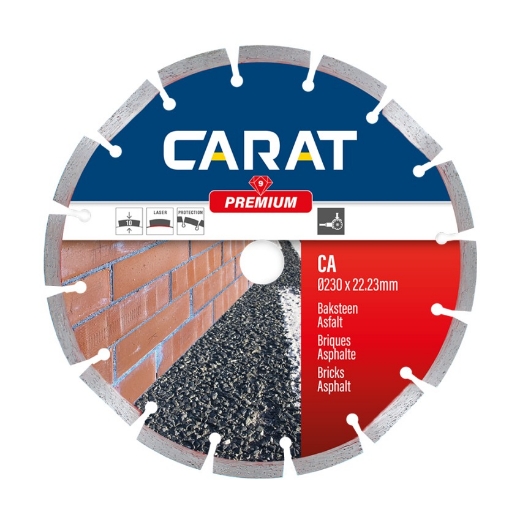
Brick & asphalt
Soft, abrasive brick or sticky asphalt? The Carat CA premium 230mm has wide gullets that clear the spoil and stop clogging.
Segmented, continuous or turbo rim: what is the difference?
The rim shape decides cutting speed and edge quality. A segmented rim has slots between teeth that cool the blade and clear debris, giving the fastest cuts in hard, brittle material like concrete and granite, but it leaves a rougher edge. A continuous (closed) rim has an uninterrupted diamond edge for the cleanest, chip-free cut in tiles and natural stone, and is meant for wet use. A turbo rim sits between the two: a serrated continuous edge that cuts faster than a closed rim while staying smoother than a full segment.
Choose by what matters most. Speed and life in concrete point to segmented or turbo. A flawless visible edge in porcelain points to a continuous rim, like the Carat CSMP. For a single disc across many materials, the Carat CGU multifunctional sits in the middle, which is exactly why it travels in so many vans.
"In our Beerse shop, tilers almost always pick the Carat CSMP continuous rim for facing tiles, while site crews who cut everything grab the Carat CGU multifunctional."DHZ-Proshop vakteam, Beerse
Which diamond blade for concrete and reinforced concrete?
For concrete and reinforced concrete, use a segmented or turbo blade with a tall segment for life and rebar resistance. Our Ø230mm turbo disc carries a 10mm segment height, which means more diamond layer to wear through before the blade is spent. For angle grinders the Carat CDTB turbo brilliant 230mm handles reinforced concrete, while large cut-off saws take the Carat CSS standard 400mm or the Carat CRB brilliant 350mm.
Hard materials want a soft bond so fresh diamond keeps exposing as you cut. Let the blade do the work: forcing it overheats the core and glazes the segments. For abrasive aggregate, the slotted turbo edge clears spoil and stops the disc bogging down. Bigger diameters reach deeper, but always match the bore to your saw.
Which diamond blade for tiles, porcelain and natural stone?
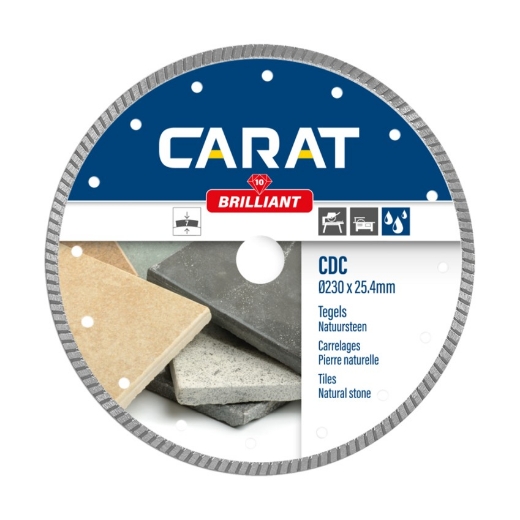
For tiles, porcelain, marble and granite use a continuous (closed) rim and cut wet to keep the edge chip-free. The Carat CSMP premium 125mm is built for tiles, and for hard natural stone and composite the Carat CGN premium 125mm holds its edge. For larger tiles up to 20mm thick on a bridge saw, the Carat CDC brilliant 250mm gives a clean cut, and our Ø230mm marble and granite disc carries a 7mm segment for stone work.
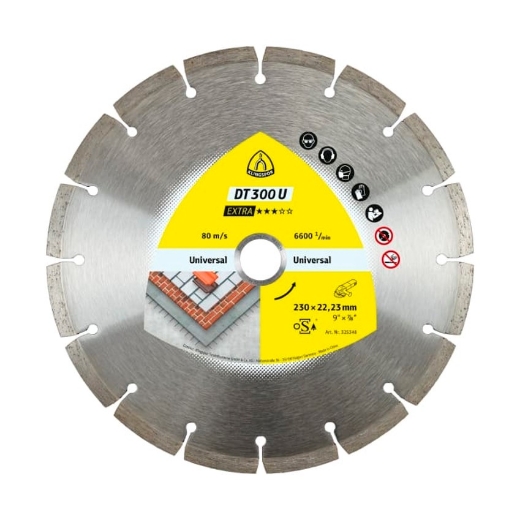
Water is not optional here. It cools the rim, flushes the slurry and stops micro-cracks racing across the glaze. Work slowly into the tile, let the blade reach speed before contact, and ease off near the far edge where chipping starts. For granite and harder porcelain the Klingspor DT 900 FT special is a dedicated tile and granite blade.
Which diamond blade for brick and asphalt?
For brick and asphalt, use a blade with wide gullets and a hard, abrasion-resistant bond so the soft, sticky spoil clears instead of clogging the rim. The Carat CA premium 230mm is made for brick and asphalt and keeps cutting where a concrete blade would pack up. Asphalt and green concrete are highly abrasive: a tougher matrix stops the segments wearing away too fast.
For hard facing brick on a cut-off saw, step up to the Carat CSG premium 350mm. The rule is the inverse of concrete: soft, abrasive material needs a hard bond, while hard, dense material needs a soft bond. Get this match right and the blade lasts far longer.
Diameter and bore size: get the fit right
The diameter sets cutting depth and the bore must match your machine spindle exactly. Angle grinders typically use 115mm or 125mm blades with a 22.23mm bore, while larger handheld and bench cut-off saws run 230mm, 250mm, 350mm or 400mm discs, often on a 25.4mm or 30mm bore. The Carat CGU premium 216x30mm, for example, has a 30mm bore for bench saws, so confirm your spindle before ordering.
| Diameter | Typical bore | Typical machine |
|---|---|---|
| 125mm | 22.23mm | Angle grinder |
| 216mm | 30mm | Bench/table saw |
| 230mm | 22.23mm | Large angle grinder |
| 350mm / 400mm | 25.4mm | Cut-off / bench saw |
Never fit a blade rated for a smaller diameter onto a larger machine, and respect the blade's maximum RPM, which is printed on the disc. Check our diamond blade range for the right diameter and bore combination.
Common mistakes
- Using a concrete blade on tiles: a segmented rim chips the glaze. Tiles and porcelain need a continuous rim cut wet.
- Cutting dry with a wet-rated blade: continuous-rim tile blades overheat without water and crack the core or the tile.
- Forcing the blade: pushing harder overheats the core and glazes the segments. Steady feed pressure cuts faster and lasts longer.
- Wrong bond for the material: a hard blade glazes on hard concrete, a soft blade wears out fast on abrasive brick or asphalt.
Find the right disc in our diamond blade assortment or browse all your tools and building materials in Belgium at the DHZ-Proshop webshop.
Frequently asked questions about diamond blades
Which diamond blade do I need for concrete?
Which diamond blade cuts tiles without chipping?
Can I cut asphalt with a concrete blade?
What is the difference between a turbo and a segmented rim?
Wet or dry: which diamond blade do I choose?
Which bore size fits my angle grinder?
Compiled by the DHZ-Proshop vakteam, your do-it-yourself and trade supplier with a shop and pickup point in Beerse. What we advise most in the shop: pick the rim by material first (turbo for concrete, continuous for tiles, wide-gullet for asphalt), then confirm the diameter and bore fit your machine. Questions about the right blade for your job? Contact our team or browse the full diamond blade range.