Match the hammer to the job, not to whatever is lying in the drawer. For carpentry, framing and pulling nails you use a claw hammer of around 450 to 570 grams, because its curved claw levers out nails and the flat face drives them clean. For demolition, chiselling and driving posts you reach for a club (lump) hammer or a sledge hammer of 1000 to 1500 grams, which delivers real striking mass. Using a light claw hammer on masonry chips the face and jars your wrist; swinging a heavy sledge for finish nailing bends everything. Head weight and handle type decide whether a job goes fast or fights you.
Which hammer do you actually need for your task? The hammer range at DHZ-Proshop covers claw hammers, club hammers and sledge hammers in every useful weight. This guide sorts them fast.
- A claw hammer of 450 to 570 grams is the all-rounder for carpentry, framing and pulling nails.
- A club or sledge hammer of 1000 to 1500 grams handles demolition, driving stakes and heavy chisel work.
- Anti-vibration handles (like Stanley FatMax Antivibe) cut the shock that tires your wrist on long jobs.
- Steel and fibreglass handles do not loosen like wood and survive rough site use.
- Heavier is not always better: too much head weight kills accuracy on finish nailing.
Which hammer for which job?
The right hammer starts with the task: nailing versus demolition versus striking metal. See the full hammer range in our webshop. The table below links each job to the matching hammer type from our real assortment.
| Product | Brand | Head weight | Type | Ideal for |
|---|---|---|---|---|
| Stanley Blue Strike 450gr | Stanley | 450 g | Claw hammer | General carpentry, DIY, nailing |
| Stanley FatMax Antivibe 570gr | Stanley | 570 g | Claw hammer (anti-vibe) | Framing, all-day site use |
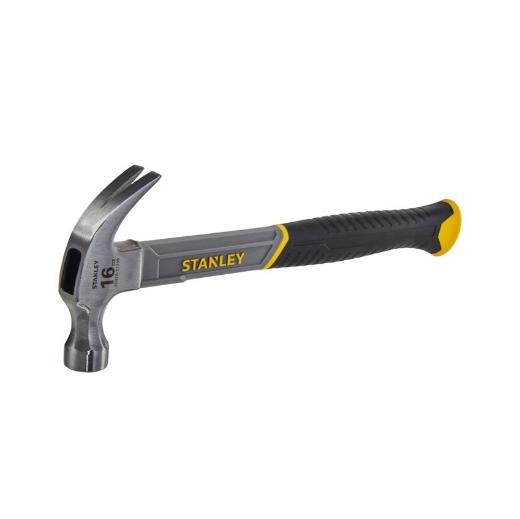
| Stanley Fibreglass Claw 450gr | Stanley | 450 g | Claw hammer (fibreglass) | DIY, shock-absorbing grip |
| Stanley Club Hammer 1000gr | Stanley | 1000 g | Club/lump hammer | Chisel work, light demolition |
| Stanley Club Hammer 1500gr | Stanley | 1500 g | Club/lump hammer | Heavy demolition, driving |
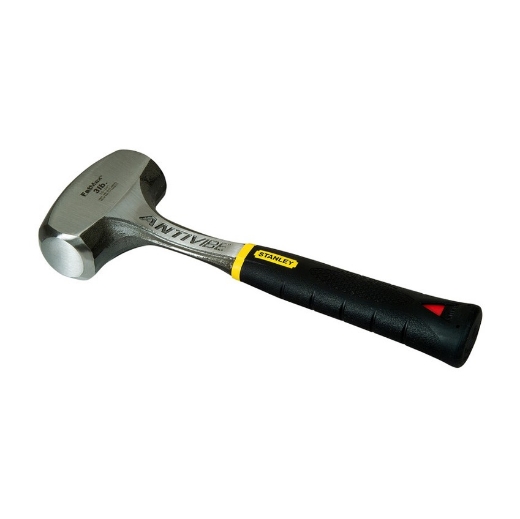
| Stanley Antivibe Club 1360gr | Stanley | 1360 g | Club hammer (anti-vibe) | Sustained demolition work |
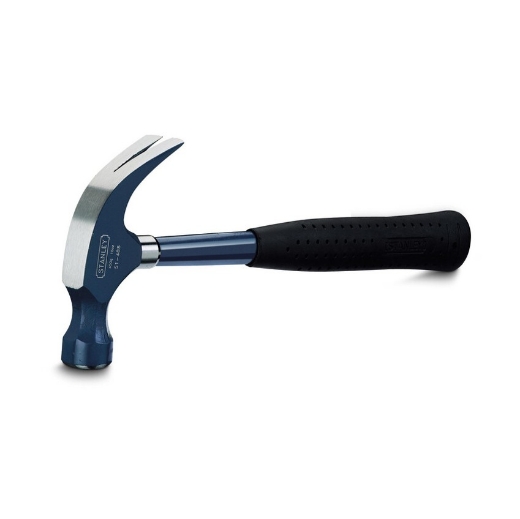
Carpentry & DIY
Nailing skirting, assembling frames, pulling old nails? A 450 gram claw hammer is the go-to. The Blue Strike is one of our most chosen for a reason.
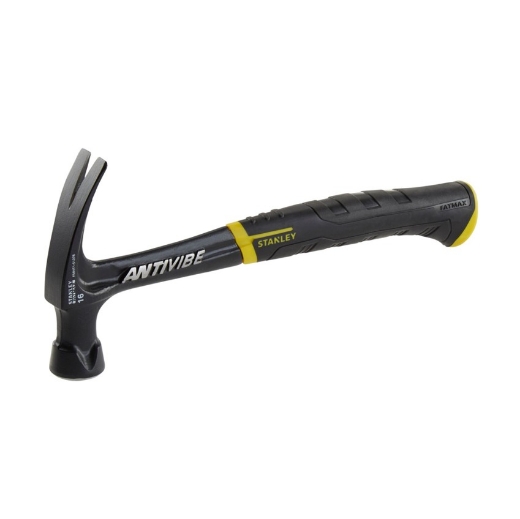
All-day framing
On site from morning to evening? The FatMax Antivibe 570gr adds mass for framing plus anti-vibration that spares your wrist over long sessions.
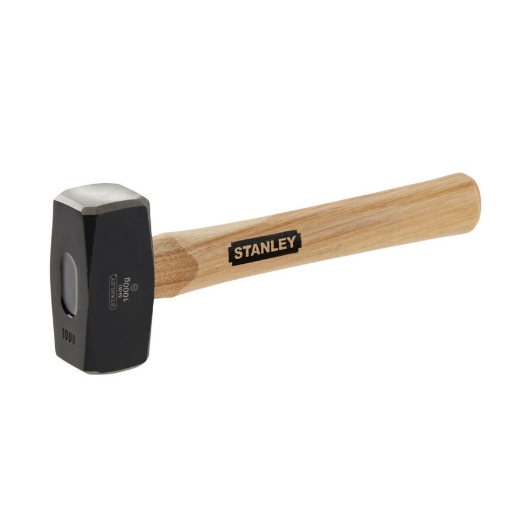
Demolition & chisel
Breaking tiles, driving a cold chisel, splitting masonry? A 1000 gram club hammer packs the striking mass a claw hammer never will.
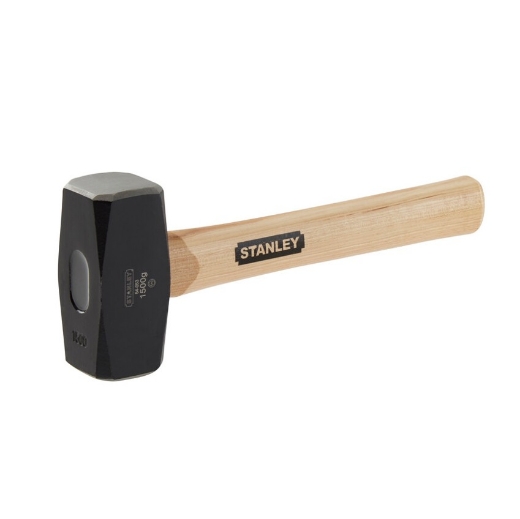
Heavy driving
Posts, stakes, serious demolition? The 1500 gram sledge delivers maximum force per blow so you finish in fewer swings.
Why does the wrong hammer ruin the job?
The wrong hammer wastes effort and damages the work because head weight and face shape are tuned to one kind of task. A light 450 gram claw hammer swung against a cold chisel or brickwork chips its face, bounces back and jars your wrist, since the head simply lacks the mass to transfer force. Turn it around and swing a 1500 gram sledge at a finish nail: you overdrive it, split the timber and dent the surface.
Handle type matters just as much. A stiff wooden handle sends every shock straight into your hand, so on a long day of framing your grip tires and accuracy drops. That is exactly why anti-vibration models exist. Pick the type first, then the weight, and the handle last.
When do you use a claw hammer?
You use a claw hammer for anything involving nails: driving them, setting them and pulling them out. The flat striking face drives the nail straight, while the curved two-pronged claw on the back levers nails cleanly out of timber. For general carpentry, DIY and framing, a claw hammer of 450 to 570 grams covers almost everything you meet.
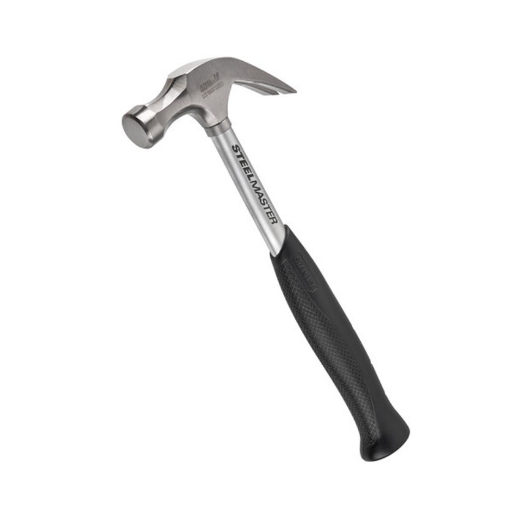
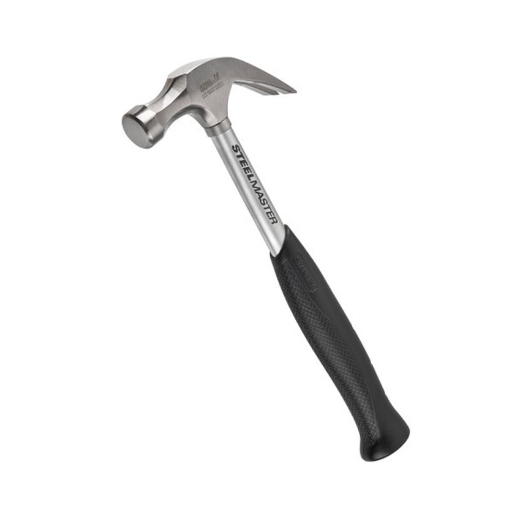
Handle material sets the top models apart. The Stanley Steelmaster 450gr and its 570 gram version use a one-piece forged steel handle that will never come loose from the head. The fibreglass claw hammer absorbs shock and stays light. For the toughest days the FatMax Antivibe 450gr dampens the impact your wrist would otherwise take.
In our Beerse shop, DIY customers looking for one hammer almost always leave with the Stanley Blue Strike 450gr, while site carpenters reach for the FatMax Antivibe 570gr.DHZ-Proshop vakteam, Beerse
Club hammer or sledge hammer for demolition?
For demolition, chiselling and driving, you use a club (lump) or sledge hammer, because raw striking mass is what breaks material. A club hammer of 1000 to 1500 grams drives cold chisels, splits bricks, seats paving and knocks apart light structures. The compact double-faced head lets you swing it one-handed in tight spots where a long sledge cannot reach.
Weight is the deciding factor here. The 1000 gram club hammer suits chisel work and controlled breaking, the 1250 gram version is the versatile middle, and the 1500 gram model hits hardest for heavy demolition. If you break things for hours, the Stanley Antivibe 1360gr cuts the vibration that otherwise numbs your hand and forearm.
How do you choose the right hammer weight?
Choose the weight by how much force the task needs and how much control you must keep. Finish nailing and trim want a lighter head around 450 grams for accuracy; framing and rough carpentry benefit from 570 grams to sink nails in fewer blows. Demolition and driving need 1000 to 1500 grams so mass, not muscle, does the breaking.
There is a real limit. Too heavy a hammer for delicate work overdrives nails and splits timber, and it exhausts your arm long before the job is done. For specialist trades there are dedicated shapes too: the Stanley lath hammer 600gr for battening and roofing lath, and the Stanley chipping hammer 500gr for cleaning welds and scale. A quality alternative claw is the Bahco claw hammer 570gr.
Common mistakes when choosing a hammer
- Using a claw hammer on masonry or a chisel: the light face chips and cracks. Chisel work and demolition belong to a club or sledge hammer.
- Buying too heavy a head for finish work: a 1500 gram sledge overdrives finish nails and splits timber. Match weight to the task, not to bravado.
- Ignoring the handle: a stiff wooden handle sends every shock into your wrist. On long days an anti-vibration model like the FatMax Antivibe protects your joints.
- Gripping up by the head: choking up on the handle kills leverage, so you tire faster and drive nails less cleanly. Hold near the end.
Browse the complete selection in our hammer range or find all your tools and building materials in Belgium at DHZ-Proshop.
Frequently asked questions about hammers
What is the best hammer weight for general carpentry?
What is the difference between a club hammer and a sledge hammer?
Can I use a claw hammer for demolition?
What does an anti-vibration hammer do?
Is a steel or fibreglass handle better?
Which hammer do I use for metalwork or welds?
Compiled by the vakteam of DHZ-Proshop, your DIY and trade supplier with a shop and pick-up point in Beerse. What we advise most in the shop: choose the type first (claw for nails, club or sledge for demolition), then match the weight to the task and pick an anti-vibration handle if you swing all day. Questions about the right hammer for your work? Contact our team or browse the full hammer range.