Which Steel Anchor for Concrete, Brick or an Old Wall? (Wedge Anchor, Frame Screw, Expansion Sleeve or Chemical Anchor)
You don't choose the right steel anchor by load alone, but by the combination of base material, wall condition, edge distance, load type and how permanent the fixing must be. In practice: wedge anchors are strongest in solid concrete, frame screws with frame plugs are ideal for frames and profiles in masonry, expansion sleeves are a light indoor fixing, and for old, hollow or crumbling walls a chemical anchor is often the safest choice. Choose the wrong anchor and the wall may crack, the anchor may spin, or the fixing may fail long before the load would justify it.
Which steel anchor do you use for concrete, brick or an old wall? Concrete takes expansion anchors well, solid brick works with several systems, and old walls often need a more forgiving anchor or even chemical anchoring when the base material is uncertain. In this guide you start with the wall and arrive at the right anchor.
Overview: which anchor for which wall?
Browse the full steel anchor range in our webshop: wedge anchors, frame screws, expansion sleeves and frame plugs. Four solutions that look alike on the shelf but solve different problems in the wall. The table below puts them side by side.
| Anchor | Best base material | Typical use | Load |
|---|---|---|---|
| Wedge anchor | Solid concrete, solid natural stone | Heavy brackets, wall plates, structural work | Heavy, fixed |
| Frame screw + frame plug | Solid masonry and concrete | Wooden frames, door jambs, profiles | Medium, controlled |
| Expansion sleeve | Masonry and concrete, indoors | Light push-through fixing indoors | Light |
| Chemical anchor | Old, hollow or crumbling walls | Important load in uncertain base material | Medium to heavy, forgiving |
Solid concrete
A dense, stable base material that can take expansion? The wedge anchor gives the strongest mechanical fixing for heavy loads and structural work.
Frames and profiles
Fixing a wooden frame or profile neatly and square in masonry? Frame screws with frame plugs give a controlled, reliable installation.
Light indoor work
A light fixing indoors in masonry or concrete? The expansion sleeve works fast with push-through mounting, like a kind of nail for stone. Ideal for light indoor mounting.
Old or uncertain wall
Crumbling, hollow or mixed masonry? Avoid hard expansion force. A chemical anchor spreads the load and is then often the safest choice. Ask for advice if the wall is in doubt.
Always start with the wall
The first question is what you are fixing into. Solid concrete, full brick, hollow brick, old masonry and damaged walls all respond differently to expansion and friction. Solid concrete is the most predictable and usually the best for expansion anchors such as wedge anchors. Solid brick can also work, but the anchor must not split weak brick or damage the mortar joint. Old walls are the least predictable: age, moisture, cracks and voids reduce the wall's ability to carry mechanical expansion.
If the wall is uneven, crumbling or mixed-material, assume lower confidence and choose a system that spreads the load more gently, that is where a chemical anchor often outperforms brute expansion. Not sure whether the masonry is solid or hollow? Treat it as the weaker case; that prevents cracked brick and failing fixings.
Wedge anchors for solid concrete
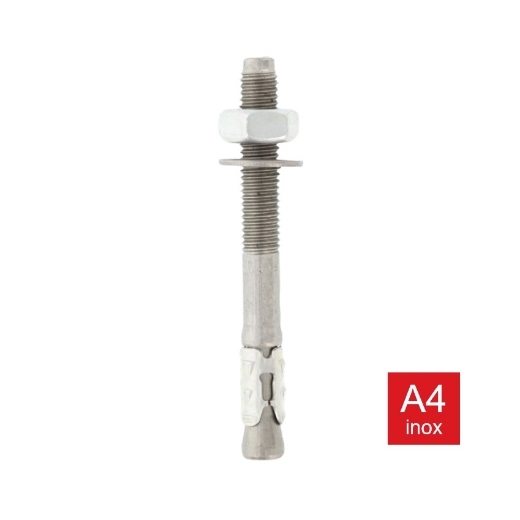
Wedge anchors are a strong choice for solid concrete because they create a mechanical expansion inside the drilled hole: a conical bolt pulls a sleeve apart, which clamps into the hole. They are especially suitable when the base material is dense and stable and can take the expansion without cracking, which makes them a good option for heavy loads, steel brackets, wall plates and structural fixings. Once set correctly, a wedge anchor gives a very reliable fixing in solid material; they are permanent and hard to remove without damage.
Frame screws and frame plugs for frames
Frame screws are designed for secure frame mounting, especially in combination with frame plugs. They are a practical solution for wooden window and door frames, profiles and similar installations in masonry or concrete. The big advantage is controlled installation: with the right hole size and proper alignment, you fix the frame without excessive stress in the base material or the frame itself, and the frame stays square during fitting.
Frame plugs are the heavier version of the nail plug: they are screwed in rather than hammered in, and combine the holding power of a plug with the precision that frame mounting requires. For window and door work they are often the everyday workhorse, because they carry respectable loads through push-through mounting. In old walls they can still work well if the wall is sound enough and the hole is drilled carefully; if the base material is weak or hollow, a more forgiving or chemically anchored system is safer.
Expansion sleeves for light indoor work
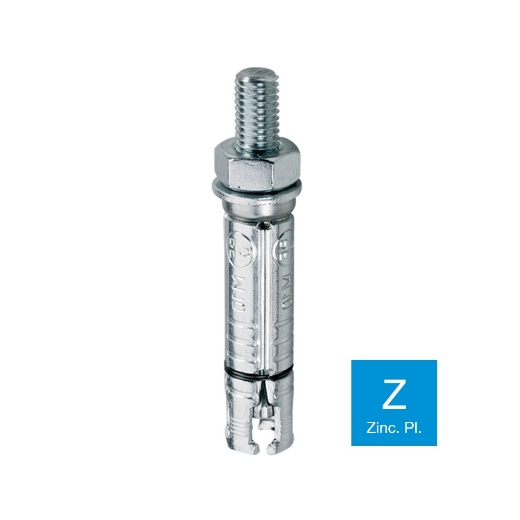
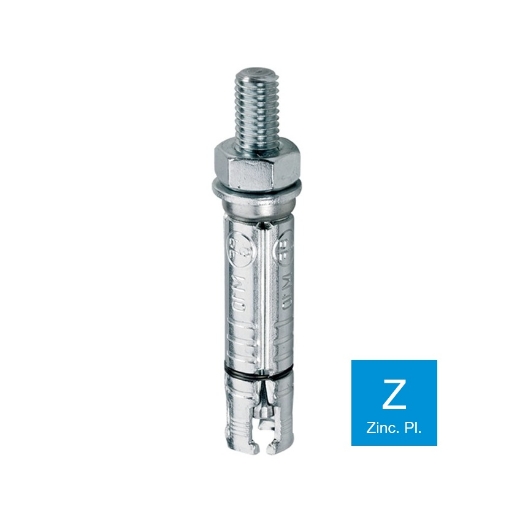
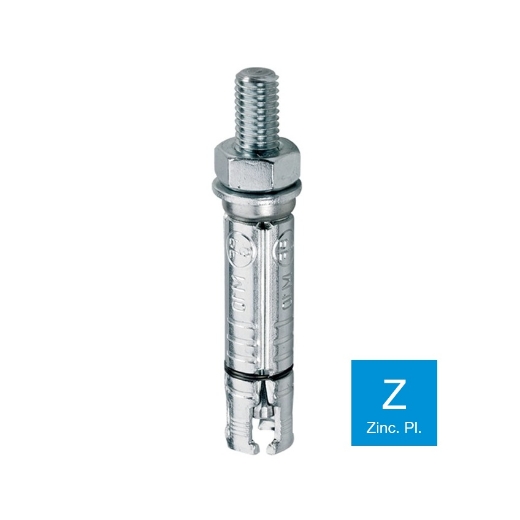
An expansion sleeve is a light fixing for masonry and concrete, intended for indoor use. Think of it as a kind of nail for stone: the sleeve is made of spring steel and comes under tension when hammered in, which makes it clamp, fast and simple through push-through mounting. Important: an expansion sleeve is a light solution, not a replacement for a wedge anchor or a chemical anchor for heavy or uncertain fixings. For light indoor mounting in sound masonry or concrete it is ideal; for heavy loads, outdoor work or a doubtful base material, choose a different system.
Old walls need the most caution
Old walls are the hardest category because they can be strong in one spot and fragile in another: old repair zones, soft mortar, hidden voids, moisture damage or weakened brick. In those situations, hard expansion is risky, because an anchor with high spreading force can loosen the surrounding material instead of creating a safe hold. That is why renovation projects often call for a more careful anchoring strategy than new-build work.
If the load is important and the wall condition is uncertain, chemical anchoring is usually considered the most suitable solution for masonry that is old, damaged or inconsistent; in hollow brick it is often even the only reliable solution. A chemical anchor spreads the injection mortar into the wall and distributes the force without the expansion stress of a wedge anchor.
Load type, edge distance and hole
Not all loads behave the same. Static loads, pull-out loads, shear loads and vibrating loads each ask something different of the anchor: a wedge anchor in concrete is strong for heavy fixed loads, a frame screw holds a frame accurately, and an expansion sleeve or frame plug suits lighter or more forgiving fixings. If the load can move, shake or apply leverage, choose the most reliable base material and anchor style, not the simplest option. Movement is where weak masonry fails first.
The distance from the hole to the edge also counts heavily: too close to an edge, an expansion anchor can cause cracking or breakout, especially in older brick or weaker masonry. And even a good anchor fails if the hole is badly positioned or the wall is already damaged. Drill clean, to the right size and straight, and blow the hole dust-free before you set the anchor, a correct hole gives the anchor the best chance to perform as intended.
Common mistakes with steel anchors
- Misjudging the base material: what works cleanly in dense concrete can split a weaker brick or fail in the mortar joint. When in doubt whether the brick is solid or hollow, assume the weakest case and choose a hollow-wall anchor or chemical anchor.
- Too much force on a weak wall: a strong expansion anchor in an old wall feels safer, but the wall is often the weak point, not the anchor. Wedge anchors in joints or chimneys can pry the masonry apart, sometimes already during tightening.
- Installation and placement: mounting a frame without keeping it square, or drilling too close to the edge, weakens the fixing. Precision counts as much as strength.
Fast decision logic
- Solid concrete: choose wedge anchors for strong mechanical expansion.
- Brick or mixed masonry: choose frame plugs for a controlled hold.
- Wooden frames in masonry: choose frame screws with frame plugs.
- Light indoor work: an expansion sleeve is enough.
- Old or uncertain wall with an important load: choose chemical anchoring.
The rule of thumb: concrete likes expansion, brick likes controlled anchoring, and old walls like caution. Browse the full selection via our steel anchor category or find all your fasteners and building materials in Belgium at the DHZ-Proshop webshop.
Frequently asked questions about steel anchors
Which anchor do I use in solid concrete?
Can I use a wedge anchor in brick?
Which anchor do I choose for a wooden frame in masonry?
What is the difference between an expansion sleeve and a frame plug?
Which anchor do I use in an old or crumbling wall?
Posted by the fastening expert at DHZ-Proshop, your specialist in wedge anchors, frame screws, expansion sleeves and frame plugs for concrete, stone and more. Webshop available 24/7 and pick-up point in Beerse. Questions about the right anchor for your wall? Contact our team or browse our complete range of fasteners.