Which Washer Stops Rust, Vibration or Leaks? (Stainless A2/A4, spring, serrated lock or sealing washer)
The right washer depends on the problem you want to solve. For rust, choose stainless washers: A2 (304) for normal outdoor work, A4 (316) for the coast and aggressive environments. For vibration, use spring washers, serrated lock washers or heavier locking systems. For leaks, choose a sealing washer with neoprene. A flat washer or fender washer spreads load, but it seals nothing and stops no vibration.
Which washer stops rust, vibration, or leaks? Washers are small, but they do very different jobs. One spreads load, another helps a connection stay tight under movement, and a third seals a joint against water or air. In this guide you define the problem first and choose the washer type second. That is the fastest route to a reliable fastening.
Overview: which washer for which problem?
Browse the full range of washers in our webshop. Our selection includes flat washers, spring washers, serrated lock washers, fender washers and sealing washers with neoprene, in galvanized steel, stainless A2 and A4 and black finish. The table below shows at a glance which type matches which problem.
| Washer type | Solves this | Key feature | When to choose |
|---|---|---|---|
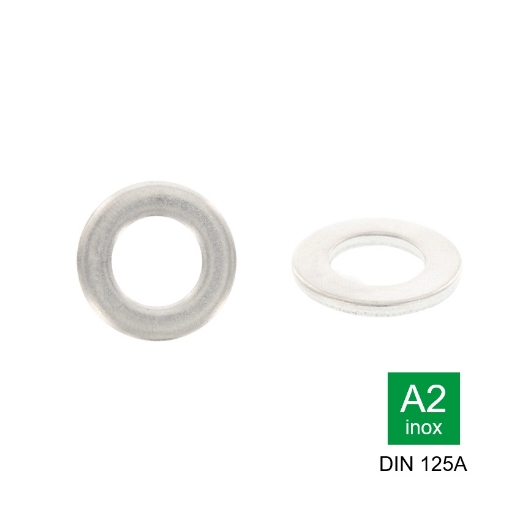
| Flat washer (stainless or galvanized) | Load spreading | Protects the surface under head or nut | Standard under any bolt or nut |
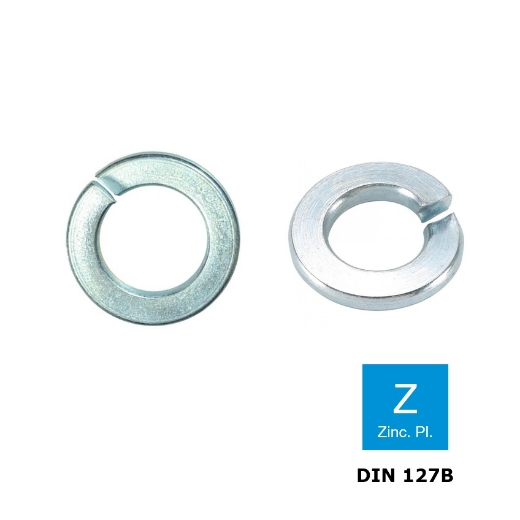
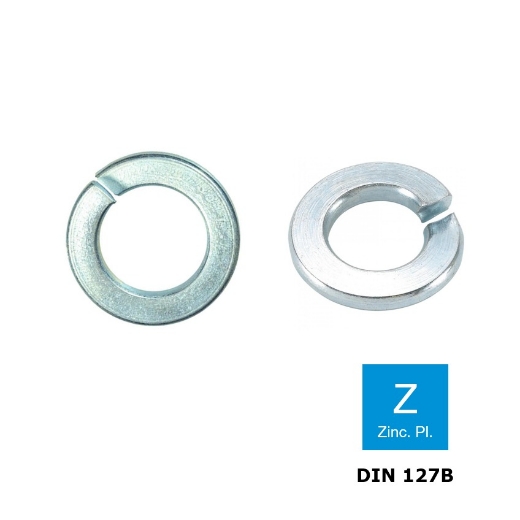
| Spring washer | Vibration (light to moderate) | Adds spring tension to the joint | Joints that move or vibrate |
| Serrated lock washer (toothed) | Vibration + rotation | Teeth bite into the surface | Stronger grip against loosening |
| Sealing washer with neoprene | Leaks | Compresses and seals the opening | Water- or air-tight connections |
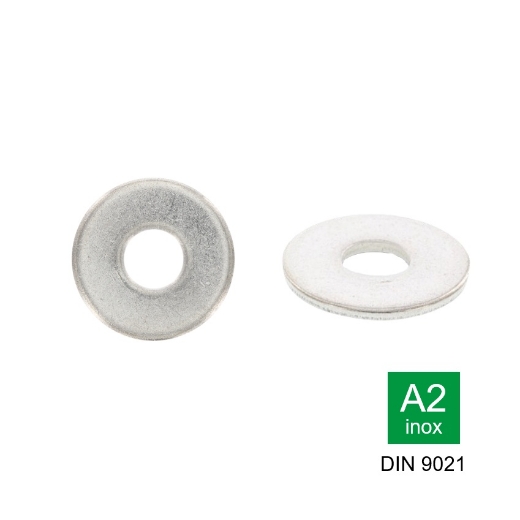
| Fender washer | Load in thin or soft material | Large outer diameter | Thin sheet metal or soft material |
Always start with the problem
The fastest way to choose the right washer is to name the problem first. If the issue is corrosion, you need a rust-resistant material. If the joint loosens under movement, you need a washer type that helps maintain tension. If water or air leaks through, you need a sealing washer. Many mistakes happen because people pick a shape before they think about the job: a flat washer does not seal a leak, and a spring washer does not stop rust on its own. The washer has to match the failure you want to prevent, not just the hole size.
Problem: rust
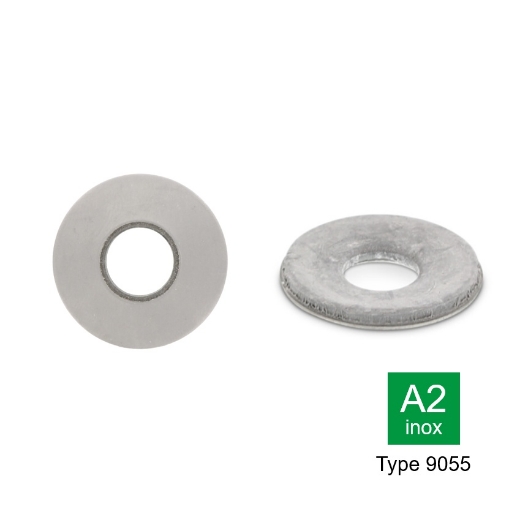
Choose stainless washers. A2 (304) for normal outdoor work, A4 (316) for the coast, pools and chemical exposure. Here the material matters more than the shape.
Problem: vibration
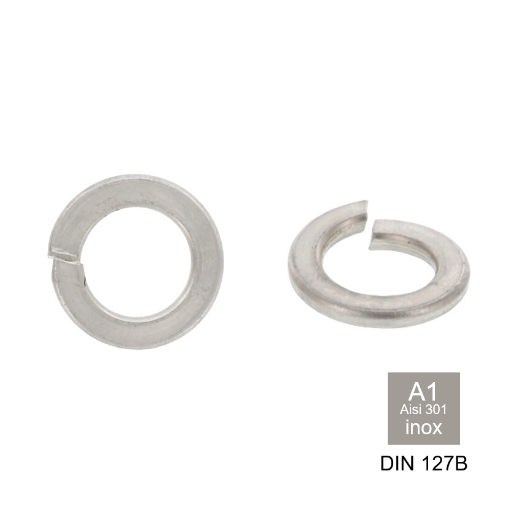
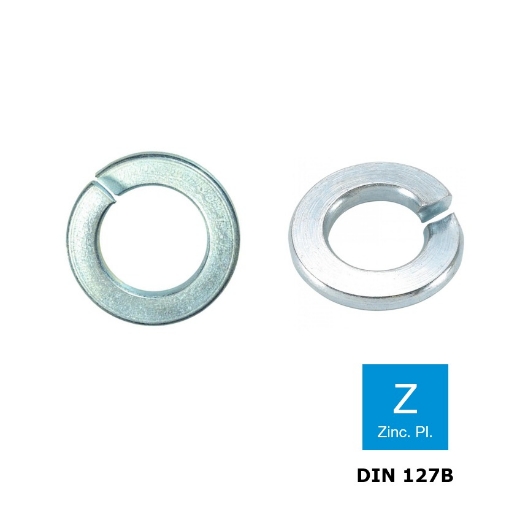
Choose a spring washer or serrated lock washer. It keeps tension on the joint or bites into the surface, so the bolt or nut loosens less easily.
Problem: leaks
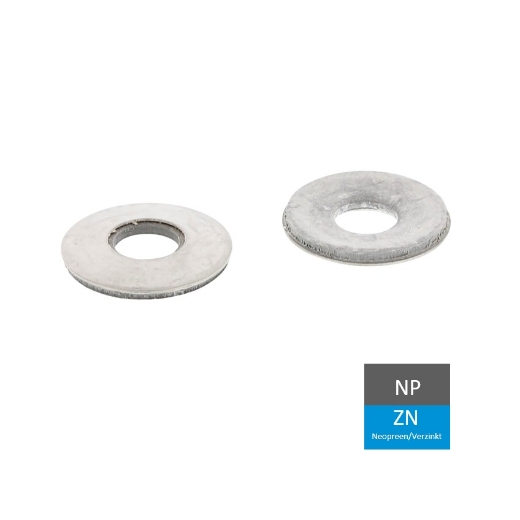
Choose a sealing washer with neoprene. The rubber layer compresses around the screw and closes the opening against water and air.
Problem: load or pull-through
Choose a flat washer or fender washer. It spreads the force over a larger area, which is especially useful in thin sheet metal or soft material.
Washers for rust resistance
If rust is the main concern, the material matters more than the shape. Stainless washers are the standard answer for outdoor, wet or corrosive environments, because they resist corrosion far better than plain steel. Stainless A2 (304) is the practical default for most outdoor jobs in inland Belgium: good corrosion resistance for normal weather exposure, garden structures and general exterior work. Stainless A4 (316) contains 2 to 3% molybdenum, which strongly improves resistance to pitting corrosion from chlorides, and is the right choice at the coast, near chlorinated pools, under chemical exposure and with persistent wetting. The simple rule: A2 for normal outdoor jobs, A4 when rust would be expensive or the environment is aggressive. Is your joint within five kilometres of the coast, or hard to replace later? Then A4 gives extra security.
Galvanized washers have a protective zinc layer over the steel. For many applications that is enough, but the coating can wear or be damaged over time. In a harsh or permanently wet environment, stainless is the safer choice for the long term.
Washers for vibration resistance
Vibration is a different problem. If a joint loosens through movement, shocks or repeated loading, you need a washer that helps maintain tension or grip. Their job is not to stop rust or seal leaks, but to prevent the fastener from working loose while the joint moves.
- Spring washer (split): adds elastic spring force to the joint. Suitable for light to moderate vibration. Note: once flattened, a spring washer loses part of its effect, so treat it as a single-use component.
- Serrated lock washer (toothed): the teeth bite into the contact surfaces and add extra resistance against rotation. Useful where a plain flat washer would not stop gradual loosening.
- Heavier locking systems: for severe shocks, strong movement or safety-critical joints, an engineered locking system beats a simple spring washer. Vibration control is a system-level choice, not just a washer choice.
Washers for leak resistance
If leakage is your main concern, the answer is not a metal washer. You need a sealing washer, usually with neoprene or another elastic sealing material. The rubber layer compresses and closes the opening around the fastener. Sealing washers are used to make water- or air-tight connections: you find them in roofing, sheet-metal work and other joints where water or air can pass along a screw opening. A neoprene sealing washer is especially useful because it combines metal backing with a flexible seal: clamping force and leak protection in the same joint.
A sealing washer only works if it is compressed correctly. Too little torque and the seal does not close; too much torque and you crush the rubber or damage the joint. So match the washer to the screw size, the material thickness and the type of application.
Flat washers and fender washers: spreading load
The flat washer is the most common type, but often misunderstood. Its main job is to spread the force of a nut or bolt head over a larger area, so the fastener does not damage the material. A flat washer is support hardware, not a cure-all: it does not lock against vibration and it does not seal a leak. The fender washer (a washer with a large outer diameter) is for when you want to spread load over an even wider area, especially useful in thin sheet metal, soft material or situations where the fastener would otherwise pull through. In outdoor work, combine it with stainless fasteners, so corrosion resistance and load spreading are handled together.
Black-finish washers are usually chosen for aesthetics or a specific surface treatment. A black finish does not in itself mean better corrosion resistance: the material underneath still counts. So treat colour as the last decision, after rust, vibration and sealing are settled.
Common mistakes with washers
- Wrong type for the job: a flat washer spreads load but makes no reliable seal, and a spring washer does not stop rust on its own, if the material is plain steel exposed to weather, the washer can still rust even though it holds well against loosening.
- Material and environment: do not mix corrosion classes, because a stainless washer with a non-stainless bolt or nut can corrode or seize the whole stack. And where long-term rust resistance matters, stainless is the safer choice than galvanized in a harsh environment.
- Installation: with sealing washers, too little torque does not seal and too much crushes the rubber. And don't choose colour over function: solve rust, vibration and sealing first, and only then pick the finish.
Belgian climate and environment
The environment helps decide which washer you need. Keep these rules of thumb in mind:
- Indoor and dry: the simplest situation. A standard washer often suffices when corrosion risk is low and the joint does not move.
- Outdoor inland Belgium: rain, condensation and temperature swings make stainless A2 (304) or solid galvanized material more attractive.
- Coastal zone (within 5 km) and pool or chemicals: the salt and chlorine load is higher, so stainless A4 (316) is at the top of the list.
- Vibration-prone equipment: focus on maintaining tension, not just load spreading. Combine a spring or serrated lock washer with the right tightening torque.
Fast decision logic
- Rust: choose stainless, usually A2 for normal outdoor work and A4 for aggressive environments.
- Vibration: choose a spring washer, serrated lock washer or a heavier locking system.
- Leaks: choose a sealing washer with neoprene.
- Load spreading: choose a flat washer or fender washer.
That sequence removes most wrong choices before you order. Browse the full selection on our washers page or start at the DHZ-Proshop webshop.
Frequently asked questions about washers
Which washer should I choose against rust?
What is the difference between stainless A2 and A4?
Which washer do I use against vibration?
Does a spring washer also stop rust?
Which washer seals a leak?
Can I use a flat washer to stop a leak?
What exactly does a flat washer do?
When do I use a fender washer?
Can I combine a stainless washer with a galvanized bolt?
How tight should I tighten a sealing washer?
Posted by the fastening expert at DHZ-Proshop, your specialist in washers, flat washers, spring and serrated lock washers, stainless A2/A4 and neoprene sealing washers. Webshop available 24/7 and pick-up point in Beerse. Questions about the right washer for your project? Contact our team or browse our complete range of fasteners.