Which Wood Screw for Which Wood? (Chipboard, MDF, Hardwood or Decking)
The right wood screw depends on the wood, not just the length. For softwood and interior work you use chipboard screws, for sheet material MDF screws, for heavy timber joints construction or washer-head screws, and for decking and outdoor wood stainless decking screws. The harder, wetter or more heavily loaded the wood, the more the screw choice, predrilling and corrosion resistance matter.
Which wood screw for which wood? The same screw can be perfect in one project and a bad choice in another. Pine, MDF, hardwood, treated outdoor timber and decking boards all behave differently, so the screw must match the material instead of forcing the wood to adapt. In this guide you start with the wood type and arrive at the right screw type, the right length and the right finish.
Overview: which screw for which wood?
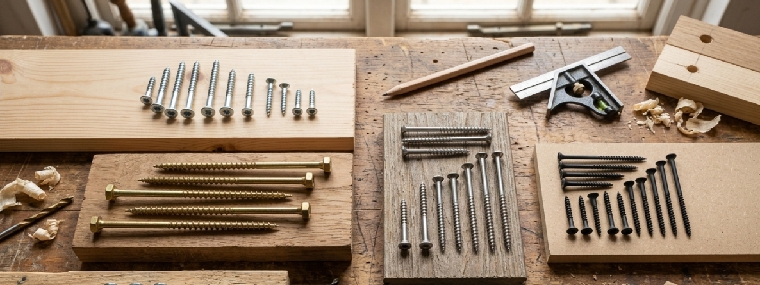
Browse the full wood fastening range in our webshop: chipboard screws, MDF screws, construction screws, washer-head timber screws with a flat flange head, stainless C2 decking screws, drywall screws, lag screws, set screws, hanger bolts and eye screws. The table below shows at a glance which type matches which wood.
| Wood type or material | Recommended screw | Predrilling? | Finish |
|---|---|---|---|
| Interior softwood (pine, spruce) | Chipboard screw, Torx or cross-head | Usually not needed | White or yellow zinc-plated |
| MDF and chipboard | MDF screw or chipboard screw | Rarely, but watch the edges | Zinc-plated |
| Heavy timber structures | Construction screw or washer-head screw | Advised for larger diameters | Zinc-plated indoors, corrosion-resistant outdoors |
| Hardwood | Stainless screw with Torx | Almost always | Stainless A2/A4, C2 only inland and non-tannin-rich |
| Decking boards and outdoor wood | Stainless decking screw | Always with hardwood | Stainless, matched to wood species and location |
Always start with the wood type
The first question is what wood you are fastening. Softwood like pine and spruce accepts a screw easily: the fibres give way, the screw bites quickly and predrilling is often unnecessary. Hardwood like oak, beech or dense tropical species offers far more resistance, demands more torque and splits faster. Sheet material like MDF and chipboard is in turn sensitive to splitting at the edges and to stripping out.
Softwood and interior work
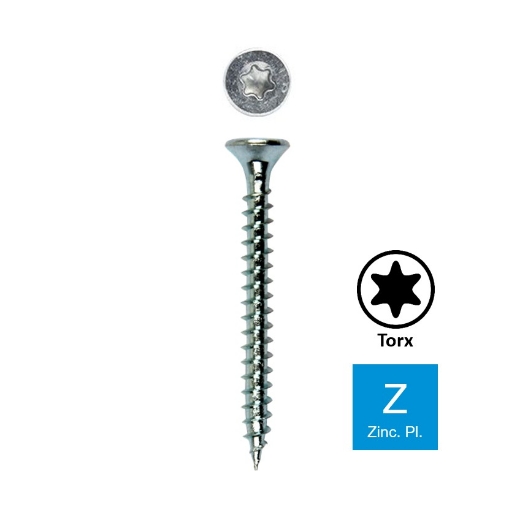
For pine, spruce, furniture and interior framing, chipboard screws are the workhorses. Sharp point, deep thread, usually no predrilling needed.
MDF and sheet material
MDF is dense and brittle at the edges. MDF screws have a special drill point so you can work without predrilling and without splitting, even on the panel edge.
Heavy timber joints
For load-bearing joints, beams and garden structures, choose construction screws or washer-head screws. More pull-out resistance and better load transfer.
Decking and outdoor wood
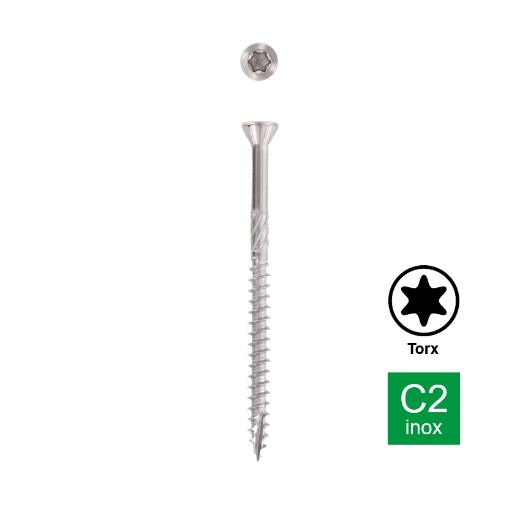
Decking boards and outdoor wood call for stainless decking screws. They withstand moisture and wood movement and prevent rust streaks on your deck.
Interior work: chipboard and MDF screws
Chipboard screws are the workhorse of interior fastening: chipboard, MDF, light furniture assembly and many general indoor wood connections. Their sharp point and deep thread bite quickly into wood-based sheet material, usually without predrilling in softer materials. Note the difference between partial thread and full thread: a screw with partial thread (the thread does not run up to the head) pulls two wood parts tightly together, ideal for wood-to-wood joints; full thread gives maximum grip in sheet material. For interior work, a white or yellow zinc-plated finish is enough.
MDF needs a different approach: it is dense, brittle at the edges and splits quickly with a screw that is too aggressive. MDF screws have a special drill point so in many cases you can work without predrilling, even close to the edge or on the end face of a panel. Edge distance and screw length remain important though: overloaded MDF still fails.
Heavy joints: construction and washer-head screws
Construction screws are meant for heavy timber structures where holding power matters more than a discreet installation: framing, beam connections and load-bearing wood joints. They offer more pull-out resistance and better load transfer than small general-purpose screws. If the joint carries weight, vibration or repeated stress, they are usually the safer choice.
Washer-head timber screws have a wide, flat flange head that spreads the clamping force over a larger area, so the head does not pull deep into the wood and you get high resistance to pull-through. They are the modern, Torx-driven relative of the classic lag screw, extremely well suited for heavy framing, garden structures and build-ups where one timber must be clamped firmly against another. For structural outdoor work the finish matters too: such screws stay in place for years and are hard to replace later, so in exposed wood corrosion protection is required.
Outdoors and hardwood: where most mistakes happen
Decking screws are specifically designed for decking boards and outdoor wood: they withstand moisture, UV and wood movement for years and reduce the chance of splitting the plank. For hardwood decks, stainless is the right choice; zinc-plated screws belong indoors or in dry, sheltered applications.
Hardwood changes everything. Dense species offer a lot of resistance, demand more driving torque and split quickly if you skip predrilling. On top of that, many hardwood species contain tannins that attack zinc-plated screws over time, which can make them break. In hardwood, stainless is therefore the norm. The rule of thumb: the harder and denser the wood, the more likely you need predrilling, the more important a quality Torx recess becomes, and the heavier corrosion resistance weighs.
Choosing length and predrilling without guessing
A screw must be long enough to really grip, but not so long that it splits or pokes through. Two rules of thumb: for wood-to-wood, the screw penetrates at least half its length into the receiving piece; for sheet material, count roughly 2.5 to 3 times the panel thickness (for 18 mm MDF that gives 45 to 55 mm).
Predrilling is not always necessary, but it becomes important in hardwood, close to edges, in brittle sheet goods and with larger construction screws (from roughly 6 mm diameter). It reduces splitting and lowers driving resistance. Is the screw binding, the wood cracking or the bit struggling? Then predrilling is the right move.
Special types in the range
Beyond the classic wood screws, our range of screw fastenings also includes a set of specialists:
- Lag screws (coach screws): for heavy wood or wood-to-wall fastening where a wrench gives more torque than a bit.
- Hanger bolts: wood thread on one side, metric thread on the other. Typical for stair handrails, washbasins and mountings where one side needs a nut or adjustable attachment.
- Set screws: for adjustable and fixed positions in constructions.
- Eye screws: for hanging or tensioning, not for joining two materials.
- Drywall screws: for plasterboard on wood or metal profiles, not as a general wood screw.
Know the function and you avoid category mistakes: an eye screw is not a structural screw, and a lag screw is not the answer for delicate panel work.
Common mistakes with wood screws
- Wrong type for the wood: forcing chipboard screws into hardwood ends in broken screws or stripped heads (hardwood demands stainless with Torx and predrilling), and a generic screw at the edge of MDF risks splitting, use an MDF screw and keep edge distance.
- Material and environment: zinc-plated screws outdoors or in tannin-rich wood get their zinc layer attacked, with rust streaks and breakage as a result. And hardened stainless C2 is strong, but does not belong at the coast or in azobé, bangkirai or cumaru, there you choose A2 or A4.
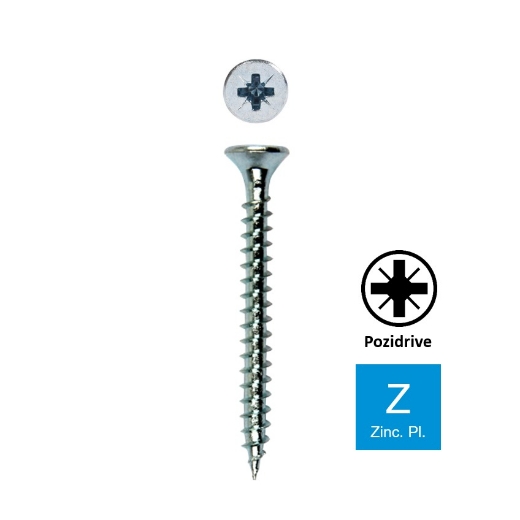
- Size and installation: too short or too thin gives insufficient pull-out resistance, too long pokes through or splits. And cross-head at high torque gives more cam-out and damaged heads, choose Torx for dense wood and repetitive work.
Fast decision logic
- MDF and chipboard: MDF screws or chipboard screws.
- Interior softwood (furniture, framing): chipboard screws with Torx.
- Hardwood: predrill and use stainless, with a Torx recess.
- Structural timber: construction screws or washer-head screws.
- Decking and outdoor boards: stainless decking screws, matched to wood species and location.
That simple mapping gets you to the right shelf in most real-world jobs. Browse the full selection via our wood fastening category or start at the DHZ-Proshop webshop.
Frequently asked questions about wood screws
Which screw do I use for MDF?
What is the difference between partial thread and full thread?
Do I need to predrill in softwood?
Which screw do I choose for hardwood?
When do I use a washer-head screw?
What is the difference between a construction screw and a chipboard screw?
Are zinc-plated screws suitable for outdoors?
What are stainless C2 decking screws and when do I use them?
How long should my wood screw be?
Torx or cross-head for wood screws?
Posted by the fastening expert at DHZ-Proshop, your specialist in chipboard screws, MDF screws, construction and washer-head screws, stainless decking screws and lag screws. Webshop available 24/7 and pick-up point in Beerse. Questions about the right wood screw for your job? Contact our team or browse our complete range of fasteners.