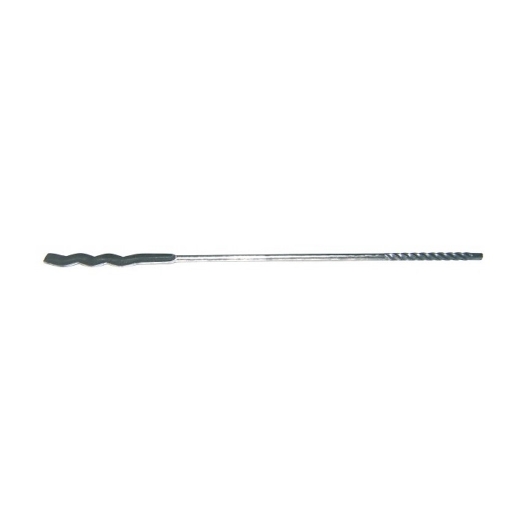
An insulation board that comes loose or lifts in the wind almost always means the wrong plug was chosen for the substrate, the insulation thickness or the load. You match the plug to three things: the substrate (solid masonry, concrete, cavity wall or hollow block), the insulation thickness, which sets the plug length, and the required anchoring depth into the solid wall behind the insulation. A screw-in plug such as the Fischer Termoz SV2 Ecotwist covers insulation from 30 to 60mm thick, while a nail-in plug such as the Termoz CN 8/350 reaches boards up to 350mm long for very thick insulation. The disc diameter, from 36mm up to 70mm, spreads the load over the insulation surface and stops the board tearing loose. Get any of these three wrong and the board lifts, the render cracks around the fixing point, or the plug pulls straight out of the wall.
Which insulation plug fits your wall and your insulation board? Browse the full range in our insulation plugs collection at DHZ-Proshop, built mainly around Fischer's Termoz and Termofix systems. This guide walks through substrate, depth and disc size so you order the right plug the first time.
- Plug length must equal insulation thickness plus the anchoring depth needed in the solid substrate, not the insulation thickness alone.
- Solid masonry and concrete take a nail-in plug (Termoz CN) or a screw-in plug (Termofix); a cavity wall needs a dedicated cavity anchor like the Isolfix NT.
- Disc diameter, from 36mm to 70mm, decides how much load the insulation surface can carry before the plug head pulls through.
- Galvanised steel discs disappear under render, plastic discs stay visible without rusting, and inox A2 discs resist salt air near the coast.
- The Termoz SV2 Ecotwist screw-in range lets you set the exact depth per board thickness, 10 to 30mm or 30 to 60mm, with its dedicated installation tool.
Overview: which insulation plug for which situation?
Every product below is real stock at DHZ-Proshop, matched to a substrate, an insulation thickness range and a disc size. Use this table to shortlist the right Fischer or Connecton plug before you order.
| Product | Brand | Key spec | Ideal for |
|---|---|---|---|
| Termofix B110 | Fischer | Schroefplug, 60mm disc, 110mm, galvanised steel | Rendered facades on masonry or concrete; one of our most chosen options |
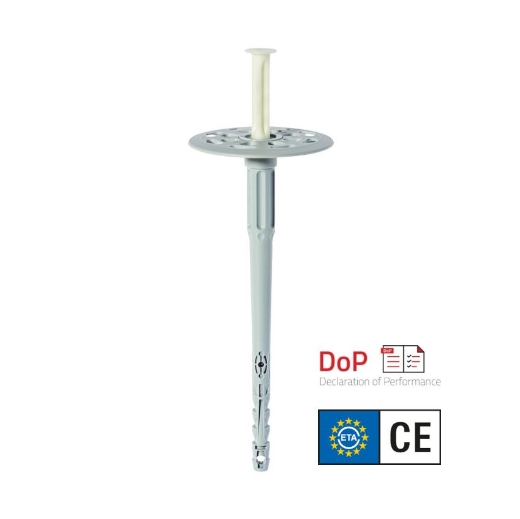
| Termoz CN 8/210 | Fischer | Nail-in, 60mm disc, Ø8mm, 210mm, plastic | Mid-thickness insulation boards on masonry or concrete |
| Termoz CN 8/350 | Fischer | Nail-in, 60mm disc, Ø8mm, 350mm, plastic | Thick external wall insulation systems |
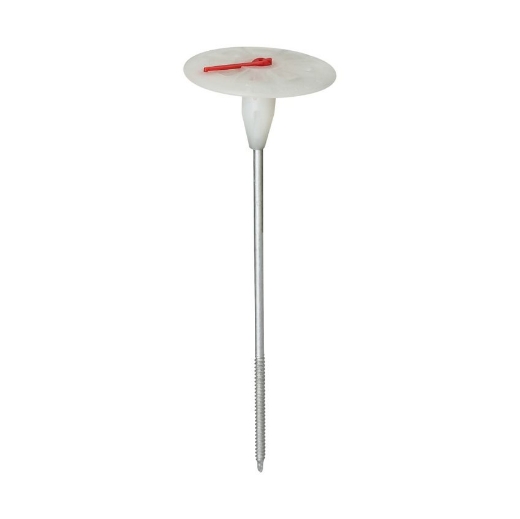
| Termoz SV2 Ecotwist 10-30 | Fischer | Screw-in, 66mm disc, Ø8mm, 202mm, plastic | Thin insulation boards, 10 to 30mm |
| Termoz SV2 Ecotwist 30-60 | Fischer | Screw-in, 66mm disc, Ø8mm, 232mm, plastic | Medium insulation boards, 30 to 60mm |
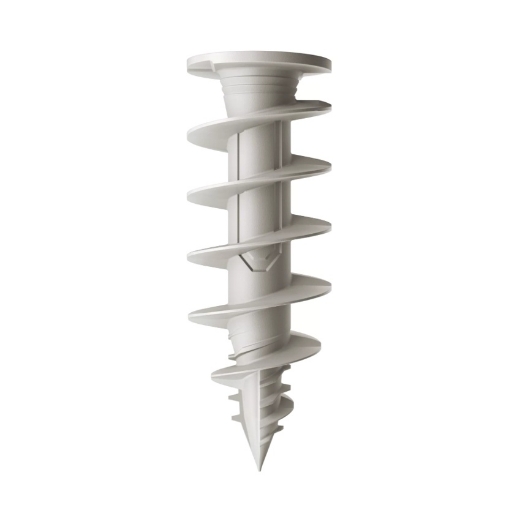
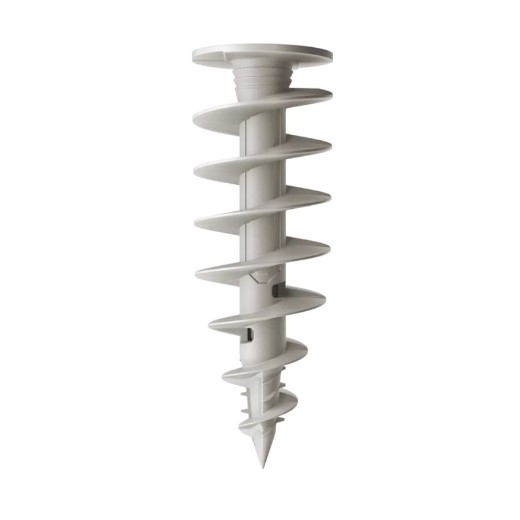
| Isolfix NT 10x260mm | Connecton | Cavity anchor, Ø10mm, 120mm, plastic | Cavity wall insulation (spouwmuur) |
| Isolfix NT-P inox 4x360mm | Connecton | Hammer-in, Ø10mm, 360mm, stainless steel | Coastal facades, thick insulation, high pull-out load |
| FID II | Fischer | Insulation-only fixing, 50mm, plastic | Locking thin insulation layers together |
| FID II Plus | Fischer | Insulation-only fixing, 90mm, plastic | Locking thicker insulation layers together |

Thin boards, 10 to 30mm
A thin rendered facade layer needs a screw-in plug set to the exact board thickness, so the disc does not crush the insulation on the way in.
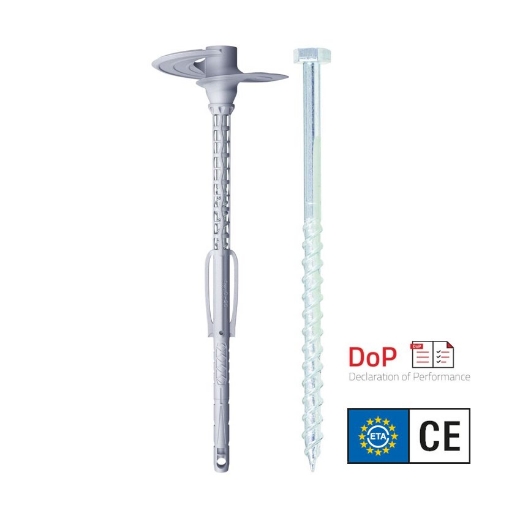
Medium boards, 30 to 60mm
Standard facade insulation in this range holds best with an adjustable screw-in plug that reaches the substrate without over-drilling.
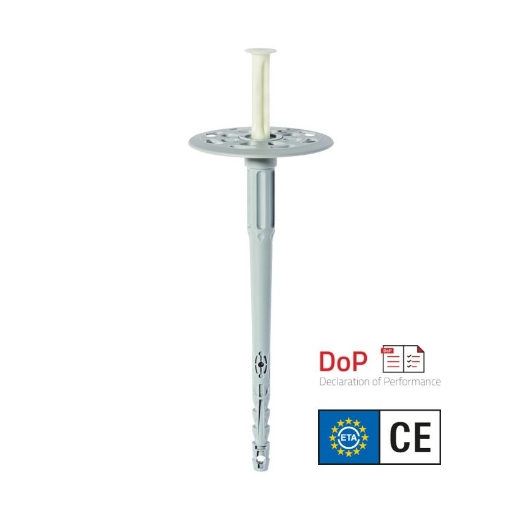
Thick boards on solid wall
External wall insulation systems up to 300mm and beyond need a long nail-in plug that still bites deep into masonry or concrete.
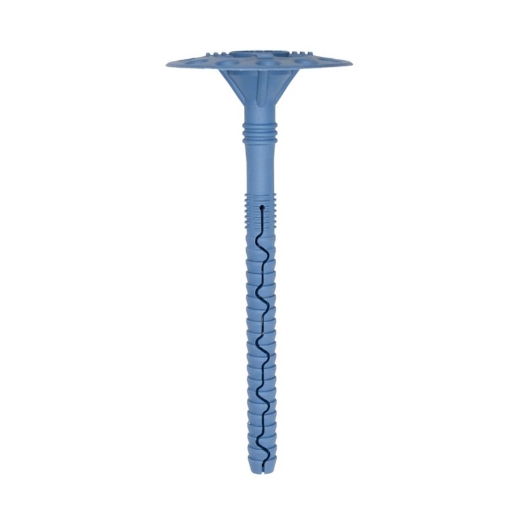
Cavity wall insulation
A cavity wall needs a plug that bridges the empty gap and locks into the inner leaf, not a plug meant for solid masonry.
Why does an insulation board come loose or lift in the wind?
An insulation board lifts or blows loose when the plug does not reach far enough into the solid substrate behind it, when the disc diameter is too small for a soft board, or when a nail-in plug was hammered into a cavity wall that needed a proper cavity anchor instead. Wind suction concentrates on facade corners and edges first, so those are usually where a failure shows up.
Left unresolved, a loose fixing point telegraphs through the render as a hairline crack or a slight bulge, and every freeze-thaw cycle works the plug a little looser. Fixing the cause means addressing three variables at once: the wall behind the insulation, the thickness of the insulation itself, and the disc that spreads the load across its surface.
Which plug matches your wall substrate?
Solid masonry and concrete take a nail-in or screw-in insulation plug that anchors straight into the material; a cavity wall needs a dedicated cavity anchor plug that bridges the gap and locks into the inner leaf. Mixing these two up is the single biggest cause of failed insulation fixings we see.
For solid brick, block or concrete, Fischer's Termoz CN nail-in plugs (plastic) install quickly and hold well once seated, while the Termofix B110 screw plug in galvanised steel gives more controlled torque on renovation walls with variable hardness. For cavity walls, the Connecton Isolfix NT bridges the empty space with a 10mm shank and locks into the inner leaf; the stainless steel Isolfix NT-P version handles higher pull-out loads and shrugs off corrosion inside a damp cavity.
How long should the insulation plug be for your board thickness?
Plug length equals insulation board thickness plus the anchoring depth required in the solid substrate behind it. A 100mm board on masonry typically needs a plug around 210mm long once embedment is added, so you read the total length off the packaging rather than guessing.
The Termoz CN 8/210 (210mm total length) suits boards with enough embedment left over on masonry or concrete, while the CN 8/350 (350mm) covers boards up to 300mm and more for thick external wall insulation systems. For adjustable depth, the Termoz SV2 Ecotwist range comes in two lengths: 202mm for boards from 10 to 30mm, and 232mm for boards from 30 to 60mm, with a dedicated installation tool to set the exact depth on site. For fixing insulation layers to each other rather than into the substrate, the FID II plug (50mm) and the longer FID II Plus (90mm) skip the deep anchor entirely.
What disc diameter do you need and why does it matter?
The disc, or schotel, spreads the pull-out load over the insulation surface so the plug head does not simply pull through the board. Soft insulation such as EPS or low-density mineral wool needs a larger disc than a stiff, high-density board; Fischer discs in this range run from 36mm up to 70mm.
A 36mm disc, whether the galvanised HV36, the white plastic HK36 or the inox A2 HA36, suits denser, load-bearing boards where a small footprint is enough. The 60mm and 66mm discs built into the Termoz CN and Ecotwist plugs handle standard facade insulation. The 70mm DTM disc in galvanised steel is for the softest or thickest boards, where load spread matters most. Material matters too: galvanised steel sits under render and never shows, white plastic stays visible without rusting on painted facades, and inox A2 resists salt air on coastal or industrial buildings.
In Beerse we see boards fail at the disc long before the plug itself lets go. Sizing the schotel to the insulation, not just to the plug, is what actually keeps a facade tight.DHZ-Proshop trade team, Beerse
Nail-in or screw-in: which mounting method should you use?
A nail-in plug like the Termoz CN goes in fast with a hammer and suits standard masonry and concrete in volume work; a screw-in plug like the Termofix B110 or Termoz SV2 Ecotwist gives you controlled torque and adjustable depth, which matters most on uneven or older substrates.
For high-volume facade work on solid, predictable masonry, nail-in plugs install quickly and hold well once seated. For retrofit projects or uneven walls where you need to feel the substrate change under the drill, screw-in plugs let you stop at the right depth, and back the plug out if the hole was drilled wrong. The Termoz SV2 Ecotwist system pairs with a dedicated installation tool (400mm) to drive the plug to a set depth without over-tightening the disc into the insulation. Insulation-only fixing, without touching the substrate at all, calls for the FID plugs that lock separate insulation layers together mechanically.
Common mistakes
- Drilling the anchor hole too shallow: this leaves too little embedment once you add the insulation thickness, so the plug never grips the solid substrate behind it.
- Using a nail-in plug in a cavity wall: without a dedicated cavity anchor like the Isolfix NT, the plug cannot lock into the inner leaf and eventually pulls free.
- Choosing a disc that is too small for soft insulation: a 36mm disc on soft EPS concentrates the load and lets the plug head pull straight through the board.
- Ignoring corrosion near the coast: plain galvanised steel corrodes faster in salt air; an inox A2 disc or the Isolfix NT-P stainless anchor holds up far longer.
Browse the complete range in our insulation plugs collection for the exact Fischer or Connecton plug your wall and insulation call for.
Frequently asked questions about insulation plugs
What are insulation fixing plates used for?
What is an insulated mounting plate and do I need one?
How much does it cost to repair a loose insulation board?
How do I fix insulation to a wall?
Which plug do I need for cavity wall insulation?
What length insulation plug do I need for 100mm insulation?
Compiled by the DHZ-Proshop trade team, your DIY and trade specialist with a shop and collection point in Beerse. What we advise most often in the shop is to measure the substrate and the board thickness together before picking a plug, not one or the other. Questions about the right plug for your facade? Contact our team or browse the full insulation plugs collection.
Vraag over dit artikel?
Onze expert-chat kent ons volledige assortiment en antwoordt meteen — of neem contact op met ons team.