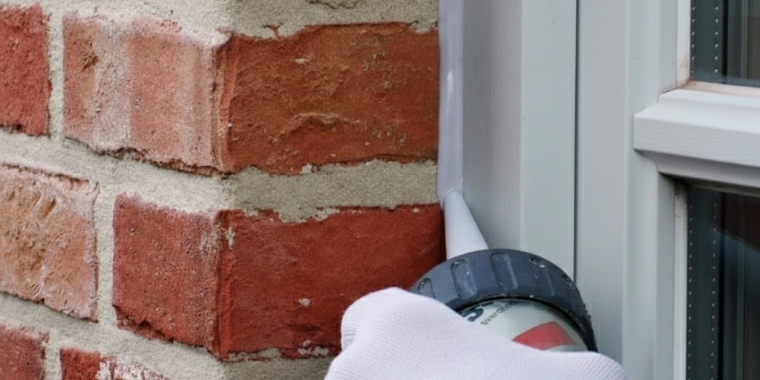
Which sealant should you use around windows and doors? Exterior frames move daily due to temperature fluctuations, a sealant that is too rigid will crack within a year. Interior finishing often calls for an overpaintable product. Below you can quickly choose the right product for each situation, followed by everything about joint build-up, substrates and application tips.
Which sealant around windows and doors?, quick choice per situation
View the full Soudal jointing sealant range in our webshop. Looking for the broader overview of all jointing sealants per application? Read our guide choosing the right jointing sealant.
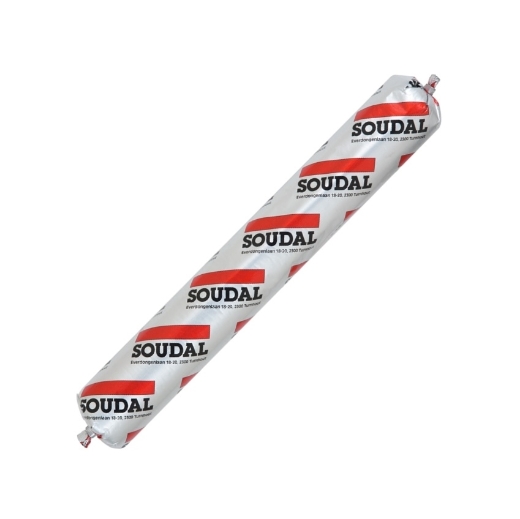
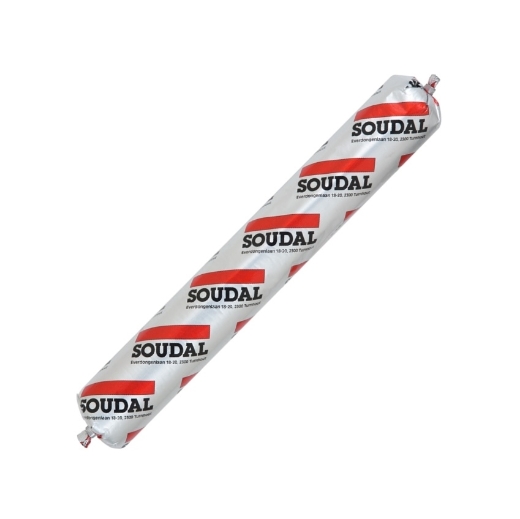
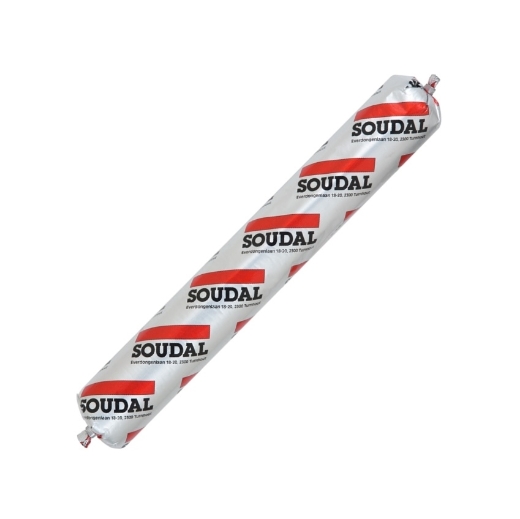
Exterior: frame–wall connection → Soudaseal 222LM
The standard for connection joints between exterior frames (wood, PVC, aluminium) and façades, façade cladding or plasterwork. Soudaseal 222LM is an elastic SMX polymer sealant that moves along with the expansion and contraction of joinery, no cracks during temperature changes. UV-resistant, weatherproof and overpaintable with water-based paint. Joint width 6–20 mm; use a PE backing profile for joints deeper than 10 mm. More on joint dimensions: the right joint width.
Exterior: glass & glazing beads → Silirub 2 or Silirub Color
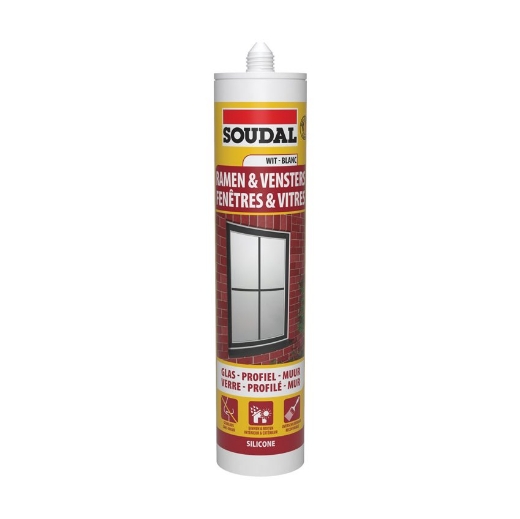
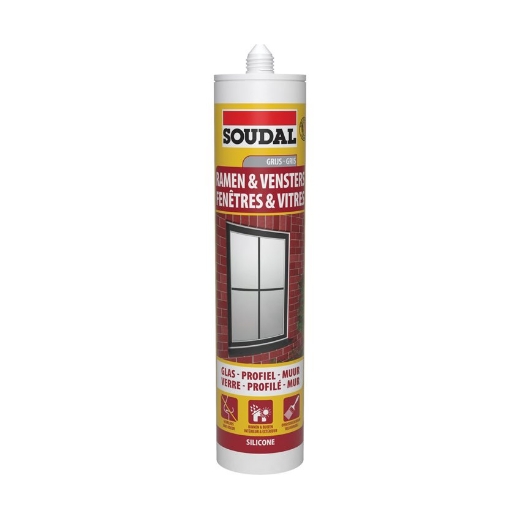
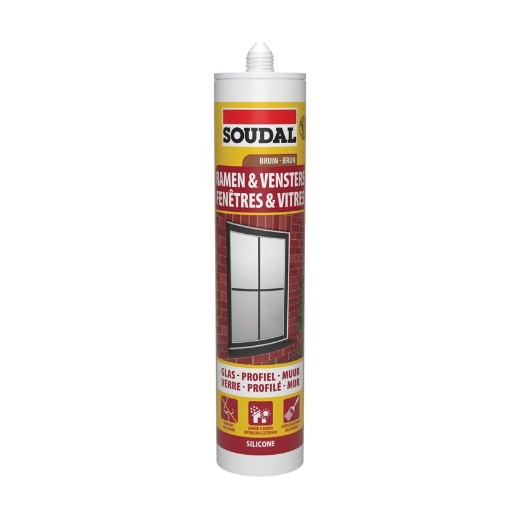
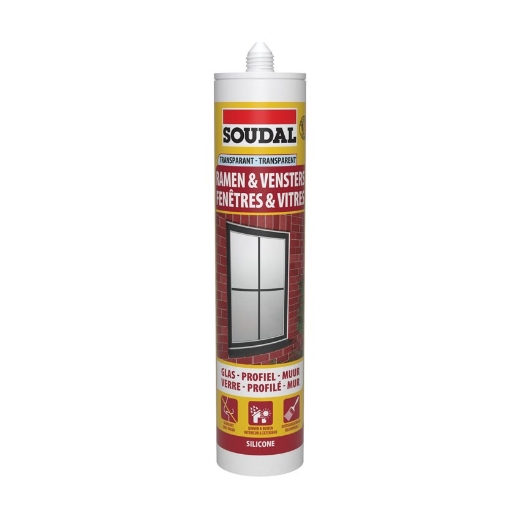
For sealant between glass and frame, along glazing beads and around roof windows. Silirub 2 is a UV-resistant silicone sealant with excellent adhesion to glass, aluminium and coated wood. Silirub Color is available in several colours for a colour-matched finish on coloured frames. Both are permanently elastic and resistant to the weather. Want to seal glass with traditional putty? Read our guide putty or Silirub Tradition.
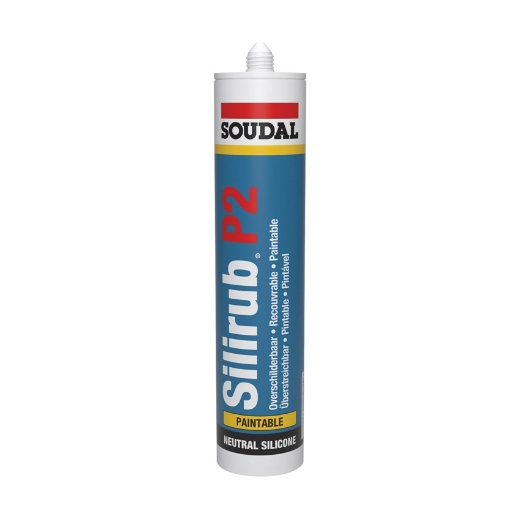
Interior: overpaintable finish → Acryrub or Silirub P2
For interior frames, sills and door surrounds that you paint over afterwards. Soudal Acryrub is the classic choice: easy to apply, readily overpaintable after 1–2 hours, suitable for narrow joints in dry interior spaces. Do you expect some movement in the joint (e.g. a wooden interior frame that works)? Then choose Silirub P2: elastic and overpaintable, alkyd resin paints generally adhere well; always test on a small section first.
Hardstone sills & natural stone → Silirub MA or Soudaseal 215 LM+
Around windowsills and sills made of blue hardstone, marble or granite you should never use standard silicone, it contains plasticisers that cause edge staining in the stone. Use Silirub MA (neutral silicone, exterior & interior) or Soudaseal 215 LM+ (hybrid, overpaintable) for a durable joint without stains. More information: sealing on natural stone.
What to watch out for with sealant around windows and doors?
Frame joints are among the most demanding sealant locations in a home. Three factors determine success: the right sealant, a correct joint build-up and a well-prepared substrate.
- Movement of the joinery is the main cause of cracks: Wood, PVC and aluminium expand and contract with temperature changes of sometimes 40–60 °C between winter and summer. A frame joint 10 mm wide must absorb up to 2.5 mm of movement with a class-25 sealant. Always use a sealant with a movement class of at least 25 outdoors, class 12.5 is insufficient for frames. More on movement classes and joint dimensions: the right joint width.
- Joint build-up with a PE backing profile: At frame connections the cavity between the frame and the wall is often 15–30 mm deep, too deep to fill entirely with sealant. Always use a PE backing profile to bring the bottom of the joint to a depth of 8–10 mm. This prevents three-sided adhesion (where the sealant adheres to the bottom and the sides and cannot move) and uses less sealant. Without a backing profile, an exterior frame joint is guaranteed to crack.
- Substrate preparation: remove paint, dust and grease: Frames are often painted, lacquered or treated with wood preservative. Always degrease with Soudal Cleaner & Degreaser before you start. On loose paint layers, sand or strip first, sealant does not adhere to loose paint. On difficult substrates (coated aluminium, certain PVC types) consider a primer; consult the technical data sheet of the product for this.
- Outdoor temperature during application: Never apply exterior sealant at temperatures below 5 °C or in freezing weather. Most sealants are optimised for application between 10 and 30 °C. Cold joinery slows down skin formation and can limit adhesion. Also do not work in direct bright sunlight on the joint, the surface skin then forms too quickly and the core hardens insufficiently.
- Rain after application: Protect fresh exterior joints from rain until the surface skin is completely closed, with hybrid sealants such as Soudaseal 222LM this takes 30–60 minutes. Rain on a wet sealant joint washes away the surface layer before it has cured. Work in cloudy, dry weather for exterior jobs.
- Primer when in doubt about adhesion: On difficult or non-absorbent substrates, such as certain PVC lacquers, anodised aluminium or concrete paint, a primer can significantly improve adhesion. Check the technical data sheet to see whether a primer is recommended for your combination of sealant and substrate. Not all sealants require this, but omitting it on questionable substrates is a common mistake that only becomes apparent later when the joint detaches.
Frequently asked questions about sealant for windows and doors
Why does sealant around frames crack so quickly?
Can I use the same sealant indoors as outdoors?
Do I always have to use a primer around frames?
Which sealant should I use for a hardstone or marble windowsill?
How do I prevent draughts along frames after sealing?
What is the difference between Silirub 2 and Soudaseal 222LM for frames?
Posted by the Soudal sealant expert at DHZ-Proshop, your specialist in fastening materials, adhesives & silicones. Webshop available 24/7 & collection point in Beerse (province of Antwerp). Questions about the right sealant for your windows or doors? Contact our team.