Skip to content
Search

Screw fixings

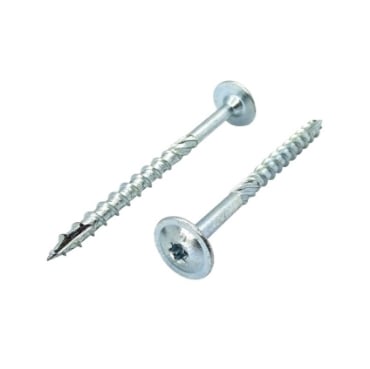
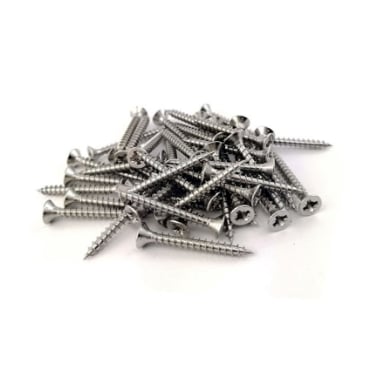
For almost any wood job there's a screw made a little better for it than the everyday chipboard screw. A construction or wafer-head screw pulls heavy beams together, a stainless decking screw holds a deck for years without rusting through, and a drywall or MDF screw is tuned to that one material which otherwise cracks or breaks out. In this department they sit side by side: chipboard, construction, wafer-head, decking, shutter, cladding and backing-panel screws, plus screw eyes, coach screws and grub screws. Choose the drive to suit your tool – Torx doesn't cam out under high torque – and the version to suit the spot: zinc-plated indoors, stainless outdoors. If you're unsure of the length, reckon the thread must grip fully in the lower piece of timber.
Most bought

Screw fasteners: the right screw for every job

Screw fasteners form the foundation of just about every construction, assembly and finishing project. Whether you're fixing plasterboard to a metal or timber frame, joining hardwood, finishing MDF to size or mounting facade panels: for every substrate and application there is a specific screw with the right head, thread and coating. In this category we bring together our full range of screws, split into clear subcategories so you can quickly find the right type.

Which types of screws will you find here?

The range runs from fine finishing screws to heavy structural connections. Each screw is matched to a particular substrate — plasterboard, timber, MDF, hardwood or sheet material — and to the desired finish and load.

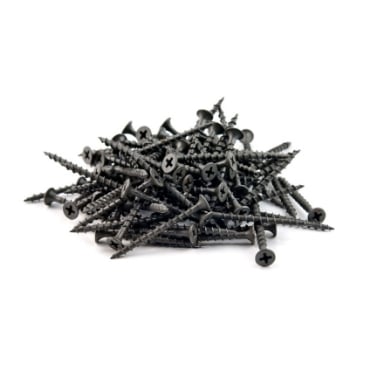
  • Plasterboard screws: with fine thread (type S) for metal profiles or coarse thread (type C) for timber battens, often collated for fast driving.
  • Hardwood screws: with a cutting point and sturdy thread for joining hard wood species without splitting.
  • MDF screws: specially designed to fix MDF without tearing out or bulging.
  • Trespa screws: for mounting compact panels and facade panels, with a neat finishing head.
  • Plumber's screws: for roofing and zinc work and metal fixings.
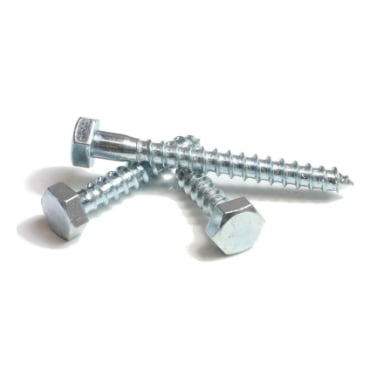
  • Coach screws: heavy coach screws for structural connections.

How do you choose the right screw?

First determine the substrate and the application: that determines the screw type. Then choose the right head and drive — Philips PH2, Torx TX15 or TX20 each provide a good grip — and match the coating to the environment. Yellow zinc-plated screws are suitable for general, sheltered applications, while a black HCP coating gives a sleek finish where the head remains visible. Finally, choose the right diameter and length to suit the material thickness.

Head and thread: what to look out for?

The head type determines the finish: a countersunk head disappears neatly into the material, a cylinder head offers extra pull-out strength. The thread design — full or partial thread, fine or coarse — is matched to the hardness and type of substrate. Screws with a cutting point pre-drill themselves and reduce the chance of splitting, which makes all the difference especially in harder wood.

Ordering screw fasteners from DHZ-Proshop

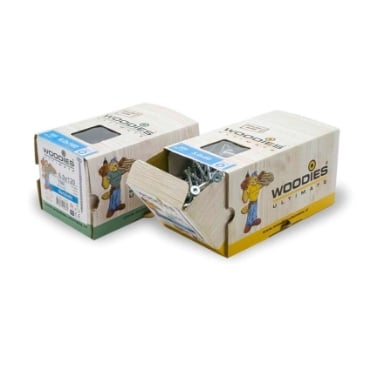
Using the subcategories above you can navigate directly to the type of screw you need, from plasterboard screws to coach screws. We stock well-known ranges such as Blackline, Jet and Woodies® Ultimate, in packs of 100, 200 or 1000 pieces. Stock items that are sufficiently available and which you order before 4pm, we dispatch the same working day. As an official distributor of well-known brands, we combine a broad range with expert advice, for the DIY enthusiast as well as the professional and industrial customer.

Frequently asked questions about screw fasteners

Which plasterboard screw should I use: fine or coarse thread?
Choose a fine thread (type S) when screwing plasterboard onto a metal profile; the fine thread grips well in thin metal. For fixing to timber battens, use a coarse thread (type C), which draws itself more firmly into the wood. Collated screws let you work quickly and in series with a screwdriver fitted with a magazine.
What is the advantage of a screw with a cutting point?
A cutting point drills itself into the material and pushes the fibres apart rather than forcing them up. As a result, in many cases you don't need to pre-drill and you greatly reduce the chance of splitting, especially with harder wood species and close to the edges.
When should I choose Torx instead of Philips?
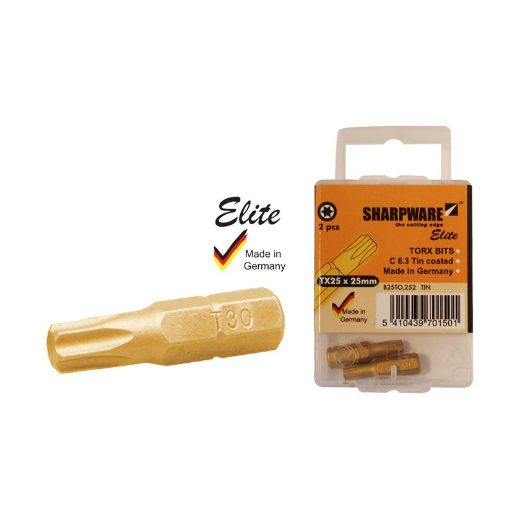
A Torx drive (such as TX15 or TX20) offers more contact surface and grip than a Philips cross head, meaning the bit is less likely to slip out of the screw and you can transfer a higher torque. For structural connections and harder materials, Torx is therefore the preferred choice. Philips PH2 remains handy for lighter finishing such as plasterboard.
What does a black HCP coating mean?
HCP stands for a high-quality protective layer that gives the screw a black, sleek finish while also providing extra protection. These screws are ideal where the head remains visible and you want a neat, dark appearance, such as on furniture or visible timber joints.
9,41.478 reviews on Kiyoh
This site is protected by reCAPTCHA. The Google Privacy Policy and Terms of Service apply.