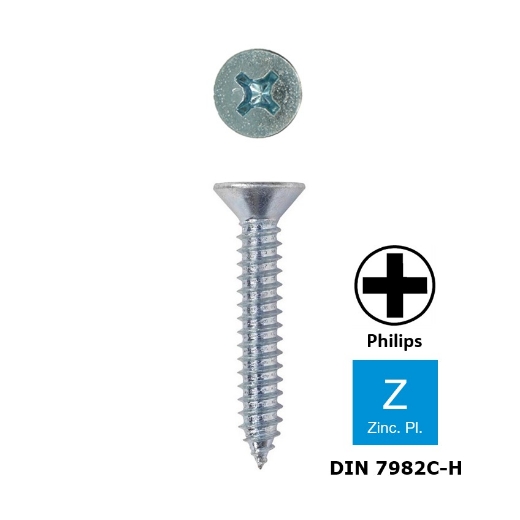
Sheet metal screws
Sheet-metal screws bite into thin plate and metal sections with their fine, continuous thread, where a wood screw's coarse thread finds no hold. Unlike a self-drilling screw they need a pre-drilled hole to size: too wide and the thread won't catch, too tight and you twist the head off. The range follows the standards – countersunk (Din 7982), raised countersunk (7983), pan (7981) and hex head (7976) – in Philips, Torx or square, and in zinc-plated, black or A2 and A4 stainless. For a window sill there are special sheet-metal screws with a dome head and nylon washer. Take a countersunk head where the whole thing has to finish flush, and Torx once you drive by machine; it doesn't cam out. For outdoor work choose stainless, or the head rusts shut after one winter.
Products
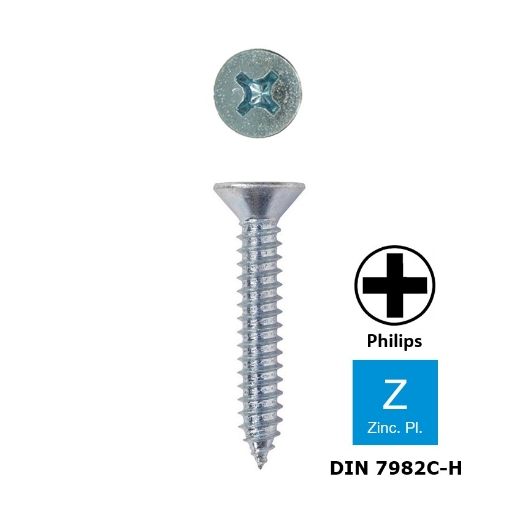
Sheet metal screw with countersunk head Phillips PH1 Din 7982C-H 2.2x4.5 zinc plated
Sheet metal screw with countersunk head Phillips PH1 Din 7982C-H 2.2x19 zinc plated
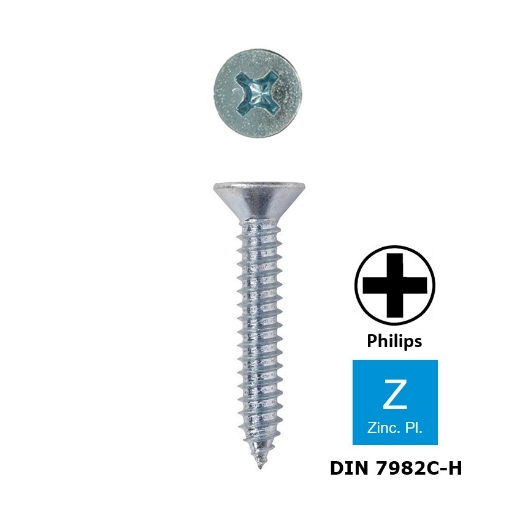
Sheet metal screw with countersunk head Phillips PH1 Din 7982C-H 2.9x6.5 zinc plated
Sheet metal screw with countersunk head Phillips PH1 Din 7982C-H 2.9x8 zinc plated
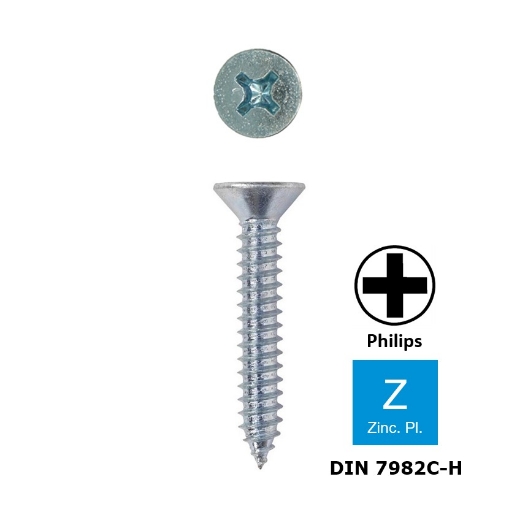
Sheet metal screw with countersunk head Phillips PH1 Din 7982C-H 2.9x16 zinc plated
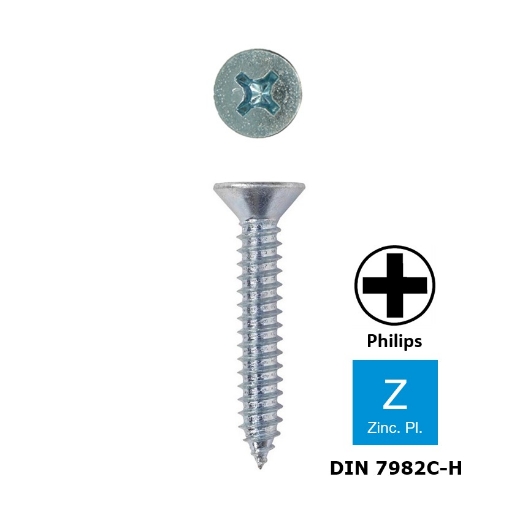
Sheet metal screw with countersunk head Phillips PH1 Din 7982C-H 2.9x22 zinc plated
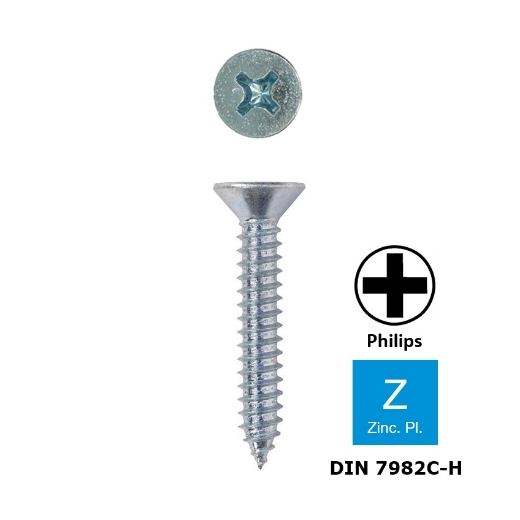
Sheet metal screw with countersunk head Phillips PH1 Din 7982C-H 2.9x25 zinc plated
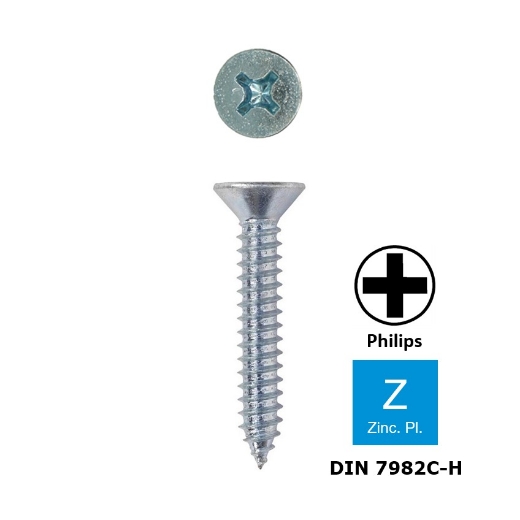
Sheet metal screw with countersunk head Phillips PH1 Din 7982C-H 2.9x32 zinc plated
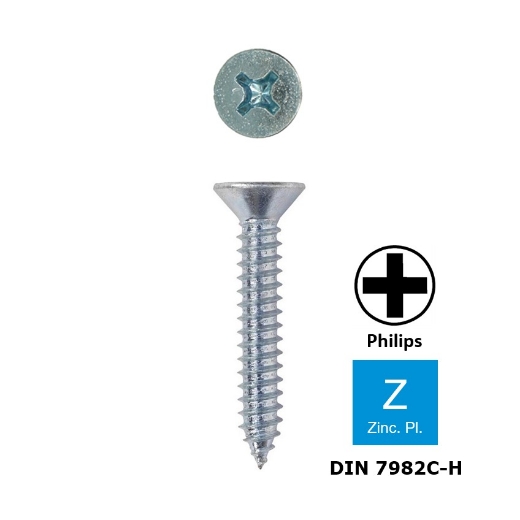
Sheet metal screw with countersunk head Phillips PH2 Din 7982C-H 3.5x6.5 zinc plated
Sheet metal screw with countersunk head Phillips PH2 Din 7982C-H 3.5x13 zinc plated
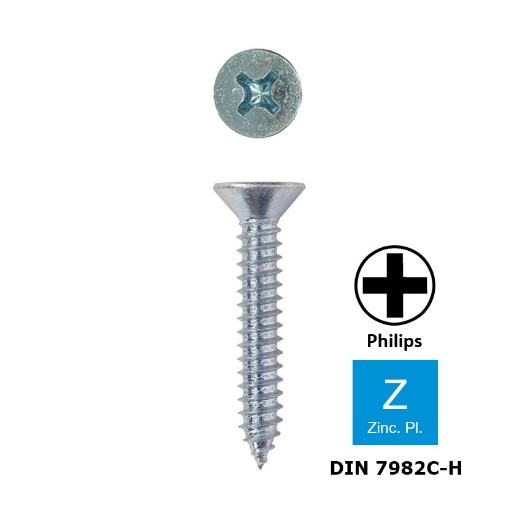
Sheet metal screw with countersunk head Phillips PH2 Din 7982C-H 3.5x16 zinc plated
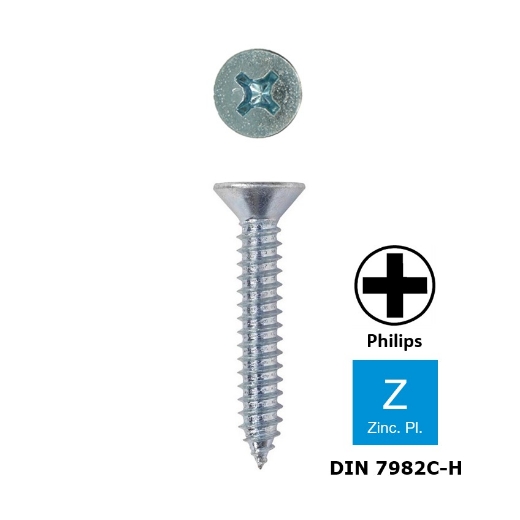
Sheet metal screw with countersunk head Phillips PH2 Din 7982C-H 3.5x19 zinc plated
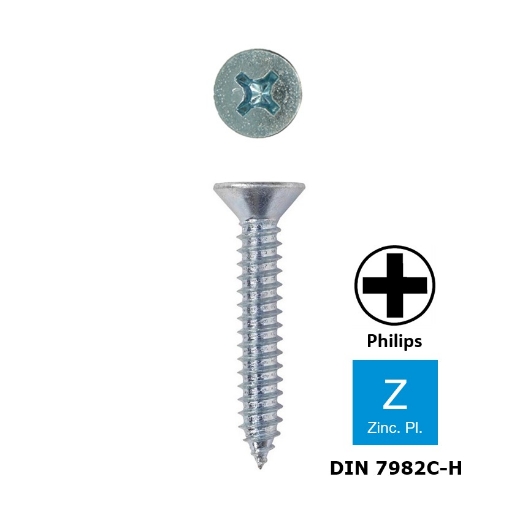
Sheet metal screw with countersunk head Phillips PH2 Din 7982C-H 3.5x22 zinc plated
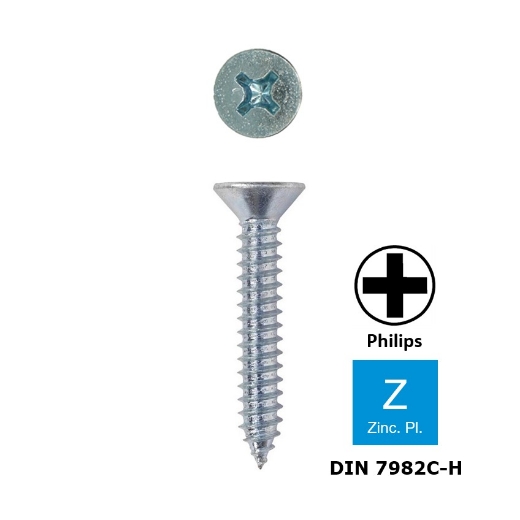
Sheet metal screw with countersunk head Phillips PH2 Din 7982C-H 3.5x25 zinc plated
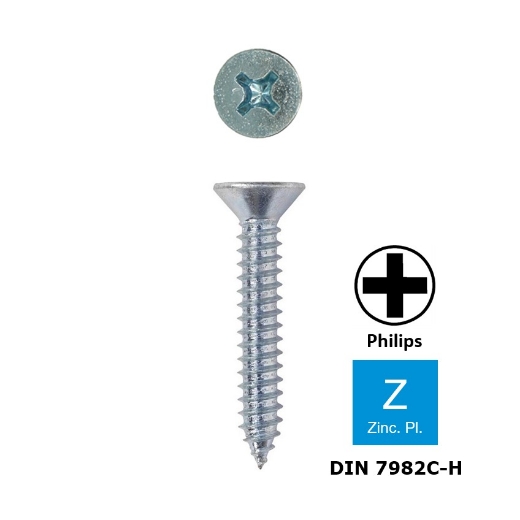
Sheet metal screw with countersunk head Phillips PH2 Din 7982C-H 3.5x32 zinc plated
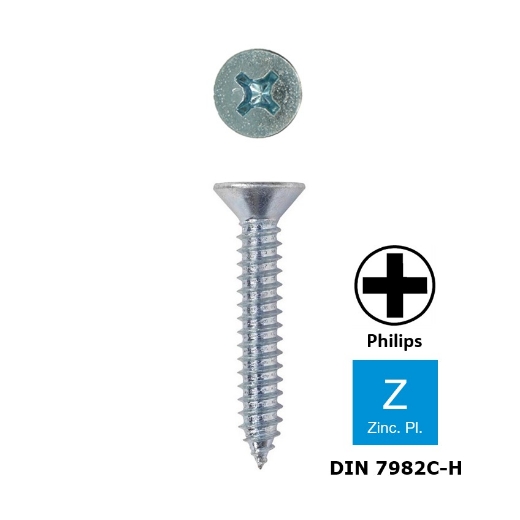
Sheet metal screw with countersunk head Phillips PH2 Din 7982C-H 3.5x38 zinc plated
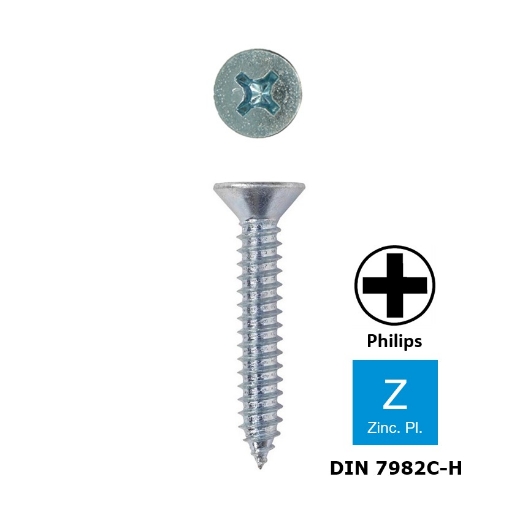
Sheet metal screw with countersunk head Phillips PH2 Din 7982C-H 3.5x45 zinc plated
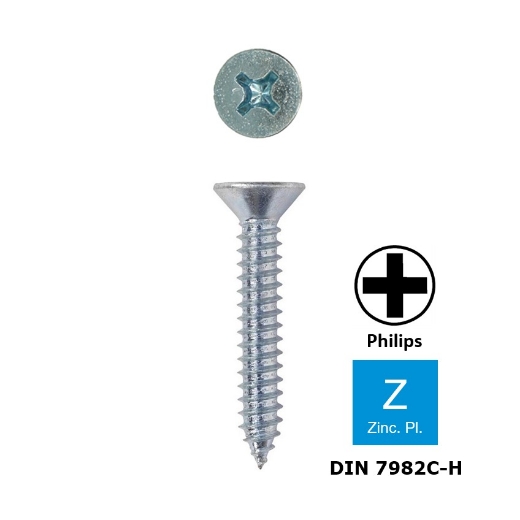
Sheet metal screw with countersunk head Phillips PH2 Din 7982C-H 3.5x50 zinc plated
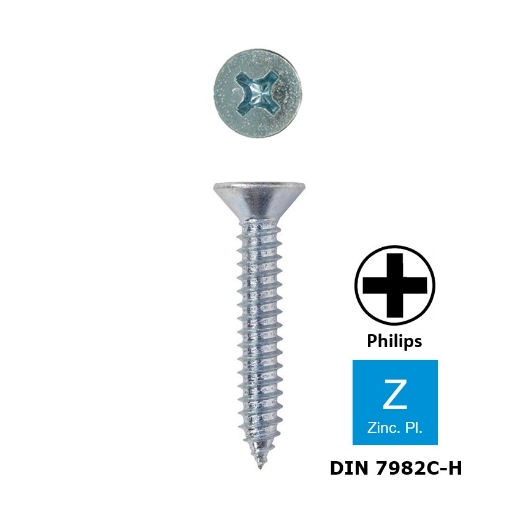
Sheet metal screw with countersunk head Phillips PH2 Din 7982C-H 3.9x9.5 zinc plated
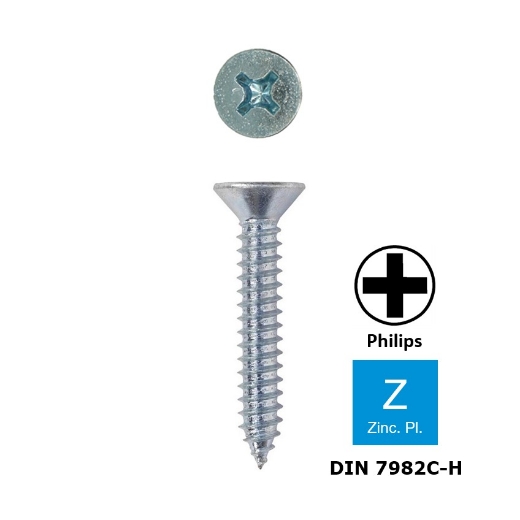
Sheet metal screw with countersunk head Phillips PH2 Din 7982C-H 3.9x13 zinc plated
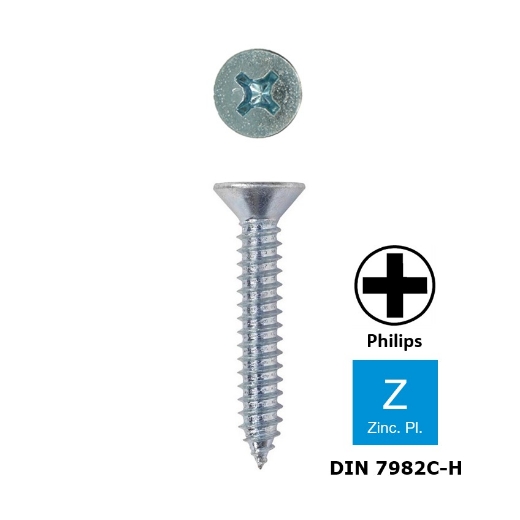
Sheet metal screw with countersunk head Phillips PH2 Din 7982C-H 3.9x16 zinc plated
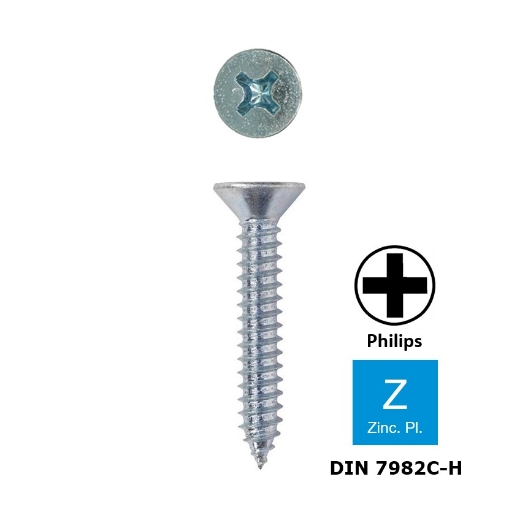
Sheet metal screw with countersunk head Phillips PH2 Din 7982C-H 3.9x19 zinc plated
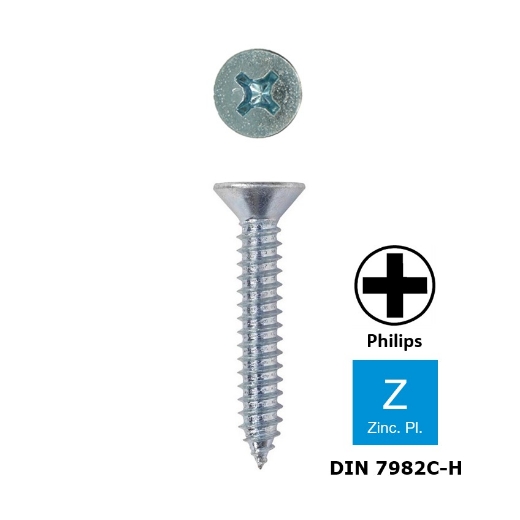
Sheet metal screw with countersunk head Phillips PH2 Din 7982C-H 3.9x22 zinc plated
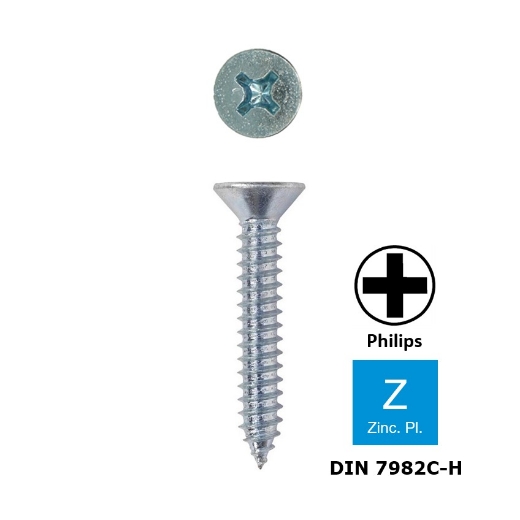
Sheet metal screw with countersunk head Phillips PH2 Din 7982C-H 3.9x25 zinc plated
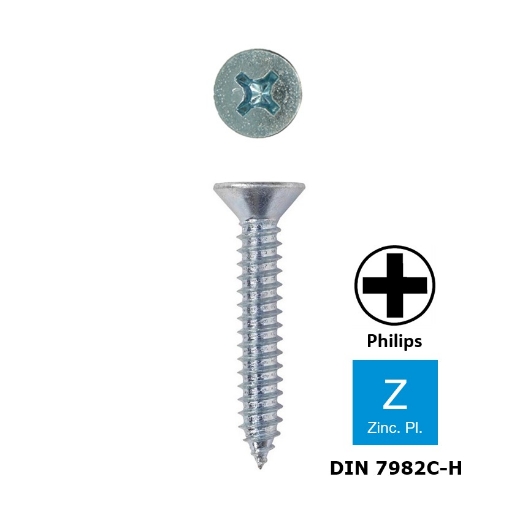
Sheet metal screw with countersunk head Phillips PH2 Din 7982C-H 3.9x32 zinc plated
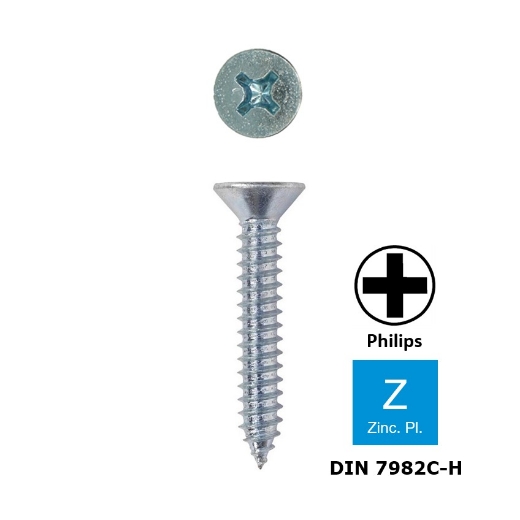
Sheet metal screw with countersunk head Phillips PH2 Din 7982C-H 3.9x38 zinc plated
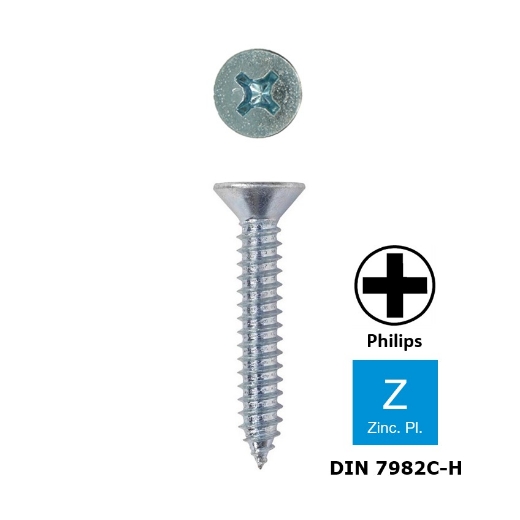
Sheet metal screw with countersunk head Phillips PH2 Din 7982C-H 3.9x45 zinc plated
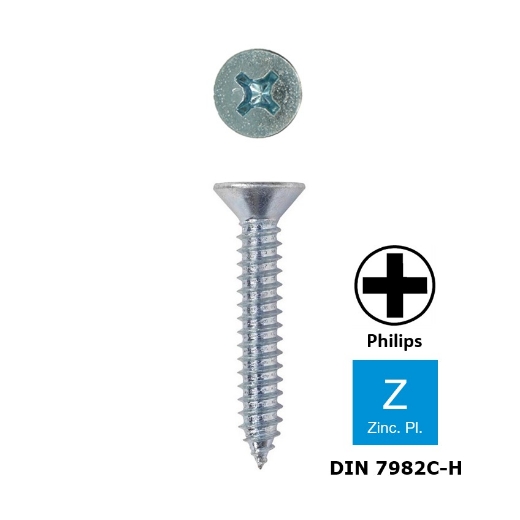
Sheet metal screw with countersunk head Phillips PH2 Din 7982C-H 3.9x50 zinc plated
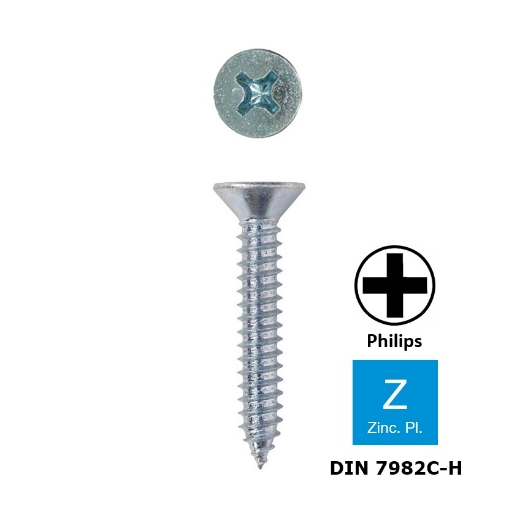
Sheet metal screw with countersunk head Phillips PH2 Din 7982C-H 3.9x60 zinc plated
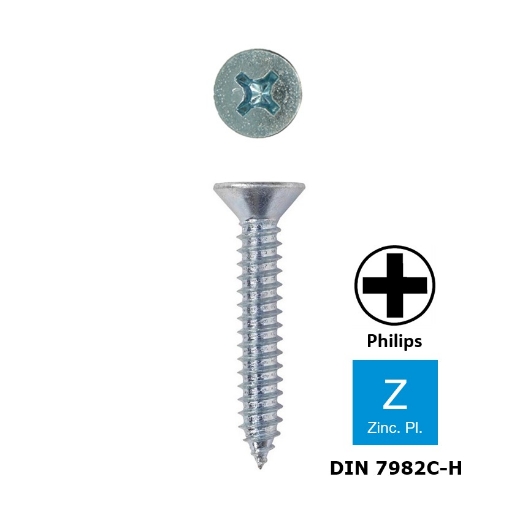
Sheet metal screw with countersunk head Phillips PH2 Din 7982C-H 3.9x70 zinc plated
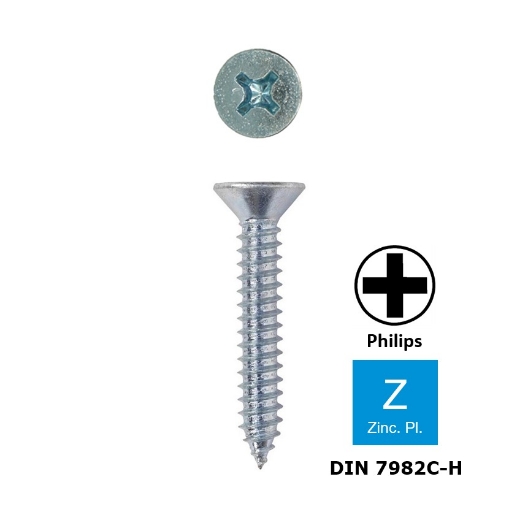
Sheet metal screw with countersunk head Phillips PH2 Din 7982C-H 4.2x9.5 zinc plated
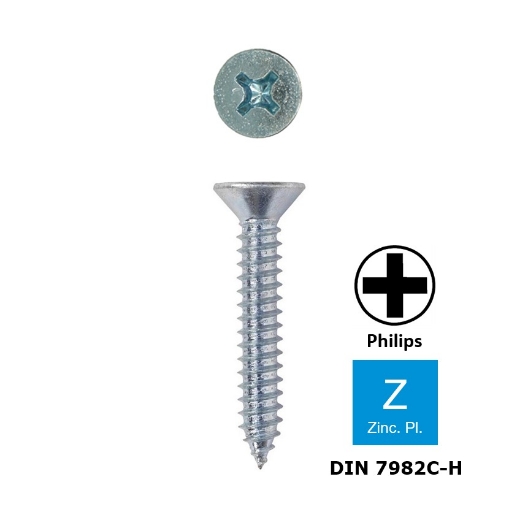
Sheet metal screw with countersunk head Phillips PH2 Din 7982C-H 4.2x13 zinc plated
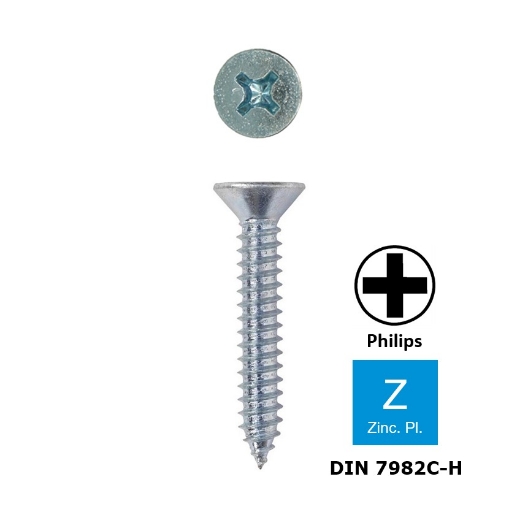
Sheet metal screw with countersunk head Phillips PH2 Din 7982C-H 4.2x16 zinc plated
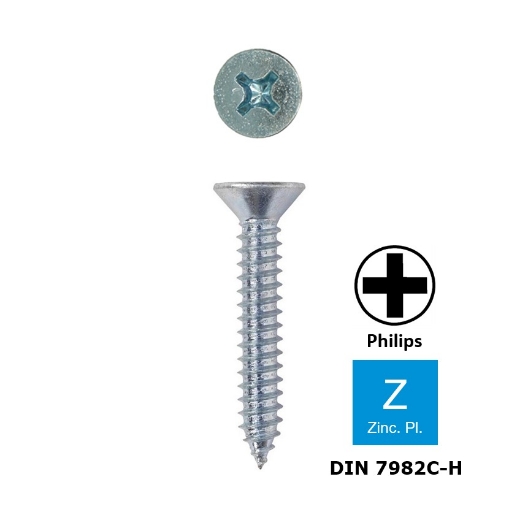
Sheet metal screw with countersunk head Phillips PH2 Din 7982C-H 4.2x19 zinc plated
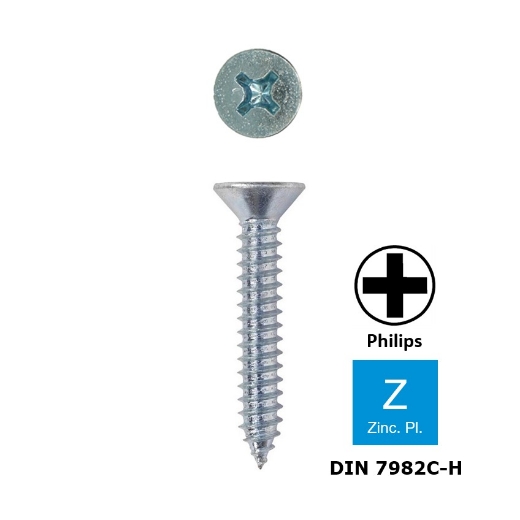
Sheet metal screw with countersunk head Phillips PH2 Din 7982C-H 4.2x22 zinc plated