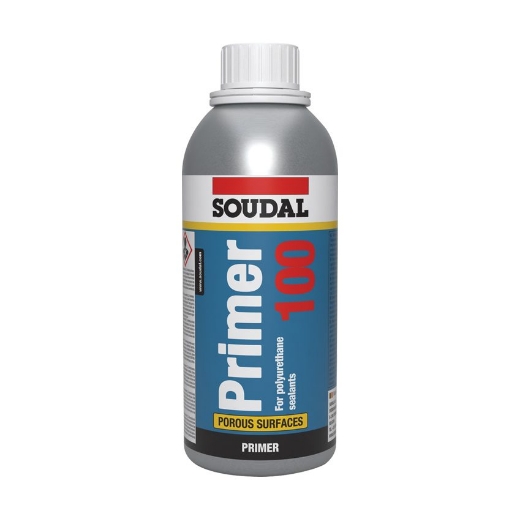
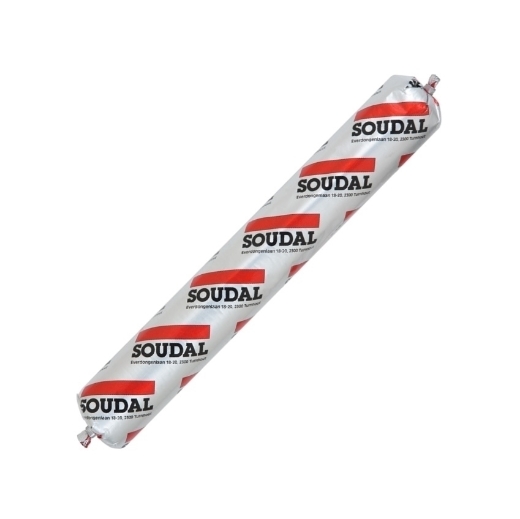
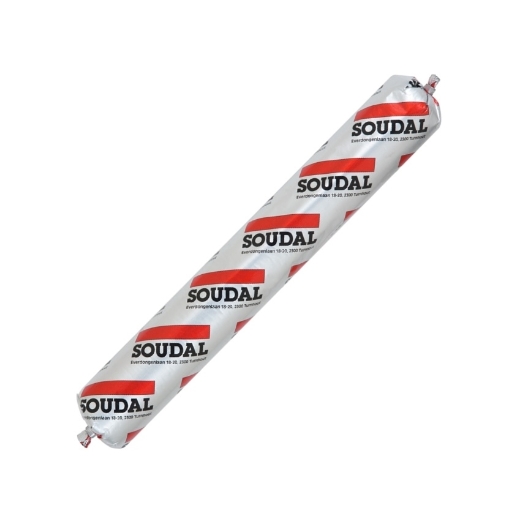
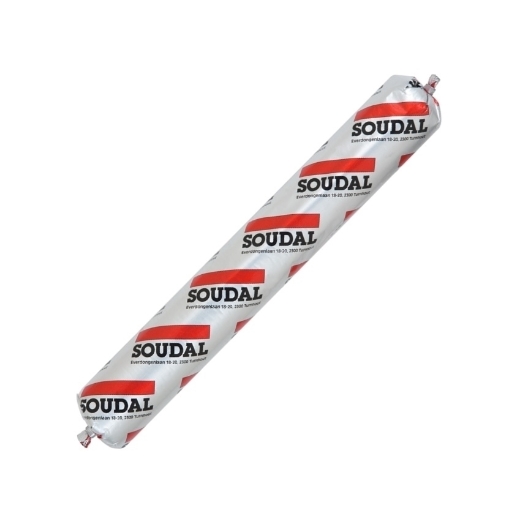
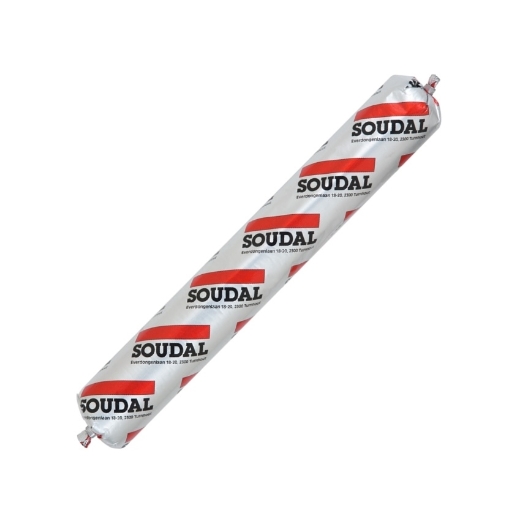
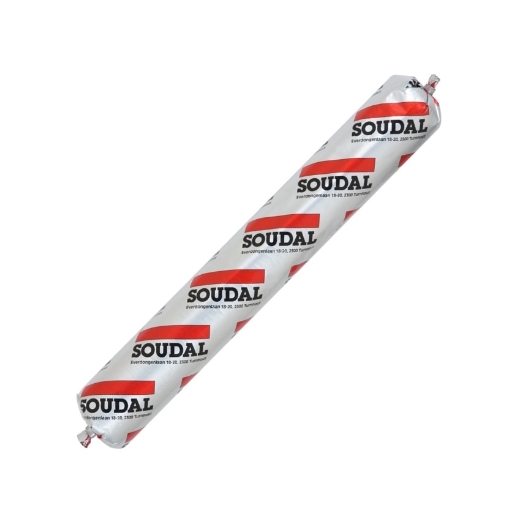
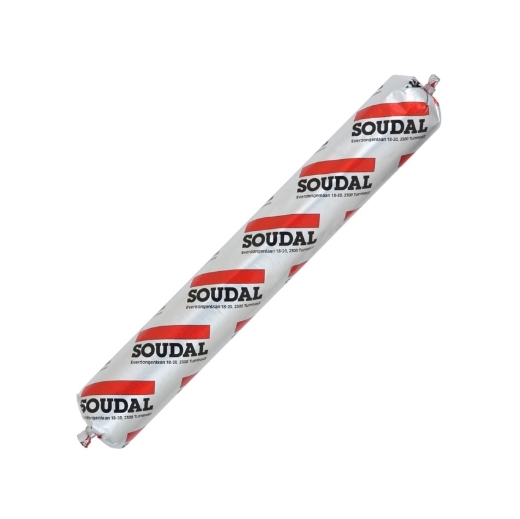
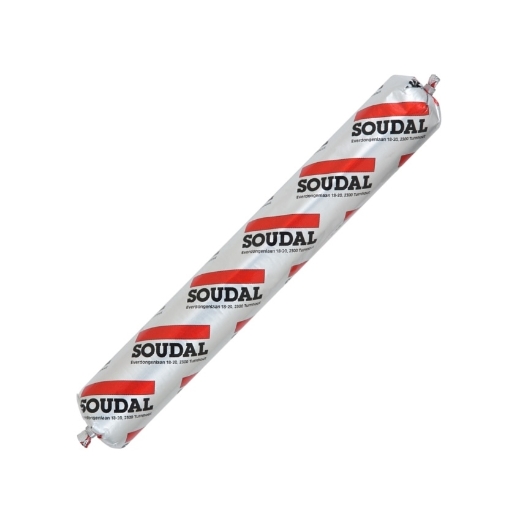
PU joint sealants for construction joints: low modulus or high modulus? Not every construction joint requires the same sealant. In facades and prefab, movement absorption is central, a low modulus PU sealant that can work along with expansion and shrinkage. In industrial floors and technical joints, compressive strength and wear resistance take priority, then a high modulus or hybrid PU is the right choice. This overview helps you quickly choose between Soudaflex 20LM, 40FC and 622.
Choosing a PU joint sealant, which product for which situation?
Browse the complete Soudaflex range in our webshop: Soudal joint sealants range. For hybrid SMX polymer sealant for comparable construction joints: Soudaseal 215LM+ and 222LM.
Facade, prefab & expansion joints → Soudaflex 20LM (low modulus)
Soudaflex 20LM is a one-component PU joint sealant with low modulus, designed for joints that must absorb large movements due to thermal expansion, shrinkage or settlement. The typical application: facade joints, expansion joints in prefab concrete structures, connection joints between concrete and masonry, and construction joints between different building materials. Low modulus means the sealant gives little counter-pressure when deformed, the joint works along instead of cracking. Good adhesion on concrete, masonry, metal, stone and many plastics. Application: one-component, cures through air humidity, excellent tooling window for facades. Also check the joint build-up with backer rod for deep or wide joints: difference in joint fillings.
Industrial & loaded joints → Soudaflex 40FC (high modulus)
Soudaflex 40FC is a high modulus PU sealant with high final strength and wear resistance, the choice when the joint is mechanically loaded. Typical applications: industrial floor joints, technical joints in workshops and production halls, joints that must be walkable or driveable, and structures where tensile strength and compressive strength weigh more than movement absorption. High modulus means more rigidity, the joint gives less, but holds up under pressure and wear. Do not use in facades: facade joints move too much for a high modulus sealant, this causes edge detachment or cracks. Also usable as a construction adhesive for mechanically loaded connections. More about when to use PU sealant vs hybrid SMX: choosing the right joint sealant.
Joints that must also bond → Soudaflex 622
Soudaflex 622 sits between a classic joint sealant and a construction adhesive: high mechanical strength combined with elasticity and sealing action. The choice when, alongside watertightness, structural adhesion and tensile strength are also required, typically with metal profiles, steel structures, industrial panels and assemblies where clamps or bolts are not possible or desirable. Widely used in metal construction, industrial building and workshops. More about Soudaflex 622 in combination with JGS: Soudaflex 622 and JGS.
Modulus in joint sealants, what it means in practice
The term "modulus" sounds technical, but the practical impact is significant and easy to understand. It determines whether a joint moves along with the structure or works against it.
- What exactly is modulus? Modulus (or E-modulus, Young's modulus) indicates how much force is needed to deform a material. For joint sealants: a low modulus means the sealant offers little resistance when deformed, it stretches along. A high modulus means the sealant is stiffer and gives more counter-pressure. In the standard for joint sealants (EN ISO 11600 / ETAG 002) this is expressed as the stress at 100% elongation: low modulus sealants typically score below 0.4 N/mm², high modulus above that. In practice, the difference feels like the difference between a supple rubber and a stiff adhesive.
- Why low modulus in facades and prefab? Building materials expand and shrink due to temperature changes, concrete, aluminium and stone each react differently. A 3-metre facade panel can move several millimetres with a temperature difference of 50°C. A stiff high modulus sealant that does not follow that movement builds up stress at the adhesion edges and cracks or detaches. A low modulus sealant absorbs the movement elastically without generating that stress. That is why choosing the right modulus in facades is not a detail but a cause-and-effect matter in joint failure.
- Why high modulus in industrial floors? In walkable or driveable joints it is exactly the opposite: if the sealant is too supple, it presses in under load and forms a hollow point in the joint edge, which causes wear and edge crumbling. A high modulus sealant that quickly reaches its final strength and stays compression-resistant gives the joint the rigidity an industrial floor requires. For joints that are heavily driven over (forklifts, pallet trucks), the final strength of the sealant is just as important as the substrate.
- One-component vs. two-component PU: All Soudaflex sealants in standard cartridge are one-component, they cure through moisture from the air. That is practical on site but means the curing speed depends on air humidity and temperature. At low temperatures or in dry conditions, curing slows down. For projects with tight scheduling (e.g. floors that must be used quickly), two-component PU variants with controlled curing time exist, ask about availability via our team.
- PU sealant and isocyanates, ventilation during application: Uncured PU sealant contains isocyanates, which can be irritating to the respiratory tract. When applying indoors, always work in well-ventilated areas and use personal protection (gloves, goggles). Once fully cured, PU sealant is inert and no longer poses any danger. This is also a reason why hybrid SMX polymer sealant (isocyanate-free) is sometimes preferred over PU for indoor applications with emission requirements.
- Correct joint build-up also with PU sealant: Backer rod, depth-to-width ratio and avoiding three-sided adhesion are just as relevant with PU sealant as with silicone or hybrid sealant. A Soudaflex 20LM in a too-deep joint without backer rod performs just as poorly as any other sealant in the same condition. More: the correct joint width and difference in joint fillings.
Frequently asked questions about PU joint sealants
What is the difference between low modulus and high modulus PU sealant?
Can I use Soudaflex 20LM in industrial floor joints?
When do I choose Soudaflex 622 instead of 20LM or 40FC?
When do I choose PU sealant and when hybrid SMX polymer (Soudaseal)?
Why do PU sealants cure more slowly in winter?
Is PU sealant suitable for use on natural stone or in the bathroom?
Posted by the Soudal sealant expert at DHZ-Proshop, your specialist in fastening materials, adhesives & silicones. Webshop available 24/7 & pick-up point in Beerse (province of Antwerp). Questions about the right PU joint sealant for your construction or industrial project? Contact our team.