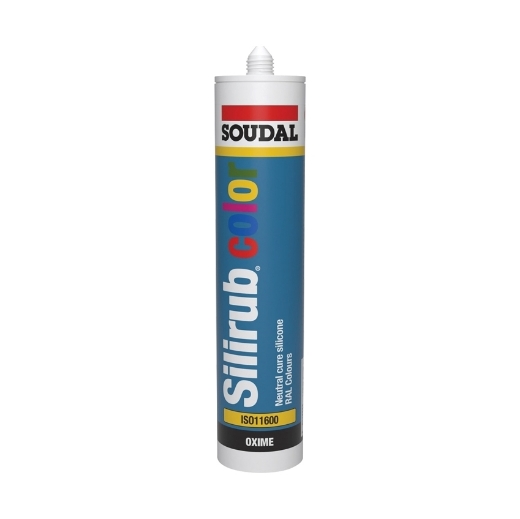
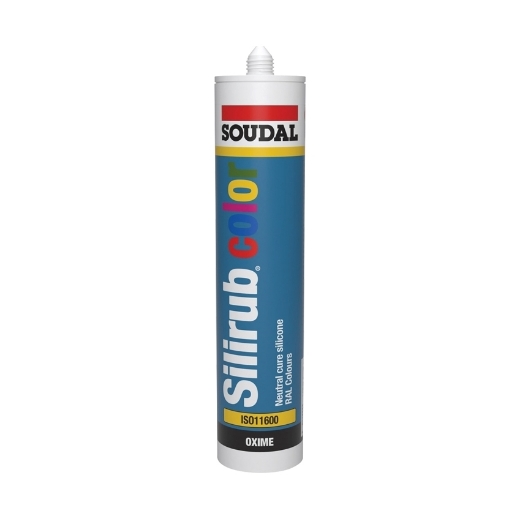
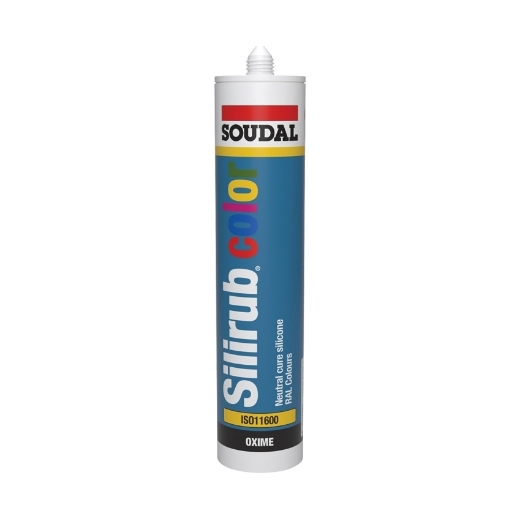
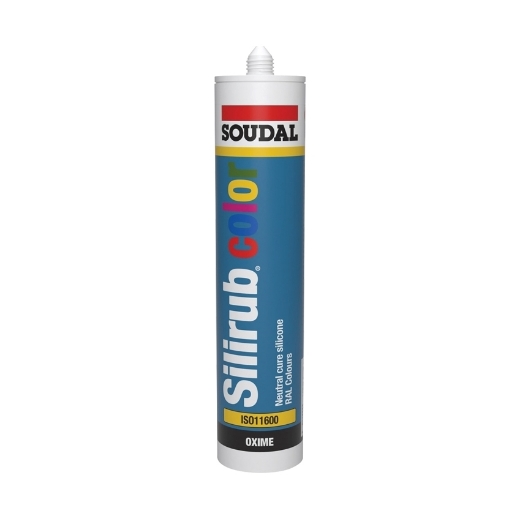
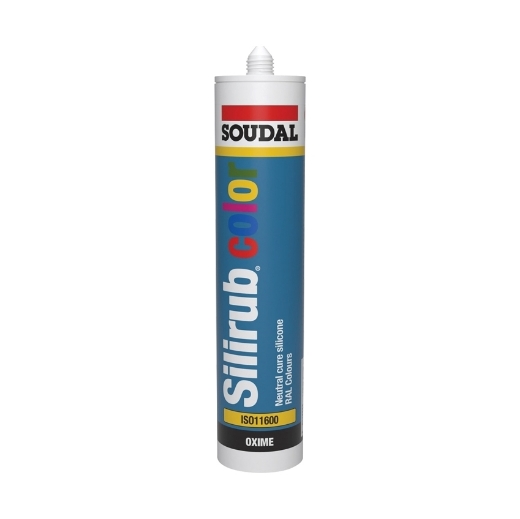
Soudal Silirub Color: RAL colour sealant for neat and professional sealing work. When a white or transparent joint isn't enough, with coloured frames, aluminium profiles or RAL façade details, Silirub Color is the solution. It is a neutral low-modulus silicone with colour matching according to the RAL system: the joint disappears into the profile instead of standing out from it. Below you'll read when to choose Silirub Color, how to order the correct RAL colour and how to achieve a neat joint on visible work.
Silirub Color, for which situation is it the right choice?
View the full colour range in our webshop: Silirub Color variants. For an overview of all sealants by application: choosing the right sealant.
Coloured glazing & frames, aluminium, PVC, wood
The most common application: the connection joint between glass and frame profile, or between frame and façade, where the profile has a RAL colour. White or transparent sealant stands out, Silirub Color matches the profile exactly. Typically with aluminium frames (RAL 7016, RAL 9005, RAL 9010, …), coloured PVC joinery and wooden windows with a coloured finish. Low-modulus means the sealant is elastic enough to absorb the movement of frames during temperature changes without coming loose. More about frame sealant and joint build-up: sealant for windows and doors.
Façade work & exterior profiles, RAL visible work
With façade details, façade panels, roof edges and cladding in RAL colour, the joint is a visible part of the finish. A colourless or incorrectly coloured joint is immediately noticeable on façade surfaces. Silirub Color is UV-resistant and weather-resistant for exterior work. Point of attention with dark RAL colours (RAL 7016 anthracite, RAL 9005 black): dark façade joints absorb more heat and undergo greater temperature fluctuations, check the movement class of the sealant for wide joints in dark colours. Comparison with other colour sealant options for outdoors: which colour sealant to choose.
Interior panels & expansion joints, interior colour matching
Colour matching is sometimes essential indoors too: wall panels, system walls, ceiling profiles or design finishes where the joint must not stand out. Silirub Color is also used for expansion joints between construction materials indoors, e.g. the transition between steel structure and plasterboard, or between panels and concrete. As a low-modulus silicone it absorbs movement without losing adhesion. Note: silicone sealants are not overpaintable. If overpainting is required later, choose an overpaintable sealant such as Acryrub or Silirub P2.
Choosing & ordering colours, stock and RAL to order
We usually have ±35 common RAL colours in stock (popular colours such as RAL 7016, RAL 9005, RAL 9010, RAL 8017, …). In addition, we supply up to ±150 RAL colours to order with a minimum order of 4 boxes, useful for larger sites or repeat work. Procedure for visible work: (1) start from the exact RAL code of the profile or panel, (2) always make a test joint in an inconspicuous area, (3) assess under the correct lighting conditions, the gloss level and texture of the substrate can make the colour look different than on paper. For projects with multiple RAL colours, calculate the required number of cartridges per colour in advance, including a margin for repair joints.
Colours, RAL matching and application, what professionals know
With RAL colour sealant, the finish is at least as important as the product choice. A deviating joint, smears or contamination are more noticeable than with standard white or transparent. These are the points of attention that make the difference.
- RAL colour ≠ guaranteed perfect match: The same RAL code can look different on a glossy aluminium profile versus a matt PVC profile, or under different lighting conditions (cloudy vs. direct sun). The sealant usually has a matt to slightly satin finish. For critical visible work, a test joint on an offcut or inconspicuous area is not a luxury but standard practice. Always assess under the final lighting conditions of the location.
- Degreasing the substrate is non-negotiable with RAL sealant: Grease, silicone oil or dust on profiles gives a visible result with colour sealant: the joint adheres poorly to the edge, pulls loose or shows a colour difference on the bonding surfaces. Always degrease with Soudal Cleaner & Degreaser before you start, especially on aluminium and lacquered profiles. With unknown coatings on profiles: test adhesion on a piece of leftover profile.
- Masking and removing tape immediately: Use HPX masking tape for neat joint edges and remove the tape immediately after smoothing, even before skin formation begins. Waiting too long leaves tape edges in the cured sealant which, with colour sealant, are immediately visible as an irregular line along the joint. Work in segments: mask → apply → smooth → remove tape → next segment.
- Smoothing: match tool and agent to the colour: Use a colourless or neutral Soudal smoothing agent. With dark colours the reverse applies: light smear residues are visible. A smoothing tool with the correct radius gives the neatest, most consistent joint shape, with colour sealant a fingertip is less reliable than with transparent or white.
- Silicone is not overpaintable, plan this in advance: If the joint has to be overpainted later (e.g. with a façade that gets a maintenance coat every year), Silirub Color is the wrong choice. Silicone repels paint. In that case use an overpaintable sealant. More about the difference: difference silicone vs acrylic.
- Storage and shelf life with colour sealant: Colour sealants are often ordered per project. Store unused cartridges cool and dry, closed with the original cap or a cartridge cap, not with tape over the nozzle. An opened cartridge that has had air exposure may form a crust on the nozzle that discolours the first few centimetres compared to the rest of the joint. Always dispose of the first few centimetres of an opened cartridge onto waste material.
Frequently asked questions about Silirub Color
Which RAL colours are available and how do I order by colour?
Is Silirub Color suitable for outdoors?
Can I overpaint Silirub Color?
Why does the RAL code match but the colour still looks different?
Is Silirub Color suitable for use on or adjacent to natural stone?
What is the difference between Silirub Color and standard Silirub 2 for outdoors?
Posted by the Soudal sealant expert at DHZ-Proshop, your specialist in fixing materials, adhesives & silicones. Webshop available 24/7 & collection point in Beerse (province of Antwerp). Need a specific RAL colour or have a question about Silirub Color for your project? Contact our team.