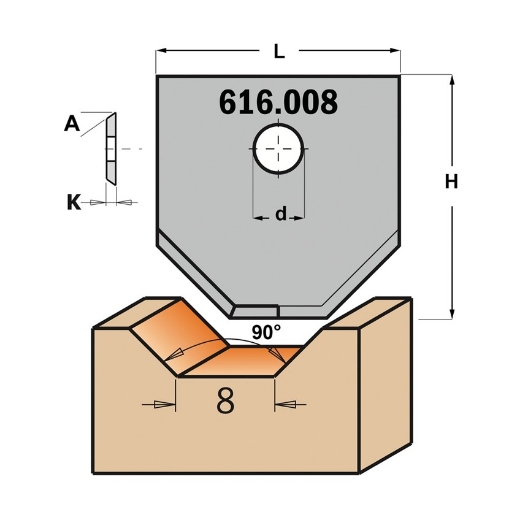
This profile knife is a replaceable cutting blade for a multi-profile router head: a cutter head in which you mount several knives of this type to jointly cut a profile shape into the workpiece. The knife is specifically made for MDF material and is part of a set of profile knives (identifiable, for example, by the "Profile Z…" designation) that you fit in the correct combination to achieve the desired profile.
What the knife does and how it works
The knife isn't used on its own but is mounted in a multi-profile cutter head together with the matching knives from the same set. Each knife in the set has its own cutting shape; only by fitting the knives in the right order and position do you get the complete profile you're aiming for. The cutting edge is specifically tuned for MDF: this board material consists of fine wood fibres bonded with resin, which places a different load on the knife than solid wood. The geometry and grind of the knife take this into account, giving you a clean cut without the fibres tearing out or the surface becoming rough.
Because it's an exchangeable knife, you can easily replace it once the cutting edge is worn or damaged, without having to replace the entire cutter head. This makes maintaining your router simple and cost-effective.
What you use it for
This type of profile knife is intended for profiling MDF, and you'll find it used for:
- Mouldings and decorative trims in MDF;
- Panel doors and cabinet fronts with a profiled edge;
- Decorative edge finishing on MDF boards;
- Furniture parts where a specific profile is routed into the material.
Practical use and how to choose
Before fitting, check that the knife matches the cutter head you're using and that you're taking the correct type/profile number from the set: the knives are mounted in a fixed combination to form the complete profile. Fit the knife firmly and evenly in the cutter head so each knife removes the same amount of material, giving you an even profile.
Work with a consistent feed rate suited to MDF: routing too fast can cause fibre tear-out, while going too slow can create unnecessary friction heat. Replace the knife once you notice the cut becoming less sharp or the surface feeling rougher than usual.