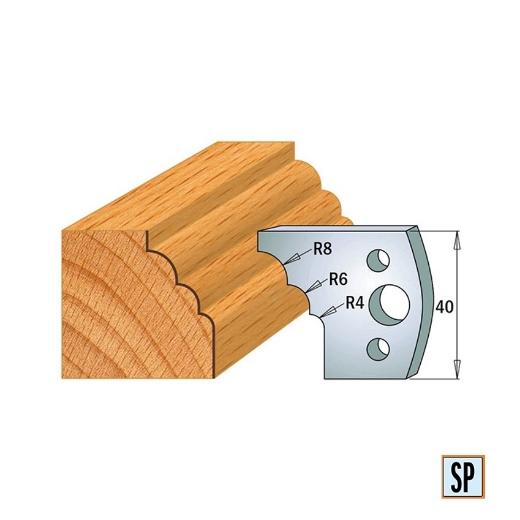
This profile knife is a separate, replaceable cutting element made of tool steel, which you mount together with a second, identical knife in a CMT profile cutter head. The knife is therefore always supplied and used in pairs. The profile ground into the knife determines the exact shape that is eventually milled into the wood. These knives are suitable for use on both hardwood and softwood.
What the knife does and how it works
A profile cutter head consists of a holder in which two knives are clamped opposite each other. While milling, the head spins at high speed and each knife shaves off a thin layer of wood, following the shape ground into the knife. Because both knives are identical and mounted symmetrically, the head stays balanced and produces an even, vibration-free cut along the full length of the workpiece.
The tool steel the knife is made from is hard enough to keep a sharp cutting edge during wood milling, yet it can also be resharpened once the edge becomes dull over time. This means you can sharpen the same knife several times before you need to replace it.
What you use it for
Profile knives are used to mill mouldings, rebates, beads, grooves and other decorative or functional profiles into solid wood. Depending on the shape ground into the knife, you cut either a straight edge (for example for a trimming cut or rebate) or a distinct profile shape (such as a bead, cove or round-over). Since these knives work on both hardwood and softwood, you can machine a wide range of timber species with the same set, from soft coniferous wood to harder hardwoods.
Practical use and how to choose
Always check that the knife matches the cutter head you use: these knives are designed for specific CMT cutter heads, so choose the model that fits your holder. Always mount the knives as a matched pair and make sure both knives protrude equally and are clamped evenly — this is essential for vibration-free, safe operation and a clean result.
Choose the profile shape (straight or a specific profile) based on the result you want: a straight edge for simple rebates or trimming cuts, a profile shape for decorative mouldings. Always work with a steady feed rate and let the knife do the cutting; forcing it increases the risk of splintering or an uneven cut. Once the edge becomes less sharp, have the knives resharpened or replace them as a pair, so the balance of the cutter head is maintained.