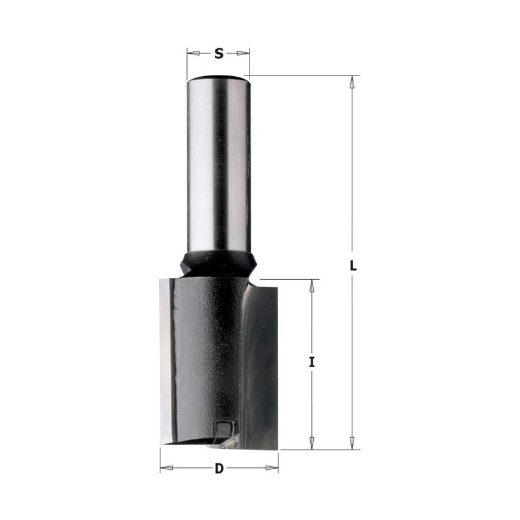
The CMT Spiral bit for aluminium & PVC is a router bit with a cylindrical shank and spirally ground cutting edges made from high-quality carbide (HWM). It is specially developed to machine plastics and aluminium at a high feed rate. Thanks to the standard shank diameter, you can use it on your hand router, but just as well on a stationary machine or CNC machine.
What the bit does and how it works
This bit has two spirally ground cutting edges (Z2) with a positive cutting angle. That positive angle makes the cutting edge "pull" through the material rather than push against it, giving you a smooth, clean cut with little resistance. The spiral shape evacuates the chips upwards (upward chip removal), so the material doesn't clog and the bit stays cool.
The cutting edges are extra sharp with a polished finish. That polished finish is important with aluminium and soft plastics: it prevents the material from sticking to the edge and ensures a clean edge without burrs or smearing. As a right-hand bit (RH), it turns in the standard direction of your machine.
What you use it for
This spiral bit is designed for edge and contour milling of:
- Aluminium — profiles, sheets and non-ferrous metals;
- PVC and other plastics — sheets, profiles and panels.
Because the bit has a plunge cut, you can also plunge into the material: you start directly in the workpiece and mill on from there. Ideal for cut-outs and contours where you can't start from an edge.
Practical use and how to choose
Fit the bit firmly and as deeply as possible into your machine's collet for good grip and minimal vibration. When machining aluminium and plastic, work with an adapted speed and feed rate: too high a speed or too slow a feed causes the material to melt and stick to the edge. Let the chips clear freely and use some cooling or lubrication with aluminium if needed.
Choose the diameter and cutting length to match the thickness of your workpiece and the shape you want to mill. A longer cutting length lets you mill through thicker material, while a smaller diameter allows finer contours and sharper inside corners.