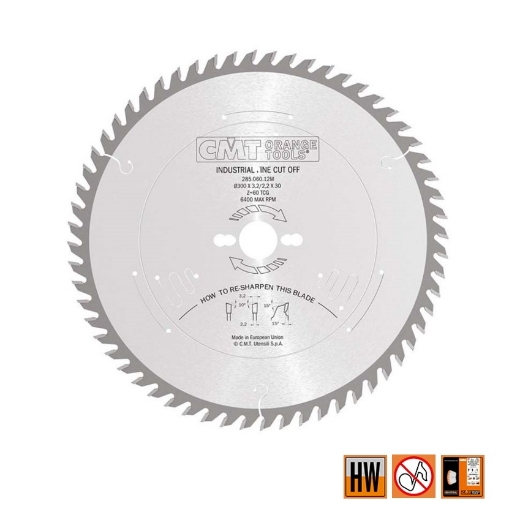
The CMT Circular Saw Blade for non-ferrous metals (aluminium) is a carbide-tipped (HW) saw blade from the industrial line, developed for crosscutting and rip-cutting aluminium and other non-ferrous metals. The teeth use the TCG (Triple Chip Grind) tooth form: an alternation of a chamfered and a flat tooth that removes the metal in two steps, giving you a clean, low-burr cut. The blade belongs to the semi-low-noise range, which limits noise output during cutting.
What the blade does and how it works
Non-ferrous metals such as aluminium are soft and tough; they tend to smear, stick and form burrs quickly. The TCG tooth form is specially designed for this: the leading tooth clears most of the material and the following tooth levels the cut. This gives you a crisp edge without sharp protruding burrs. The carbide teeth stay sharp for a long time and withstand the high loads that occur when cutting metal.
The rake angle of this type is neutral to slightly negative. This is deliberate: a negative or neutral angle prevents the blade from "grabbing" into the soft metal and keeps the feed calm and controllable — especially important with crosscutting for safety and cut quality.
What you use it for
This saw blade is intended for crosscutting and rip-cutting a variety of non-ferrous and related materials:
- Aluminium — profiles, tubes and sheet material;
- Thin brass and thin copper alloys;
- Plastics and composites;
- Faced (melamine or veneered) board material.
You use the blade on single or double cross-cut saws and on panel and sizing saws. For the best result, work preferably with machines that clamp the material securely.
Practical use and how to choose
First check that the diameter and bore of the blade match your machine; this blade: Ø 216 mm, bore 30 mm, 40 teeth. Always clamp the workpiece firmly so it can't shift or vibrate during cutting — this benefits both cut quality and your safety. When cutting aluminium and other non-ferrous metals, use a liquid coolant: this cools the teeth, prevents the metal from sticking and produces a smoother cut.
Choose the diameter and tooth count based on your machine and the desired cut quality: a blade with more teeth gives a finer, neater cut, while fewer teeth cut more freely. Work with a steady, calm feed and don't force the blade, and you'll get the longest tool life and the best results.