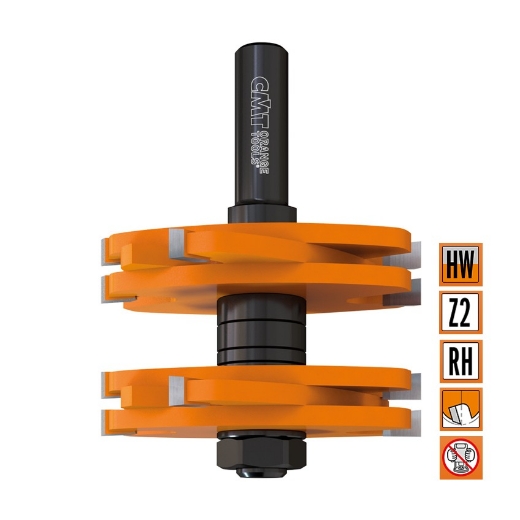
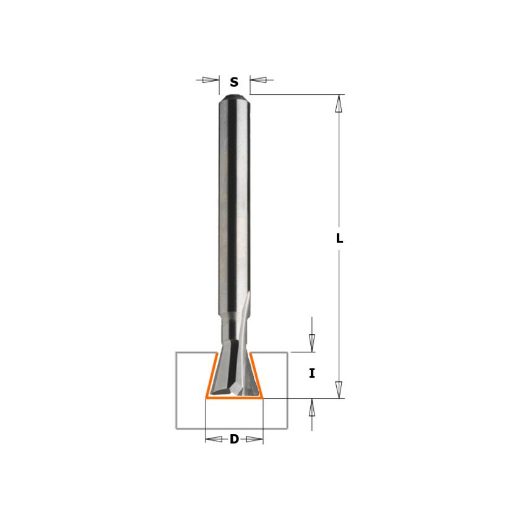
This CMT dovetail cutter, HW is a router bit with tungsten carbide (HW) cutting edges and a cylindrical shank, designed to rout dovetail joints. Its conical shape cuts an angled, wedge-shaped groove into the wood, allowing two workpieces to interlock with one another. This joint is known for being particularly strong and durable, and has traditionally been used in fine woodworking such as boxes and drawers.
What the cutter does and how it works
The conical shape of the cutter is the secret behind the dovetail joint: instead of a straight groove, it creates a groove that is narrower at the base than at the opening. When you fit two such grooves together, they mechanically lock into place and the joint can't simply be pulled apart, even without glue.
The cutter is made with HW (tungsten carbide), a wear-resistant material that keeps the cutting edges sharp for a long time. This matters when routing dovetail joints, since the cutter is cutting at an angle through the wood and is therefore under more strain than a straight groove cutter. The cylindrical shank fits the standard collet of your router, and the right-hand (RH) rotation matches the usual direction of most routers.
What you use it for
The dovetail cutter is specifically designed for making wood joints in fine furniture and woodworking, such as:
- Drawers and boxes — the classic application, giving corners a strong and decorative connection;
- Cabinets and boxes — for strong corner joints without visible fasteners;
- Fine furniture work — anywhere you want a durable, mechanically strong wood joint without relying (solely) on glue.
Several versions of this cutter exist, each with its own cutting angle and diameter, so you can choose the cutter that matches the type of joint and the jig or template you're using.
Practical use and how to choose
If you're working with a jig or template, it's recommended to rout in two passes: a careful first pass followed by a second one that brings the joint to full depth. Afterwards, check that the cutter has gone completely through the workpiece without splintering before removing the jig — this prevents damage to visible surfaces.
For the best result, it's wise to pre-mill with a groove cutter first; this reduces the load on the dovetail cutter and gives a tighter, cleaner joint. If you regularly work with dovetail and finger joints, the CMT universal jointing system type CMT300 is a handy tool: it lets you make all types of dovetail and finger joints in a standardised way.
When choosing the right cutter, pay attention to the cutting angle and diameter that match your jig or the desired joint type — you'll find these specifications in the Specifications tab.