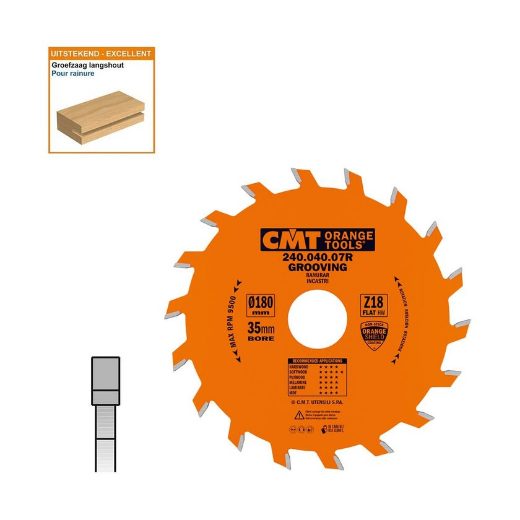
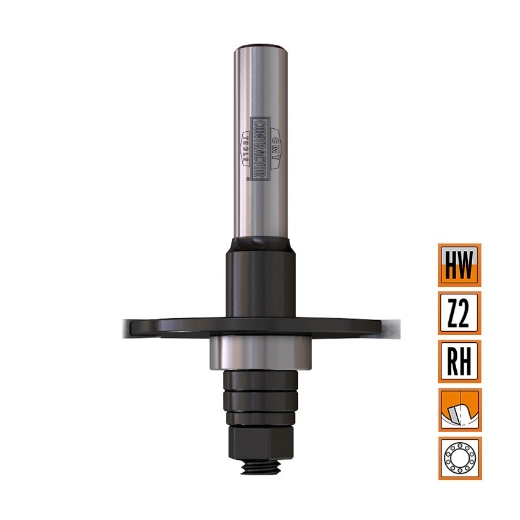
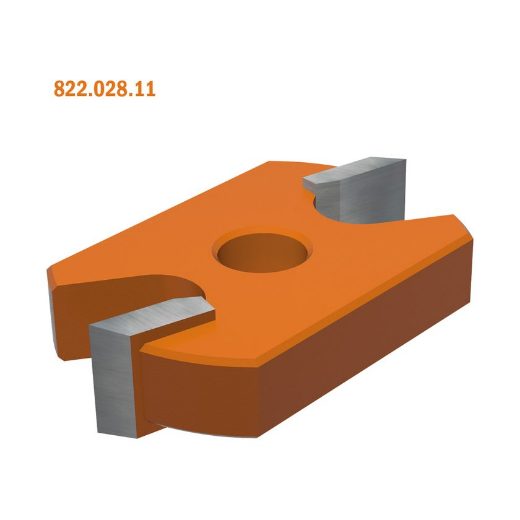
The CMT Schijffrees, HW is a carbide-tipped (HW) slot cutter used to mill grooves, slots and rabbets in wood and sheet material. Instead of plunging into the wood, this cutter cuts from the side: it spins like a disc and removes material along its full useful cutting length. The cutter has a central bore and mounts on a matching CMT arbor (shank), so you can use it in a router table or spindle moulder.
What the cutter does and how it works
The cutting edges are made of carbide (HW). This material is hard and wear-resistant, stays sharp for a long time and withstands the heat generated during cutting. As a result you get clean, smooth cut walls and the cutter lasts longer than one made from ordinary tool steel.
The cutter is right-hand rotation (RH) and has no bore cut. This means you cannot plunge straight down into the workpiece; you feed the material sideways past the spinning disc. It cuts a groove or rabbet with a width matching the thickness of the disc, and a depth you set via the fence or the height of the cutter.
Because it is a slot cutter on a separate arbor, you can vary the cutting width using different discs and sometimes spacer rings. That way one system supports several operations.
What you use it for
This slot cutter is intended for woodworking and related sheet materials:
- Solid wood — milling grooves, slots and rabbets;
- Sheet material such as plywood and MDF — rabbets for back panels and bases;
- Furniture and cabinet making — joints and grooves for panels;
- Frame and profile work — rabbets for glass or panels.
Practical use and how to choose
First check that the cutter's bore fits the arbor you are using, and that the matching shank fits your machine. Mount the disc firmly and centred on the arbor and mind the correct rotation (right-hand). Set the cutting depth and height and work with steady feed; do not force the feed, so you protect the cutting edges and keep a smooth result.
Choose the disc based on the desired cutting width (disc thickness) and the required cutting depth (useful cutting length). For narrow, shallow slots take a thinner disc with a short cutting length; for wider or deeper grooves a thicker disc with a longer cutting length. You will find the exact dimensions in the specifications for each item.