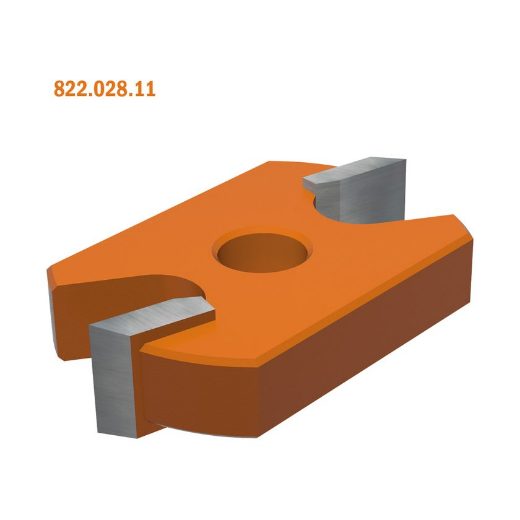
The CMT Schijffrees, HW is a cutter with a disc-shaped blade made of tungsten carbide (HW). You mount it on the arbor of a suitable cutter head or machine, so that as it rotates it cuts a neat groove or rebate into the workpiece. The cutter is right-hand rotating (RH) and is used mainly in woodworking.
What the cutter does and how it works
As it spins, the carbide teeth around the disc's circumference remove the material. Because the cutting edges are made of tungsten carbide, they stay sharp longer than plain steel and hold their edge well during intensive use. This gives you a crisp, smooth cut and a tidy end result.
The disc shape determines the width of the groove you cut, while the useful cutting length tells you how deep or wide the profile becomes. The bore fits the arbor of your head or machine, so the cutter runs perfectly centred. This version has no plunge cut — so you feed the cutter into the workpiece from the side rather than drilling into it.
What you use it for
The Schijffrees is designed for cutting straight grooves and rebates in wood and sheet material. Typical applications include:
- Cutting grooves for joints, panels or guides;
- Making rebates along the edge of a workpiece;
- Sizing small profiles and recesses.
By combining or stacking several disc cutters on a head, you can adjust the groove width to suit your project.
Practical use and how to choose
First check that the bore fits the arbor of your cutter head or machine, and mount the cutter firmly and centred. Note the direction of rotation (RH) so the machine drives the cutter the right way. Work with a steady feed rate and let the cutter do the job; don't force it, as that speeds up wear and makes the cut rougher.
Choose the cutter based on the groove width and cutting depth you need: the useful cutting length determines how deep you can go in one pass. Also make sure the bore matches your arbor. This way you work safely and achieve a clean end result.