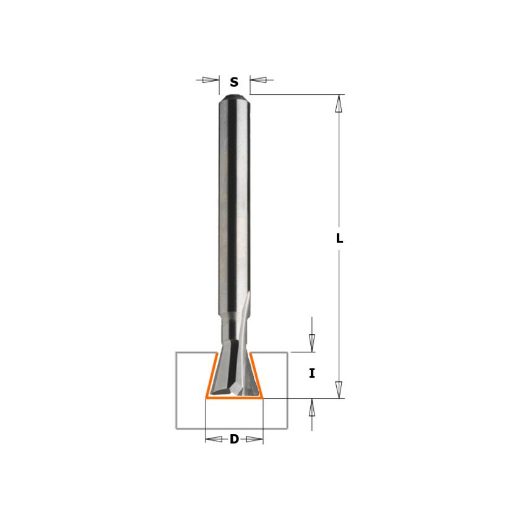
The CMT lettering router bit is a carbide-tipped (HW) profile bit for routing neat letters and decorative motifs in wood. The bit has a pointed profile with a 60° cutting angle and a rounded bottom, so you create attractive relief letters and engraved text. It's the go-to bit for name signs, house name plates, decorative panels and similar engraving work.
What the bit does and how it works
The V-shaped profile cuts a groove with angled walls and a rounded transition to the flat bottom. Thanks to those rounded corners, no sharp edges form where the wood tends to splinter; the surface inside the groove stays smooth and clean. That makes the bit ideal for letters and numbers: the lines stay crisp and the curves remain pure.
An added benefit of the soft, rounded transitions is that paint bonds better and more durably in the groove. On sharp corners paint cracks and flakes more quickly; on the rounded profile the colour stays looking good for longer. This lets you make relief letters that you can easily and lastingly colour in afterwards.
The bit is made of carbide (HW), which provides sharp cutting edges and a long service life. It is right-hand rotating and has a cylindrical shank, so you can chuck it in a router or router table.
What you use it for
This bit is intended for lettering and engraving work in wood and wood-based panels:
- Name signs and house name plates with relief or engraved lettering;
- Decorative text, motifs and border designs;
- Craft engraving work where a crisp, splinter-free line matters;
- Workpieces you colour or paint afterwards, thanks to paint bonding well in the groove.
Practical use and how to choose
Clamp the bit firmly and fully into the collet of your router or router table. Preferably work with a guide, template or copy pin to follow the letters cleanly, or use an engraving system for consistent lines. Set the routing depth to the desired depth of your letters and work evenly, so the bottom stays equally deep everywhere.
Remove material in several passes when routing deep, and choose a speed suited to the bit diameter. Let the bit do the work and don't force it: this keeps the cutting edges sharp and gives a clean, splinter-free result. After routing you can easily colour in the relief letters for a nice contrast.