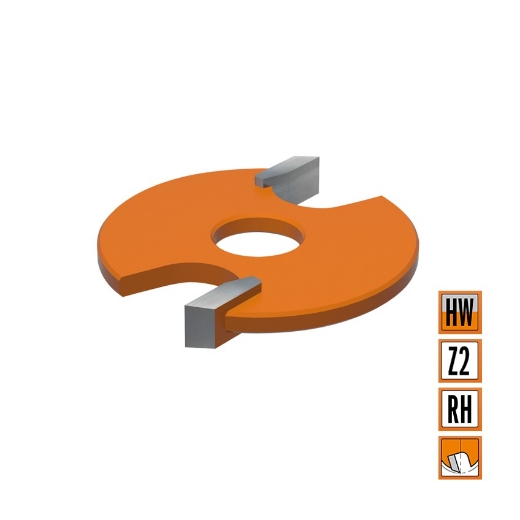
The CMT rabbeting and edge cutter with bevel-set knives is a carbide-tipped (HW) router bit that you clamp into a router or router table. With this bit you work both the edge and a rabbet of your workpiece in one operation. The angled cutting knives create a shearing cut that removes the wood smoothly, giving you a clean edge with less tear-out than a straight cutter.
What the bit does and how it works
The bit has a cylindrical shank that you clamp into the machine's collet. At the end sits a ball bearing that acts as a guide. This bearing runs along the edge of your workpiece or along a template and thereby sets how deep the bit cuts. In this version the bearing is placed very close to the cutter, so the guide runs right up against the cutting section and you can work very close to the edge.
The cutting edges are made of carbide (HW), a tough and wear-resistant material that stays sharp for a long time. The bevel setting of the knives produces a gradual, pulling cut: the wood is shaved rather than chopped, which gives a smoother result. The bit is right-hand rotating, so it works with the standard rotation direction of your router.
What you use it for
This bit is intended for making rabbets and finishing edges, especially in:
- Solid wood — cutting edge and rabbet joints;
- Sheet material such as plywood and MDF — creating clean edges and rabbets;
- Cabinet and furniture making — rabbets for back panels, glass panes or panels.
Because the end bearing can run along a template or an existing edge, the bit is also suitable for copying shapes and edges exactly.
Practical use and how to choose
Clamp the bit firmly and as deeply as possible into the collet, but keep the cutting edges fully clear. Set the bit height to the desired rabbet depth and let the end bearing handle the guiding. Work with a steady feed and against the rotation direction (climb the correct way) for the best result. For deeper rabbets, take several light passes rather than everything in one go; this puts less load on the bit and keeps the surface clean.
Choose the diameter and useful cutting length based on the rabbet you want to make and the thickness of your material; this bit: Ø 16 mm, useful cutting length 19 mm. Keep the end bearing clean and turning freely so it runs along the guide without resistance.