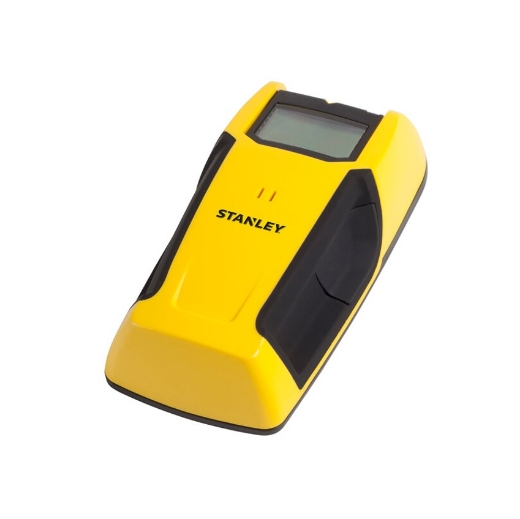
The Stanley® material detector is a digital measuring instrument that lets you find out what's hidden behind a wall, floor or ceiling. Before drilling, sawing or nailing, you hold the device against the surface and scan the spot. That way you know where pipes, studs or other materials sit, and you avoid damage or dangerous situations.
What it does and how it works
The detector measures changes in the material behind the surface. Depending on the model, it responds to differences in density (to find wooden or metal studs and profiles), to metal (nails, screws, pipes) and sometimes to live cables through their electromagnetic field. As you move the device slowly across the wall, it shows on a display and with a signal where something is located. In effect, this makes the structure behind the wall visible without you having to break anything.
Before use you usually calibrate the device on an empty part of the surface; after that it recognises the deviations that point to hidden objects. Many models have different modes so you can search specifically for metal or for studs.
What you use it for
A material detector is handy for jobs where you want to fix something to the wall or need to break into a structure:
- Before drilling and screwing — checking that no pipe or cable lies on the drill line;
- When hanging cabinets, shelves or TV brackets — finding the load-bearing studs or profiles for a firm hold;
- During renovations — mapping out the build-up of plasterboard walls and wooden or metal frames;
- For safety — detecting hidden live wires to avoid short circuits and hazards.
This way the detector works on a range of surfaces such as plasterboard, wood, brick and concrete.
Practical use and how to choose
Place the device flat against the wall at a spot where you're sure nothing is hidden, and let it calibrate according to the manual. Then move it calmly and evenly across the surface; sliding too fast gives less reliable results. Mark the objects you find with a pencil so you know exactly where you can and can't drill.
When choosing, consider what you want to detect: is it mainly studs and profiles, metal, or live wires as well? The more detection modes a model has, the more versatile it is. Remember that a detector gives an indication — always stay careful and, when in doubt, don't drill.